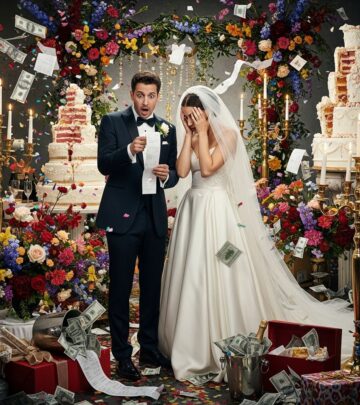
Financial Red Flags in Modern Romance
Explore how money matters are reshaping dating dynamics, from debt dealbreakers to skyrocketing date costs in 2026.

Financial considerations have become central to romantic relationships in 2026, with surveys revealing that money habits often determine compatibility more than personality traits. As economic pressures mount, Americans are scrutinizing partners’ fiscal responsibility early in dating.
The Surge of ‘Date-flation’ and Its Impact
Rising costs associated with dating, dubbed ‘date-flation,’ are straining budgets and altering behaviors. The average expenditure on a single date, including grooming and transportation, has climbed to $189, marking a 12.5% increase from the previous year. Over the course of a year, this translates to more than $2,300 spent by those who date regularly.
This escalation outpaces general inflation, prompting shifts in dating frequency. Half of daters report reducing outings or opting for cheaper alternatives due to these expenses. Younger generations feel the pinch most acutely: Millennials average $252 per date (up 32%), while Gen Z spends $205.
- Annual date spending exceeds $2,300 for active daters.
- 47% of singles deem dating financially unviable.
- 65% in relationships split costs evenly.
Common Financial Dealbreakers in Relationships
Transparency tops the list of non-negotiables. Over half (54%) of Americans view dishonesty about finances as an absolute dealbreaker. Close behind, 46% cannot tolerate a partner requesting loans, and 38% dislike one who expects them to cover date bills consistently.
Credit card debt emerges as a significant barrier, with 17% rejecting partners carrying any balance, given its high-interest burden. Other red flags include living arrangements (32% see cohabitation with others as problematic) and poor savings habits.
| Dealbreaker | Percentage Viewing as Dealbreaker |
|---|---|
| Dishonesty about finances | 54% |
| Asks to borrow money | 46% |
| Expects me to pay for dates | 38% |
| Lives with family/roommates | 32% |
| Any credit card debt | 17% |
Lies and Secrets: The Hidden Side of Dating Finances
Financial deception is widespread, with 50% of those in relationships admitting to concealing or falsifying money details from partners. The most frequent fibs involve undisclosed purchases (18%) and loans to friends or family (16%). Such omissions erode trust and can signal deeper incompatibilities.
Financially honest individuals spend less on dates ($182 vs. $195), suggesting openness correlates with prudent habits.
Generational Perspectives on Money in Love
Younger daters face unique hurdles. A national survey of unmarried adults aged 22-35 indicates a ‘dating recession,’ with 74% of women and 64% of men reporting minimal dating activity despite 51% desiring relationships. Economic factors, including inflation, exacerbate this trend.
Gen Z and Millennials cite dating costs as barriers to goals, with 50% and 40% respectively noting interference. Inflation drives credit card reliance: 55% use cards for essentials, 46% have maxed out at least one, and five-figure balances rose to 29%.
Online Dating and Financial Profiles
Digital platforms amplify financial scrutiny. About half of 18-29-year-olds (51%) and 30-49-year-olds (53%) have used dating apps, versus 20% of those 50+. Profiles increasingly hint at fiscal stability, with low-cost date suggestions polarizing: 47% green flag, 18% red, 36% yellow.
Strategies for Navigating Financial Talks in Dating
Early, honest discussions mitigate risks. Couples aiming for equity (65%) fare better amid rising costs. Paying off debt swiftly preserves options, as high interest hampers budgets.
- Initiate casual money chats post-few dates.
- Share credit scores voluntarily if relevant.
- Propose budget-friendly activities.
- Monitor personal debt to boost appeal.
Broader Economic Context Fueling Tensions
Persistent inflation shifts credit from convenience to necessity. Monthly balances grow for 57%, reflecting strained finances that spill into romance. The dating recession ties to this, with low dating confidence among youth.
FAQs
What is the top financial dealbreaker in dating?
Dishonesty about finances, cited by 54% of Americans.
How much do dates cost on average in 2026?
$189 per date, totaling over $2,300 yearly.
Do people lie about money in relationships?
Yes, 50% admit to it, often about purchases or loans.
Is credit card debt a dating no-go?
For 17%, any amount is.
Why are younger people dating less?
Costs and a ‘dating recession’ deter them; 74% of young women dated minimally.
References
- Survey: 17% of Americans Say Credit Card Debt is a Dating Dealbreaker — NerdWallet. 2026. https://www.nerdwallet.com/finance/studies/2026-dating-dealbreakers
- Date-flation Hits Hard: Average Date Spend Nears $200 — BMO Bank. 2026-02-11. https://usnewsroom.bmo.com/2026-02-11-Date-flation-Hits-Hard-Average-Date-Spend-Nears-200-BMO-Real-Financial-Progress-Index
- State of Our Unions 2026: The Dating Recession — Institute for Family Studies. 2026. https://ifstudies.org/report-brief/state-of-our-unions-2026-the-dating-recession
- 2026 Survey: As Inflation Pressures Persist, Americans Are Increasingly Relying on Credit Cards — Morningstar/PR Newswire. 2026-03-16. https://www.morningstar.com/news/pr-newswire/20260316fl10002/2026-survey-as-inflation-pressures-persist-americans-are-increasingly-relying-on-credit-cards-to-bridge-the-gap
- Modern Dating Survey — The Harris Poll. 2026-02. https://theharrispoll.com/wp-content/uploads/2026/02/Modern-Dating-Survey-February-2026.pdf
- The Public and Online Dating 2026 — SSRS. 2026. https://ssrs.com/insights/online-dating-2026/
Similar Articles








Read full bio of medha deb