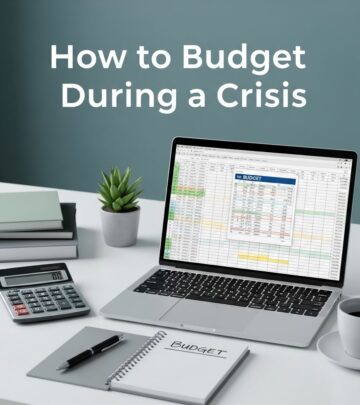
Financial Recovery Guide After Losing Your Job
Practical steps to stabilize your finances and rebuild after unexpected unemployment

Losing your job represents one of life’s most challenging financial moments. The sudden loss of income can create immediate stress and force difficult decisions about essential expenses, debt payments, and healthcare coverage. However, with a structured approach and clear priorities, you can navigate this transition effectively and emerge financially stronger. This guide outlines practical strategies to help you stabilize your finances immediately after job loss and chart a path toward recovery.
Understanding Your Immediate Financial Position
The first critical action after job loss involves taking stock of your complete financial picture. This assessment forms the foundation for all subsequent decisions and helps you identify your actual financial capacity to weather the transition period.
Begin by documenting all sources of income you can access in the short term. This includes any severance package your employer offers, final paychecks, and funds already in savings accounts or emergency reserves. Understanding exactly how much money you have available allows you to calculate how long you can sustain yourself while seeking new employment.
Next, compile a comprehensive list of all your outstanding debts and financial obligations. Include credit card balances, auto loans, student loans, mortgages, and any other borrowing. For each debt, note the minimum payment required, the interest rate, and the consequences of missing a payment. This inventory reveals which financial commitments demand immediate attention and which might offer flexibility during financial hardship.
Many people overlook their household’s total monthly spending when facing income loss. Review bank and credit card statements from the past three months to identify actual spending patterns. Track where money goes across categories such as housing, utilities, groceries, transportation, insurance, childcare, and discretionary items. This analysis often reveals spending habits that surprise people and creates opportunities for reduction.
Redesigning Your Budget for Reduced Income
A traditional household budget designed for full employment becomes obsolete once income drops. Creating a specialized budget focused on survival and core necessities represents a fundamental shift in financial planning approach.
Start by distinguishing between essential and non-essential expenses. Essential expenses include housing payments, food, utilities, insurance, medications, and transportation necessary for job searching. Non-essential expenses encompass streaming services, dining out, entertainment, gym memberships, and luxury purchases. This categorization isn’t about judgment—it’s about identifying what you must pay versus what you can temporarily eliminate.
Create two parallel budget scenarios. The first should reflect the absolute minimum amount needed monthly to cover essentials—your survival budget. The second should include essential expenses plus any recurring costs you’d prefer not to cut, providing a more sustainable mid-range target. Knowing both numbers helps you understand how long your savings can last under different scenarios.
Consider shifting from monthly budget reviews to weekly check-ins during unemployment. Weekly reviews provide more frequent opportunities to track spending patterns and adjust course quickly if you’re tracking ahead of your projected burn rate. Many people find weekly reviews prevent the psychological shock of discovering major budget overages only when reviewing monthly statements.
Audit your recurring subscriptions and memberships ruthlessly. Video streaming services, music platforms, software subscriptions, gym memberships, and premium apps often renew automatically with little conscious thought. During unemployment, every dollar counts, making this low-hanging fruit for immediate savings. Many services offer temporary pause options rather than permanent cancellation, allowing you to resume when circumstances improve.
Managing Healthcare Coverage During Transition
Healthcare represents both a major expense category and a critical protection against catastrophic financial loss. Losing your job typically means losing employer-sponsored health insurance, requiring immediate action to maintain coverage or face gaps that could prove devastating.
Explore COBRA continuation coverage, which allows you to maintain your former employer’s insurance plan for a limited period, typically 18 to 36 months. While you’ll pay the full premium plus administration costs—making it more expensive than when employed—COBRA eliminates the medical underwriting process and maintains continuity of coverage. For individuals with ongoing health needs or complex medication requirements, this continuity proves valuable.
If COBRA isn’t affordable or available, investigate the Health Insurance Marketplace. Losing your job qualifies as a life event triggering special enrollment periods outside standard annual enrollment windows. Marketplace plans offer various coverage levels and cost structures, often with subsidies available based on household income. During unemployment, your income may qualify you for subsidies previously unavailable when fully employed.
If you have a spouse or partner with employer coverage, adding yourself to their plan may offer the most economical solution. Similarly, if you’re young and in good health, catastrophic coverage plans through the Marketplace provide basic protection at lower monthly costs, though with higher deductibles.
Before leaving your job, complete any time-sensitive medical care while still covered. Address dental needs, vision care, preventive screenings, and other services that become more expensive or complex to access without insurance.
Navigating Unemployment Benefits and Final Payments
Unemployment insurance represents a crucial but often underutilized financial resource. Most people qualify for benefits after job loss, though eligibility varies by state, previous employment history, and reason for separation.
Contact your state’s unemployment office immediately after losing your job. Each state maintains different application processes, documentation requirements, and payment schedules. Some states process applications online, while others require phone or in-person visits. Benefits typically begin arriving one to three weeks after approval, making prompt application critical for maintaining cash flow.
Prepare necessary documentation before applying. You’ll likely need your Social Security number, driver’s license, employment history from the past 18 months, and your former employer’s business information. Having these details readily available accelerates the application process.
Simultaneously, clarify your final paycheck situation with your former employer. Determine whether you have accrued vacation or paid time off that must be paid out, how your final paycheck will be delivered, and what tax implications exist. Some states require employers to pay accrued time off, while others don’t, making this clarification essential for accurate financial planning.
Communicating With Creditors and Service Providers
Financial hardship doesn’t absolve you of debt obligations, but most creditors offer hardship programs designed specifically for situations like unemployment. The critical step involves contacting them before missing payments rather than after.
Reach out to your mortgage or rental company, auto loan provider, credit card issuers, and utility providers. Explain your situation clearly and directly, and express your commitment to resuming regular payments once employed. Many lenders offer temporary solutions including payment reductions, extended repayment periods, or skipped payments that aren’t reported to credit bureaus.
Document all conversations with creditors, noting the representative’s name, date, and any agreements reached. Request written confirmation of any modified arrangements before relying on them. Without documentation, you risk payment disputes or unexpected collection efforts.
Prioritize payments strategically. Housing, utilities, and transportation necessary for job searching should take priority over credit card payments. While damaging your credit isn’t ideal, avoiding homelessness or losing your ability to get to interviews takes precedence.
Exploring Emergency Funding Sources
Despite careful planning, you may need additional funds to bridge the gap until employment resumes. Multiple options exist, each with different implications for your financial recovery.
Personal emergency funds or savings accounts represent the ideal first source. Tapping these accounts avoids debt and interest charges, though it reduces your financial cushion. Many financial advisors recommend preserving at least one month’s essential expenses in savings even during unemployment to cover true emergencies.
Credit cards, while expensive due to interest charges, offer immediate access to funds without extensive application processes. If you’ve maintained good credit, many cards offer introductory low or zero interest periods that might extend through your unemployment if you’re cautious about new charges.
Personal loans from banks or credit unions typically offer lower interest rates than credit cards but involve more extensive application processes. These formalized loans also create structured repayment obligations that you’ll need to budget for once employed again.
Borrowing from family or friends offers interest-free options but creates personal relationship complications. If pursuing this route, formalize the arrangement with clear repayment terms to prevent misunderstandings.
Retirement account withdrawals should represent a last resort option. Early withdrawals from 401(k)s and IRAs trigger income taxes on the withdrawn amount plus potential 10% early withdrawal penalties, substantially reducing the actual cash you receive. You lose years of tax-deferred growth, permanently damaging long-term retirement security for a short-term financial need.
Organizing Your Job Search for Maximum Efficiency
While managing finances, you’re simultaneously undertaking an intensive job search. Organization during this process accelerates your return to employment, shortening the overall financial impact of job loss.
Create a centralized system tracking all applications submitted, positions applied for, companies contacted, and follow-up dates. Use a simple spreadsheet or dedicated job search application to maintain this information. This system prevents duplicate applications, ensures timely follow-ups, and demonstrates consistency when opportunities re-emerge.
Set specific daily targets for job search activities. Determine how many applications you’ll submit daily, how many networking contacts you’ll reach out to weekly, and what professional development activities you’ll pursue. Treating job search as a full-time job with structured schedules and metrics increases productivity and accelerates results.
Invest time in professional development and skill enhancement through low-cost or free resources. Many online platforms offer courses and certifications that strengthen your candidacy without adding major expenses. These investments demonstrate initiative to potential employers while improving your actual qualifications.
Rebuilding Your Financial Foundation Once Employed
Returning to employment marks a transition point but not a return to pre-layoff financial habits. The experience of financial vulnerability should inform more cautious financial practices going forward.
Before spending your new income freely, rebuild your emergency fund to at least three months of essential expenses. Many financial experts recommend allocating your first several paychecks primarily to emergency fund restoration before upgrading lifestyle spending. This process typically requires two to six months depending on the fund’s size and your income level.
Review any modified debt arrangements you negotiated during unemployment. Begin transitioning back to regular payment schedules systematically, ensuring you don’t default on agreements made during hardship. Contact creditors again to confirm the process for returning to normal payments.
Update retirement plan contributions and flexible spending account elections as permitted in your new position. The unemployment period likely interrupted years of retirement savings growth, making it important to resume contributions promptly despite the temptation to delay in favor of debt repayment.
Key Takeaways for Financial Survival
- Assess your complete financial position immediately, including all income sources, debts, and monthly obligations
- Create a specialized unemployment budget focused on essential expenses and survival needs
- Address health insurance coverage before gaps emerge through COBRA, Marketplace, or family plans
- Apply for unemployment benefits immediately, as these typically take weeks to begin arriving
- Contact creditors proactively before missing payments to negotiate temporary relief options
- Prioritize housing, utilities, and job search transportation as you allocate limited funds
- Treat job searching as a structured full-time job with daily targets and systematic tracking
- Once reemployed, prioritize emergency fund restoration before upgrading lifestyle spending
Frequently Asked Questions
How long does it take to receive unemployment benefits?
Unemployment benefit processing times vary by state, typically ranging from one to three weeks after application approval. Some states process applications faster than others. It’s crucial to apply immediately after job loss to minimize delays, as benefits don’t typically cover the waiting period.
Should I withdraw from my retirement account during unemployment?
Early retirement withdrawals should be a last resort option. Withdrawals trigger income taxes on the full amount plus potential 10% penalties, reducing actual cash received significantly. Additionally, you permanently lose years of tax-deferred growth. Explore all other funding sources before considering retirement account withdrawals.
How much emergency fund should I target?
Financial advisors typically recommend maintaining three to six months of essential expenses in emergency savings. However, even starting with one month’s expenses provides meaningful financial protection. Building your fund gradually is better than avoiding this goal entirely.
What happens if I can’t pay my bills during unemployment?
Contact your creditors before missing payments. Most offer hardship programs including payment reductions, extended payment periods, or skipped payments that won’t damage your credit. Documentation of these agreements protects you from future disputes.
How should I prioritize bill payments with limited funds?
Prioritize housing (rent or mortgage), utilities, necessary transportation, insurance, and essential food. These prevent immediate crises. Credit cards and other unsecured debts can wait if necessary, though proactive communication with those creditors remains important.
References
- How to Prepare for a Job Loss – Protect Your Finances — Money Fit. Accessed 2025. https://www.moneyfit.org/how-to-guides/life-events/how-to-prepare-for-a-job-loss/
- 5 Tips for Job Loss Financial Survival — Ameris Bank. Accessed 2025. https://www.amerisbank.com/Personal/Learn/Financial-Articles-Advice/Managing-Your-Money/5-Tips-for-Job-Loss-Financial-Survival
- How to Survive Financially After a Job Loss — Better Money Habits, Bank of America. Accessed 2025. https://bettermoneyhabits.bankofamerica.com/en/taxes-income/how-to-survive-financially-after-job-loss
- How to Prepare for and Survive Financial Hardship — FINRA.org. Accessed 2025. https://www.finra.org/investors/insights/prepare-survive-financial-hardship
- Unexpected job loss — Consumer Financial Protection Bureau. Accessed 2025. https://www.consumerfinance.gov/consumer-tools/unexpected-job-loss/
- Unemployment Survival Guide: How to Plan for Your Financial Needs — Comerica. Accessed 2025. https://www.comerica.com/insights/personal-finance/layoff-survival-guide-how-to-plan-for-unemployment.html
- A Financial Survival Guide to Job Loss — GM Financial. Accessed 2025. https://www.gmfinancial.com/en-us/financial-resources/articles/job-loss.html
Similar Articles








Read full bio of Sneha Tete