Financial Literacy for Kids: A Parent’s Guide
Practical, age-appropriate ways to teach kids money skills, from earning and saving to budgeting and long-term financial habits.
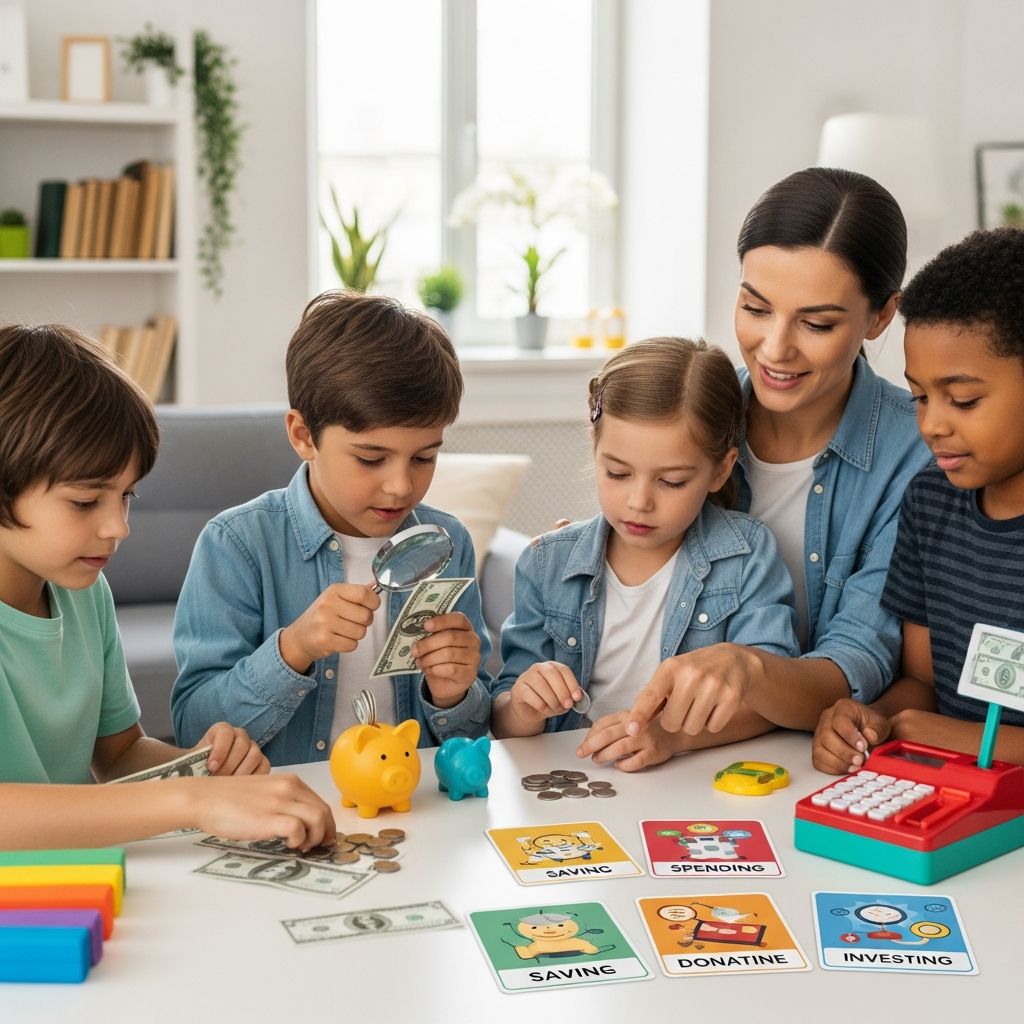
Financial literacy for kids is not just about dollars and cents. It is about helping children understand how money works so they can make thoughtful decisions, avoid common financial mistakes, and build a secure future. When you intentionally teach your kids about earning, saving, spending, and planning ahead, you give them skills they will use for the rest of their lives.
This guide walks you through why financial literacy matters, the essential skills kids should learn, and practical, age-appropriate strategies you can start using right away.
Why Teaching Kids Financial Literacy Is Important
Children grow into adults who must make daily financial decisions—from paying bills on time to choosing whether to use credit or cash. Yet many teenagers and young adults reach college or their first job without ever being taught how to manage money in real life.
Research from the U.S. Federal Deposit Insurance Corporation (FDIC) shows that youth who receive financial education demonstrate improved financial knowledge and are more likely to use mainstream financial services responsibly.
Early money lessons matter because they allow kids to:
- Practice decision-making when the stakes are low, such as choosing how to spend birthday money.
- Develop healthy habits—like saving consistently—long before they have to manage rent, credit, or student loans.
- Build confidence in handling money instead of feeling overwhelmed by it.
- Understand trade-offs, learning that money is limited and must be allocated thoughtfully.
Education experts emphasize introducing simple concepts early and then layering in more complex ideas as children grow. This gradual approach helps kids see money management as a normal part of everyday life instead of something scary or confusing.
Kids’ Financial Literacy Basics
Before you think about advanced topics like investing, focus on the core building blocks. These are the essential financial skills every child should be exposed to as they grow:
- Earning an income
- Budgeting
- Saving money
- Developing good overall money habits
Earning an Income
Children need to understand that money is earned by providing time, effort, or value—not just handed out endlessly. Even basic exposure to this idea can change how they treat the money they receive.
Age-appropriate ways to introduce earning include:
- Young kids: Small, optional tasks like helping in the garden, organizing toys, or assisting with simple household jobs.
- Older kids: Regular responsibilities such as pet care or helping with family projects, sometimes tied to extra pay beyond a base allowance.
- Teens: Part-time jobs, babysitting, tutoring, lawn care, pet walking, or other small businesses.
Economists recommend connecting effort with rewards so kids begin to grasp that income is limited and must be managed.
Budgeting
Once kids have money coming in—whether from allowances, gifts, or jobs—they need to learn how to organize it. Budgeting is simply a plan for where their money will go.
Teach your child that every amount of money can be divided into categories. A simple kid-friendly framework is:
- Save: For future goals and security.
- Spend: For everyday wants and needs.
- Give: For charity or helping others.
- Invest (for older kids): For long-term growth.
Budgeting introduces children to concepts like goals, expenses, and trade-offs, and it helps them see that money should be planned, not just used impulsively.
Saving Money
Saving is a core pillar of personal finance, and the earlier kids understand it, the better. Children who practice saving regularly are more likely to carry that habit into adulthood, which is linked to better financial outcomes and resilience against shocks.
Practical ways to teach saving include:
- Setting a rule that a certain percentage of all money received goes into savings first.
- Using a clear jar or digital tracker so kids can see their savings grow.
- Helping them set short-term goals (a toy, a game) and longer-term goals (a bike, a trip).
- Transitioning from a piggy bank to a savings account as they get older.
Good Habits Overall With Money
Beyond individual skills, kids need to build strong money habits. These are automatic behaviors that guide their decisions, such as:
- Thinking before spending and comparing options.
- Tracking how much money they have and where it goes.
- Setting goals and planning for them.
- Using bank accounts and digital tools responsibly.
Parents play a crucial role by modeling good financial behavior and including children in age-appropriate discussions about money.
7 Impactful Ways to Teach Financial Literacy for Kids
Teaching kids about money does not need to be complicated. The key is consistency, real-life practice, and making it as engaging as possible. Here are seven powerful strategies to use at home.
1. Teach Independence and Responsibility Through Chores
Chores can be a gateway to both life skills and financial skills. Even if you choose not to tie basic chores directly to allowance, you can still use them to teach responsibility and discuss the value of contributing to the household.
Ideas to try:
- Set clear expectations for daily and weekly chores.
- Offer extra, optional tasks that come with additional pay.
- Talk about how in the adult world, people are paid for completing work on time and to a certain standard.
When kids connect effort, reliability, and earnings, they begin to understand how income works in real life.
2. Open a Savings Account and Walk Them Through the Process
Opening a bank savings account is a powerful, hands-on way to build financial literacy. Government and central bank resources emphasize that understanding banking terms and how accounts work is a core part of financial capability.
Involve your child in each step:
- Explain why people use banks to keep money safe and earn interest.
- Go to the bank together (or use a trusted online bank) to open the account.
- Show them how to make deposits from their allowance, gifts, or earnings.
- Review account balances and statements with them regularly.
You can set a family rule that savings stay untouched until they are used for meaningful goals, such as education, travel, or a major purchase the child has planned for.
3. Educate Your Children About Finance Concepts
Formal financial concepts can and should be introduced gradually. Concepts like interest, inflation, credit, and taxes can be explained in simple language and then revisited as kids grow.
Ways to embed financial education:
- Make learning about money a regular topic, not a one-time lecture.
- Set high expectations around education in general, emphasizing that knowledge creates options.
- Talk about how college, training, or apprenticeships are investments in future earning potential.
- Involve older kids and teens in researching scholarships or learning about student loans from reputable sources like federal student aid websites.
Encouraging curiosity and questions about money helps your children feel that they can take control of their financial futures.
4. Use Fun Resources and Activities
Kids learn best when they are engaged and having fun. Many educators suggest using games, stories, and interactive tools to teach financial concepts.
Examples of fun learning tools:
- Board games that involve earning, buying, and managing resources.
- Age-appropriate money books that feature characters making financial choices.
- Online simulations or apps that let kids practice budgeting or running a small business.
- Family “money dates” where you talk about goals and celebrate progress.
For older kids, you might encourage small entrepreneurial projects such as a lemonade stand, pet-sitting, or selling crafts, which can reinforce lessons about costs, profits, and customer service.
5. Talk Openly About Everyday Money Decisions
Everyday life offers countless teachable moments. If you narrate some of your financial decisions, kids will start to see how money works outside a classroom or book.
Simple ways to make money visible:
- At the grocery store, explain that you buy based on a budget, compare prices, and sometimes say no to items not in the plan.
- When paying bills, briefly explain what they are (utilities, rent, internet) and why they matter.
- Show kids how you set aside money for savings or emergencies before spending on wants.
When children see you making thoughtful choices, they start to understand that money is finite and must be managed carefully.
6. Involve Kids in Setting and Reaching Money Goals
Goal-setting helps kids connect short-term sacrifices with long-term rewards. It is also central to budgeting.
How to guide your child through a money goal:
- Ask what they want to save for and why it matters to them.
- Help them calculate the total cost of the item or experience.
- Work out how much they need to save each week or month to get there.
- Track their progress visually, such as a chart or thermometer drawing they can color in.
Reaching a goal is a powerful confidence boost and reinforces the value of patience and planning.
7. Gradually Introduce More Advanced Topics for Teens
As kids enter their teen years, you can start exploring more complex money topics in an age-appropriate way—such as credit, interest, taxes, and basic investing.
According to financial educators, teenagers should understand how to track spending, manage a basic budget, and grasp the responsibilities that come with borrowing.
Ideas for teen lessons:
- Explain paychecks, including gross vs. net pay and payroll taxes.
- Discuss credit scores, interest rates, and the risks of carrying high-interest debt.
- Introduce the idea of investing for long-term goals like retirement, using simple examples of compound interest.
- Walk through how to compare prices, avoid impulse purchases, and evaluate advertising.
Simple Budget Framework for Kids
To keep budgeting approachable, you can use a basic structure like the one below. Adjust the percentages by age and family values.
| Category | Purpose | Suggested Share of Money (Example) |
|---|---|---|
| Save | Build up money for future goals and security. | 30%–50% |
| Spend | Everyday wants and small purchases. | 30%–50% |
| Give | Donations or helping others. | 5%–10% |
| Invest (older kids/teens) | Long-term growth, learning how investments work. | 5%–20% |
You can use labeled jars, envelopes, or digital “buckets” to separate these categories so kids can see where their money is going.
Frequently Asked Questions (FAQs)
Q: At what age should I start teaching my child about money?
A: Experts suggest you can begin as early as ages 3–5 by introducing coins, bills, and simple ideas like exchanging money for items in a store. At this stage, keep lessons concrete and visual.
Q: Should allowance be tied to chores?
A: There is no single right answer. Some families give a base allowance to practice money skills and then pay extra for additional tasks; others tie most earnings directly to chores. The important part is connecting effort, responsibility, and money, and being consistent with your rules.
Q: How much financial detail should I share with my kids?
A: Share information that is age-appropriate and educational without putting adult burdens on them. For example, you might explain that the family uses a budget, pays bills on time, and saves for emergencies, but you do not need to share every number with younger children.
Q: What if I do not feel confident about my own finances?
A: You can still teach your children while learning alongside them. Use reputable resources from government agencies, banks, and educational institutions to build your own understanding. Being honest about learning and improving can be a powerful example.
Q: How often should we talk about money as a family?
A: Short, frequent conversations tend to work better than long, occasional lectures. You might have weekly “money check-ins” to review goals, savings progress, or upcoming expenses, and use everyday activities like shopping as ongoing teaching moments.
References
- Money Smart for Young People — Federal Deposit Insurance Corporation (FDIC). 2023-01-01. https://www.fdic.gov/consumer-resource-center/money-smart-young-people
- How to Teach Your Child About Financial Literacy — Knowledge@Wharton, University of Pennsylvania. 2022-04-06. https://knowledge.wharton.upenn.edu/article/how-to-teach-your-child-about-financial-literacy/
- Financial Literacy for Kids: Essential Skills for Success — Success Magazine. 2023-05-15. https://www.success.com/financial-literacy-for-kids
- Budgeting for Kids: How To Get Them Started — Clever Girl Finance. 2023-08-01. https://www.clevergirlfinance.com/budgeting-for-kids/
- Here’s how I’m trying to teach my two young daughters about money — Bankrate. 2022-03-18. https://www.bankrate.com/credit-cards/news/financial-literacy-starts-at-home/
Similar Articles








Read full bio of medha deb