7 Financial Literacy Basics Everyone Should Know
Learn the seven essential money skills you need to budget, save, borrow, invest, and plan confidently for your financial future.
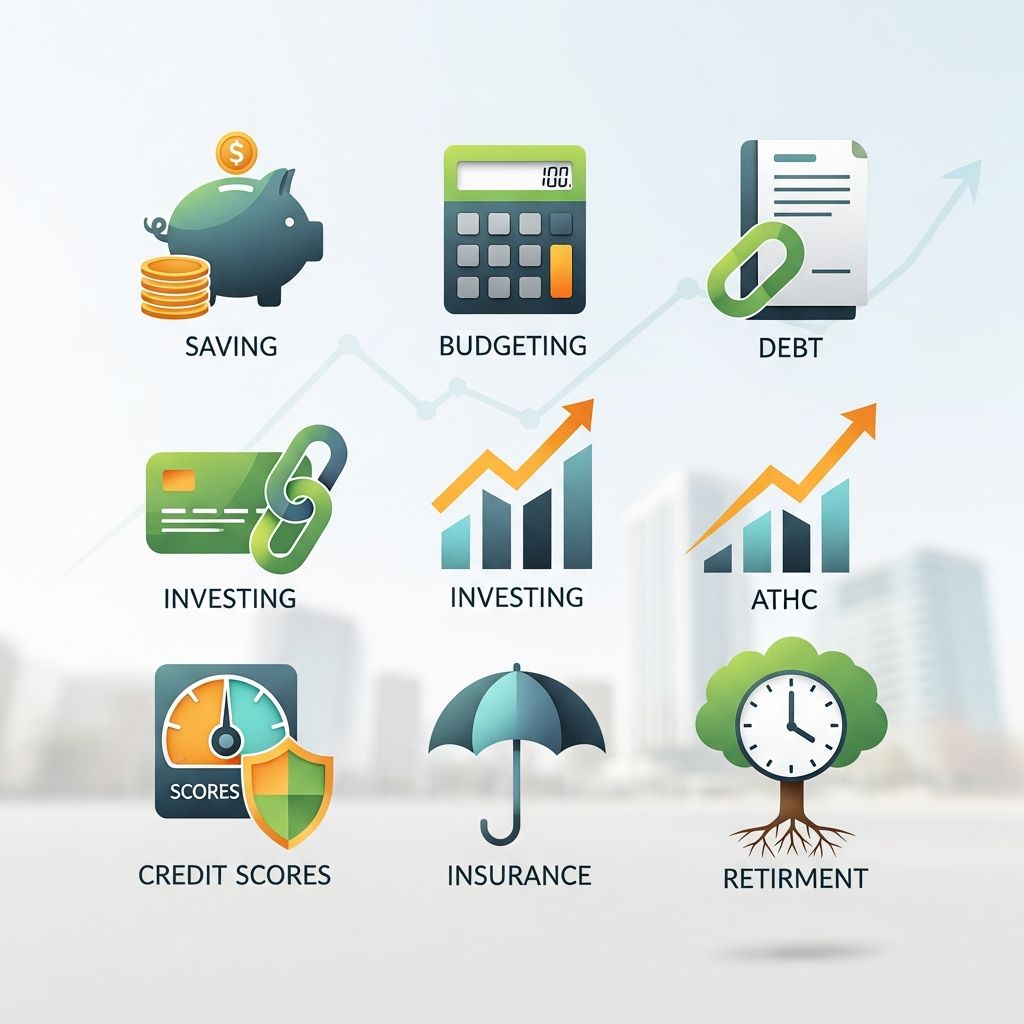
Financial literacy is the ability to understand and use key money skills such as budgeting, saving, borrowing, and investing to make informed decisions about your finances. Strong financial literacy helps you cover your needs, reach your goals, and reduce money-related stress over time.
These seven financial literacy basics will give you a practical foundation to manage your day-to-day money decisions and plan for the future.
The importance of understanding financial literacy basics
Money influences almost every area of life, from housing and healthcare to education and retirement. When you understand core financial concepts, you are better equipped to compare products, avoid unnecessary fees, protect against risk, and build wealth over time.
- Better everyday decisions: Financial literacy helps you choose appropriate bank accounts, cards, and loans, and avoid expensive mistakes like high-interest debt.
- Increased financial security: Knowing how to budget, save, and insure yourself can reduce the risk of financial hardship after job loss, illness, or unexpected expenses.
- Progress toward long-term goals: Skills like investing and retirement planning help you prepare for major life events, education costs, and life after work.
- Greater confidence and control: Understanding your numbers allows you to make proactive choices instead of reacting to every money emergency.
1. Know the basics of banking
A strong financial foundation begins with choosing and using the right banking tools. At minimum, most people benefit from a checking account for daily spending and a savings account for short-term goals and emergency funds.
Checking account
A checking account is designed for frequent transactions such as paying bills, receiving direct deposits, and using a debit card. It typically offers:
- Easy access via debit card, ATM, or electronic transfers
- Online and mobile banking tools to track balance and transactions
- Potential fees for overdrafts, out-of-network ATMs, or low balances
Look for a checking account with low or no monthly fees, convenient ATM access, and strong fraud protections from a federally insured bank or credit union.
Savings account
A savings account is used to store money you do not need to spend right away. It can help you build an emergency fund and work toward goals such as travel, large purchases, or a home down payment.
- Standard savings: Lower interest rates, but usually easier to open and maintain with small balances.
- High-yield savings: Higher interest rates, often offered by online banks, sometimes requiring higher minimum balances.
Because savings accounts earn interest, they help your money grow over time while remaining relatively safe and accessible.
| Feature | Checking Account | Savings Account |
|---|---|---|
| Main purpose | Daily spending and bill payments | Short-term and emergency savings |
| Transaction frequency | Frequent | Occasional |
| Interest earned | Usually low or none | Typically higher than checking |
| Access | Debit card, checks, online payments | Transfers to checking, limited withdrawals |
2. Use credit and debit cards in a smart way
Credit and debit cards make paying for purchases fast and convenient, in-store or online. However, using them without understanding the differences can lead to overdrafts or high-interest debt.
Debit cards
A debit card is linked directly to your checking account. When you make a purchase, money is withdrawn from your balance.
- Helps you avoid debt because you can only spend available funds.
- May incur overdraft fees if you spend more than your balance and have overdraft services turned on.
- Usually does not build credit history, because it is not a loan product.
Credit cards
A credit card allows you to borrow up to a preset credit limit and repay later. If you pay your statement balance in full and on time each month, you can avoid interest while building credit history.
- Benefits: Can help build a credit score, offer rewards, and provide fraud protection.
- Risks: Carrying a balance can result in high interest charges and fees, making purchases much more expensive.
- Best practice: Keep utilization low (for example, using less than 30% of your limit) and always pay at least the statement balance on time.
Smart card habits
- Review statements every month to spot errors or fraud.
- Turn on alerts for large transactions or low balances.
- Avoid using credit cards for purchases you cannot realistically repay within a short timeframe.
- Use debit for everyday spending and credit selectively for planned expenses you can pay off quickly.
3. Know how to take out loans wisely
Loans allow you to access large amounts of money that might otherwise take many years to save, such as for a car, higher education, or a home. However, borrowing always comes with a cost, typically through interest and fees.
Key loan concepts
- Principal: The original amount you borrow.
- Interest rate: The cost of borrowing, expressed as a percentage of the principal, often shown as an Annual Percentage Rate (APR).
- Term: How long you have to repay the loan (for example, 5 years, 30 years).
- Monthly payment: The amount due each month, combining principal and interest.
Longer loan terms can lower your monthly payment but increase the total interest paid over the life of the loan.
Types of common loans
- Auto loans: Used to buy vehicles; they are typically secured by the car.
- Student loans: Used to pay for education; federal student loans offer protections such as income-driven repayment and potential forgiveness in some cases.
- Personal loans: Usually unsecured and can be used for many purposes, but rates vary based on creditworthiness.
- Mortgages: Long-term loans used to buy real estate, often repaid over 15–30 years.
Borrowing best practices
- Compare APRs, fees, and terms from multiple lenders before signing.
- Calculate whether the monthly payment fits comfortably within your budget.
- Avoid borrowing for non-essential spending that does not build long-term value.
- Understand the consequences of missed payments, including damage to your credit score and potential collection actions.
4. Understand basic insurance concepts
Insurance is a contract that protects you financially from certain risks, such as illness, accidents, property damage, or death. In exchange for a premium (the amount you pay regularly), the insurer agrees to cover specific losses up to a limit described in the policy.
Why insurance matters
- Helps protect your savings from large, unexpected expenses.
- Provides support for your family if you become disabled or pass away.
- In some cases (such as auto insurance), coverage is required by law.
Common types of insurance
- Health insurance: Helps pay for medical expenses and can significantly reduce the risk of medical debt.
- Auto insurance: Covers damage to your vehicle and liability if you cause an accident.
- Renters or homeowners insurance: Protects your belongings and may cover liability if someone is injured on your property.
- Life insurance: Provides financial support to your beneficiaries if you die.
Key terms to know
- Premium: The amount you pay for coverage (monthly, quarterly, or annually).
- Deductible: The amount you pay out of pocket before the insurer begins to pay for covered services.
- Copay / coinsurance: Your share of a covered service cost after meeting the deductible.
- Coverage limit: The maximum amount the insurer will pay for a covered claim.
5. Budget money effectively
A budget is a plan for how you will allocate your income toward spending, saving, and debt repayment over a specific period, typically a month. Budgeting is one of the most important financial literacy basics because it shows you exactly where your money goes and helps you stay on track with your goals.
Begin with your monthly income
Start by determining how much money you bring in each month after taxes (your net income).
- Add up wages or salary from your job.
- Include other income such as side hustles, child benefits, or rental income.
- Use consistent, reliable income figures rather than occasional windfalls.
Track your expenses
Next, list your expenses to understand where your money is going. Group them into categories:
- Fixed expenses: Costs that stay the same each month, such as rent or mortgage, insurance premiums, and certain loan payments.
- Variable expenses: Costs that change from month to month, such as groceries, utilities, transportation, and entertainment.
Review your bank and card statements for the last few months to get realistic averages for each category. This helps you identify areas to cut back if your expenses are higher than your income.
Increase your income if needed
If you have trimmed expenses but still struggle to cover your obligations or meet your savings goals, focus on growing your income.
- Ask for a raise or promotion if your performance supports it.
- Explore higher-paying job opportunities.
- Consider side hustles such as freelance work, gig economy jobs, or small businesses.
Set money aside
Budgeting is not only about covering bills; it is also about paying yourself first. Aim to:
- Build an emergency fund of at least several months of essential expenses, if possible.
- Allocate money monthly toward specific goals like travel, education, a home purchase, or debt repayment.
- Automate transfers to savings and investment accounts so you are less tempted to skip them.
6. Learn the basics of investing
Investing is the process of using money to buy assets that you expect to grow in value or produce income over time, such as stocks, bonds, or funds. Investing helps your money outpace inflation and is essential for long-term goals like retirement.
Why investing matters
- Growth potential: Historically, diversified stock portfolios have offered higher returns than savings accounts over long periods, although returns are not guaranteed.
- Beating inflation: Investing can help you maintain or increase your purchasing power as prices rise.
- Long-term goals: Investing through retirement accounts like 401(k)s or IRAs can support future income needs.
Common investment options
- Stocks: Ownership shares in a company with potential for significant gains and losses.
- Bonds: Loans to governments or companies that pay interest, generally with lower risk and lower returns than stocks.
- Mutual funds and ETFs: Pooled investments that hold many assets, helping you diversify with a single purchase.
- Retirement accounts: Tax-advantaged accounts that hold investments for the long term.
Basic investing principles
- Start as early as you can to benefit from compounding (earning returns on your past returns).
- Diversify across different asset types to reduce risk.
- Invest regularly, such as monthly contributions, rather than trying to time the market.
- Understand that investing involves risk; values can go up and down, especially in the short term.
7. Create financial goals and plans
Financial goals give your money a purpose. Without clear goals, it is easy to spend on whatever is in front of you and delay important priorities like debt reduction or retirement savings.
Make goals for your money
Think about what you want your money to help you achieve, both now and in the future. Common goals differ by life stage. For example:
- Teens and young adults: Saving for education, a car, or travel; building an emergency fund; avoiding harmful debt.
- Mid-career adults: Paying off high-interest debt, buying a home, growing retirement savings, or saving for children’s education.
- Later life: Strengthening retirement income, paying off remaining debts, and planning for healthcare and legacy wishes.
Short-, mid-, and long-term goals
- Short-term goals (under 1 year): Building a starter emergency fund, paying off a small credit card balance, or saving for a modest trip.
- Mid-term goals (1–5 years): Saving for a car, home down payment, or major home improvement.
- Long-term goals (5+ years): Funding retirement, paying off a mortgage, or financing education.
Break each goal into smaller monthly or weekly targets. For instance, if you want to save $1,200 in a year, you could plan to set aside $100 per month.
Review and adjust regularly
Life circumstances and priorities change. Review your goals and spending plan periodically to make sure they still match your values and current situation.
- Update your budget after major life events such as a new job, relocation, marriage, or having children.
- Increase savings or debt payments when your income rises.
- Revisit your insurance needs, investment choices, and estate planning documents as your responsibilities grow.
Frequently Asked Questions (FAQs)
Q: What is financial literacy in simple terms?
A: Financial literacy is the knowledge and skills that help you earn, save, borrow, spend, and invest money wisely so you can meet your needs and work toward your goals.
Q: How can a beginner improve financial literacy?
A: Start by tracking your income and expenses, setting up basic bank accounts, making a simple budget, building an emergency fund, and learning the basics of credit, loans, and investing through reputable educational resources.
Q: How much should I keep in an emergency fund?
A: Many experts suggest saving at least three to six months’ worth of essential living expenses, but even a smaller starter fund provides valuable protection and can be built up over time.
Q: Is it better to pay off debt or save first?
A: A common approach is to build a small emergency fund while making minimum payments on all debts, then focus extra money on paying off high-interest debt before increasing long-term savings and investments.
Q: Why is investing important if I already save money?
A: Savings accounts are useful for short-term goals and emergencies, but investing gives your money a better chance to grow over the long term and keep up with inflation, which is especially important for retirement and other distant goals.
References
- Financial Literacy and Education Commission: About the FLEC — U.S. Department of the Treasury. 2023-04-10. https://home.treasury.gov/policy-issues/consumer-policy/financial-literacy-and-education-commission/about-the-flec
- Financial Literacy Basics — Consumer Financial Protection Bureau. 2023-07-12. https://www.consumerfinance.gov/consumer-tools/educator-tools/resources-for-older-adults/financial-literacy-basics/
- Emergency Savings — Consumer Financial Protection Bureau. 2024-01-05. https://www.consumerfinance.gov/consumer-tools/save-and-invest/emergency-funds/
- Bank Accounts — Federal Deposit Insurance Corporation (FDIC). 2023-06-15. https://www.fdic.gov/resources/consumers/money-smart/banking.html
- Credit Reports and Scores — Consumer Financial Protection Bureau. 2023-09-20. https://www.consumerfinance.gov/consumer-tools/credit-reports-and-scores/
- A Framework for Investor Education — U.S. Securities and Exchange Commission (SEC). 2022-11-03. https://www.sec.gov/investor
Similar Articles








Read full bio of Sneha Tete