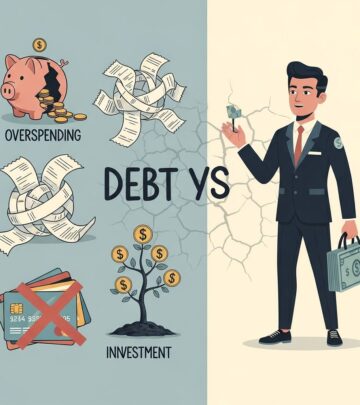
Financial Kryptonite: Identify & Overcome Your Money Weakness
Discover your financial kryptonite and learn proven strategies to conquer it and achieve lasting financial success.

Understanding Your Financial Kryptonite
Just as Superman has his kryptonite—his one weakness that can bring down the most powerful superhero—we all have our financial kryptonite. This is the one financial area that consistently derails our money goals, undermines our best intentions, and keeps us from achieving the financial freedom we desire. Whether it’s an inability to resist the siren call of designer shoes, an overwhelming fear of investing, or a compulsive tendency to overspend on dining out, everyone has that one financial weakness that needs addressing.
The first step toward financial wellness is recognizing what your specific financial kryptonite is. Many people go through life without ever pausing to identify their particular money weakness, instead attributing their financial struggles to bad luck, insufficient income, or external circumstances. However, understanding your personal financial kryptonite empowers you to take control of your finances and implement targeted strategies to overcome it.
Common Types of Financial Kryptonite
Financial weaknesses vary widely from person to person, but several patterns emerge repeatedly. Understanding these common categories can help you identify where you fall on the spectrum of financial challenges.
The Compulsive Shopper
For many people, shopping is more than a necessity—it’s a form of entertainment, stress relief, or emotional comfort. The compulsive shopper experiences an irresistible urge to purchase items, often items they don’t need. This might manifest as a shoe addiction, clothing hoarding, gadget accumulation, or any category of discretionary spending. The compulsive shopper often experiences a brief high from the purchase, followed by guilt and regret. This cycle perpetuates itself, creating a pattern that sabotages long-term financial goals.
The Chronic Saver’s Dilemma
On the opposite end of the spectrum, some people struggle with the inability to save effectively. Despite earning adequate income, these individuals find themselves living paycheck to paycheck, unable to accumulate emergency funds or invest for the future. This might stem from lifestyle inflation, where expenses automatically rise to match income, or from poor budgeting habits that leave no room for savings. The chronic saver struggles to delay gratification and prioritize future financial security over present consumption.
Investment Fear and Avoidance
A significant portion of the population suffers from investment anxiety or outright fear of investing. This kryptonite keeps people from building wealth through market participation, leaving them vulnerable to inflation and missing out on compound growth opportunities. Investment fear often stems from a lack of knowledge, previous negative experiences, or media-fueled anxiety about market volatility. These individuals may keep all their assets in cash, earning minimal returns, or avoid retirement planning altogether.
Debt Accumulation
Some people find themselves perpetually drowning in debt, unable to break the cycle of borrowing. Whether through credit cards, personal loans, or other high-interest debt, these individuals repeatedly accumulate obligations faster than they can repay them. This kryptonite often reflects difficulty saying no, impulse spending patterns, or underlying issues with financial literacy regarding interest rates and long-term debt impact.
Avoidance and Denial
Perhaps one of the most damaging financial kryptonites is simple avoidance. Some people refuse to look at their financial situation, ignoring bank statements, unopened bills, and the reality of their financial condition. This ostrich approach—burying one’s head in the sand—prevents any meaningful progress toward financial goals and often allows problems to snowball into crises.
How to Identify Your Specific Financial Kryptonite
Identifying your financial kryptonite requires honest self-reflection and a willingness to examine your spending patterns and financial behaviors without judgment. Here are several approaches to help you pinpoint your particular weakness:
Track Your Spending
One of the most revealing exercises is to meticulously track every dollar you spend for 30 days. Use apps, spreadsheets, or even a notebook—whatever method you’ll actually use consistently. At the end of the month, categorize your spending and look for patterns. Where does most of your discretionary money go? What categories surprise you? The data rarely lies and will quickly reveal where your financial kryptonite lies.
Examine Your Emotional Triggers
Financial decisions are rarely purely rational; emotions play a significant role. When do you most feel the urge to spend? After a stressful day? When you’re bored? During social occasions? When you see friends with something new? Understanding the emotional triggers behind your spending patterns helps you address the root cause rather than just the symptom.
Review Your Financial Goals
Look at the financial goals you’ve set but failed to achieve. Do you notice a pattern? If you consistently fall short on savings goals but exceed spending limits, that’s your kryptonite. If you have retirement accounts sitting uninvested in cash, your kryptonite might be investment fear. Your failed goals are powerful indicators of your financial weaknesses.
Ask for Outside Perspective
Sometimes friends, family members, or financial advisors can see patterns in our behavior that we’re blind to ourselves. Ask someone you trust to observe your financial habits and provide honest feedback. They might see your kryptonite more clearly than you can.
Strategies to Overcome Your Financial Kryptonite
Once you’ve identified your specific financial weakness, implementing targeted strategies can help you overcome it. The approach varies depending on your particular kryptonite, but several universal principles apply.
Make It Inconvenient
If your kryptonite is compulsive shopping, make shopping less convenient. Delete shopping apps from your phone, unsubscribe from retailer emails, remove saved payment information from websites, and leave your credit cards at home. The more friction you add to the purchasing process, the more likely you are to reconsider impulse buys. Research shows that adding even minor inconveniences significantly reduces impulsive spending behavior.
Automate Good Behavior
If your kryptonite is poor saving habits, don’t rely on willpower. Instead, automate savings by setting up automatic transfers from checking to savings accounts immediately after payday. When you never see the money in your checking account, you’re less likely to spend it. This automation removes decision-making from the equation and makes saving effortless.
Educate Yourself
For those whose kryptonite is investment fear, education is transformative. Read books about investing fundamentals, take online courses, listen to financial podcasts, or work with a financial advisor. The more you understand how markets work and why long-term investing is statistically sound, the easier it becomes to overcome anxiety-driven avoidance. Knowledge replaces fear and uncertainty.
Implement a Spending Plan
Rather than relying on willpower, create a specific spending plan that allocates money to different categories. Many people find success with the 50/30/20 budget: 50% for needs, 30% for wants, and 20% for savings and debt repayment. By pre-deciding where money goes, you remove the daily temptation to overspend on wants. A clear plan provides structure and accountability.
Create Accountability Systems
Share your financial goals and weaknesses with an accountability partner—a friend, family member, or financial coach. Regular check-ins and progress reports create external pressure that reinforces your commitment. Knowing you’ll have to report your spending to someone else often provides the motivation needed to resist your kryptonite.
Address Underlying Emotional Issues
If your financial kryptonite is rooted in emotional triggers—spending to manage stress, anxiety, or loneliness—address the underlying emotions. Develop alternative coping mechanisms like exercise, meditation, hobbies, or counseling. When you have healthier ways to manage difficult emotions, the compulsion to spend diminishes. Some people find that therapy or coaching specifically targeting money mindset is invaluable.
Set Realistic Milestones
Don’t expect to completely overcome your financial kryptonite overnight. Instead, set realistic milestones and celebrate small wins. If you’ve historically spent $500 monthly on clothes, set a goal to reduce it to $400 the first month, then $300, and so on. Each small victory builds confidence and momentum toward lasting change.
Building a Financial Weakness Action Plan
Creating a specific action plan tailored to your financial kryptonite increases your likelihood of success. Here’s a framework to follow:
- Define your kryptonite clearly: Be specific about what your financial weakness is and how it manifests. “I overspend on shoes” is more actionable than “I spend too much.”
- Understand the root cause: Why does this weakness exist? Is it emotional, habitual, knowledge-based, or environmental?
- Identify triggers: What specific situations, emotions, or circumstances trigger your problematic financial behavior?
- Select your strategy: Based on your particular kryptonite, choose the most appropriate intervention from the strategies listed above.
- Implement systematically: Take action deliberately and measure results. Give new habits at least 30 days to become established.
- Track progress: Regularly monitor whether your behavior is changing and whether you’re moving toward your financial goals.
- Adjust as needed: If your initial strategy isn’t working, be willing to try a different approach. What works for one person may not work for another.
The Role of Financial Literacy
Many financial kryptonites stem from a lack of financial knowledge. Understanding basic concepts like compound interest, inflation, debt, budgeting, and investing fundamentals makes it easier to make sound financial decisions. Investing time in financial education—whether through books, courses, or working with a financial advisor—addresses the knowledge gap that often underlies financial weaknesses.
Embracing Vulnerability and Seeking Support
Acknowledging that you have a financial kryptonite isn’t a sign of weakness; it’s the first step toward financial empowerment. Many people struggle with financial shame, hiding their money problems and avoiding help. However, seeking support—whether from friends, family, financial advisors, or counselors—accelerates progress. Financial coaches and therapists specializing in money psychology can provide personalized strategies and support for overcoming entrenched financial patterns.
Long-Term Success and Maintenance
Overcoming your financial kryptonite isn’t a one-time event but an ongoing process. Even after you’ve made significant progress, remain vigilant about your weakness. During times of stress, change, or life transitions, old patterns can resurface. Maintain the systems and habits that helped you overcome your kryptonite, and be prepared to strengthen them if needed. Many people find that periodic financial check-ins—quarterly or annually—help them stay on track.
Frequently Asked Questions
Q: Can I have more than one financial kryptonite?
A: Yes, many people struggle with multiple financial weaknesses. However, it’s often most effective to focus on addressing your primary kryptonite first, as success in that area often builds momentum and confidence for tackling secondary issues.
Q: How long does it take to overcome a financial kryptonite?
A: The timeline varies depending on the severity of the weakness and how consistently you apply strategies to address it. Most behavioral changes require 30-90 days of consistent effort to become habitual. However, deeply rooted patterns may require longer, perhaps several months or more.
Q: What if I don’t know what my financial kryptonite is?
A: Start by tracking your spending in detail for 30 days, reviewing your financial goals and where you’ve failed to achieve them, and honestly examining your emotional relationship with money. If you’re still unsure, consulting with a financial advisor can provide professional insight into your financial patterns.
Q: Can changing my environment help me overcome my financial kryptonite?
A: Absolutely. Environmental changes—unsubscribing from marketing emails, deleting shopping apps, changing your route to avoid certain stores—can significantly reduce temptation and make it easier to stick to your financial goals. Your environment either supports or undermines your financial intentions.
Q: Is it normal to slip back into old financial habits?
A: Yes, completely normal. Breaking financial habits is challenging, and occasional lapses don’t mean failure. The key is to quickly recognize the slip, understand what triggered it, and recommit to your strategy. Progress isn’t always linear; what matters is the overall trajectory.
Q: Should I use a budget app or spreadsheet to track my progress?
A: Choose whichever method you’ll actually use consistently. Some people prefer automated budget apps that categorize spending automatically, while others like the hands-on approach of a spreadsheet. The best tool is the one that works for your personality and habits.
References
- Behavioral Economics and Financial Decision-Making — American Psychological Association. 2024. https://www.apa.org/science/about/psa/financial-decision-making
- The Psychology of Money: Timeless Lessons on Wealth, Greed, and Happiness — Morgan Housel. 2020. Published by Harriman House.
- Spending Habits and Consumer Behavior — U.S. Consumer Financial Protection Bureau. 2024. https://www.consumerfinance.gov/
- Financial Wellness and Mental Health Correlation — National Foundation for Credit Counseling. 2024. https://www.nfcc.org/
- Habit Formation and Behavioral Change — Stanford Behavior Design Lab. 2024. https://www.behaviordesignlab.org/
Similar Articles








Read full bio of medha deb