Financial Definitions of Equity: Complete Guide
Master equity financing: Understand ownership stakes, stock types, and investment opportunities.

Equity represents ownership interest in a company or property. In financial and accounting contexts, equity refers to the value of assets owned by shareholders after all liabilities and debts have been satisfied. For investors and business owners alike, understanding equity is fundamental to making informed financial decisions. Whether you’re considering an investment opportunity or evaluating your business’s financial health, grasping the nuances of equity is essential.
What is Equity?
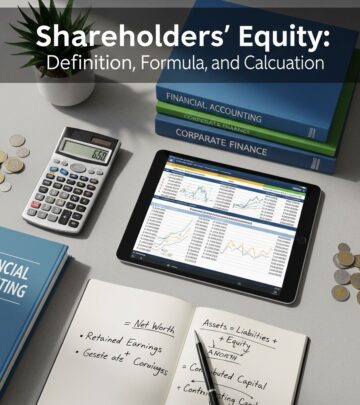
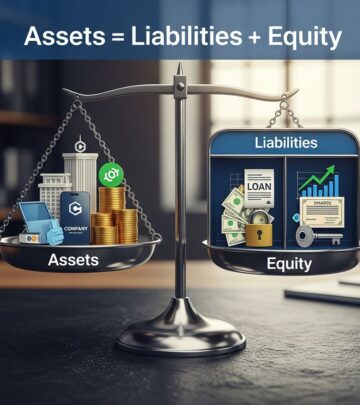
In finance, equity is the market value of the assets owned by shareholders after all debts have been paid off. In accounting terms, equity refers to the book value of ownership in a company. Equity is measured for accounting purposes by the balance sheet equation: Assets minus Liabilities equals Equity. This fundamental concept represents the residual claim that owners have on a business’s assets after creditors have been paid.
Equity can be viewed from multiple perspectives depending on context. For a homeowner, equity is the difference between the home’s current market value and the outstanding mortgage balance. For shareholders, equity represents their ownership stake in a corporation and their claim on its profits and assets.
Understanding Equity in Different Business Structures
The nature and calculation of equity varies depending on the business structure. Different entities handle equity accounting in distinct ways:
Sole Proprietorships
In a sole proprietorship, equity is the combination of assets like investments and profits as well as liabilities, including losses and withdrawals. The owner’s equity account tracks the initial investment, accumulated profits or losses, and any personal withdrawals from the business. This represents the owner’s net claim on the business assets.
Partnerships
Partnerships distribute equity among partners based on their ownership agreements. Each partner maintains a capital account that reflects their contributed capital, share of profits or losses, and distributions taken. Partner capital accounts can vary significantly if partners have different ownership percentages or investment amounts.
Corporations
Corporations structure equity through various stock classes and retained earnings. The corporate equity section typically includes common stock, preferred stock, contributed surplus, and retained earnings. This structure allows corporations to raise capital through multiple mechanisms and provides flexibility in managing ownership stakes.
Types of Equity
Equity comes in several distinct forms, each with unique characteristics and implications for investors and companies:
Common Stock
Common stock records the amount of money investors gave to a corporation as capital investment to have ownership of the company. Holders of common stock have voting rights in corporate decisions proportional to their share ownership. However, common stockholders are last in line during liquidation or bankruptcy proceedings. The value for the company is calculated by multiplying the par value by the number of outstanding shares. For example, one million shares valued at $1 each would have a balance sheet entry of $1 million.
Advantages to the corporation include increases in the company’s ability to borrow money, and common stock never has to be repaid. Disadvantages include that it is the highest cost since all income not used for preferred stock dividends belongs to common stockholders. For investors, advantages include a higher return potential than other forms of investing and voting rights in corporate governance. Disadvantages include being last in line for compensation during bankruptcy.
Preferred Stock
Preferred stock also records the amount of money investors gave to have partial ownership of a company. Many entities rarely issue this type of stock because although shareholders seldom have voting rights with preferred stock shares, they earn a guaranteed cumulative dividend. Dividends not paid annually usually accumulate until paid. For example, a company that didn’t pay dividends for two years might offer a $5 cumulative dividend in the third year.
The advantage of preferred stock is that shareholders are promised a predetermined return on their investment. However, they are not allowed to vote in corporate decisions. This makes preferred stock attractive to conservative investors seeking income stability.
Bonus Shares
Bonus shares are additional shares issued to existing shareholders at no additional cost. Companies issue bonus shares to capitalize accumulated profits and distribute value to shareholders without requiring additional cash investment. This effectively increases the number of shares outstanding while maintaining the same total equity value.
Paid-Up Shares
Paid-up shares represent the portion of authorized share capital for which the company has received full payment from investors. These shares have been completely paid for and represent actual equity contributions rather than promised or partially funded investments.
Listed Shares
Listed shares are equity securities traded on recognized stock exchanges. These shares provide liquidity, allowing investors to buy and sell their holdings in the market. Listed shares are subject to regulatory requirements and public reporting obligations.
Convertible Shares
Convertible shares are securities that can be converted into common stock under specified conditions. These typically include convertible preferred stock and convertible bonds that provide investors with the option to exchange their securities for common shares at a predetermined conversion price.
Right Shares
Right shares give existing shareholders the first opportunity to purchase newly issued shares before they are offered to the general public. This maintains proportional ownership for existing investors and is often offered at a discount to current market prices.
Sweat Equity
Sweat equity represents ownership earned through contribution of effort, skills, or services rather than cash investment. Founders, employees, and key contributors often receive equity through sweat equity arrangements, aligning their interests with company success.
Deferred Shares
Deferred shares are equity securities with dividend and voting rights that are deferred until specific conditions are met. These are less common but provide mechanisms for managing equity structures in complex corporate situations.
Key Equity Accounts on the Balance Sheet
Corporate balance sheets present equity through several distinct accounts, each serving specific accounting purposes:
Capital Stock and Contributed Surplus
Capital stock (or share capital) reflects the par value of issued shares. Contributed surplus (or additional paid-in capital) represents the total amount of financial investment over the par value of stocks. For example, if a company issues 100,000 shares at $10 each with a $1 par value, $100,000 goes to common stock and $900,000 goes to contributed surplus (100,000 shares at $9).
Retained Earnings
Retained earnings represent accumulated profits and losses that the company has reinvested in the business rather than distributed to shareholders as dividends. Fluctuations in retained earnings reflect the company’s net income performance and dividend decisions. A strong increase in retained earnings may indicate high profitability or a decision to retain rather than distribute profits.
Treasury Stock
Treasury stock represents the amount paid to investors from buying back their stock. This contra-equity account appears as a negative balance from a company’s perspective, reducing the organization’s total amount of equity. Companies might use treasury stock to decrease the number of total investors in the business or manage earnings per share calculations.
Accumulated Other Comprehensive Income
This account reflects unrealized gains and losses from investments, foreign currency holdings, and other valuation adjustments. Changes in the value of securities that the firm owns or foreign currency holdings are accumulated in equity through this mechanism.
Equity Financing: Raising Capital Through Ownership
When a company needs money and does not want to take a loan, they often consider equity financing. Equity financing is a way of raising capital by selling partial ownership in a company. There are five main types of equity financing:
Angel Investors
Angel investors are wealthy individuals who believe the business can generate high returns in the future. They often bring their personal skills, expertise, and connections along with the money in order to help the company succeed. Angel investments typically occur in early-stage companies where traditional financing is difficult to obtain.
Corporate Investors
When large companies (corporations) invest in small private businesses, it is often beneficial to both. The corporation provides a large amount of capital and, in return, gets a partnership that benefits both companies. This can include strategic advantages, market access, or technology transfer alongside financial investment.
Crowdfunding Platforms
Crowdfunding platforms allow a large number of people in public to invest small amounts in a company. The public supports the company to earn their money back, with profit, in the future. All of the investment is placed together, thus reaching a goal amount set by the company. This democratizes investment opportunities and reduces reliance on institutional investors.
Initial Public Offerings (IPO)
Well-established companies often conduct an IPO in order to raise funds. This presents shares available to the public for trading in the stock markets. IPOs provide liquidity for early investors and founders while enabling the company to access broad capital markets.
Venture Capital Firms
Venture capital firms provide substantial capital investments to promising companies in exchange for equity stakes. These firms typically focus on high-growth potential companies and often provide strategic guidance, industry connections, and operational expertise alongside funding.
Advantages and Disadvantages of Equity Financing
Equity financing offers distinct advantages and disadvantages compared to debt financing:
Advantages
Equity financing helps a company by giving them needed capital without a loan or required repayment. This eliminates the obligation to make interest payments or principal repayments, reducing financial burden. Companies gain flexibility in cash flow management and can redirect resources to growth initiatives. Additionally, equity investors often bring valuable expertise, industry connections, and strategic guidance beyond just capital.
Disadvantages
Equity financing costs partial ownership of the company, thus cutting into profits. Founders and existing shareholders experience dilution of their ownership percentage and control. Future profits must be shared among more equity holders. Additionally, equity investors typically expect higher returns than debt holders, which can increase the cost of capital long-term.
Hybrid Equity Securities
Financial managers have created hybrids of virtually every kind of financing that previously existed. Three of the most common hybrids in equity financing are:
Non-Voting Common Stock
This hybrid allows companies to raise capital while maintaining voting control among founders or key stakeholders. Non-voting common shareholders participate in profits but lack decision-making power.
Convertible Preferred Stock
Preferred stock that can be converted to common stock provides investors with upside potential while maintaining preferred dividend protections. Conversion typically occurs when the company’s common stock reaches certain price thresholds.
Convertible Bonds
These debt securities can be converted into common stock, combining bond holder protections with equity upside potential. This hybrid reduces initial dilution while providing investors with conversion options.
Understanding Different Stock Types
It is important to understand the different types of stocks, securities, and voting options that come with each equity financing agreement. Companies can have both common and preferred stocks with varying characteristics:
| Feature | Common Stock | Preferred Stock |
|---|---|---|
| Voting Rights | Yes, based on share ownership | Typically no |
| Dividends | Variable, no guarantee | Fixed, guaranteed rate |
| Liquidation Priority | Last in line | Before common stockholders |
| Return Potential | Higher growth potential | Stable, predictable income |
Equity and Personal Finance
Equity concepts extend beyond corporate structures into personal wealth building. Home equity, the difference between property value and mortgage debt, represents one of the largest equity positions for many individuals. Building equity through investment portfolios, retirement accounts, and business ownership forms the foundation of personal wealth accumulation.
Frequently Asked Questions About Equity
Q: What is the difference between equity and debt financing?
A: Equity financing involves selling ownership stakes in the company in exchange for capital, while debt financing involves borrowing money that must be repaid with interest. Equity doesn’t require repayment but dilutes ownership, whereas debt maintains ownership but creates financial obligations.
Q: How is equity calculated on a balance sheet?
A: Equity is calculated using the fundamental accounting equation: Assets – Liabilities = Equity. It represents the residual value that belongs to the owners after all debts are paid.
Q: Can equity be negative?
A: Yes, negative equity occurs when liabilities exceed assets. This situation indicates the company is technically insolvent, though it may continue operating if creditors allow.
Q: What does equity dilution mean?
A: Equity dilution occurs when a company issues new shares, reducing the percentage ownership of existing shareholders. While their share count remains the same, their ownership percentage and earnings per share decrease.
Q: Why would a company buy back its own stock?
A: Companies conduct stock buybacks to reduce the number of outstanding shares, increase earnings per share, return value to shareholders, or maintain control against hostile takeovers. Buybacks are recorded as treasury stock, a contra-equity account.
Q: What is the relationship between equity and return on equity (ROE)?
A: ROE measures how efficiently a company generates profits from shareholder equity. It’s calculated as Net Income divided by Shareholder Equity, indicating how much profit is generated for each dollar of equity.
References
- Equity in Finance | Definition, Types & Examples – Lesson — Study.com. Retrieved November 2025. https://study.com/academy/lesson/what-is-equity-financing-definition-pros-cons-examples.html
- Types of Equity: Understanding Different Equity Investments — IDFC First Academy. Retrieved November 2025. https://www.idfcfirstacademy.com/blogs/advanced/investments/types-of-equity
- 10 Types of Equity Accounts (With Definitions and Examples) — Indeed Career Advice. Retrieved November 2025. https://www.indeed.com/career-advice/career-development/equity-account-types
- Equity (finance) — Wikimedia Foundation. Retrieved November 2025. https://en.wikipedia.org/wiki/Equity_(finance)
- Equity In Accounting: Definition, Types, Examples & Formula — Financial Cents. Retrieved November 2025. https://financial-cents.com/resources/articles/equity-in-accounting/
- Equity – Overview, How it Work, Types, Formula, Example — Corporate Finance Institute. Retrieved November 2025. https://corporatefinanceinstitute.com/resources/valuation/equity-definition/
- What is Equity – Types, Features, Advantages, Formula — Groww. Retrieved November 2025. https://groww.in/p/equities
Similar Articles








Read full bio of Sneha Tete