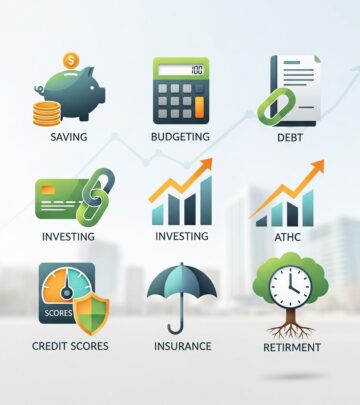
Building Financial Confidence: Essential Money Management Skills
Master core financial concepts to achieve stability and long-term wealth growth

Financial literacy represents far more than understanding basic arithmetic or reading a bank statement. It encompasses a comprehensive set of competencies that enable individuals to make deliberate, informed decisions about their financial lives. In today’s complex economic landscape, possessing strong financial knowledge serves as a protective shield against unnecessary debt, predatory financial products, and costly mistakes that could derail long-term wealth accumulation goals.
Understanding the Foundation of Financial Knowledge
At its core, financial literacy involves the ability to comprehend and effectively apply various financial concepts and tools that directly impact your economic wellbeing. This functional skill set extends beyond passive knowledge to active implementation of strategies that align with your unique circumstances and aspirations.
Financial literacy functions as what many experts call “leadership currency”—it determines how effectively you navigate economic decisions and interact with financial institutions. Whether you’re evaluating mortgage options, understanding tax implications, or assessing investment opportunities, the depth of your financial knowledge shapes the quality of your choices.
The relationship between financial literacy and financial security is undeniable. Individuals with stronger financial knowledge demonstrate greater confidence in their money management abilities, experience lower stress related to financial matters, and tend to make more deliberate, purposeful spending decisions aligned with their values.
Establishing Your Financial Baseline
Before implementing any financial strategy, you must first understand your current financial position. This foundational step provides clarity and establishes measurable benchmarks against which you can track progress over time.
Begin by conducting a comprehensive financial audit:
- Document all income sources, including employment wages, investment returns, side income, benefits, and any other regular cash inflows
- Catalog every expense category, from fixed obligations like housing and insurance to discretionary spending on entertainment and dining
- Calculate your total assets, encompassing savings accounts, retirement investments, property, vehicles, and other valuables
- Tally your total liabilities, including mortgages, car loans, credit card balances, student loans, and personal debts
- Determine your net worth by subtracting total liabilities from total assets
This baseline assessment illuminates patterns you might otherwise miss. Many individuals discover significant gaps between their perceived spending and actual expenditures. Closing this awareness gap represents a critical starting point for meaningful financial improvement.
Developing Clear Financial Objectives
Goal setting serves as the scaffolding upon which all financial planning rests. Without clearly defined objectives, financial decisions lack direction and purpose, often resulting in reactive rather than proactive money management.
Structure your goals along a timeline that reflects their nature and scope:
| Goal Type | Time Horizon | Example Objectives |
|---|---|---|
| Short-Term Goals | 1-3 years | Building emergency reserves, eliminating high-interest debt, funding a vacation |
| Medium-Term Goals | 3-7 years | Saving for a vehicle down payment, funding home improvements, establishing investment accounts |
| Long-Term Goals | 7+ years | Accumulating down payment for home purchase, funding education expenses, retirement planning |
Ensure your goals meet specific criteria: they should be measurable (with quantifiable targets), achievable (realistic given your financial capacity), relevant (aligned with your values), and time-bound (with defined completion dates). Vague aspirations like “save more money” lack the specificity needed to guide behavioral change. Refined objectives such as “accumulate $8,000 in emergency savings within 18 months” provide clear direction and motivation.
Creating a Functional Budget Framework
A budget represents your personalized blueprint for directing money toward priorities. Rather than restricting freedom, an effective budget actually enhances it by ensuring your spending aligns with your deepest values and long-term aspirations.
The most widely recommended budgeting approach for establishing financial discipline is the 50/30/20 framework:
- 50 percent allocation to needs: Essential expenses required for survival and basic functioning, including housing, utilities, groceries, insurance, and transportation
- 30 percent allocation to wants: Discretionary spending that enhances quality of life but isn’t essential, such as entertainment, dining out, hobbies, and travel
- 20 percent allocation to savings and debt repayment: Building financial resilience through emergency funds, retirement contributions, and systematic debt elimination
This proportional approach provides flexibility while maintaining discipline. Unlike rigid budgets that specify exact amounts for every category, the 50/30/20 method offers guardrails that adapt to your unique income level and circumstances.
Implementing your budget requires consistent monitoring. Many financial experts recommend establishing a monthly review ritual to examine spending patterns, verify alignment with projections, and identify areas requiring adjustment. This ongoing refinement process transforms budgeting from a one-time exercise into a dynamic financial management tool.
The Critical Role of Emergency Savings
Before aggressively pursuing other financial goals, establishing an emergency fund provides essential protection against life’s inevitable disruptions. This dedicated reserve addresses unexpected expenses—medical emergencies, vehicle repairs, temporary job loss—without forcing reliance on high-interest debt.
Financial stability experts typically recommend maintaining emergency reserves equivalent to three to six months of essential expenses. For individuals with variable income or greater job instability, targeting the higher end of this range provides additional security. Start by establishing a more modest goal of $1,000 to $2,000, then systematically expand your reserves as your income permits.
Strategic account placement strengthens emergency fund effectiveness. A separate high-yield savings account physically removes these funds from everyday spending temptation while maintaining accessibility for genuine emergencies. The psychological barrier created by separation reinforces the reserve’s intended purpose.
Mastering Debt Management Strategies
Different debt types warrant distinct management approaches. While mortgages and other low-interest debt typically warrant standard repayment schedules, high-interest consumer debt demands aggressive elimination.
Two primary approaches guide debt payoff strategies:
- Debt Avalanche Method: Direct extra payments toward highest-interest obligations first, minimizing total interest paid across all debts. This mathematically optimal approach appeals to analytically-minded individuals
- Debt Snowball Method: Focus on smallest debt balances first, creating psychological momentum through early wins. Many behavioral economists recommend this approach for its motivational benefits
Whichever approach you select, commit to consistency. Establishing automatic payments ensures obligations receive priority and eliminates the risk of overlooked payments damaging credit history.
Building Investing Confidence and Knowledge
Investing represents the mechanism through which money grows beyond earned income. While saving preserves capital, investing positions capital for meaningful long-term expansion through market participation.
Begin with foundational concepts before making investment decisions. Understanding asset classes—stocks representing partial business ownership, bonds representing lending arrangements, and mutual funds providing diversification—provides essential context for evaluating opportunities.
Time horizon significantly influences appropriate investment strategies. Younger investors with decades before retirement can tolerate greater volatility inherent in equity-focused portfolios. Those nearing retirement typically prefer stability-focused strategies emphasizing bonds and dividend-paying stocks.
Consider beginning with employer-sponsored retirement accounts, which often provide matching contributions representing immediate returns on your investment. Tax-advantaged accounts like Individual Retirement Accounts (IRAs) offer additional benefits that accelerate wealth accumulation over extended time horizons.
Developing Sustainable Financial Habits
Lasting financial transformation emerges from consistent habits rather than dramatic overhauls. Small, manageable changes integrated into daily routines create compound effects over months and years.
Powerful financial habits worth cultivating include:
- Automating savings transfers immediately after income receipt, prioritizing financial goals before discretionary spending
- Conducting monthly financial check-ins reviewing spending patterns and progress toward objectives
- Tracking net worth changes quarterly, celebrating increases resulting from disciplined efforts
- Negotiating recurring expenses annually—insurance premiums, subscription services, utility rates—identifying savings opportunities
- Investing in skill development that expands earning capacity through education, certifications, or professional development
- Regularly reviewing financial goals and adjusting strategies as life circumstances evolve
Protecting Yourself Through Financial Knowledge
One of financial literacy’s most crucial protective functions involves recognizing and avoiding financial scams and fraudulent schemes. Predatory lenders, identity theft operations, and investment frauds specifically target individuals lacking financial knowledge.
Building protective awareness requires understanding common red flags: unsolicited financial offers, promises of guaranteed returns exceeding market averages, pressure to decide quickly, and requests for sensitive financial information. Developing skepticism toward unfamiliar financial products and independently verifying claims through official sources provides essential protection.
Expanding Your Financial Knowledge
Financial literacy represents an ongoing learning journey rather than a destination. Multiple resources support continuous education and skill development:
- Government agencies and nonprofit organizations provide free financial planning guides and educational materials
- Reputable financial literature addresses behavioral dimensions of money management alongside technical concepts
- Online educational platforms offer structured courses covering investment fundamentals, tax planning, and financial goal-setting
- Financial counseling services provided by nonprofit organizations deliver personalized guidance addressing individual circumstances
- Community workshops and seminars explore timely topics relevant to changing economic conditions
Frequently Asked Questions
What are the seven essential components of financial literacy?
The widely recognized framework includes: income management and earning strategy, spending discipline and consumption decisions, saving for future security, borrowing and debt management, insurance and risk protection, investing for growth, and integrated financial decision-making that coordinates all elements.
How long does it take to develop strong financial literacy?
Foundational competency typically develops within three to six months of consistent engagement with financial concepts and deliberate practice. However, advanced expertise and mastery of complex financial strategies requires ongoing learning throughout your financial life.
Can financial literacy truly impact wealth accumulation?
Research consistently demonstrates that individuals with stronger financial knowledge accumulate greater wealth over their lifetime. Financial literacy enables better decision-making regarding investments, debt management, and savings, directly translating to improved financial outcomes.
What’s the best starting point for someone with limited financial knowledge?
Begin by understanding your current financial situation through comprehensive assessment, then establish clear short-term goals, and implement a straightforward budgeting system. This foundation enables progression toward more sophisticated financial strategies.
Conclusion: Your Financial Empowerment Journey
Building financial confidence and achieving lasting economic security emerges from systematic development of financial knowledge and deliberate implementation of sound financial practices. Rather than viewing financial literacy as an intimidating, complicated domain, recognize it as an accessible skill set available to anyone willing to invest time and attention.
Your journey toward financial empowerment begins with honest assessment of your current situation, clear articulation of your goals, and consistent implementation of proven financial strategies. Progress compounds over time as disciplined habits strengthen, knowledge deepens, and financial confidence expands. Invest in your financial education today, and reap the rewards of greater security, reduced stress, and expanded opportunities throughout your lifetime.
References
- 6-Step Financial Plan for 2026 — California Department of Financial Protection and Innovation. 2026. https://dfpi.ca.gov/news/insights/6-step-financial-plan-for-2026/
- Financial Literacy: The Ultimate Guide for 2026 — Recharge.com. February 14, 2026. https://www.recharge.com/blog/en-gb/financial-literacy-the-ultimate-guide-for-2026
Similar Articles








Read full bio of medha deb