Financial Accounting vs Managerial Accounting: Key Differences
Understand the critical differences between financial and managerial accounting and their roles in business.
How Does Financial Accounting Differ from Managerial Accounting?
Accounting serves as the language of business, providing a structured approach to documenting, reporting, and analyzing financial transactions. Within the accounting field, two primary branches play distinct yet complementary roles: financial accounting and managerial accounting. While both rely on financial data and aim to improve business performance, they operate with different objectives, audiences, and methodologies. Understanding these differences is crucial for business professionals, investors, and stakeholders seeking to make informed decisions about an organization’s financial health and operational efficiency.
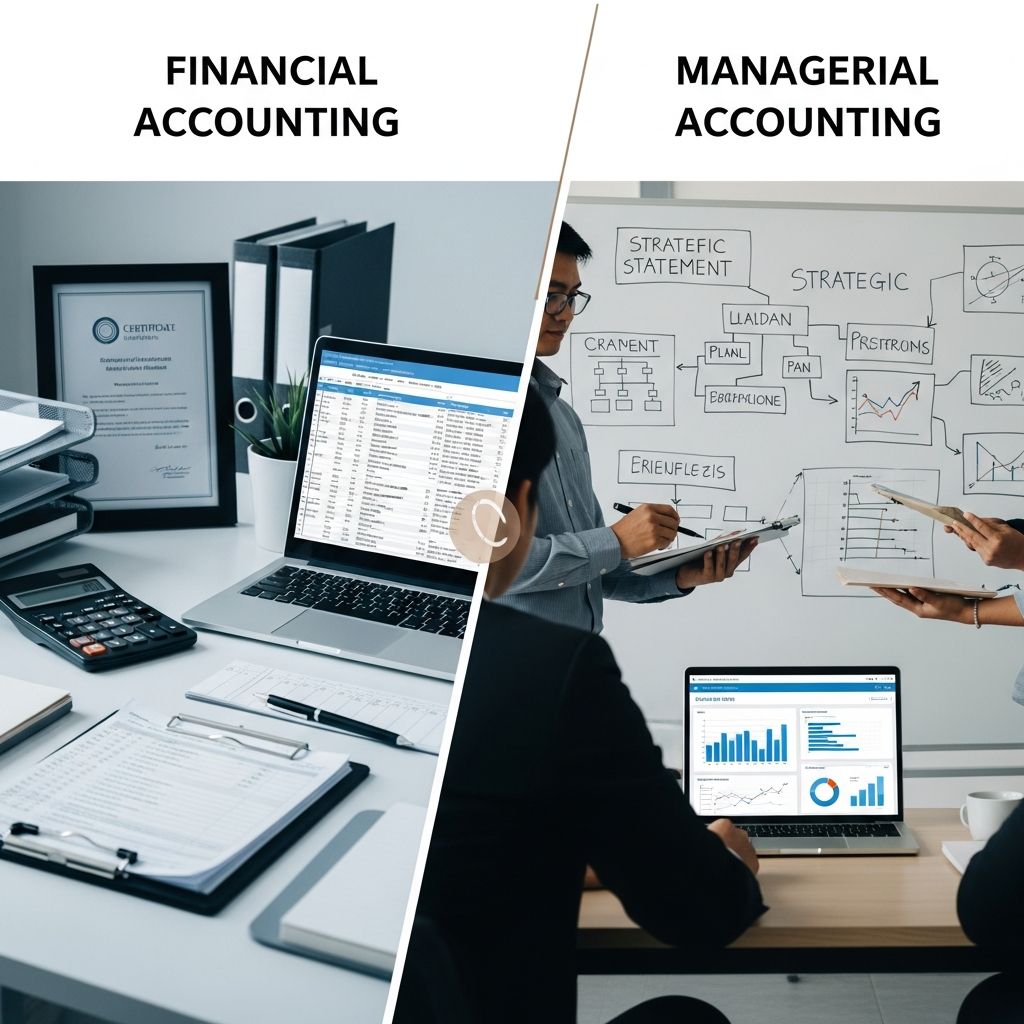
The fundamental distinction between financial and managerial accounting lies in their purpose and audience. Financial accounting gathers and summarizes financial data into standardized reports intended for external stakeholders, including investors, creditors, regulatory agencies, and the general public. Managerial accounting, conversely, focuses on providing detailed, real-time financial information to internal stakeholders—company managers and executives—to facilitate strategic decision-making and operational planning.
Definition and Core Purpose
Financial Accounting Defined
Financial accounting is the process of recording, summarizing, and reporting financial transactions to external parties. It focuses on the overall value of a company’s assets and liabilities, providing a comprehensive view of the organization’s financial health. Financial accounting emphasizes historical performance, analyzing what has already occurred in a business’s financial activities, including equity, assets, revenue, liabilities, and expenses.
The primary purpose of financial accounting is to create standardized financial statements that present an accurate and transparent picture of the company’s financial position. These statements—including the balance sheet, income statement, and cash flow statement—enable external stakeholders to assess the organization’s profitability, liquidity, and overall financial stability.
Managerial Accounting Defined
Managerial accounting, also known as management accounting, encompasses identifying, analyzing, interpreting, and communicating financial and non-financial data to help managers make decisions and achieve business goals. Unlike financial accounting, managerial accounting is designed for internal consumption and is not bound by regulatory reporting requirements.
Managerial accountants help businesses achieve their objectives through various functions, such as determining income, valuing inventory, identifying operational opportunities, forecasting trends, analyzing product or service costs, allocating financial resources, isolating efficiency issues, and setting strategic objectives. This branch of accounting provides managers with the detailed insights necessary to optimize operations, enhance profitability, and drive organizational success.
Key Differences Between Financial and Managerial Accounting
Audience and Primary Users
One of the most significant differences between financial and managerial accounting is their intended audience. Financial accounting serves external stakeholders who require standardized information about the company’s financial performance. These external users include:
- Investors and shareholders evaluating investment opportunities
- Creditors and lenders assessing creditworthiness
- Regulatory agencies, including the Securities and Exchange Commission (SEC)
- Tax authorities such as the Internal Revenue Service (IRS)
- The general public and market analysts
Managerial accounting, by contrast, targets internal stakeholders exclusively. The primary users are company managers, executives, and department heads who require detailed, actionable information to make strategic planning and operational decisions. This information is customized to specific departments or functional areas within the organization.
Focus and Time Orientation
Financial accounting maintains a historical focus, documenting and analyzing past financial activities to provide stakeholders with information about what has already transpired. While financial statements do enable investors and creditors to make future projections, the accounting data itself reflects historical performance.
Managerial accounting, conversely, adopts a forward-looking perspective. Rather than simply documenting historical transactions, managerial accountants examine financial information to make forecasts, identify trends, and support future planning decisions. This future orientation enables managers to anticipate market changes, optimize resource allocation, and make proactive strategic adjustments.
Reporting Standards and Compliance
Financial accounting operates under strict regulatory guidelines established by accounting standards bodies. Companies must comply with either Generally Accepted Accounting Principles (GAAP) in the United States or International Financial Reporting Standards (IFRS) in many other jurisdictions. These standards dictate how companies record transactions, value assets, recognize revenue, and present financial information. Compliance with these standards ensures consistency, comparability, and reliability across financial statements.
Managerial accounting, however, is not subject to these external regulatory requirements. Since managerial reports are intended only for internal use, organizations have considerable flexibility in how they present and structure financial information. Many companies develop internally created rules, processes, and reporting formats that best serve their specific operational needs and strategic objectives. This flexibility allows managerial accountants to customize reports and analyses to address unique business challenges.
Reporting Frequency and Timing
Financial accounting produces reports on a fixed schedule determined by regulatory requirements and stakeholder needs. Typically, financial accounting reports are prepared quarterly or annually. These periodic financial statements reflect the organization’s performance during a specific accounting period and provide external stakeholders with regular updates on financial health.
Managerial accounting operates on a more flexible and frequent reporting schedule. Managers may request reports monthly, weekly, or even daily, depending on operational needs and decision-making timelines. This ongoing, real-time reporting enables managers to monitor operational metrics closely, identify emerging issues quickly, and adjust strategies promptly in response to changing business conditions.
Data Analysis and Non-Financial Factors
Financial accounting focuses primarily on quantifiable financial metrics—revenue, expenses, assets, liabilities, and cash flows. The analysis centers on measuring financial performance and determining profitability.
Managerial accounting incorporates both financial and non-financial data in its analyses. Managerial accountants examine factors such as operational efficiency, production quality, customer satisfaction metrics, employee productivity, and market trends alongside traditional financial data. This comprehensive approach provides managers with a multifaceted understanding of business performance, enabling more informed and holistic decision-making.
Overlapping Similarities
Despite their significant differences, financial and managerial accounting share several important characteristics. Both branches quantify the results of business activity and transactions, dealing with expenses, assets, liabilities, cash flows, and financial statements. Both prepare reports based on the same underlying database of financial transactions and rely on consistent cost determination and measurement methodologies.
Additionally, both accounting types contribute to improving overall business performance. While they approach this goal through different lenses—financial accounting through external transparency and managerial accounting through internal optimization—they ultimately serve the organization’s financial health and operational success.
Systems and Operational Focus
Financial accounting primarily focuses on the outcome of generating profit and reporting this outcome to external stakeholders. The emphasis lies on presenting accurate financial results within a specific time frame.
Managerial accounting takes a systems-oriented approach, concentrating on identifying and resolving operational bottlenecks—operations working at maximum capacity that cannot accept additional work. By analyzing system inefficiencies and workflow obstacles, managerial accountants help organizations increase sales and profits through operational optimization.
Valuation and Asset Analysis
While both accounting types analyze company assets and liabilities, they do so with different objectives. Financial accounting focuses on determining and reporting the overall value of a company’s assets and liabilities as presented on the balance sheet. This valuation is critical for external stakeholders assessing the company’s book value and financial position.
Managerial accounting analyzes assets and liabilities to understand their contribution to company profit and productivity. Rather than simply valuing assets, managerial accountants examine how efficiently those assets generate returns and contribute to operational performance.
Is Managerial Accounting More Difficult Than Financial Accounting?
Managerial accounting is generally considered to be easier than financial accounting from a compliance perspective, primarily because managerial accounting does not require adherence to complex regulatory standards like GAAP or IFRS. Managerial accounting mainly involves budgeting, forecasting, and internal reporting designed for organizational use.
However, this does not make managerial accounting an “easy” discipline. Managerial accounting requires significant experience, training, and analytical skill to thoroughly understand the factors influencing business success or failure. Managerial accountants must develop deep insights into operational dynamics, market conditions, and strategic implications of financial data—capabilities that demand considerable expertise.
Financial accounting, while bound by strict standards, involves rigorous compliance requirements and must prepare reports for multiple internal and external users with different informational needs. The complexity of financial accounting lies in navigating regulatory requirements while ensuring accuracy and comparability across reporting periods.
Practical Applications and Decision-Making Impact
Financial accounting enables external stakeholders to evaluate investment opportunities, assess credit risk, and monitor regulatory compliance. Investors use financial statements to evaluate expected returns; creditors use them to assess repayment ability; and regulators use them to ensure market fairness and investor protection.
Managerial accounting directly impacts organizational decision-making across multiple dimensions. Managerial accountants assist in financial decisions, revenue growth strategies, change management initiatives, organizational restructuring, and technology adoption assessments. By providing detailed, context-specific financial analysis, managerial accounting enables executives to implement evidence-based strategies that optimize performance and profitability.
Can a Business Rely Only on Financial Accounting?
While a business can technically operate using only financial accounting—and may be legally required to do so for external reporting purposes—doing so would limit management’s ability to make fully informed strategic decisions. Financial accounting provides a valuable historical perspective on company performance, but it offers limited insight into operational efficiency, departmental performance, and future opportunities.
Organizations that rely exclusively on financial accounting miss critical internal insights that managerial accounting provides. Financial accounting looks backward, documenting what has occurred, while managerial accounting helps guide day-to-day operational decisions and future planning initiatives. This represents a fundamental strategic difference between the two accounting types that organizations should carefully consider.
Is Managerial Accounting Required by Law?
Managerial accounting is not legally required. Unlike financial accounting, which is mandated for public companies and organizations subject to regulatory oversight, managerial accounting is entirely optional and used only at an organization’s discretion. Because managerial accounting is intended exclusively for internal use and does not have to follow GAAP, IFRS, or any other external reporting standards, it is not subject to legal requirements.
However, while not legally mandated, managerial accounting represents a best practice that organizations should implement to support effective management decision-making and operational optimization.
Frequently Asked Questions
Q: What is the primary difference between financial and managerial accounting?
A: The primary difference is audience and purpose. Financial accounting reports externally to investors, creditors, and regulators about historical financial performance. Managerial accounting provides internal stakeholders with detailed financial and operational data to support strategic decision-making and future planning.
Q: Which accounting type is required by law?
A: Financial accounting is required by law for public companies and organizations subject to regulatory oversight. Managerial accounting is optional and used entirely at management’s discretion for internal purposes.
Q: How frequently are reports prepared in each accounting type?
A: Financial accounting reports are typically prepared quarterly or annually to meet regulatory requirements. Managerial accounting reports can be prepared as frequently as needed—monthly, weekly, or daily—to support operational decision-making.
Q: Does managerial accounting follow GAAP standards?
A: No, managerial accounting does not follow GAAP or IFRS standards. Since managerial reports are for internal use only, organizations have flexibility in developing their own reporting formats and methodologies.
Q: Can managerial accounting include non-financial data?
A: Yes, managerial accounting incorporates both financial and non-financial data, including operational efficiency, production quality, customer satisfaction, and employee productivity metrics to provide comprehensive business insights.
Q: What is the time orientation difference between the two accounting types?
A: Financial accounting focuses on historical performance—analyzing what has already occurred. Managerial accounting focuses on the future through forecasting, trend analysis, and strategic planning to support forward-looking decision-making.
References
- Financial Accounting vs. Managerial Accounting: What’s the Difference? — Bay Atlantic University. 2024. https://bau.edu/blog/financial-accounting-vs-managerial-accounting/
- Key Insights on Financial vs. Managerial Accounting — Our Lady of the Lake University. 2024. https://www.ollusa.edu/blog/financial-accounting-vs-managerial-accounting.html
- Managerial Accounting vs Financial Accounting — TGG Accounting. 2024. https://tgg-accounting.com/managerial-accounting-vs-financial-accounting/
- Financial vs Managerial Accounting – YouTube — Accounting Basics. 2024. https://www.youtube.com/watch?v=qISkyoiGHcI
- Financial Accounting vs Managerial Accounting — DeVry University. 2024. https://www.devry.edu/blog/financial-accounting-vs-managerial-accounting.html
Similar Articles








Read full bio of Sneha Tete