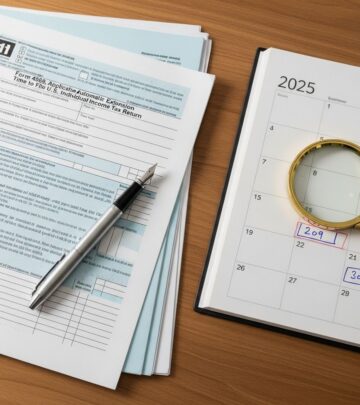
Last-Minute Tax Filing Guide For 2025: Quick Checklist
Master last-minute tax filing with essential tips to avoid penalties, maximize refunds, and meet deadlines stress-free.

As the April 15 tax filing deadline looms for the 2025 tax year, many taxpayers find themselves scrambling to submit their returns. Procrastination is common, with IRS data showing millions of returns filed in the final weeks, yet rushing can lead to costly errors, penalties, and missed refunds. This guide provides actionable steps to file accurately, even under pressure, drawing from official IRS recommendations and expert advice.
Understand the Tax Filing Deadline
The standard federal tax deadline is
April 15, 2026
, for 2025 returns, though extensions can push filing to October 15. State deadlines often align but vary—check your state’s revenue department. Missing the deadline without an extension triggers a5% monthly failure-to-file penalty
on unpaid taxes, up to 25%, plus interest. No penalty applies if you’re due a refund, but filing promptly secures it faster.In 2025, the IRS processed returns starting January 27, expecting over 140 million by deadline, with many last-minute filers contributing to backlogs. Plan ahead: block calendar time or book a tax professional appointment now.
Get Organized: Essential Documents Checklist
Organization is the foundation of error-free filing. Gather these
key documents
before starting:- W-2 forms from employers, detailing wages and withholdings.
- 1099 forms for freelance income, interest, dividends, or gig work.
- Form 1098 for mortgage interest or student loan deductions.
- Social Security numbers for all dependents and filers.
- Records of deductions: receipts for charitable donations, medical expenses, or business costs.
- Prior year AGI for e-filing verification.
Use the IRS website’s full checklist or tax software’s customized lists to avoid omissions. Double-check identification numbers, math, and filing status—common errors like wrong SSN or unchecked boxes lead to rejections.
Choose the Fastest Filing Method: E-File for Accuracy and Speed
**E-filing** is the IRS-recommended method: safest, fastest, and most accurate, with nearly 100 million users last year. Benefits include:
- Instant acknowledgment and error flags before submission.
- Direct deposit refunds in 21 days or less.
- Free options: IRS Free File for AGI ≤ $84,000; Fillable Forms for all.
Avoid paper returns, which delay processing and risk postage issues. Tax software provides guided navigation, unlike basic fillable forms. For complex situations, H&R Block or similar pros offer in-person, virtual, or drop-off services.
Request a Tax Extension if Needed
If documents are missing or calculations incomplete, file
Form 4868
for an automatic extension to October 15—no approval needed if submitted by April 15. Use IRS Free File for free electronic submission.| Extension Pros | Extension Cons |
|---|---|
| Avoids 5% failure-to-file penalty | No extension for payment—pay estimated taxes by April 15 |
| More time for accuracy | Interest accrues on unpaid balances |
| Easy online filing | Failure-to-pay penalty (0.5% monthly) still applies |
Estimate and pay what you owe via IRS Direct Pay or EFTPS to minimize penalties. Extensions don’t cover state taxes—file separately if required.
Maximize Deductions and Credits Last Minute
Rushing often means missing savings. Review these before finalizing:
- IRA/Health Savings Account contributions: Deductible until April 15 for 2025.
- SALT deductions: Up to $40,000 cap for state/local taxes (phase-down for high earners).
- Common credits: Earned Income Tax Credit (EITC), Child Tax Credit—dollar-for-dollar reductions.
- Charitable donations, home office (if eligible), education expenses.
Use IRS tools or software to scan qualifications. Credits outperform deductions by directly lowering your bill. Last-minute moves like IRA funding can yield immediate write-offs.
Plan for Payment: Options if You Owe
If you owe, pay by deadline to avoid
0.5% monthly failure-to-pay penalty
plus interest. Options include:- IRS Direct Pay or credit/debit card (fees apply).
- Short-term plans: 180 days penalty-free if under $100,000 owed.
- Installment agreements via IRS online tool—easy for balances under $50,000.
File anyway if unable to pay fully; penalties are based on unpaid amounts. Dispute penalties online if reasonable cause applies.
Avoid Common Last-Minute Mistakes
Pressure breeds errors. Top pitfalls:
- Missing signatures/dates on joint returns.
- Incorrect tax tables or math—e-file prevents this.
- Wrong filing status or unchecked exemptions.
- Forgetting Form 1040-V for payments.
Double-check everything. E-filing rejects 90% of errors pre-submission.
What Happens if You Miss the Deadline?
Late filing without extension: 5% penalty per month (max 25%) on unpaid taxes. Late payment: 0.5% monthly. No filing penalty for refunds, but delays access—IRS holds unclaimed refunds for 3 years. File ASAP post-deadline; options exist to abate penalties for first-time issues.
State Taxes and Special Situations
Federal extensions don’t always cover states. Disaster areas may qualify for automatic relief—check IRS announcements. Self-employed? Pay quarterly estimates to avoid underpayment penalties.
Frequently Asked Questions (FAQs)
Q: Can I file taxes for free last minute?
A: Yes, IRS Free File for AGI ≤ $84,000; Fillable Forms for all. E-file by April 15.
Q: Does an extension give more time to pay?
A: No, pay estimated taxes by April 15 to avoid penalties.
Q: What if I can’t pay what I owe?
A: File anyway and apply for installment plans online—no prepayment needed for eligibility.
Q: How long for a refund if e-filed correctly?
A: Typically 21 days via direct deposit.
Q: Are there penalties if I get a refund but file late?
A: No failure-to-file penalty, but file within 3 years to claim it.
Final Tips for Stress-Free Filing
Schedule now: Use software, pros, or IRS tools. E-file, pay estimates, claim all breaks. Last-minute filers succeed by staying organized and informed. For 2025, IRS Direct File expands in participating states until October.
References
- 5 Important Tips for Last-Minute Tax Filing — Credit Human. 2025. https://www.credithuman.com/building-slack/5-important-tips-for-last-minute-tax-filing
- Tips Help Last-Minute Taxpayers — Internal Revenue Service (IRS). Accessed 2025. https://www.irs.gov/pub/irs-utl/OC_Tipshelplastminutetaxpayers.pdf
- Last Minute Tax Filing Tips — H&R Block. 2025. https://www.hrblock.com/tax-center/filing/personal-tax-planning/last-minute-tax-filing-tips/
- Last-Minute Tax Guide 2025: What You Need To Know — Bankrate. 2025. https://www.bankrate.com/taxes/tax-season-guide-file-taxes-get-refund/
- 4 Last-Minute Tax Tips to Consider Before Filing Your Return — MassMutual. 2025. https://blog.massmutual.com/planning/tax-tips-last-minute
- Tax Filing: Last-Minute Tax Tips as April 15th Nears — IRS YouTube (via transcript). 2025. https://www.youtube.com/watch?v=P_v41nqn22Y
Similar Articles








Read full bio of Sneha Tete