Filing Bankruptcy: The Complete Process
Navigate the step-by-step journey of bankruptcy filing, from preparation to discharge, and understand its lasting financial effects.

Bankruptcy offers a structured legal pathway for individuals overwhelmed by debt to seek relief through federal courts. This process involves filing a petition that triggers immediate protections and leads to either liquidation of assets or a repayment plan, depending on the chapter selected.
Understanding Bankruptcy Fundamentals
The U.S. bankruptcy system, governed by the Bankruptcy Code, allows debtors to discharge certain unsecured debts while protecting essential assets. Federal courts handle all cases, with a bankruptcy judge overseeing eligibility and a trustee managing the estate. Cases typically proceed administratively without requiring the debtor’s courtroom appearance.
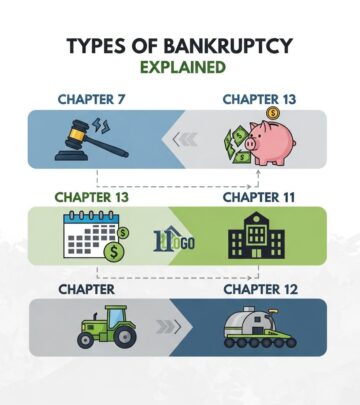
Primary types include Chapter 7 for liquidation, suitable for low-income filers, and Chapter 13 for wage earners proposing repayment plans. Businesses often use Chapter 11 for reorganization.
Preparing for Your Bankruptcy Filing
Preparation begins with gathering comprehensive financial records to assess eligibility and complete forms accurately. Essential documents include:
- Tax returns for the prior two years
- Proof of income like pay stubs for the last six months
- Recent bank and investment account statements
- Property valuations and vehicle registrations
Before filing, complete a credit counseling course from a U.S. Trustee-approved provider within 180 days. This online or phone session, costing around $50, provides a certificate proving you’ve explored alternatives.
Choosing the Right Bankruptcy Chapter
| Chapter | Best For | Process Overview | Duration |
|---|---|---|---|
| Chapter 7 | Low/no income individuals | Asset liquidation; unsecured debt discharge | 4-6 months |
| Chapter 13 | Wage earners with steady income | 3-5 year repayment plan | 3-5 years |
| Chapter 11 | Businesses or high-debt individuals | Reorganization plan | Varies |
Chapter 7 suits those passing the means test, comparing income to state medians. Chapter 13 helps retain assets like homes by restructuring debts.
Completing the Bankruptcy Petition
The petition requires over 20 forms detailing income, expenses, assets, liabilities, and financial history. Schedules cover assets/liabilities, income/expenditures, and executory contracts. Total pages can exceed 70 for complex cases.
Individuals must include credit counseling certificates, recent pay evidence, and income projections. Pro se filers (without attorneys) face higher risks of errors leading to case dismissal.
Submitting Your Case to Court
File at the bankruptcy court for your residence or business area. Chapter 7 fees total $338, payable upfront, in installments, or waived for low-income via Form 103B.
Print forms single-sided, sign them, and submit with the fee or waiver application, counseling certificate, and pay stubs. Clerks process filings quickly, issuing a case number, trustee assignment, and 341 meeting details. The automatic stay activates immediately, halting collections, foreclosures, and lawsuits.
Post-Filing Obligations and Trustee Review
After filing, mail tax returns, bank statements, and other docs to the trustee. Attend the 341 meeting of creditors, typically virtual, 20-40 days post-filing. Bring ID, Social Security card, forms, and financial proofs. The trustee verifies identity and questions finances; creditors may attend but rarely do.
No property valuations occur unless assets exceed exemptions. Most cases are “no-asset,” meaning no liquidation.
Financial Management and Discharge
Complete a post-filing financial management course before discharge. Upon approval, eligible debts like credit cards and medical bills are wiped out. Non-dischargeable debts include student loans, child support, and recent taxes.
Discharge typically issues 60 days post-341 meeting in Chapter 7. Receive it via mail; it legally ends creditor claims on discharged debts.
Immediate Effects of Filing
- Collection Halt: Automatic stay stops wage garnishments, calls, and repossessions instantly.
- Asset Risks: Trustee may sell non-exempt property in Chapter 7.
- Co-Signer Exposure: Stay doesn’t protect co-signers.
- Ongoing Payments: Secured debts like mortgages continue if retaining collateral.
Long-Term Financial Consequences
Bankruptcy appears on credit reports for 10 years (Chapter 7) or 7 years (Chapter 13), severely dropping scores initially by 100-200 points. Experian notes scores can rebound within years with responsible habits.
Post-discharge, secured debts require continued payments to avoid repossession. Rebuilding involves secured cards, timely bills, and low credit use.
Alternatives to Bankruptcy
Before filing, consider debt consolidation, negotiation, or counseling. Chapter 13 offers asset protection without liquidation for those with income.
Frequently Asked Questions
Can I file bankruptcy without a lawyer?
Yes, pro se filing is possible for simple cases, but errors risk denial. Many succeed annually with organization.
How long does bankruptcy stay on my record?
Chapter 7: 10 years; Chapter 13: 7 years from filing.
What debts are not discharged?
Student loans, alimony, child support, most taxes, and fraud-related debts survive.
Will I lose my house or car?
Exemptions protect equity up to state/federal limits. Chapter 13 allows catching up on payments.
Can I file bankruptcy more than once?
Yes, but Chapter 7 discharges are limited: 8 years between filings.
Key Steps Summary
- Gather financial documents.
- Complete credit counseling.
- Prepare and file petition.
- Submit fee or waiver.
- Attend 341 meeting.
- Finish financial management course.
- Await discharge.
Filing demands precision but provides fresh starts for many. Consult professionals for personalized advice.
References
- How To File Bankruptcy for Free: A 10-Step Guide — Upsolve. 2023. https://upsolve.org/learn/how-to-file-bankruptcy/
- Chapter 7 – Bankruptcy Basics — United States Courts. 2024-03-01. https://www.uscourts.gov/court-programs/bankruptcy/bankruptcy-basics/chapter-7-bankruptcy-basics
- Chapter 11 – Bankruptcy Basics — United States Courts. 2024-03-01. https://www.uscourts.gov/court-programs/bankruptcy/bankruptcy-basics/chapter-11-bankruptcy-basics
- Bankruptcy: How It Works and Consequences — Debt.org. 2024. https://www.debt.org/bankruptcy/
- Process – Bankruptcy Basics — United States Courts. 2024-03-01. https://www.uscourts.gov/court-programs/bankruptcy/bankruptcy-basics/process-bankruptcy-basics
- Bankruptcy: How It Works, Types and Consequences — Experian. 2024. https://www.experian.com/blogs/ask-experian/credit-education/bankruptcy-how-it-works-types-and-consequences/
Similar Articles








Read full bio of Sneha Tete