Filene’s Basement: History, Legacy & Impact
Explore the iconic discount retailer that revolutionized American retail with its innovative markdown system and iconic bargain basement concept.
The Birth of an American Retail Icon
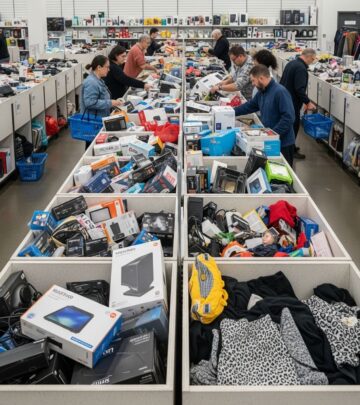
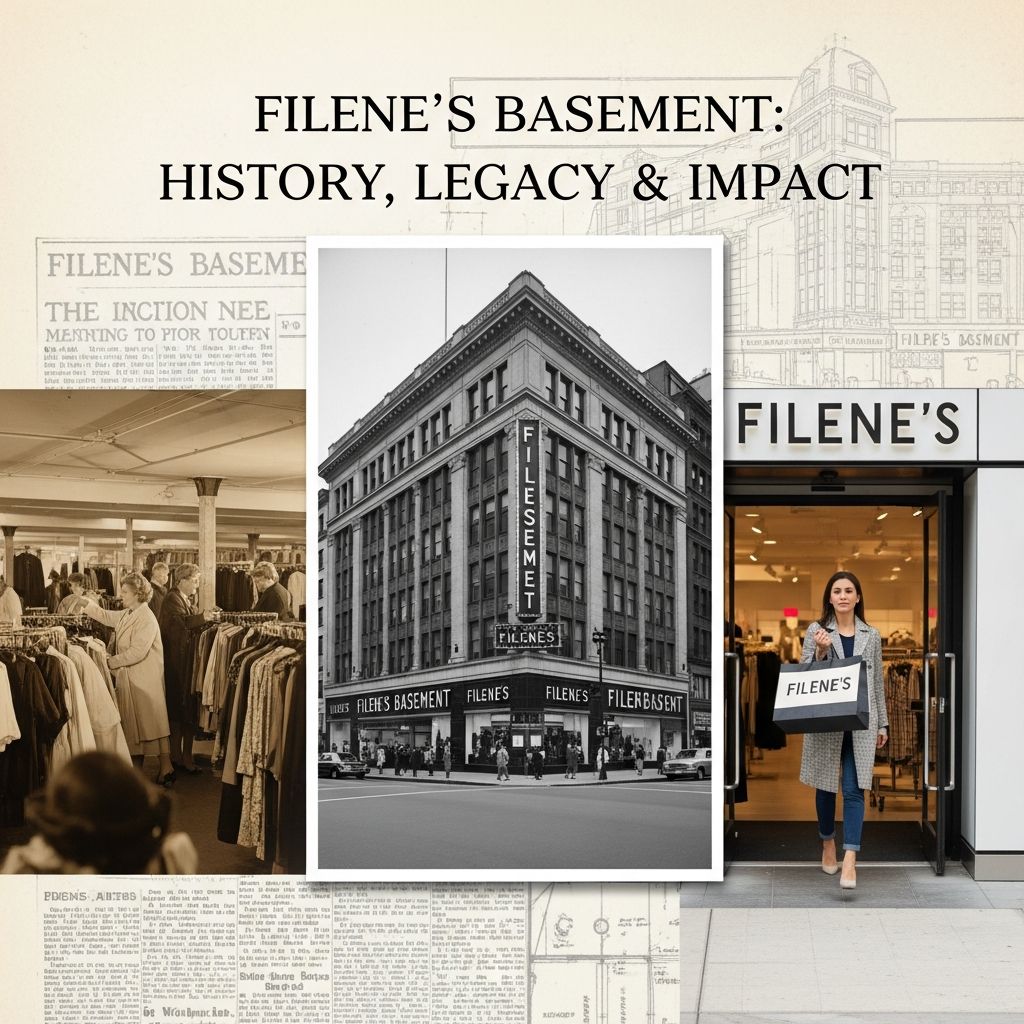
Filene’s Basement stands as one of the most significant chapters in American retail history. Founded in 1909 by Edward Filene, the son of William Filene, this innovative store concept emerged from a simple yet revolutionary idea: selling surplus, overstock, and closeout merchandise in the basement of his father’s flagship department store in Boston. What began as an experimental venture in the basement of the Downtown Crossing location would evolve into a household name and cultural phenomenon that influenced discount retail across the entire nation.
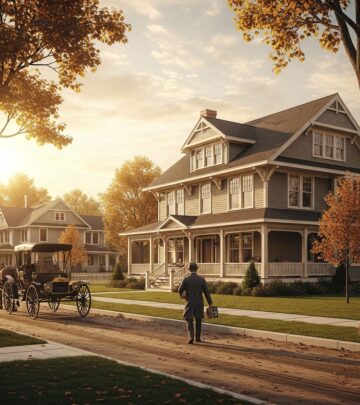
The original Filene’s department store itself had deep roots in American commerce. William Filene leased a five-story building with basement space at 445-447 Washington Street in 1890, initially focusing on women’s ready-to-wear clothes and accessories. When William retired, his two sons Edward and Lincoln took control, transforming the operation into what became known as “William Filene’s Sons Company” and later established itself as “the World’s Largest Specialty Store.”
The Revolutionary Automatic Markdown System
What truly distinguished Filene’s Basement from its competitors was its distinctive and ingenious automatic markdown system. This system became the cornerstone of the store’s identity and business model, creating an unparalleled shopping experience that attracted customers from across the region. The markdown mechanism operated on a precise schedule that rewarded both patience and frequent shopping visits.
The system worked as follows: merchandise was tagged with the date it first went on sale. If an item failed to sell within 12 days, its price was automatically reduced by 25 percent. Six selling days later, the price dropped by an additional 25 percent, bringing the total reduction to 50 percent. After another six days passed, prices were slashed by 75 percent off the original price. If merchandise still remained unsold after 30 days total, it was donated to charity, ensuring nothing went to waste.
Despite this aggressive markdown schedule, approximately 90 percent of Filene’s Basement merchandise sold within the first 12 days, demonstrating the appeal of the initial offerings and the store’s understanding of consumer preferences. This innovative approach wasn’t merely a merchandising strategy—it represented a democratization of luxury goods, allowing middle-class consumers to access high-end designer items at substantial discounts. The strategy became so successful that other department stores across the nation adopted similar markdown systems, though none achieved the cultural prominence of Filene’s Basement.
Building a Retail Empire
Following its successful launch in 1909, Filene’s Basement expanded significantly. In 1912, the company celebrated the grand opening of its flagship store at the corner of Washington and Summer Streets in what is now called Downtown Crossing in Boston. This location became the iconic face of the brand, attracting shoppers from throughout New England.
Between 1914 and 1920, Filene’s acquired substantial real estate holdings, establishing a strong presence throughout the region. The company continued its expansion strategy, opening its first branch store in Wellesley in 1923, followed by additional locations throughout Massachusetts and Rhode Island. By 1935, the entire downtown Boston flagship store became the first department store in New England to feature complete air conditioning, demonstrating the company’s commitment to customer comfort and modern retail innovation.
The Edward Filene Era (1908–1937) proved particularly transformative. Beyond the automatic markdown system, Edward introduced progressive employee benefits decades before they became standard in American business. The company instituted minimum-wage scales for female employees, provided paid winter vacations, offered employee discounts, established health clinics, provided insurance programs, and created credit unions—all innovations that reflected Edward’s progressive business philosophy.
Cultural Phenomena and Iconic Events
Filene’s Basement transcended retail to become deeply embedded in popular culture and shopping tradition. The store hosted legendary sales events that became cultural touchstones. The most famous was the “Running of the Brides” bridal gown sale, which debuted in 1947 and became a phenomenon that attracted brides-to-be from across the country. The event featured designer wedding gowns at steep discounts and became so popular that it inspired similar events at other retailers.
Another iconic promotion was the “$11 Men’s Suit Sale,” which first launched in 1937 and remained popular for decades, eventually increasing to $99 in later years while maintaining its legendary status. These events demonstrated Filene’s Basement’s unique ability to create shopping experiences that transcended ordinary retail and became community traditions.
The store’s prominence extended to cultural figures. President Franklin D. Roosevelt’s son John worked as a stock boy in the basement during the 1933, adding to the store’s social significance. Additionally, in 1940, Filene’s Basement secured designer creations from war-torn Europe, featuring works by renowned designers Coco Chanel and Elsa Schiaparelli, making high fashion accessible to Boston shoppers during challenging times.
Organizational Changes and Corporate Evolution
The late 20th century brought significant organizational transformations. In 1988, Filene’s was purchased by May Department Stores, creating a pivotal moment in the company’s history. Following this acquisition, Filene’s Basement operated as a separate entity and pursued an aggressive expansion strategy aimed at establishing a national presence for the discount retailer concept.
However, this expansion strategy ultimately proved problematic. By August 1998, the company sought Chapter 11 bankruptcy protection, forcing the closure of more than 30 outlets. Despite this setback, the company’s journey through bankruptcy was relatively brief, and expansion resumed, though with greater caution and strategic restraint.
In March 1999, Filene’s Basement introduced a new concept called “Aisle 3,” featuring weekend warehouse stores averaging 60,000 square feet that operated exclusively Friday through Sunday near major metropolitan areas. Although the company planned to open 40-50 such stores, ultimately only eight opened before the concept was discontinued.
The Final Chapter and Closure
A significant turning point came in 2006 when Macy’s Department Stores acquired the original Filene’s chain. Due to overlapping store locations, most Filene’s locations transitioned to Macy’s, but the flagship Boston location at Downtown Crossing was shuttered because an existing Macy’s store operated directly across the street. The building was subsequently sold for redevelopment, and Filene’s Basement, which operated beneath the flagship store, closed on September 3, 2007.
Although a second Boston location had opened on Boylston Street near Copley Square in 2006, the loss of the historic flagship location represented a symbolic end of an era. Redevelopment plans for the Downtown Crossing site stalled in late 2008, leaving the building partially gutted and disappointing customers who hoped Filene’s Basement would eventually return to its historic home.
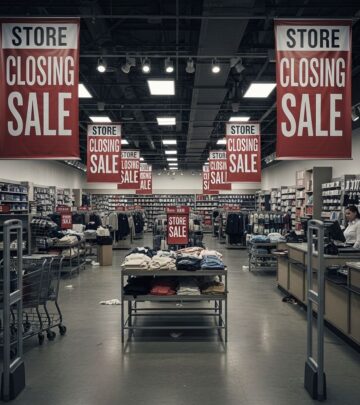
The final blow came in November 2011 when Syms, which had acquired Filene’s Basement in April 2009, filed for bankruptcy. All Filene’s Basement stores closed permanently on December 29, 2011, ending more than a century of retail operations. The liquidation occurred during the 2011 holiday season, marking a poignant conclusion to an American retail institution.
Digital Revival and Online Presence
Following the 2011 closure, the Filene’s Basement brand did not disappear entirely. In 2012, private equity firm Trinity Place Holdings acquired the brand copyright and intellectual property. The company remained dormant until 2015, when Filene’s Basement was relaunched exclusively as an online retailer through a new website. In January 2015, a new website posted at www.filenesbasement.com encouraged customers to sign up for information about a potential relaunch, with items becoming available for sale by mid-February.
However, the online venture faced challenges. As of January 1, 2021, no items were offered for sale on the website, which prominently displayed an “under construction” message. This suggested that efforts to revive the brand through digital channels had encountered obstacles, leaving the future of the Filene’s Basement name uncertain.
Legacy and Cultural Impact
The impact of Filene’s Basement on American retail and consumer culture cannot be overstated. The store pioneered the concept of the discount department store and demonstrated that luxury goods could be made accessible to middle-class consumers through innovative pricing strategies. The automatic markdown system became a model that other retailers adopted, fundamentally changing how discount shopping operates.
Filene’s Basement’s historic flagship store at Downtown Crossing is listed in the National Register of Historic Places, cementing its significance in American cultural history. In the 2010 documentary “Voices From the Basement,” legendary investigative journalist Mike Wallace called the department store “an important part of our heritage.” Former Boston Mayor Thomas M. Menino expressed similar sentiments, recalling his personal memories of shopping at the store and enjoying the thrill of discovering unexpected bargains.
The store’s 1912 exterior at the Downtown Crossing location received landmark status from the Boston Landmarks Commission, recognizing its architectural and historical importance. When the site was eventually redeveloped, architects ensured that the original 1912 exterior was preserved as part of new construction, honoring the building’s historical significance.
Frequently Asked Questions
Q: When was Filene’s Basement originally founded?
A: Filene’s Basement was founded in 1909 by Edward Filene in the basement of his father’s department store at the Downtown Crossing location in Boston, Massachusetts.
Q: What made Filene’s Basement’s markdown system unique?
A: The automatic markdown system was revolutionary because it automatically reduced prices on a fixed schedule: 25% off after 12 days, 50% off after 18 days, 75% off after 24 days, and donations to charity after 30 days. This transparent, customer-friendly system became a model for the entire retail industry.
Q: When did Filene’s Basement permanently close?
A: All Filene’s Basement stores closed permanently on December 29, 2011, following the bankruptcy of its owner, Syms Corp., in November 2011.
Q: Is Filene’s Basement still operating today?
A: As a physical retail chain, no. However, the brand was revived in 2015 as an online retailer, though the website has not actively offered merchandise for sale since January 2021.
Q: What was the “Running of the Brides” event?
A: This legendary bridal gown sale began in 1947 and featured designer wedding dresses at deep discounts. It became a cultural phenomenon that attracted brides-to-be from across the country and inspired similar events at other retailers.
Q: Why was the original flagship store at Downtown Crossing closed?
A: The flagship location was closed in 2007 to accommodate redevelopment of the site. Additionally, when Macy’s acquired the original Filene’s chain in 2006, they closed the Downtown Crossing flagship location because an existing Macy’s store was directly across the street.
References
- Filene’s Basement — Wikipedia. Accessed November 2025. https://en.wikipedia.org/wiki/Filene’s_Basement
- Filene’s Department Store History and Marketing Archives — Boston Public Library. Accessed November 2025. https://guides.bpl.org/filenes
- Filene’s Was a Pioneer in Discount Department Store History — Fifty Plus Advocate. January 23, 2024. https://www.fiftyplusadvocate.com/2024/01/23/filenes-was-a-pioneer-in-discount-department-store-history
Similar Articles








Read full bio of medha deb