FICO Vs Credit Score: Key Differences And How To Improve
Unravel the key distinctions between FICO scores and general credit scores to master your financial profile and boost lending success.
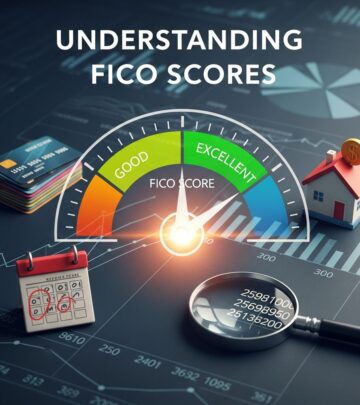
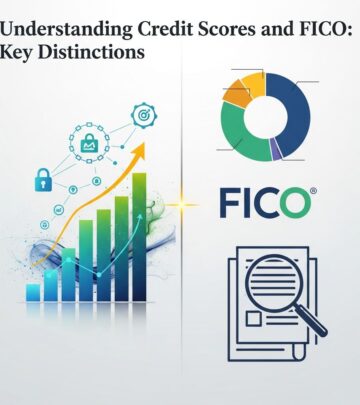
Credit scores serve as numerical summaries of your creditworthiness, helping lenders decide whether to approve loans or credit cards. While all FICO scores are credit scores, not every credit score is a FICO score, creating important distinctions in how they are developed, calculated, and applied.
Understanding the Basics of Credit Scores
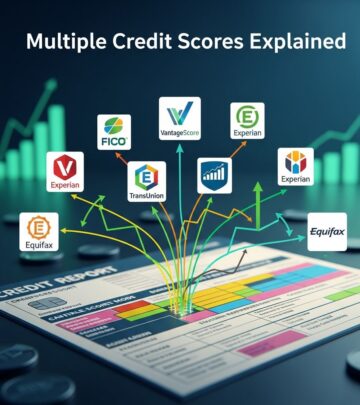
Credit scores predict the likelihood of repaying debts on time, typically ranging from 300 to 850, where higher numbers indicate lower risk to lenders. These scores draw from data in your credit reports, which detail payment behaviors, debts, and account histories across the three major bureaus: Equifax, Experian, and TransUnion.
Multiple models exist because different companies created proprietary algorithms. Lenders select scores based on their needs, such as general lending or industry-specific evaluations like auto loans. This variety means you might have dozens of scores, each reflecting slight methodological differences.
What Makes FICO Scores Unique
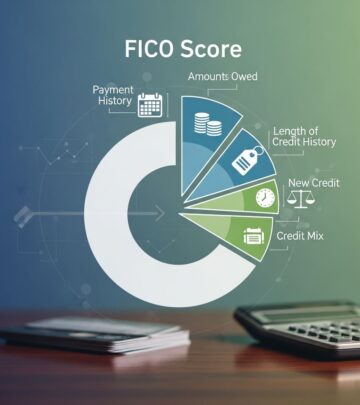
FICO scores, developed by Fair Isaac Corporation, dominate lending decisions, used by 90% of top lenders for approvals. They emphasize five core factors with fixed weights: payment history at 35%, amounts owed at 30%, length of credit history at 15%, new credit at 10%, and credit mix at 10%.
- Payment history: Tracks on-time payments, late payments, defaults, and collections.
- Amounts owed: Measures credit utilization (balances versus limits) and total debt.
- Length of credit history: Considers average age of accounts and age of oldest account.
- New credit: Counts recent inquiries and new account openings.
- Credit mix: Balances revolving credit (cards) and installment loans (mortgages, auto).
Industry-specific FICO variants, like Auto Score 8 or Bankcard Score 8, adjust ranges to 250-900 for tailored predictions.
Other Prominent Credit Scoring Models
VantageScore, created by the three credit bureaus, offers an alternative with a similar 300-850 range but different emphases. It weights payment history at 40%, age and type of credit at 21%, credit utilization at 20%, balances at 11%, and new credit at 5%, plus available credit at 3%.
| Factor | FICO Weight | VantageScore Weight |
|---|---|---|
| Payment History | 35% | 40% |
| Amounts Owed/Utilization | 30% | 20% + 11% |
| Length/Age of History | 15% | 21% |
| New Credit | 10% | 5% |
| Credit Mix/Type | 10% | Included in Age/Type |
| Available Credit | N/A | 3% |
This table highlights how VantageScore prioritizes payment reliability more while FICO stresses debt levels.
Score Ranges and What They Mean
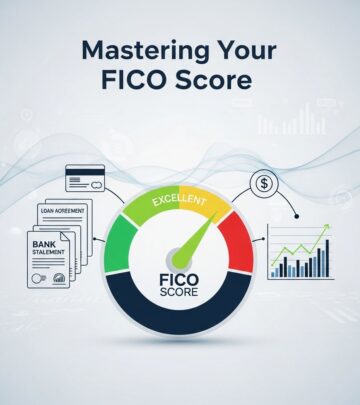
Both FICO and most credit scores use the 300-850 scale, categorized as:
- Exceptional (800-850): Best rates, highest approvals.
- Very Good (740-799): Competitive terms.
- Good (670-739): Solid access to credit.
- Fair (580-669): Higher rates, limited options.
- Poor (<580): High risk, denials common.
A “good” FICO score (670-739) qualifies for most products at favorable rates.
Why Lenders Prefer FICO Scores
FICO’s longevity and validation make it the benchmark; it’s delivered instantly for quick decisions and excludes non-credit factors like income or demographics for fairness. Lenders benefit from precise risk assessment, enabling customized rates that save borrowers money on interest. Higher FICO scores correlate with lower default rates, unlocking more opportunities.
Accessing and Monitoring Your Scores
Free services from banks, credit card issuers, or sites like Credit Karma provide VantageScore or other models. For FICO specifically, check via myFICO.com, your credit card statements, or bureau sites. Note: FICO requires at least six months of history and recent activity.
Regular monitoring reveals discrepancies across models, helping spot errors or fraud early.
Strategies to Improve Your Scores
Enhance both FICO and general scores by focusing on shared factors:
- Pay bills on time—automate payments.
- Keep utilization under 30%—pay down balances.
- Avoid frequent applications to limit inquiries.
- Maintain old accounts for history length.
- Diversify credit types responsibly.
New to credit? Start with secured cards; payment history outweighs short histories.
Common Myths and Misconceptions
- Myth: One score rules all. Lenders use specific models; track the relevant one.
- Myth: FICO is always superior. Importance depends on the lender.
- Myth: Scores never change. They update monthly with report changes.
Frequently Asked Questions
What is the main difference between FICO and credit scores?
FICO is a specific model by Fair Isaac; credit score is the general term encompassing FICO, VantageScore, and others.
Is a 700 FICO score good?
Yes, it’s in the “good” range (670-739), offering decent lending terms.
How often do FICO scores update?
Whenever your credit report changes, typically monthly.
Can I have multiple FICO scores?
Yes, one per bureau and version (e.g., FICO 8, 9, industry-specific).
Does checking my score hurt it?
Soft inquiries (your own checks) don’t; hard inquiries (applications) do temporarily.
Impact on Your Financial Life
Mastering these distinctions empowers better financial choices. A strong FICO or credit score lowers borrowing costs—potentially thousands in interest savings—and expands access to mortgages, autos, and cards. Conversely, poor scores lead to rejections or penalties. Proactively managing factors builds a robust profile over time.
For newcomers, building from scratch emphasizes timely payments over perfection. Veterans should optimize utilization and avoid unnecessary credit pulls. Regardless, consistency yields results across models.
References
- FICO Scores vs. Credit Scores: What’s the Difference? — Credit Karma. 2023. https://www.creditkarma.com/credit/i/fico-score-vs-credit-score
- FICO® score vs. credit score: What’s the difference? — Capital One. 2024. https://www.capitalone.com/learn-grow/money-management/fico-score-vs-credit-score/
- FICO® score vs. credit score. What is a FICO score? — Empeople. 2024. https://empeople.com/learn/empeople-insights/fico-score-vs-credit-score/
- FICO Score vs. Credit Score: What’s the Difference? — Citi. 2024. https://www.citi.com/credit-cards/understanding-credit-cards/fico-score-vs-credit-score
- Credit Scores | MyCreditUnion.gov — National Credit Union Administration (.gov). 2025. https://www.mycreditunion.gov/manage-your-money/credit/credit-scores
Similar Articles








Read full bio of Sneha Tete