Credit Scoring Models: FICO vs. VantageScore Explained
Understand how the two dominant credit scoring systems differ and impact your financial opportunities.
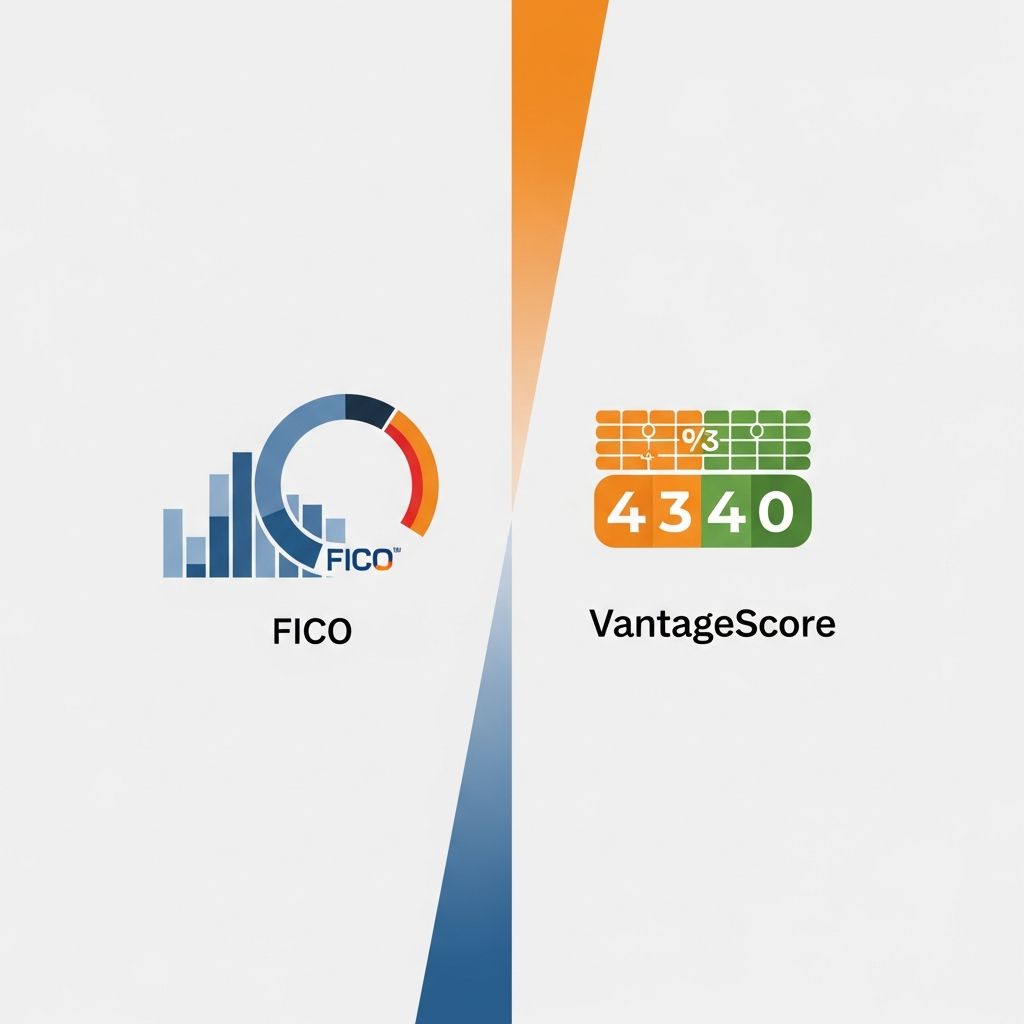
When you apply for credit, lenders rely on numerical representations of your creditworthiness to make lending decisions. These scores serve as predictive indicators of your likelihood to repay borrowed money on time. In the United States, two primary credit scoring systems dominate the lending landscape: FICO and VantageScore. Understanding how these systems work and where they differ can help you make informed financial decisions and better manage your credit profile.
The Evolution of Credit Scoring Systems
Credit scoring methodology has undergone significant refinement over the past few decades. The FICO scoring model emerged in 1989 as a standardized approach to credit evaluation. This foundational system revolutionized how lenders assessed credit risk by providing objective, numerical assessments rather than relying solely on subjective judgment. The major versions that shaped modern lending practices include FICO Score 8, introduced in 2004, and FICO Score 9, launched in 2014.
VantageScore entered the credit scoring arena more recently as an alternative approach. The original VantageScore model, version 1.0, debuted in 2006, with the most current iteration, VantageScore 4.0, released in 2017. This newer competitor was created as a tri-bureau model, meaning a single VantageScore can be calculated using credit reports from any of the three national credit reporting bureaus: Experian, Equifax, or TransUnion.
Understanding Score Ranges and What They Mean
Both FICO and VantageScore employ comparable numerical ranges, yet the interpretation of scores varies between the two systems. Most base FICO Scores and current VantageScore models (versions 3.0 and 4.0) operate on a 300 to 850 scale. However, FICO offers industry-specific scoring models that range from 250 to 900 for specialized lending categories.
Higher scores indicate lower credit risk and a stronger likelihood of meeting payment obligations, which is why lenders reserve their most favorable interest rates and terms for borrowers with elevated scores. However, what constitutes a “good” score differs between the two systems due to how each organizes their scoring tiers.
FICO Score Categories (as of current standards)
- Exceptional: 800 to 850
- Very Good: 740 to 799
- Good: 670 to 739
- Fair: 580 to 669
- Poor: 300 to 579
VantageScore Categories (as of current standards)
- Superprime: 781 to 850
- Prime: 661 to 780
- Near Prime: 601 to 660
- Subprime: 300 to 600
For practical purposes, a FICO Score of at least 670 generally indicates good credit, while VantageScore considers 700 and above as good credit standing. These thresholds represent approximate breakpoints where lenders typically become more willing to approve applications and offer competitive rates.
How Credit Factors Are Weighted Differently
While both FICO and VantageScore evaluate similar credit components, they assign dramatically different weights to each factor. These weighting differences can result in significantly different scores for the same borrower, even when using current versions of each system.
| Credit Factor | VantageScore 4.0 Weight | FICO Score 8/9 Weight |
|---|---|---|
| Payment History | 41% (Extremely Influential) | 35% |
| Credit Utilization/Amounts Owed | 20% (Highly Influential) | 30% |
| Credit History Length | 20% (Highly Influential) | 15% |
| Recent Credit/New Inquiries | 11% (Moderately Influential) | 10% |
| Credit Mix | N/A | 10% |
| Account Balances | 6% (Less Influential) | N/A |
These weighting differences have practical implications. VantageScore places greater emphasis on payment history, making recent behavior exceptionally important. FICO, by contrast, dedicates more weight to credit utilization—the percentage of available credit you’re currently using—and includes credit mix as a distinct factor, which VantageScore does not explicitly measure.
Minimum Requirements for Score Generation
Not all consumers can receive a score from both systems immediately. The minimum credit history requirements differ substantially, affecting how quickly new credit users can obtain a score.
FICO requires more established credit history before generating a score. Specifically, you must have at least one credit account that has been open for six months or longer, plus at least one account that has reported activity to a credit bureau within the past six months. This six-month minimum ensures that FICO has sufficient payment history data to make a reliable assessment.
VantageScore operates with more lenient requirements. You can receive a VantageScore with just one or more credit accounts, regardless of how recently they were opened. Additionally, VantageScore can generate scores with thinner credit histories, making it more accessible to consumers who are just beginning their credit journey or those with limited credit activity.
This difference becomes particularly significant for young adults establishing credit for the first time or immigrants building U.S. credit profiles. VantageScore may provide an initial score when FICO cannot, offering these populations earlier access to credit assessment data.
Collection Accounts and Medical Debt Treatment
How collection accounts appear on your credit report and factor into your score differs noticeably between the two systems, with important implications for individuals dealing with past-due debts or medical bills.
VantageScore versions 3.0 and 4.0 treat certain collections more favorably. Both versions ignore all paid collections regardless of type, and they exclude medical collections entirely from score calculations—whether paid or unpaid. This approach reflects VantageScore’s philosophy that medical debt may not accurately reflect a borrower’s creditworthiness.
FICO takes a more nuanced but less forgiving approach. FICO Score 8 does not differentiate between medical and non-medical collections and will not ignore paid collections that remain on your report. However, FICO does ignore collection accounts when the original unpaid balance was under $100.
FICO Score 9, the newer version, provides some middle ground. It ignores all paid collections entirely and gives unpaid medical collections less impact than unpaid non-medical collections, though medical debt still affects your score more than under VantageScore.
One additional consideration: medical collection accounts won’t appear on your credit report at all if they are under $500 and less than 365 days past due. This built-in grace period provides temporary relief for medical debt before it impacts credit reports.
Industry-Specific Scoring and Lender Preferences
Beyond the standard scoring models, lenders often employ specialized versions tailored to specific lending categories. FICO offers industry-specific scores for auto lending, mortgage lending, and credit card lending, each with its own algorithm and score range. These specialized models help lenders assess risk more accurately within their particular industry.
The choice between FICO and VantageScore also reflects broader market adoption patterns. FICO has maintained dominance in the lending industry for decades, and most major lenders—particularly mortgage companies, auto lenders, and credit card issuers—rely primarily on FICO scores. VantageScore, while growing in acceptance, remains less universally adopted by traditional lenders.
Some lenders experiment with both models to determine which more accurately predicts default rates within their customer base. This ongoing testing suggests that neither system is objectively superior; rather, each may prove more predictive for specific lending scenarios or customer populations.
Why Your Scores Differ Across Systems
If you’ve checked both your FICO and VantageScore, you’ve likely noticed they differ. This discrepancy stems from multiple sources: different weighting schemes, different data requirements, and different treatment of specific credit factors. Even identical credit information processed through each system will typically yield different numerical results.
A FICO Score of 600 does not equate to a VantageScore of 600. The two systems interpret credit data through fundamentally different lenses, making direct numerical comparison problematic. A consumer might fall into the “good” category under one system while landing in “fair” under the other.
This reality underscores the importance of monitoring both scores if you have access to them, as different creditors may consider different scores in their approval decisions. Additionally, understanding which score a particular lender uses helps you assess your likelihood of approval more accurately.
Recent Payment Behavior and Credit History Depth
VantageScore 4.0 reflects changing priorities in credit assessment by emphasizing recent behavior more heavily than previous models. This newer orientation recognizes that recent payment patterns may be more predictive of future behavior than older history, particularly for consumers whose financial circumstances have improved.
The model also places substantial weight on the depth and variety of your credit history—the age of your accounts and types of credit you’ve used. VantageScore considers both of these factors highly influential in score calculations.
FICO similarly values payment history and credit history length but distributes weight differently. FICO’s inclusion of credit mix as a separate 10% factor recognizes that successfully managing various credit types—revolving accounts like credit cards and installment accounts like auto loans—demonstrates comprehensive credit management ability.
Practical Implications for Borrowers
Understanding these differences helps you strategize credit management. If you have limited credit history, focusing on obtaining your first VantageScore is realistic, as FICO may not yet be available. Both systems reward consistent on-time payments, so prioritizing payment punctuality benefits your score regardless of which model is used.
If you’re concerned about collection accounts or medical debt, VantageScore’s more favorable treatment of these items may result in a higher score than FICO would generate. However, if seeking a mortgage or auto loan, be aware that lenders will likely use FICO scores regardless of your VantageScore, so improvements in FICO-relevant factors like credit utilization matter most for those applications.
Frequently Asked Questions
Which credit score matters more?
For most lending decisions, FICO scores matter more because traditional lenders—mortgage companies, auto lenders, and credit card issuers—predominantly rely on FICO. However, some alternative lenders and online platforms use VantageScore, so both remain relevant depending on your situation.
Can I have different scores from FICO and VantageScore?
Yes, absolutely. The two systems weight credit factors differently and use different data rules, so identical credit information produces different scores. This is normal and expected.
Why does VantageScore treat medical debt differently?
VantageScore’s approach reflects the philosophy that medical debt may result from unexpected circumstances beyond a consumer’s control, making it a less reliable indicator of creditworthiness compared to other debt types.
How long do I need to wait before I can get a FICO score?
FICO requires six months of credit history with at least one account active within the past six months. VantageScore may be available sooner, potentially immediately upon opening your first credit account.
References
- VantageScore vs. FICO: Learn the Differences — Intuit Credit Karma. https://www.creditkarma.com/credit/i/vantagescore-vs-fico
- What Are the Differences Between VantageScore 4.0 vs. FICO® 10 — First Horizon Mortgage. August 14, 2025. https://fhmtg.com/2025/08/14/what-are-the-differences-between-vantagescore-vs-fico-credit-scoring-models/
- The Difference Between VantageScore Credit Scores and FICO — Experian. https://www.experian.com/blogs/ask-experian/the-difference-between-vantage-scores-and-fico-scores/
- Differentiating FICO, VantageScore, and Experian — Chase Bank. https://www.chase.com/personal/credit-cards/education/credit-score/differentiating-fico-vantagescore-experian
- The VantageScore vs FICO® Score — Discover. https://www.discover.com/credit-cards/card-smarts/the-differences-between-a-vantagescore-and-a-fico-score/
- FICO Score vs. VantageScore: Understanding the Difference — CareCredit. https://www.carecredit.com/well-u/financial-health/credit-score-101-vantagescore-vs-fico-score/
Similar Articles








Read full bio of Sneha Tete