FICO Bankcard Score 8: What Card Issuers Look For
Understand how credit card issuers evaluate your creditworthiness
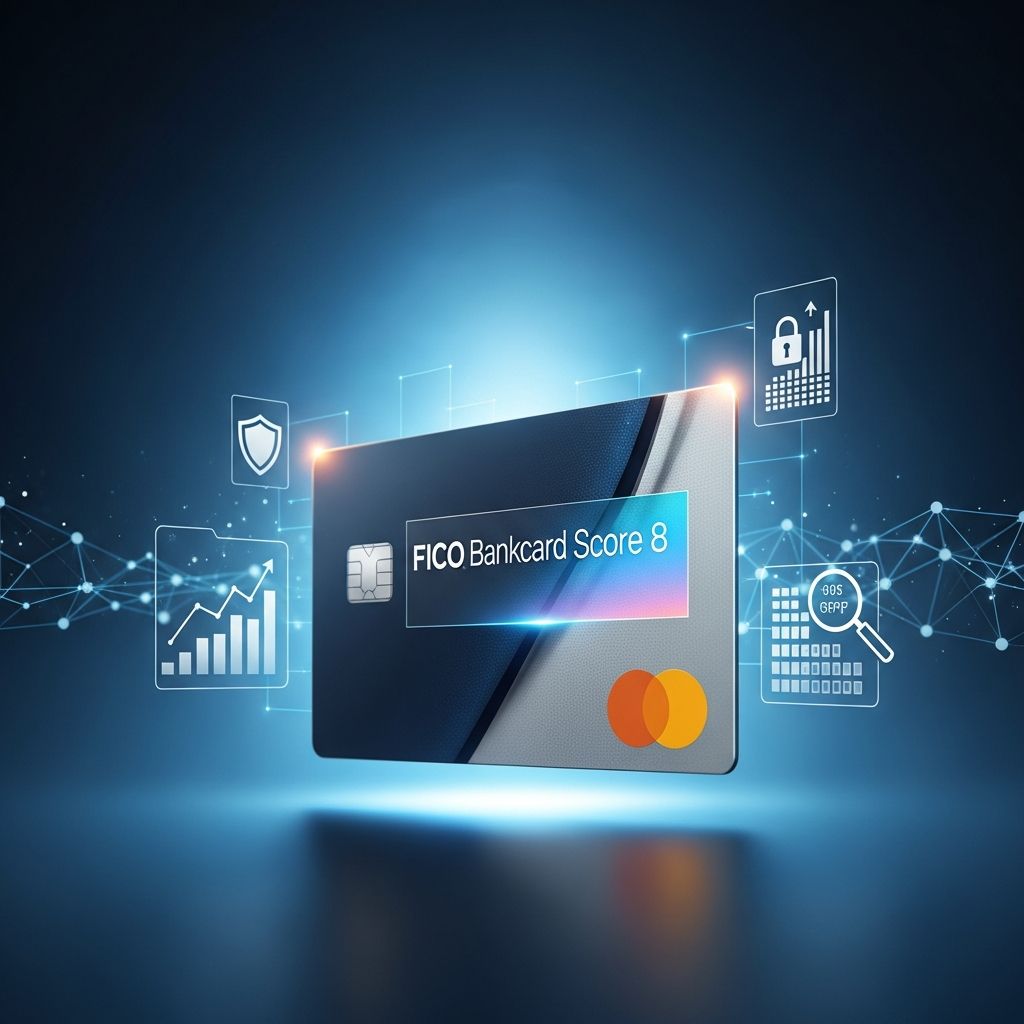
When you apply for a credit card, the issuer doesn’t simply approve or deny your application based on a gut feeling. Instead, they rely on sophisticated credit scoring models designed to predict your likelihood of repaying borrowed money. One of the most influential tools in this process is the FICO Bankcard Score 8, a specialized version of the FICO credit scoring system tailored specifically for credit card lending decisions. Understanding how this score works can help you make better financial decisions and improve your chances of approval for favorable credit card terms.
What Distinguishes FICO Bankcard Score 8 From General FICO Scores
FICO offers multiple scoring models designed for different purposes. While the standard FICO Score 8 functions as a general-purpose tool that lenders use across various credit products, the Bankcard Score 8 represents an industry-specific variant created exclusively for credit card evaluation. This specialization means that credit card issuers can obtain a more targeted assessment of how likely you are to manage revolving credit responsibly.
The most obvious distinction between these models lies in their scoring ranges. Traditional FICO base scores span from 300 to 850, whereas the FICO Bankcard Score 8 operates within a broader range of 250 to 900. This expanded scale allows credit card companies to make more granular distinctions between applicants, potentially identifying subtle differences in creditworthiness that matter specifically for credit card products.
Beyond the numerical scale, the Bankcard Score 8 weights certain credit behaviors more heavily than the base FICO Score 8. Since credit card companies face unique risks—particularly the possibility that cardholders will carry high balances or miss payments on revolving accounts—the Bankcard Score 8 places greater emphasis on factors directly related to credit card behavior patterns.
Core Calculation Components and Their Weightings
Like all FICO scoring models, the Bankcard Score 8 draws information exclusively from the three major credit bureaus: Equifax, Experian, and TransUnion. The algorithm examines various aspects of your credit history and assigns weights based on their predictive importance for credit card defaults. Understanding these components helps explain why certain credit behaviors significantly impact your score.
Payment History: The Foundation of Your Score
Your payment history represents the most important factor influencing your FICO Bankcard Score 8, carrying the same 35% weight as in the base FICO Score 8. Credit card issuers care intensely about this metric because it demonstrates your actual behavior with credit obligations. Whether you pay your bills on time, miss payments, or habitually pay late directly indicates how you’ll likely manage new credit card accounts.
Payment history encompasses several elements: on-time payments demonstrate reliability, while late payments—particularly those 30, 60, or 90 days overdue—signal increasing risk. Accounts in collections or those that have gone to charge-off status severely damage this component. The more recent your negative payment events, the more damaging they typically are to your score.
Credit Utilization: The Bankcard Score’s Emphasis
Where the Bankcard Score 8 truly distinguishes itself is through its heightened focus on credit utilization ratios. While the base FICO Score 8 allocates 30% weighting to “amounts owed,” the Bankcard Score 8 places particular emphasis on how much of your available credit limit you’re actively using across all accounts, with special attention to revolving credit lines.
Credit utilization measures the percentage of your available credit that you’re currently borrowing. For example, if you have a $5,000 credit limit and maintain a $1,500 balance, your utilization rate is 30%. Credit card issuers view low utilization rates (typically below 30%) as indicators of responsible credit management and reduced default risk. Conversely, high utilization rates suggest you may be financially stretched, making you more likely to default on new credit obligations.
The Bankcard Score 8 calculates utilization both on individual accounts and across your entire credit portfolio. This dual approach recognizes that someone maxing out one card while maintaining low balances on others demonstrates different risk characteristics than someone maintaining moderate balances across multiple cards.
Credit History Length and Account Age
The length of your credit history contributes 15% to your FICO Bankcard Score 8. This component includes both the age of your oldest account and the average age of all your accounts. Longer credit histories suggest more opportunities to demonstrate responsible behavior and typically result in higher scores. Credit card issuers recognize that someone with a 20-year credit history has more proven track record than someone with only two years of credit activity.
Account age matters in multiple ways. Very old accounts in good standing positively impact your score significantly. However, if you’ve recently closed old accounts, your average account age may decrease, potentially lowering your score. Additionally, how recently you’ve used various accounts influences this component—accounts you haven’t accessed recently appear less relevant to current creditworthiness assessments.
Credit Mix and Account Diversity
Your credit mix—the variety of different credit types you manage—comprises 10% of your Bankcard Score 8. Credit card issuers recognize that demonstrating responsible behavior across multiple account types (credit cards, installment loans, mortgages, etc.) indicates broader financial capability than managing only one type of credit. Having a diverse credit portfolio suggests you understand various lending products and can manage different repayment structures.
This component explains why having only credit cards, with no installment loans or mortgage history, can result in a lower score than someone managing both revolving and installment accounts responsibly. The scoring model rewards demonstrated ability to handle different financial obligations.
New Account Inquiries and Recent Applications
New credit inquiries and recently opened accounts account for 10% of your Bankcard Score 8. When you apply for new credit, the lender performs a “hard inquiry” into your credit report, and newly opened accounts appear on your credit history. Multiple applications within a short timeframe signal to creditors that you’re rapidly accumulating new debt, which increases perceived risk.
Credit card issuers understand that someone opening three new credit cards within 60 days faces different circumstances than someone opening one card per year. Recent account openings temporarily lower your average account age and indicate you’re actively seeking credit, both factors suggesting increased risk. However, the impact of new credit inquiries diminishes significantly after several months.
How FICO Bankcard Score 8 Differs From Other Scoring Models
The credit scoring landscape includes multiple options beyond the FICO Bankcard Score 8. Understanding these alternatives helps explain why your credit assessment might differ depending on who’s evaluating you.
Comparison With FICO Score 9
FICO introduced Score 9 to address perceived limitations in Score 8’s handling of certain debt types. The most notable difference involves medical debt treatment. Score 8 treats medical debt identically to other collection accounts—both paid and unpaid medical collections negatively impact your score equally. Score 9, by contrast, ignores medical debt entirely if it’s been paid off, recognizing that medical debt often results from unexpected health expenses rather than irresponsible borrowing.
Additionally, Score 9 more favorably treats paid collection accounts, downweighting their impact compared to unpaid collections. This refinement reflects the model’s recognition that resolving past delinquencies demonstrates improved financial stability. Despite these improvements, Score 8 remains far more widely adopted by credit card issuers, meaning most cardholders encounter Score 8 in practice.
Industry-Specific Scoring vs. General Purpose
While FICO Bankcard Score 8 focuses specifically on credit card behavior, FICO also offers Auto Score 8 for auto lending decisions and maintains general base scores for broad lending decisions. Auto Score 8 emphasizes auto loan payment history and deemphasizes factors less relevant to vehicle financing. Similarly, mortgage lenders often use specialized scores that weight home loan payment history more heavily than credit card behavior.
This specialization matters significantly. You might have a FICO Bankcard Score 8 of 740 (considered very good for credit cards) while simultaneously having an Auto Score 8 of 680 (fair range) if your auto loan payment history is weaker than your credit card behavior. Lenders choose scoring models aligned with their specific risk concerns.
Score Ranges and Interpretation Guidelines
Given the Bankcard Score 8’s 250-900 range, interpreting your score requires understanding how issuers view different ranges. While no official FICO designation maps this broader range to traditional “excellent” or “poor” categories, industry practice has developed general interpretations.
| Score Range | General Assessment | Likely Credit Card Approval Status |
|---|---|---|
| 800-900 | Exceptional creditworthiness | Premium card approval with best available terms |
| 750-799 | Very strong credit | Strong approval odds; access to rewards and premium cards |
| 700-749 | Good credit profile | Favorable approval odds; standard to premium card access |
| 650-699 | Fair credit standing | Approval likely; limited card selection; higher rates possible |
| Below 650 | Higher perceived risk | Approval uncertain; subprime card options may be only option |
These interpretations reflect industry trends rather than hard rules. Individual issuers set their own approval thresholds and may approve applicants well below 700 if other factors (such as income or assets) appear favorable.
Practical Strategies to Optimize Your FICO Bankcard Score 8
Understanding the scoring components naturally suggests strategies for improvement:
- Prioritize on-time payments: Making payments by their due date every single month directly improves your largest scoring component. Set up automatic payments or reminders to ensure you never miss a deadline.
- Reduce credit utilization: Pay down existing credit card balances to bring your utilization ratios below 30%. If multiple cards show high balances, prioritize those carrying the largest utilization percentages.
- Maintain older accounts: Resist the urge to close old credit cards, even after paying them off. Keeping accounts open preserves your average account age and maintains available credit limits, both beneficial to your score.
- Limit new applications: Space out credit card applications across several months to minimize the impact of hard inquiries. Avoid multiple applications within short timeframes.
- Diversify credit types: If you have only credit cards, consider adding an installment loan or mortgage to demonstrate credit variety, though this strategy works best for long-term planning rather than immediate score improvements.
- Review credit reports regularly: Errors on your credit report can artificially lower your score. Request free annual reports from each bureau and dispute any inaccuracies.
Why Bankcard Issuers Specifically Use This Model
Credit card companies adopted specialized scoring models like Bankcard Score 8 because they needed better predictive tools for their specific business model. Unlike auto lenders who assess a single, secured loan, or mortgage lenders evaluating a major, long-term commitment, credit card issuers manage thousands of small, unsecured credit lines with inherent flexibility. A customer with a $10,000 credit limit could theoretically charge $9,500 tomorrow, then face financial hardship and default shortly after.
The Bankcard Score 8’s emphasis on utilization ratios and recent account behavior helps issuers identify customers most likely to manage revolving credit responsibly. Historical validation has shown that this specialized model provides superior predictive accuracy for credit card defaults compared to general-purpose scoring models.
Frequently Asked Questions About FICO Bankcard Score 8
Can I improve my FICO Bankcard Score 8 quickly?
Score improvements require sustained behavioral change rather than overnight transformation. Paying down high credit card balances can produce visible improvements within one to two billing cycles, as utilization ratios recalculate monthly. However, addressing payment history delinquencies or building credit age requires months or years. The most dramatic improvements typically occur in the first 6-12 months of responsible credit behavior.
Will a single late payment destroy my score?
A single late payment will damage your score, but the impact diminishes over time and depends on recency. A 30-day late payment reported today hurts more than one reported three years ago. Additionally, the impact of one late payment on an otherwise excellent credit history differs from its impact on an already problematic history. One negative event among years of perfect payments creates less damage than it would for someone with multiple previous problems.
How often does my FICO Bankcard Score 8 update?
Your score updates whenever credit bureaus receive new information from lenders, typically monthly when account statements close. However, you won’t see score changes immediately; there’s a lag between when lenders report information and when scoring models recalculate your score. Checking your score too frequently creates frustration, as meaningful changes typically require at least 30 days of improved behavior.
Should I dispute accurate negative items on my credit report?
No. Disputing accurate negative information wastes time and may create additional reports when disputes are investigated. Focus instead on ensuring accuracy—dispute only items you genuinely believe are wrong. Once negative items reach seven years of age (or ten years for bankruptcy), they automatically disappear from your report regardless of accuracy.
The Future of Credit Card Scoring
As credit markets evolve and FICO continues developing newer models like Score 10, adoption patterns will gradually shift. However, FICO Bankcard Score 8 will likely remain important for years given its current widespread implementation among major issuers. Staying aware of how this model works positions you to make financially sound decisions regardless of which scoring version ultimately determines your approval odds or credit terms.
Your FICO Bankcard Score 8 represents a numerical summary of your credit behavior, specifically as it relates to credit card management. By understanding its components and optimizing your behavior accordingly, you can meaningfully improve your creditworthiness and increase your access to favorable credit card opportunities.
References
- FICO 8 Score Is New Standard for Credit Risk Assessment — FICO Inc. July 27, 2010. https://www.fico.com/en/newsroom/fico-8-score-new-standard-credit-risk-assessment
- What Does FICO Score 8 Mean? — Capital One. https://www.capitalone.com/learn-grow/money-management/fico-score-8/
- What Is FICO Score 8 vs. FICO Score 9? — SoFi. https://www.sofi.com/learn/content/what-is-fico-score-8-vs-9/
- FICO Score 8: What is it? — Chase. https://www.chase.com/personal/credit-cards/education/credit-score/fico-score-8
- What Is FICO Score 8? — American Express. https://www.americanexpress.com/en-us/credit-cards/credit-intel/fico-score-8/
Similar Articles








Read full bio of Sneha Tete