FHFA Credit Model Shift Boosts Mortgage Access
Discover how FHFA's updated credit scoring options are expanding home loan opportunities for more Americans in 2026.

The Federal Housing Finance Agency (FHFA) has introduced significant updates to credit scoring for mortgages backed by Fannie Mae and Freddie Mac, allowing lenders to choose between Classic FICO and VantageScore 4.0 models. This shift, effective in an interim phase as of July 2025, seeks to broaden access to homeownership by accommodating diverse credit profiles, including thinner files and alternative payment data.
Understanding the Evolution of Credit Scoring in Housing Finance
Historically, mortgage lenders relied solely on the Classic FICO score from all three major credit bureaus—Equifax, Experian, and TransUnion—via tri-merge reports for loans sold to government-sponsored enterprises (GSEs). This uniform approach often disadvantaged borrowers with limited traditional credit history. FHFA’s modernization, rooted in the 2018 Economic Growth, Regulatory Relief, and Consumer Protection Act, validates newer models like FICO 10T and VantageScore 4.0, with an interim lender-choice option to foster competition and innovation.
These changes reflect a broader commitment to inclusive lending. By permitting bi-merge reports (from two bureaus) instead of mandatory tri-merges, the process becomes more flexible without compromising risk assessment. Lenders can now tailor evaluations to borrower strengths, potentially approving more applications.
Key Differences Between Classic FICO and VantageScore 4.0
Classic FICO, the longstanding standard, emphasizes five factors: payment history (35%), amounts owed (30%), length of credit history (15%), new credit (10%), and credit mix (10%). It requires substantial credit data for accurate scoring.
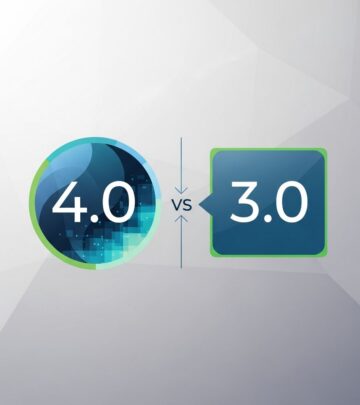
VantageScore 4.0, developed collaboratively by the three bureaus, introduces enhancements like scoring borrowers with just one year of history and incorporating rent, utilities, and telecom payments when available. It uses machine learning for better predictive accuracy across populations, potentially raising scores for 20-30 million Americans with thin files.
| Feature | Classic FICO | VantageScore 4.0 |
|---|---|---|
| Minimum Data Needed | 6 months to 2 years | 1-2 years, scores thin files |
| Alternative Data | Limited | Rent, utilities, telecom |
| Scoring Range | 300-850 | 300-850 |
| Report Merge | Tri-merge required previously | Bi-merge or tri-merge allowed |
This table highlights how VantageScore 4.0 promotes equity by valuing non-traditional data, aligning with FHFA’s safety and soundness goals.
Impact on Mortgage Qualification Standards
In late 2025, Fannie Mae and Freddie Mac eliminated the strict 620 minimum credit score for automated underwriting systems, evaluating holistic profiles instead. Borrowers below 620 may qualify with compensating factors like stable income, large down payments, or reserves covering 2-6 months of payments.
- FHA Loans: Accessible at 580+ for 3.5% down; 500+ with 10% down, though many lenders prefer 580.
- Conventional Loans: Typically 620+, but flexibility via new models.
- Government-Backed (VA, USDA): Even more lenient, ideal for first-time buyers.
Debt-to-income (DTI) ratios now prioritize pricing over rigid caps; FHA allows up to 50-57% with strong profiles. Stable two-year income history, reserves, and low DTI (ideally under 45%) remain crucial.
2026 Conforming Loan Limits and High-Cost Areas
FHFA raised the baseline conforming loan limit (CLL) for one-unit properties to $832,750 in 2026, up $26,250 from 2025, reflecting rising home values. High-cost areas see limits up to 115% of local medians, capped at $1,249,125 (150% of baseline).
| Property Type | Baseline CLL 2026 | High-Cost Ceiling |
|---|---|---|
| 1-Unit | $832,750 | $1,249,125 |
| 2-Unit | $1,067,250 | $1,599,375 |
| 3-Unit | $1,290,150 | $1,933,225 |
| 4-Unit | $1,603,125 | $2,403,750 |
These adjustments enable financing for larger loans in expensive markets while maintaining GSE stability.
Benefits for Borrowers with Thin or Non-Traditional Credit
Approximately 45 million U.S. adults have thin files, hindering mortgage access. VantageScore 4.0 addresses this by scoring based on shorter histories and alternative payments, potentially increasing approvals by 10-15% for underserved groups. Immigrants, young adults, and gig workers stand to gain most, as do those building credit via rent reporting services.
Lenders must still assess overall risk, but FHFA’s framework encourages innovation. FICO’s 2025 licensing to lenders directly further streamlines scoring.
Steps to Strengthen Your Mortgage Application
- Check Scores: Pull free reports from AnnualCreditReport.com; dispute errors.
- Build History: Use credit-builder loans or authorized user status.
- Lower DTI: Pay down debt; avoid new credit.
- Save Reserves: Aim for 2-6 months of payments.
- Shop Lenders: Compare for model flexibility and overlays.
Pre-approval reveals personalized requirements, boosting offers.
Potential Challenges and Lender Overlays
While FHFA removes barriers, lenders impose overlays—stricter rules like 620+ minimums—for risk management. Transition to dual scores (FICO 10T and VantageScore 4.0) post-interim may require system updates, delaying full benefits until 2027-2028.
Bi-merge flexibility helps if one bureau lacks data, but comprehensive profiles yield best results.
Future Outlook: Toward Fully Modernized Scoring
FHFA’s initiative aligns with 2026-2028 housing goals, promoting affordability amid rising rates. Full adoption of FICO 10T, with trended data, promises even better predictions. Borrowers should monitor updates via FHFA and GSE sites.
Frequently Asked Questions
What credit scores qualify for conventional mortgages in 2026?
No strict GSE minimum exists; 620+ is common, but lower scores succeed with strong factors like reserves.
Can I use VantageScore 4.0 for my loan?
Yes, lenders may choose it or Classic FICO in the interim phase.
What’s the 2026 conforming loan limit?
$832,750 baseline for one-unit properties; higher in high-cost areas up to $1,249,125.
How does DTI affect approval?
Flexible; under 45% ideal, up to 50-57% for FHA with compensating factors.
Do I need scores from all three bureaus?
Bi-merge allowed, but tri-merge preferred for robustness.
References
- Complete Guide to Mortgage Qualification Requirements in 2026 — Amerisave. 2026. https://www.amerisave.com/learn/complete-guide-to-mortgage-qualification-requirements-in-what-you-really-need-to-get-approved
- Fannie Mae, Freddie Mac & Credit Scores in 2026 — Nolo. 2026. https://www.nolo.com/legal-updates/fhfa-approves-use-of-classic-fico-credit-scores-for-fannie-mae-freddie-mac-mortgages.html
- Credit Scores — FHFA. 2025. https://www.fhfa.gov/policy/credit-scores
- FHFA Announces Conforming Loan Limit Values for 2026 — FHFA. 2025. https://www.fhfa.gov/news/news-release/fhfa-announces-conforming-loan-limit-values-for-2026
- Credit Score Models and Reports Initiative — Fannie Mae. 2025. https://singlefamily.fanniemae.com/originating-underwriting/credit-score-models
Similar Articles








Read full bio of medha deb