FHA Loan: Definition, Requirements, and Benefits
Complete guide to FHA loans: Understanding government-backed mortgages for homebuyers.

What Is an FHA Loan?
An FHA loan is a government-backed mortgage insured by the Federal Housing Administration, designed to expand homeownership opportunities for borrowers who may not qualify for conventional loans. Unlike traditional mortgages, FHA loans are offered by private lenders but protected by federal government insurance, making them significantly more accessible to first-time homebuyers and those with lower credit scores or limited savings for down payments.
The Federal Housing Administration administers a program of loan insurance that protects FHA-approved lenders against losses if the homeowner defaults on the loan. This insurance protection allows lenders to offer more favorable terms to borrowers with weaker financial profiles than would typically be possible with conventional financing.
How FHA Loans Work
FHA loans function similarly to conventional mortgages in their basic structure. A borrower receives a lump sum from a private lender to purchase a home, then repays that loan balance plus interest over the agreed loan term. The key difference lies in the government insurance backing and the more flexible qualification requirements.
One of the most significant features of FHA loans is the loan-to-value (LTV) ratio they allow. FHA loans permit borrowers to finance up to 96.5% of a home’s value, meaning you could potentially purchase a home with a down payment as low as 3.5%. This is substantially lower than conventional loans, which typically require larger down payments.
The cost of the mortgage insurance provided by the FHA is passed along to the homeowner through mortgage insurance premiums (MIP). This insurance serves as the lender’s protection and makes the program possible for borrowers with riskier profiles.
FHA Loan Requirements
To qualify for an FHA loan, borrowers must meet several specific requirements. Understanding these criteria is essential for determining your eligibility and preparing your application.
Credit Score Requirements
Your credit score plays a crucial role in determining your down payment requirements. Borrowers with a credit score of at least 580 can qualify for the minimum 3.5% down payment. However, if your score falls between 500 and 579, you’ll need to make at least a 10% down payment. Individual lenders may impose stricter requirements than the FHA’s minimums, so it’s worth shopping around. Even borrowers with a bankruptcy, foreclosure, or other serious marks on their financial record may still qualify for an FHA loan.
Down Payment
The down payment requirement depends directly on your credit score. With a qualifying score, you could put down as little as 3.5% to 10%. Additionally, the FHA allows home sellers, builders, or mortgage lenders to cover up to 6% of closing costs. Many borrowers may also qualify for down payment assistance programs that can further reduce or eliminate the required out-of-pocket down payment.
Debt-to-Income Ratio
Lenders typically require that no more than 31% of your monthly income goes toward mortgage payments (front-end ratio) and no more than 43% goes toward all debt payments combined (back-end ratio). Some lenders may allow higher ratios if you can make a larger down payment or demonstrate other compensating factors.
Property and Occupancy Requirements
FHA loans are exclusively for primary residences, meaning you must live in the home the majority of the time. The property can have up to four units as long as you occupy one as your primary residence. You cannot use an FHA loan to purchase a second home, vacation property, or investment property where you don’t reside full-time.
Property Inspection and Standards
The property must be inspected and appraised by a HUD-approved appraiser who verifies that it meets HUD’s basic standards. These requirements ensure the property is structurally sound and has adequate ventilation, working heating, plumbing, and electrical systems. The property must also be a one-unit to four-unit primary residence.
Loan Limits
FHA loan limits vary by location based on local market conditions. In 2025, you can borrow between $524,225 and $1,209,750 for a single-family home, depending on your geographic location. Higher-value markets have higher loan limits to accommodate regional housing costs.
Mortgage Insurance Premiums
All FHA loans require mortgage insurance premiums (MIP). Borrowers pay an upfront premium equal to 1.75% of the loan principal, typically paid at closing. Additionally, annual premiums ranging from 0.15% to 0.75% of the loan amount are usually paid monthly, depending on your down payment, loan amount, and loan term.
Types of FHA Loans
The FHA offers several loan products to meet different homebuying needs and situations.
FHA Purchase Loan (203(b))
The most common FHA product, the 203(b) loan, is used to purchase a primary residence. This standard home mortgage loan is the form most frequently discussed when referring to FHA loans and is suitable for first-time homebuyers and others seeking to purchase a home.
FHA Rate-and-Term Refinance
Current homeowners can refinance their existing mortgage—whether FHA or conventional—into a new FHA loan to obtain a lower interest rate or better loan terms. This option is ideal for adjusting monthly payments without cashing out any home equity.
FHA Cash-Out Refinance
Homeowners with equity in their property can refinance while withdrawing cash for home improvements, debt consolidation, or other expenses. This product typically requires a higher credit score and more equity than other FHA products.
FHA Streamline Refinance
Borrowers who already have an FHA loan can use this streamlined option to refinance quickly with minimal documentation, resulting in lower closing costs. However, streamline refinances don’t offer a cash-out option.
FHA Rehabilitation Loan (203(k))
An FHA 203(k) loan covers both the home’s purchase price and the cost of repairs. Available in Standard and Limited options covering different types of renovations and loan limits, these loans are ideal for buyers purchasing fixer-uppers who need to incorporate renovation costs into their financing.
FHA Loans vs. Conventional Loans
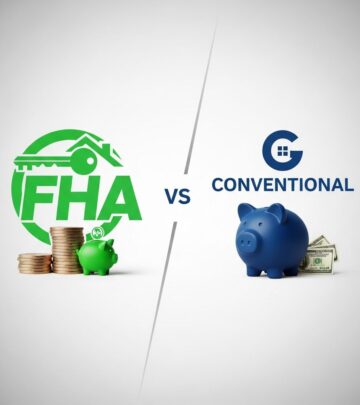
While FHA loans and conventional mortgages serve similar purposes, they differ significantly in their qualification requirements, flexibility, and costs.
| Feature | FHA Loan | Conventional Loan |
|---|---|---|
| Minimum Down Payment | 3.5% (with credit score 580+) | 3-5% (typically 5-20%) |
| Credit Score Requirement | 500-580+ | 620+ |
| DTI Ratio (Front End) | Up to 31% | Up to 28% |
| Mortgage Insurance | MIP required (1.75% upfront + 0.15-0.75% annually) | PMI only if down payment less than 20% |
| Loan Limits (2025) | $524,225-$1,209,750 | No federal limits |
| Property Type | Primary residence only | Primary, secondary, or investment |
When FHA Loans Work Best
FHA loans are particularly beneficial for first-time homebuyers with limited savings for down payments and borrowers with lower credit scores who may not qualify for conventional financing. They allow borrowers with less-than-perfect financial histories to achieve homeownership sooner and begin building equity.
When Conventional Loans Work Best
Conventional loans may be more suitable for well-qualified buyers with strong credit scores and substantial down payments, particularly those able to put down 20% or more. They also allow for larger loan amounts in high-cost markets and can be used to purchase investment properties or vacation homes.
Advantages of FHA Loans
FHA loans offer numerous benefits that make homeownership more accessible:
– Lower credit score requirements: Borrowers with credit scores as low as 500-580 can qualify, and even those with past bankruptcies or foreclosures may be eligible- Lower down payment requirements: As little as 3.5% down is possible with qualifying credit, significantly lower than conventional loan requirements- Faster path to homeownership: More lenient qualification criteria allow you to purchase a home and start building equity sooner- More flexible debt-to-income ratios: Front-end ratios up to 31% and back-end ratios up to 43% are generally acceptable- Closing cost assistance: Up to 6% of closing costs can be covered by sellers, builders, or lenders- Loan term flexibility: Choose between 15-year and 30-year fixed or adjustable-rate mortgages
Disadvantages of FHA Loans
Despite their advantages, FHA loans have some drawbacks to consider:
– Mandatory mortgage insurance: All FHA loans require MIP regardless of down payment size, increasing the total cost of borrowing- Higher total costs: The combination of upfront and annual insurance premiums can substantially increase your total interest paid over the loan term- Limited to primary residences: You cannot use FHA financing for investment properties or vacation homes- Property requirements: HUD’s strict property standards may exclude some homes from FHA financing- Lower loan limits: Geographic loan limits may be restrictive in high-cost housing markets- Stricter lender requirements: Individual lenders often impose standards higher than the FHA minimums
The FHA Loan Application Process
Applying for an FHA loan involves several key steps. First, you’ll need to get pre-approved by meeting with an FHA lender who will review your financial situation, credit history, and employment. The lender will provide a pre-approval letter indicating how much you can borrow. Next, you’ll work with a real estate agent to find a suitable property that meets FHA standards. Once you’ve found a home, you’ll make an offer and, if accepted, complete the formal application process. The lender will order a HUD-approved appraisal and inspection. Finally, you’ll undergo underwriting where the lender verifies all documentation before issuing a clear-to-close statement.
Understanding Mortgage Insurance Premiums
Mortgage insurance premiums protect lenders rather than borrowers. The upfront MIP of 1.75% is typically financed into the loan, meaning you pay interest on it throughout the loan term. Annual premiums, ranging from 0.15% to 0.75%, are paid monthly and included in your mortgage payment. The annual premium amount depends on your down payment percentage, loan amount, and loan term. Borrowers who put down less than 10% may pay annual premiums for the life of the loan, while those with 10% or more down may have premiums that eventually terminate.
Frequently Asked Questions
Q: What credit score do I need for an FHA loan?
A: The minimum FHA credit score is 500, though many lenders require at least 580. With a score between 500-579, you’ll need to put down 10%, while scores of 580 and above qualify for the minimum 3.5% down payment.
Q: Can I use an FHA loan to buy an investment property?
A: No, FHA loans are exclusively for primary residences where you live the majority of the time. You cannot use FHA financing for investment properties, vacation homes, or properties where you don’t reside.
Q: How much can I borrow with an FHA loan?
A: FHA loan limits vary by location. In 2025, limits range from $524,225 to $1,209,750 for single-family homes, with higher limits in more expensive markets.
Q: Is mortgage insurance required on all FHA loans?
A: Yes, all FHA loans require mortgage insurance premiums regardless of your down payment amount. This includes an upfront premium of 1.75% and annual premiums of 0.15-0.75%.
Q: Can FHA loans be used for fixer-upper homes?
A: Yes, the FHA 203(k) rehabilitation loan is specifically designed for purchasing fixer-uppers and includes the cost of repairs in your financing.
Q: How do I qualify if I have bad credit or a foreclosure history?
A: FHA loans are more forgiving than conventional loans. Even borrowers with past bankruptcies or foreclosures may qualify, especially with a higher down payment or compensating factors.
References
- What is an FHA Loan? – Consumer Financial Protection Bureau — Consumer Financial Protection Bureau (CFPB). 2024. https://www.consumerfinance.gov/ask-cfpb/what-is-an-fha-loan-en-112/
- What Is an FHA Loan? Requirements, Rates and More — Bankrate. 2025. https://www.bankrate.com/mortgages/what-is-an-fha-loan/
- What is an FHA Loan?: A Comprehensive Guide to FHA Loans — PNC Bank. 2024. https://www.pnc.com/insights/personal-finance/borrow/what-is-fha-loan.html
- FHA Loan Limits for 2025 — U.S. Department of Housing and Urban Development (HUD). 2024. https://www.hud.gov/program_offices/public_indian_housing/programs/ph/phr/about/faq
Similar Articles








Read full bio of medha deb