Fed’s Role in Mortgage Rates
Discover how Federal Reserve policies shape mortgage costs and what homebuyers need to know about rate movements.

The Federal Reserve exerts significant but indirect influence on mortgage rates through its monetary policy decisions, particularly adjustments to the federal funds rate, which affects broader borrowing costs without directly setting home loan percentages.
Understanding the Federal Funds Rate Mechanism
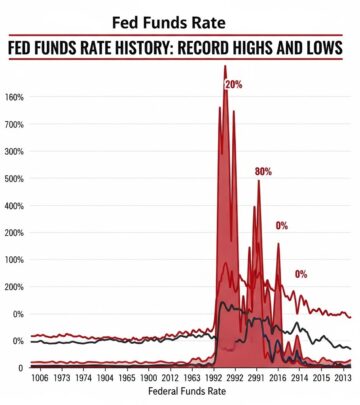
The federal funds rate represents the interest banks charge each other for overnight loans from their reserves held at the Fed. This benchmark influences short-term borrowing costs across the economy. When the Fed raises this rate, as it did repeatedly from March 2022 to combat inflation, banks face higher costs, which they pass on to consumers through elevated loan rates, including mortgages. Conversely, rate cuts, like those in late 2024, aim to stimulate economic activity by making borrowing cheaper.
However, mortgage rates do not mirror the federal funds rate precisely. Fixed-rate mortgages, which dominate the U.S. market, align more closely with the 10-year Treasury yield. This yield reflects investor expectations for future inflation and economic growth. Lenders add a spread—typically 1.5 to 2 percentage points—to this yield to determine mortgage rates, though spreads widened to around 3 points in 2023-2024 due to market risks.
Why Mortgage Rates Defy Fed Expectations Sometimes
Even as the Fed cut rates three times by the end of 2024, 30-year fixed mortgage rates stayed elevated or rose slightly, hovering around 6-7% into 2025. This disconnect arises because long-term rates respond to multiple forces beyond Fed actions:
- Inflation Trends: Persistent inflation pushes yields higher as investors demand compensation for eroded purchasing power.
- Investor Demand in Secondary Markets: Lenders sell most mortgages as securities to investors; weak demand raises rates to attract buyers.
- Supply and Demand Balance: High lender volume leads to rate hikes to manage inflow; slow periods prompt cuts.
Quantitative easing, where the Fed buys mortgage-backed securities (MBS), also plays a role. Post-Great Financial Crisis, this lowered spreads by replacing rate-sensitive private investors.
Fixed vs. Adjustable-Rate Mortgages: Differing Fed Impacts
Fixed-rate mortgages offer payment stability but track Treasury yields indirectly. Adjustable-rate mortgages (ARMs), less common, reset periodically based on indices like the Secured Overnight Financing Rate (SOFR), which correlates closely with the federal funds rate. Fed hikes directly elevate ARM resets, while cuts provide relief.
| Mortgage Type | Key Rate Influence | Fed Sensitivity | Typical Use Case |
|---|---|---|---|
| Fixed-Rate (30-Year) | 10-Year Treasury Yield + Spread | Indirect | Long-term stability |
| Adjustable-Rate (ARM) | SOFR + Margin | Direct | Short-term affordability |
As of late 2025, 30-year fixed rates averaged around 6.35%, down from 2023 peaks near 8%, reflecting Fed cuts amid cooling inflation.
Historical Patterns: Fed Actions and Rate Movements
From 2022-2023, Fed hikes to 5.33% drove mortgage rates above 8% in October 2023, cooling home sales as affordability waned. Cuts starting September 2024 (0.25% each in September and October) eased pressure slightly, though rates lagged due to Treasury movements. By 2025, further cuts were anticipated, potentially stabilizing rates near 6.5% if the funds rate nears 3.5%.
Lower rates historically boost homebuying by reducing monthly payments. For a $300,000 loan, a drop from 7% to 6% saves about $200 monthly, encouraging demand. Yet, rapid demand can inflate home prices, offsetting savings.
Economic Ripple Effects on Housing Markets
Fed policy shapes the entire housing ecosystem. Rate hikes increase borrowing costs, deterring buyers and slowing sales, as seen in 2023 when elevated rates reduced transactions. Cuts reverse this, spurring activity but risking price surges.
Homeowners with ARMs benefit directly from cuts via lower resets, building equity faster if values rise. Fixed-rate holders remain insulated but may refinance opportunistically. First-time buyers gain larger loan qualifications with lower rates, though competition intensifies.
Strategies for Homebuyers in a Fed-Driven Market
Navigating Fed-influenced rates requires preparation:
- Monitor Economic Indicators: Track Fed announcements, inflation data, and Treasury yields via official calendars.
- Lock Rates Strategically: Secure when spreads narrow, even if absolute rates are moderate.
- Consider ARM Trade-offs: Opt for hybrids if planning short-term ownership, given direct Fed linkage.
- Build Strong Credit: Better scores secure lower spreads amid volatility.
- Explore Buydowns: Pay points upfront to reduce effective rates temporarily.
Refinancing surges post-cuts; in 2024-2025, many locked sub-4% pandemic rates awaited optimal windows.
Future Outlook: What to Expect from Fed Policy
Into 2026, with labor market softening, more cuts are projected to support growth without reigniting inflation. Mortgage rates may dip toward 6%, but persistent factors like high home inventories or fiscal policy could cap declines. Investors watch FOMC meetings closely, as signals alone move markets pre-announcement.
Frequently Asked Questions
Does the Fed directly control my mortgage rate?
No, it influences indirectly via the funds rate and broader policy; fixed mortgages follow Treasuries.
Will Fed cuts always lower mortgage rates?
Not immediately; other factors like inflation can counteract, as in late 2024.
Are ARMs safer now with falling rates?
They offer initial savings but carry reset risks if rates rebound.
How do I prepare for rate changes?
Get pre-approved, track indices, and consult lenders on timing.
What if rates don’t fall as expected?
Focus on affordability, location, and long-term plans over chasing lows.
References
- How does the Federal Reserve affect mortgages? — Bankrate. 2025. https://www.bankrate.com/mortgages/federal-reserve-and-mortgage-rates/
- How Does the Federal Reserve Influence Mortgage Rates? — My First Option. 2024-08-29. https://myfirstoption.com/blog/fed-rates-influence
- Understanding Fed Rate Changes: Impact on Mortgage Rates and Home Sales — Barrett Financial. 2025. https://www.barrettfinancial.com/calmira/blog/understanding-fed-rate-changes-impact-on-mortgage-rates-and-home-sales
- The Fed, Mortgage Rates, and Home Prices — Center for Retirement Research at Boston College. 2025. https://crr.bc.edu/the-fed-mortgage-rates-and-home-prices/
- What Determines the Rate on a 30-Year Mortgage? — Fannie Mae. 2025. https://www.fanniemae.com/research-and-insights/publications/housing-insights/rate-30-year-mortgage
- How Fed Rate Cuts Can Impact Mortgage Interest Rates — Charles Schwab. 2025-09-18. https://www.schwab.com/learn/story/what-is-happening-with-mortgage-interest-rates
- How The Fed’s Rate Cuts Could Impact Homebuyers — Northwest Bank. 2025. https://www.northwest.bank/news-insights/how-the-feds-rate-cuts-could-impact-homebuyers/
- Why do interest rates matter? — Federal Reserve. 2025. https://www.federalreserve.gov/faqs/why-do-interest-rates-matter.htm
Similar Articles








Read full bio of Sneha Tete