Federal Reserve System and Its Functions
Understanding the Federal Reserve's structure, roles, and critical functions in the U.S. economy.
The Federal Reserve System and Its Function
The Federal Reserve System serves as the central banking authority of the United States, operating as a unique hybrid institution that balances national interests with regional economic considerations. Established to provide the nation with a safer, more flexible, and more stable monetary and financial system, the Federal Reserve plays a pivotal role in promoting economic growth, maintaining price stability, and ensuring the health of financial institutions. Understanding the structure and functions of the Federal Reserve is essential for comprehending how monetary policy influences the broader economy and affects everyday financial decisions.
Understanding the Federal Reserve’s Unique Structure
The Federal Reserve’s organizational design represents a carefully balanced system that insulates it from short-term political pressures while maintaining accountability to Congress and the American people. This unique structure helps distribute power across multiple entities, preventing any single component from dominating the system’s operations and decisions. The Federal Reserve operates independently on its own earnings rather than relying on congressional appropriations, which further strengthens its independence from day-to-day political considerations.
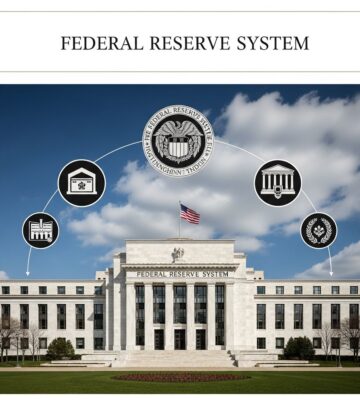
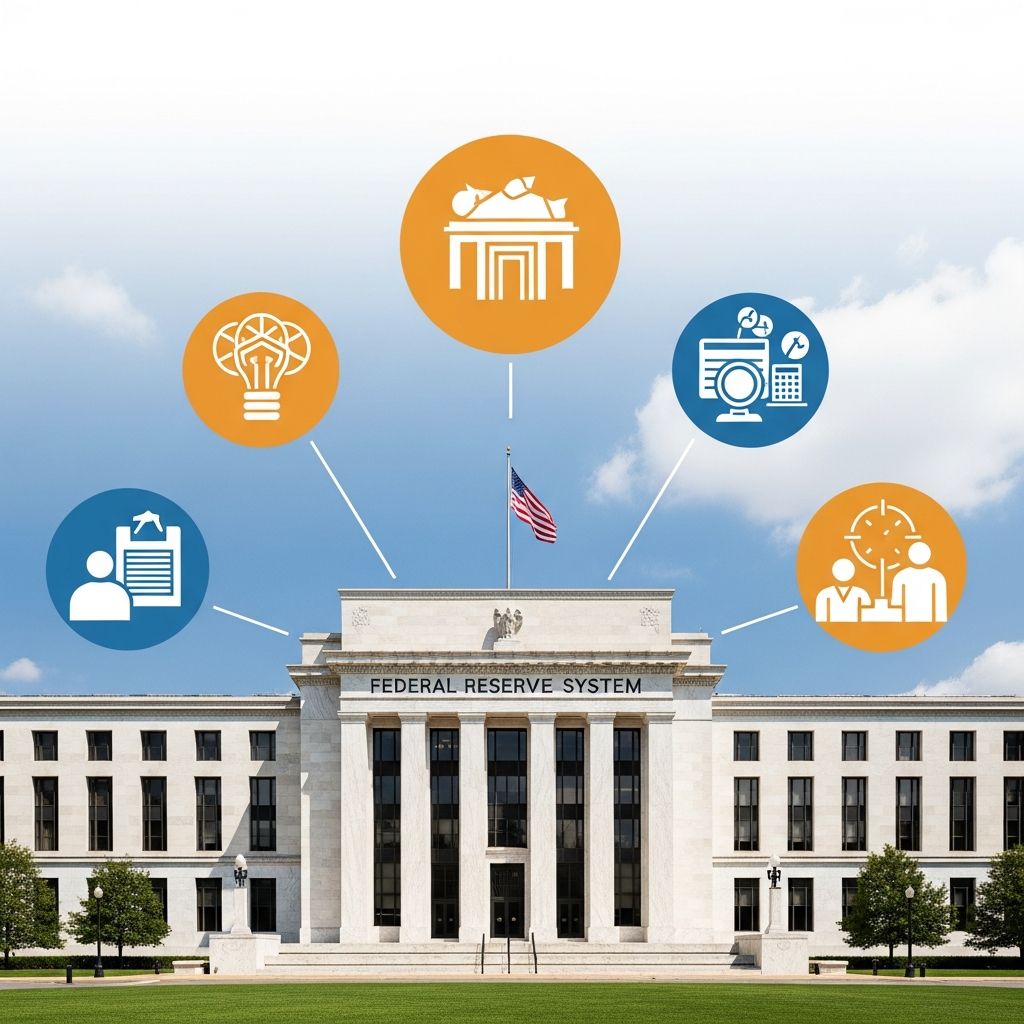
The Federal Reserve System comprises several key components that work together to fulfill its mandate. These components include the Board of Governors, twelve regional Federal Reserve Banks, the Federal Open Market Committee, member banks, and various advisory committees. Each component has distinct responsibilities that contribute to the overall functioning of the central banking system.
The Board of Governors: Central Leadership
The Board of Governors, located in Washington, D.C., serves as the main governing body of the Federal Reserve System. This independent federal government agency consists of seven members who are appointed by the President of the United States and confirmed by the Senate for staggered fourteen-year terms. The staggered terms ensure continuity and prevent any single presidency from having complete control over the Board’s composition.
The President designates two Board members to serve as Chair and Vice Chair, positions that carry four-year renewable terms. The Board of Governors holds substantial regulatory and policy-making authority, including responsibility for overseeing the twelve District Reserve Banks and implementing national monetary policy. Additionally, the Board possesses sole authority for setting reserve requirements for depository institutions and approves discount rate changes proposed by Reserve Bank directors.
Board members maintain regular communication with key economic officials and frequently testify before congressional committees, maintaining transparency and accountability. The Board also establishes and administers financial safety and soundness regulations, consumer protection regulations, and regulations regarding bank consolidation. Furthermore, it oversees Reserve Banks’ services to depository institutions, bank supervision functions, and accounting procedures.
The Twelve Regional Federal Reserve Banks
The Federal Reserve System divides the nation into twelve federal reserve districts, each served by a regional Federal Reserve Bank located in major cities throughout the country. These regional banks, along with their twenty-four to twenty-five branches, function as the operating arms of the Federal Reserve System. The twelve reserve banks are not government agencies; rather, they operate independently under the supervision of the Board of Governors.
Each Federal Reserve Bank is independently incorporated and maintains its own nine-member board of directors. Six of these directors are elected by member banks, while the remaining three are designated by the Board of Governors. The directors work closely with their Reserve Bank president to provide grassroots economic information and contribute to management and monetary policy decisions.
The regional Reserve Banks perform critical functions that support the nation’s financial system:
– Operating a nationwide payments system- Distributing currency and coin to the public through depository institutions- Supervising and regulating member banks and bank holding companies- Holding reserve balances for depository institutions and serving as “lender of last resort”- Providing banking services to the U.S. government- Participating in monetary policy formulation- Acting as fiscal agents for the U.S. Treasury
Each Reserve Bank establishes the discount rate charged on short-term loans to financial institutions through the discount window, subject to approval by the Board of Governors. Regional directors provide valuable economic insights about their districts, which the Federal Open Market Committee incorporates into its monetary policy decisions.
The Federal Open Market Committee: Policy Decision-Making
The Federal Open Market Committee (FOMC) represents the Federal Reserve’s principal monetary policymaking body and serves as the decision-making entity when the public hears that “the Fed” has set monetary policy. The FOMC directs open market operations, which constitute the most important tool of U.S. monetary policy.
The Committee’s structure consists of twelve voting members: the seven members of the Board of Governors, the president of the Federal Reserve Bank of New York, and four of the other eleven Reserve Bank presidents. The Reserve Bank presidents serve one-year terms on a rotating basis, ensuring that all twelve regional banks have regular representation. The Chair of the Board of Governors also serves as Chair of the FOMC.
While all Reserve Bank presidents participate in FOMC discussions and contribute to the committee’s assessment of economic conditions and policy options, only the five designated presidents vote on policy decisions alongside the Board members. The Committee meets eight times annually in Washington, D.C., to review regional financial and economic conditions, release economic projections, set monetary policy through voting on key decisions about interest rates, and communicate policy decisions to the public.
The FOMC also directs operations undertaken by the Federal Reserve in foreign exchange markets, providing another dimension to its policy responsibilities.
Member Banks: Private Sector Participation
Member banks represent the private banking institutions that hold stock in their regional Federal Reserve Banks. These member banks elect six of the nine members of their Reserve Bank’s board of directors, providing private sector representation in the Federal Reserve System’s governance structure. This arrangement creates a hybrid system that incorporates input from private financial institutions while maintaining federal oversight and control.
Five Critical Functions of the Federal Reserve
The Federal Reserve System performs five key functions that collectively serve to promote the effective operation of the U.S. economy and serve the public interest:
1. Conducting Monetary Policy
The primary function of the Federal Reserve involves conducting the nation’s monetary policy through the FOMC. By influencing the flow of money and credit throughout the economy, the Federal Reserve seeks to foster economic growth while maintaining price stability. The Federal Reserve employs various tools, including open market operations, to achieve these objectives.
2. Promoting Financial System Stability
The Federal Reserve works continuously to promote the stability and integrity of the nation’s financial system. This involves monitoring economic and financial conditions, identifying emerging risks, and implementing measures to prevent systemic crises that could disrupt the broader economy.
3. Supervising and Regulating Financial Institutions
Through its regional banks and central authority, the Federal Reserve supervises and regulates member banks and bank holding companies. This regulatory function ensures that financial institutions maintain adequate capital, manage risks appropriately, and comply with applicable laws and regulations designed to protect depositors and maintain financial stability.
4. Fostering Payment and Settlement System Safety and Efficiency
The Federal Reserve operates the nation’s payment and settlement systems, ensuring that financial transactions can be completed safely, efficiently, and reliably. This function is essential for the smooth functioning of commerce and the overall financial system.
5. Promoting Consumer Protection and Community Development
The Federal Reserve actively works to protect consumers from predatory financial practices and promotes community development initiatives. This function recognizes the Federal Reserve’s responsibility to ensure that all Americans have access to fair financial services and opportunities.
Internal Checks and Balances
The Federal Reserve’s structure incorporates internal checks and balances that prevent any single component from dominating its operations and decisions. This distributed authority model ensures that monetary policy decisions result from careful deliberation involving multiple perspectives and interests. The combination of a centralized Board of Governors, geographically distributed regional banks, and a policy committee that includes both Board members and Reserve Bank presidents creates a system where power is appropriately distributed.
Federal Reserve Advisory Committees
Beyond its main structural components, the Federal Reserve maintains various advisory committees that provide specialized expertise and guidance. These committees carry out varied responsibilities and include members from the private sector, academia, and community organizations. They provide valuable input on economic conditions, regulatory matters, and other topics relevant to the Federal Reserve’s mission.
Independence and Accountability
While the Federal Reserve maintains substantial independence in its monetary policy decisions, it remains accountable to Congress and the American people. The Board of Governors reports to and is accountable to Congress, and the Federal Reserve operates on its own earnings rather than congressional appropriations. This financial independence allows the Federal Reserve to pursue long-term economic objectives without being constrained by short-term budget pressures.
Board members testify frequently before congressional committees, and the Federal Reserve maintains regular communication with the President’s Council of Economic Advisers and other key economic officials. This accountability structure ensures that while the Federal Reserve has independence to make monetary policy decisions, it remains connected to and responsive to the broader government’s economic objectives.
The Regional Structure and Economic Diversity
The Federal Reserve’s organization into twelve districts reflects the economic diversity of the United States. Each region has unique economic characteristics, industries, and challenges. By maintaining regional Federal Reserve Banks, the system ensures that monetary policy decisions incorporate insights about local economic conditions. Reserve Bank presidents and directors provide information about regional economic trends, employment conditions, and financial challenges, helping the FOMC make policy decisions that appropriately address the nation’s diverse economic needs.
Operating on Independent Earnings
A distinctive feature of the Federal Reserve’s structure is that it operates on its own earnings rather than relying on congressional appropriations. The Federal Reserve generates revenue through various activities, including interest earned on securities held in its portfolio and fees for services provided to financial institutions. This financial independence removes the Federal Reserve from the annual congressional budget process, allowing it to focus on long-term economic objectives without political pressure related to funding levels.
Frequently Asked Questions
Q: What is the Federal Reserve System?
A: The Federal Reserve System is the central banking authority of the United States, serving as a hybrid institution that combines national oversight with regional operations. It was established to provide the nation with a safer, more flexible, and more stable monetary and financial system.
Q: How many regional Federal Reserve Banks are there?
A: There are twelve regional Federal Reserve Banks, each located in major cities across the nation and serving a designated federal reserve district. These banks operate approximately twenty-four to twenty-five branch locations.
Q: How are Board of Governors members selected?
A: The President of the United States appoints the seven Board members, subject to confirmation by the Senate. Each member serves a fourteen-year staggered term, ensuring continuity and preventing any single presidency from controlling the Board’s composition.
Q: What is the Federal Open Market Committee?
A: The FOMC is the Federal Reserve’s principal monetary policymaking body, consisting of twelve voting members including the seven Board governors, the president of the New York Federal Reserve Bank, and four other Reserve Bank presidents serving one-year rotating terms.
Q: How often does the FOMC meet?
A: The Federal Open Market Committee meets eight times per year in Washington, D.C., to review economic conditions, set monetary policy, and communicate decisions to the public.
Q: What are the five key functions of the Federal Reserve?
A: The Federal Reserve performs five critical functions: conducting monetary policy, promoting financial system stability, supervising and regulating financial institutions, fostering payment and settlement system safety and efficiency, and promoting consumer protection and community development.
Q: Why does the Federal Reserve have a regional structure?
A: The twelve-district regional structure ensures that the Federal Reserve incorporates diverse economic perspectives and conditions across the nation into its policymaking. Each region has unique economic characteristics, and regional Federal Reserve Banks provide valuable grassroots economic information.
Q: Is the Federal Reserve independent from political influence?
A: The Federal Reserve maintains substantial independence from short-term political pressures through its unique structure, long staggered Board terms, operation on its own earnings, and internal checks and balances. However, it remains accountable to Congress and the American people.
References
- Structure of the Federal Reserve System — Federal Reserve. https://en.wikipedia.org/wiki/Structure_of_the_Federal_Reserve_System
- The Fed’s Structure — Federal Reserve Bank of Atlanta. https://www.atlantafed.org/about/publications/fed-structure-and-functions/structure
- Understanding the Federal Reserve’s Structure — Federal Reserve Bank of Cleveland. https://www.clevelandfed.org/about-us/understanding-the-federal-reserve
- The Fed Explained — Federal Reserve Board. https://www.federalreserve.gov/aboutthefed/the-fed-explained.htm
- Staff Picks: Understanding the Fed — FRASER, Federal Reserve Bank of St. Louis. https://fraser.stlouisfed.org/blog/2025/05/staff-picks-understanding-the-fed/
- The Fed Explained – Who We Are — Federal Reserve Board. https://www.federalreserve.gov/aboutthefed/fedexplained/who-we-are.htm
- The Fed’s Structure — Federal Reserve History. https://www.federalreservehistory.org/essays/fed-structure
Similar Articles








Read full bio of medha deb