Federal Funds Rate: Definition and Impact on Economy
Understanding the federal funds rate and its crucial role in monetary policy and the economy.

The federal funds rate stands as one of the most critical tools in the Federal Reserve’s monetary policy arsenal. Understanding this rate is essential for investors, business owners, and anyone interested in how the economy functions. This comprehensive guide explores what the federal funds rate is, how it operates, and why it profoundly influences economic activity across the United States.
What Is the Federal Funds Rate?
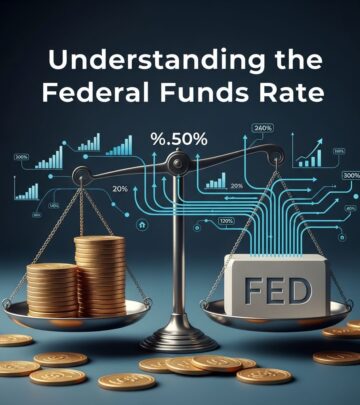
The federal funds rate represents the interest rate at which commercial banks lend reserve balances to each other overnight. These are the funds that banks hold at the Federal Reserve to meet their reserve requirements and facilitate day-to-day transactions. Rather than being set by the market alone, the Federal Reserve establishes a target range for this rate and uses various tools to influence it to stay within that range.
Unlike other interest rates directly set by the Federal Reserve, such as the discount rate, the federal funds rate is influenced through open market operations. The Fed does not directly dictate this rate; instead, it targets a range and conducts operations to maintain the actual rate within that target band. This distinction is crucial for understanding how monetary policy operates in practice.
How the Federal Funds Rate Works
To understand how the federal funds rate operates, it’s important to grasp the mechanics of bank reserves and overnight lending. Banks maintain reserve balances at the Federal Reserve to satisfy regulatory requirements and ensure liquidity. These requirements fluctuate daily based on customer deposits, withdrawals, and other factors.
When a bank finds itself short of reserves to meet its requirements at the end of the business day, it borrows from other banks that have excess reserves. These overnight loans occur in the federal funds market, where the interest rate on these transactions is the federal funds rate. Banks with excess reserves are willing to lend because they earn interest on funds they cannot otherwise deploy, while banks needing reserves prefer borrowing in this market to other alternatives.
The Federal Reserve influences this rate through several mechanisms:
- Open Market Operations (OMOs): The Fed buys and sells government securities to adjust the money supply and influence the funds rate.
- Reserve Requirements: Changes to the amount of reserves banks must hold affect the supply and demand for overnight loans.
- Interest on Reserves: The Fed pays interest on reserves that banks hold, influencing their willingness to lend or borrow.
- Discount Rate: The rate at which banks can borrow directly from the Federal Reserve’s “discount window” serves as an alternative to federal funds market borrowing.
The Federal Reserve’s Role and Authority
The Federal Reserve, established in 1913, operates as the central banking system of the United States. Among its key responsibilities is maintaining price stability and promoting maximum employment through the judicious use of monetary policy tools. The federal funds rate has become the primary instrument through which the Fed influences these objectives.
The Federal Open Market Committee (FOMC), a subset of the Federal Reserve’s Board of Governors, meets roughly every six weeks to review economic conditions and decide on the appropriate target range for the federal funds rate. These decisions reflect the Committee’s assessment of inflation, employment levels, and broader economic growth prospects.
The Fed’s authority to influence the federal funds rate stems from its unique position as the repository of bank reserves and its ability to conduct open market operations. By adjusting the amount of reserves in the banking system, the Fed can increase or decrease the pressure on banks to borrow or lend in the federal funds market, thereby influencing the rate.
Impact on Interest Rates and Borrowing Costs
Changes to the federal funds rate ripple throughout the financial system, affecting numerous other interest rates that consumers and businesses encounter daily. While the federal funds rate directly applies only to overnight lending between banks, it serves as a benchmark that influences other rates.
When the Federal Reserve raises the federal funds rate, banks face higher costs for overnight borrowing. In response, they typically increase the rates they charge on various lending products:
- Prime Rate: The interest rate banks offer their most creditworthy customers rises in tandem with the federal funds rate.
- Mortgage Rates: Long-term mortgage rates, while influenced by broader bond market dynamics, tend to move in the same direction as the federal funds rate over time.
- Credit Card Rates: These variable-rate products typically adjust quickly as the federal funds rate changes, directly affecting consumers’ borrowing costs.
- Auto Loans: Both fixed and variable-rate auto loans are influenced by movements in the federal funds rate.
- Home Equity Lines of Credit: These variable-rate products adjust directly with changes in the prime rate, which follows the federal funds rate.
Conversely, when the Fed lowers the federal funds rate, these same rates typically decline, reducing borrowing costs across the economy. This transmission mechanism from the federal funds rate to consumer and business borrowing costs represents a crucial channel through which monetary policy affects real economic activity.
Economic Effects and Policy Transmission
The federal funds rate influences the economy through multiple channels beyond simply adjusting borrowing costs. Understanding these transmission mechanisms provides insight into why the Fed places such emphasis on this single overnight lending rate.
Higher federal funds rates increase the cost of borrowing for businesses and consumers, potentially slowing spending and investment. Companies may delay expansion plans or capital investments when borrowing becomes more expensive. Consumers may postpone major purchases like homes and vehicles. This reduction in aggregate demand can help cool an overheating economy and reduce inflationary pressures.
Lower federal funds rates have the opposite effect, encouraging borrowing and spending. Businesses expand operations more readily, and consumers increase purchases of durable goods and real estate. This stimulus to aggregate demand can help boost economic growth when the economy weakens.
Beyond these direct effects on borrowing and spending, changes in the federal funds rate influence asset prices and wealth effects. Lower rates tend to support stock market valuations and higher real estate prices, increasing household wealth and encouraging consumption. Higher rates can compress asset valuations, reducing wealth and dampening consumption.
The Relationship Between Federal Funds Rate and Inflation
Controlling inflation represents one of the Federal Reserve’s primary objectives, and the federal funds rate serves as a critical tool for this purpose. The relationship between interest rates and inflation operates through several mechanisms.
Higher real interest rates (the nominal federal funds rate minus the inflation rate) discourage borrowing and spending, reducing aggregate demand and easing upward pressure on prices. Conversely, low real rates encourage borrowing and spending, potentially fueling inflation if the economy is already operating at or near full capacity.
The Fed must carefully calibrate the federal funds rate to maintain price stability while supporting employment. This balancing act proves particularly challenging during periods when inflation and unemployment move in opposite directions, forcing policymakers to prioritize one objective over the other.
Historical Context and Policy Evolution
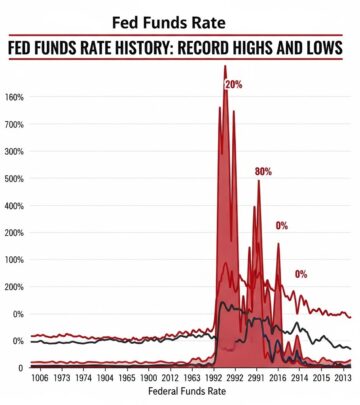
The federal funds rate has evolved as a policy tool since the Federal Reserve’s establishment. During the financial crisis of 2008-2009, the Federal Reserve lowered the federal funds rate to near zero and held it there for an extended period to support the economy. This zero lower bound constrains the Fed’s ability to stimulate the economy through rate cuts, leading to alternative tools like quantitative easing.
Following the post-crisis recovery, the Fed gradually raised rates from 2015 to 2018. Then, faced with economic slowdown in 2019 and the COVID-19 pandemic in 2020, the Fed once again reduced rates to near zero. The subsequent inflation surge led to aggressive rate increases beginning in 2022, marking one of the fastest tightening cycles in recent history.
Key Differences: Federal Funds Rate vs. Other Rates
Several important distinctions exist between the federal funds rate and other interest rates in the economy. The discount rate, for example, represents the rate at which banks can borrow directly from the Federal Reserve’s discount window. This rate is set directly by the Fed and typically exceeds the federal funds rate, as borrowing from the discount window is meant as a backstop when banks cannot obtain funds in the market.
Prime rate differs from the federal funds rate in that it represents the rate banks offer their most creditworthy customers and moves in tandem with changes to the discount rate. Long-term rates, such as mortgage rates and Treasury bond yields, reflect expectations about future economic conditions and inflation, making them only loosely tied to the current federal funds rate.
Impact on Savers and Investors
While much discussion of the federal funds rate focuses on borrowers, savers and investors face significant consequences as well. Higher federal funds rates typically lead to higher yields on savings accounts, money market accounts, and certificates of deposit (CDs), benefiting savers. However, higher rates also reduce the value of existing bonds in the portfolio and may slow corporate earnings growth, potentially pressuring stock valuations.
Lower federal funds rates reduce yields on savings products, hurting savers, but may support stock market valuations and encourage investors to seek returns in riskier assets. Understanding these dynamics helps investors position their portfolios appropriately as the Fed adjusts its policy rate.
Frequently Asked Questions
Q: How often does the Federal Reserve change the federal funds rate?
A: The Federal Open Market Committee meets approximately every six weeks to assess economic conditions and decide on any changes to the target federal funds rate. Rate changes can occur at any of these meetings, though not all meetings result in policy adjustments.
Q: What is the current federal funds rate?
A: The current target range for the federal funds rate can be found on the Federal Reserve’s official website, which is updated following each FOMC meeting. The actual effective federal funds rate, which is the weighted average of rates in the federal funds market, typically stays close to the target range.
Q: How does the federal funds rate affect mortgage rates?
A: While mortgage rates do not move in lockstep with the federal funds rate, they generally trend in the same direction over time. Mortgage rates are influenced by the federal funds rate through the prime rate, which serves as a benchmark for many adjustable-rate mortgages and home equity lines of credit.
Q: Can the federal funds rate go negative?
A: In the United States, the federal funds rate has remained at or above zero, but some central banks in other countries have implemented negative rates. The zero lower bound represents a practical constraint on how low nominal rates can go, though this constraint is not absolute.
Q: Why does the Federal Reserve care about the federal funds rate if it doesn’t directly set it?
A: The Fed targets the federal funds rate through open market operations rather than setting it directly. This approach allows market forces to determine the rate while the Fed ensures it stays within the desired range, maintaining a balance between policy control and market function.
Q: What happens when the federal funds rate reaches the zero lower bound?
A: When the federal funds rate approaches zero and cannot be lowered further without creating technical problems, the Federal Reserve employs alternative tools such as quantitative easing, forward guidance, and negative interest rates on reserves to continue stimulating the economy.
References
- Monetary Policy and the Federal Funds Rate — Board of Governors of the Federal Reserve System. 2024. https://www.federalreserve.gov/monetarypolicy/openmarket.htm
- The Transmission of Monetary Policy to the Real Economy — Federal Reserve Bank of San Francisco. 2023. https://www.frbsf.org/education/publications/doctor-econ/2003/december/monetary-policy-transmission/
- Federal Funds Rate: Definition and Impact — U.S. Department of the Treasury. 2024. https://home.treasury.gov/
- How Interest Rates Affect the Stock Market — Federal Reserve Bank of New York. 2023. https://www.newyorkfed.org/
- The Federal Funds Market and Open Market Operations — Board of Governors of the Federal Reserve System. 2024. https://www.federalreserve.gov/aboutthefed/structure-federal-reserve-system.htm
Similar Articles








Read full bio of Sneha Tete