Fed Rate Outlook: Cuts Ahead in 2026?
Explore the Federal Reserve's latest signals on interest rates, economic forecasts, and what 2026 holds for borrowers and savers amid persistent inflation.
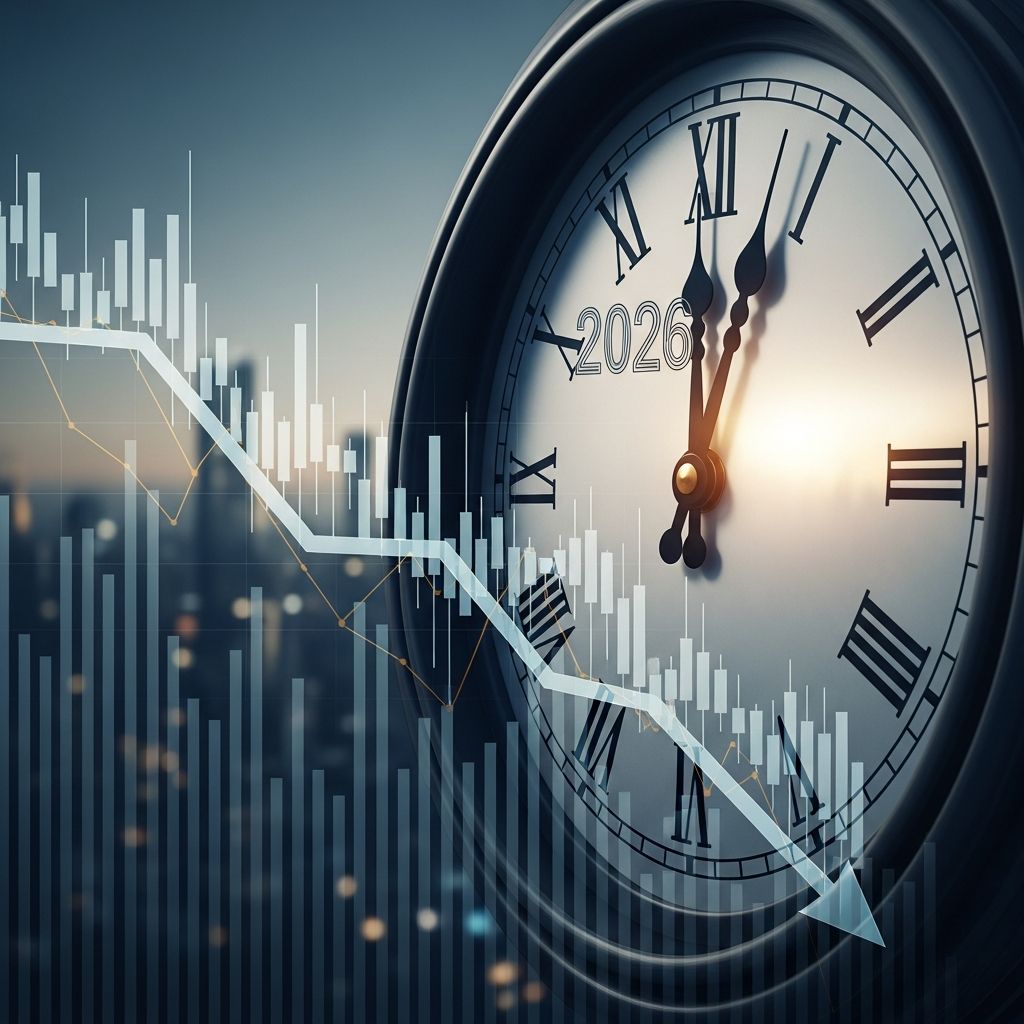
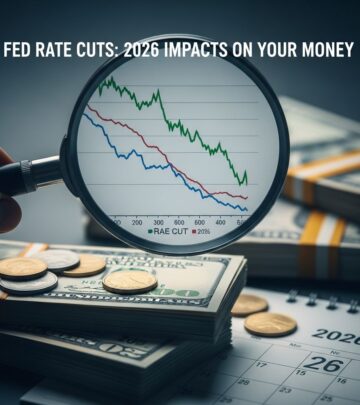
The Federal Reserve has maintained the federal funds rate at 3.5% to 3.75% following its recent FOMC meeting, signaling a cautious approach to monetary policy amid elevated inflation and steady economic growth. Policymakers project just one rate cut in 2026, but divergent expert opinions and market tools suggest the path forward remains uncertain.
Understanding the Federal Funds Rate and Its Reach
The
federal funds rate
serves as the benchmark interest rate at which banks lend reserves to each other overnight, profoundly influencing consumer products like mortgages, auto loans, credit cards, and savings accounts. When the Fed adjusts this rate, ripple effects determine borrowing costs and saving yields across the economy.Currently steady at 3.5%-3.75% for the second consecutive meeting, this range reflects the Fed’s balance between curbing inflation—targeted at 2% via the PCE index—and supporting employment. Higher rates temper spending and investment to cool price pressures, while cuts stimulate activity during slowdowns.
Breaking Down the Latest FOMC Dot Plot
The FOMC’s “dot plot”—a quarterly snapshot of the 19 policymakers’ anonymous rate projections—reveals the median expectation for the funds rate to end 2026 at 3.4%, implying a single 25 basis point (0.25%) reduction from current levels. This matches December’s forecast, despite upward revisions to inflation and growth projections.
- End of 2026: 3.4% median (one cut projected)
- Long-run neutral rate: Revised up slightly to 3.125%, hinting current policy may not be as restrictive as once thought
- Divergence: Seven members foresee no cuts in 2026, advocating patience
Inflation forecasts rose, with PCE expected at 2.7% by year-end (up from 2.4%), core PCE also at 2.7% (from 2.5%), underscoring persistent pressures. GDP growth ticked up to 2.4% for 2026, unemployment steady at 4.4%.
Key Economic Indicators Steering Fed Decisions
Several metrics guide the Fed’s stance:
| Indicator | Current/Projected 2026 | Implication |
|---|---|---|
| PCE Inflation | 2.7% (end-2026) | Above 2% target; delays cuts |
| Core PCE | 2.7% (end-2026) | Excludes food/energy; sticky |
| GDP Growth | 2.4% | Solid expansion reduces urgency for stimulus |
| Unemployment | 4.4% (2026), 4.3% (2027) | Stable labor market supports hold |
Recent data shows core PCE at 3.1% year-over-year in January, with monthly gains of 0.04%, reinforcing inflation’s resilience. Geopolitical tensions, like Middle East conflicts, add oil shock risks, potentially fueling prices further.
Market Expectations via CME FedWatch Tool
The CME FedWatch Tool, derived from futures pricing, indicates low odds of near-term moves. Post-March meeting, there’s a 27.5% chance of a December 2026 cut, 89.2% probability of no change after June, and even a 3.8% hike risk. Futures peg the effective rate around 3.6% through mid-2026.
This reflects trader bets on sustained high rates, contrasting the Fed’s single-cut median but aligning with hawkish dot plot dots.
Expert Forecasts: A Spectrum of Views
Analysts diverge sharply:
- Optimistic on Cuts: Goldman Sachs anticipates two cuts in 2026 (March and June), targeting 3%-3.25%, driven by expected GDP acceleration to 2-2.5%, stable unemployment near 4.4%, and inflation easing post-tariff effects.
- Bearish Outlook: J.P. Morgan’s Michael Feroli predicts zero cuts through 2026, citing “too hot” inflation (PCE/CPI), Middle East risks, and a neutral policy stance; he even foresees a 2027 hike to 4%.
- Fed Chair Powell’s Take: Emphasizes data-dependent decisions, noting the economy in a “moderately neutral range”—neither overly stimulative nor restrictive.
Schwab highlights the Fed’s upgraded long-run rate view, suggesting less policy tightness.
How Rate Paths Affect Everyday Finances
Mortgages and Homebuying
30-year fixed mortgage rates, closely tied to the 10-year Treasury, hover elevated. A single Fed cut might lower them modestly (e.g., 0.5%-1%), but persistent inflation could keep them above 6%. Buyers may delay; refinancers watch for dips.
Credit Cards and Personal Loans
Variable-rate cards (average 20%+ APR) would see direct relief from cuts, saving hundreds annually on balances. Fixed loans less impacted short-term.
Auto Financing
New car loans (7-8% average) sensitive to short-term rates; one cut could trim payments by $20-50/month on a $30,000 loan.
Savings and CDs
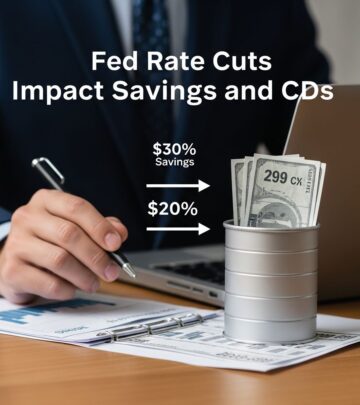
High-yield savings (4-5%) and CDs benefit from steady rates; cuts erode yields, pushing savers to lock in now.
Global and Geopolitical Influences
Beyond domestic data, external factors loom:
- Oil Shocks: Iran-related tensions risk supply disruptions, spiking energy costs and imported inflation.
- Tariffs: Potential trade policies could temporarily boost prices, delaying disinflation.
- Labor Market: If softening resumes, cuts could accelerate; tightening might prompt holds or hikes.
Fed minutes note downside employment risks have eased, but inflation persistence dominates.
Strategies for Navigating Uncertainty
With rates likely steady near-term:
- Borrowers: Lock fixed rates on big purchases; pay down variable debt aggressively.
- Savers: Ladder CDs; consider short-term Treasuries yielding ~3.6%.
- Investors: Diversify into rate-agnostic assets; monitor Fed meetings (next: June 2026).
- Budgeting: Stress-test for 4%+ rates; build 6-month emergency funds.
Track updates via FOMC statements, dot plots, and tools like CME FedWatch.
Frequently Asked Questions (FAQs)
When will interest rates drop?
The Fed projects one 25bp cut in 2026, but markets see low odds before year-end; data-dependent.
Are rates going up in 2026?
Unlikely per median dot plot, but some experts (e.g., J.P. Morgan) warn of hikes if inflation sticks.
How does the dot plot work?
Anonymous policymaker projections; median guides expectations, not commitments.
Will mortgage rates fall with Fed cuts?
Yes, but lags and Treasury yields influence more; expect modest declines.
What’s the impact of high rates on the economy?
Cools inflation without recession signals; GDP/unemployment stable.
Long-Term Projections Beyond 2026
Dot plot eyes 3.1% by 2027 (another cut), unemployment at 4.3%, with long-run rate at 3.125%. Goldman sees terminal 3-3.25%; J.P. Morgan a potential rebound. Futures hold ~3.6% through 2031. Policymakers emphasize flexibility amid uncertainties.
Stakeholders should prepare for volatility: inflation above target (2.7% PCE), solid growth (2.4% GDP), and balanced risks favor a wait-and-see posture.
References
- Fed Holds Rates Steady, Still Sees One Cut in 2026 — Charles Schwab. 2026-03. https://www.schwab.com/learn/story/fomc-meeting
- J.P. Morgan pushes back on Fed’s 2026 interest-rate cut forecast — TheStreet. 2026-03. https://www.thestreet.com/fed/j-p-morgan-pushes-back-on-feds-2026-interest-rate-cut-forecast
- Will the Federal Reserve cut interest rates in 2026? — Fox Business. 2026-03. https://www.foxbusiness.com/economy/federal-reserve-cut-interest-rates-2026
- United States Fed Funds Interest Rate — Trading Economics. 2026-03. https://tradingeconomics.com/united-states/interest-rate
- The Outlook for Fed Rate Cuts in 2026 — Goldman Sachs. 2026. https://www.goldmansachs.com/insights/articles/the-outlook-for-fed-rate-cuts-in-2026
- What’s The Fed’s Next Move? — J.P. Morgan. 2026-01. https://www.jpmorgan.com/insights/global-research/economy/fed-rate-cuts
- Fed Funds Rate Forecast 2026-2031 — StreetStats. 2026-03-30. https://streetstats.finance/rates/fedfunds
Similar Articles








Read full bio of medha deb