Fed Rate Cuts: What Banks Hide from You
Discover the hidden impacts of Federal Reserve rate decisions on your savings, loans, and investments that your bank prefers to keep quiet.

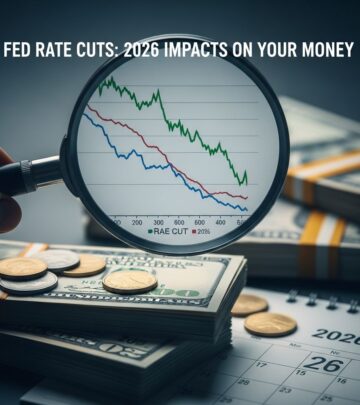
The Federal Reserve has kept its benchmark federal funds rate steady at 3.5% to 3.75% for recent meetings, with projections pointing to just one rate cut in 2026.Fed rate cuts directly influence what banks offer you, but they rarely volunteer the full story on how these shifts impact your money.
This guide reveals the unspoken truths about savings yields, loan costs, credit card rates, and more. As the FOMC signals caution due to economic uncertainties like geopolitical tensions and steady inflation, understanding these dynamics empowers you to make smarter financial moves.
Understanding the Federal Funds Rate’s Ripple Effects
The federal funds rate is the interest rate at which banks lend reserves to each other overnight, set by the Fed’s Federal Open Market Committee (FOMC). When the FOMC cuts this rate, it lowers borrowing costs across the economy, but banks don’t pass on every benefit equally.
Currently at 3.5%-3.75%, the rate reflects a pause amid stronger-than-expected growth and persistent inflation pressures. FOMC projections via the ‘dot plot’ anticipate one 25-basis-point cut this year, with median expectations holding steady from prior forecasts. Markets now price in limited easing, with an 89% chance of no change after June meetings.
Banks profit from the spread between what they pay depositors and charge borrowers. During rate cuts, they adjust slowly on savings to retain margins, while quickly hiking loan rates when rates rise. This asymmetry means your high-yield savings might lag behind Fed moves.
How Rate Cuts Transform Your Savings Accounts
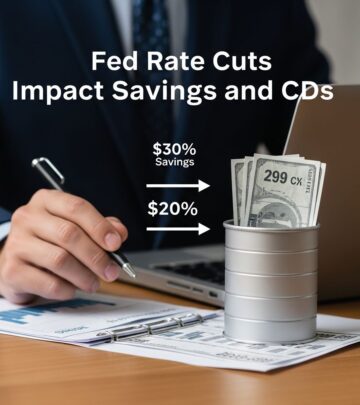
When the Fed cuts rates, banks typically follow by reducing yields on savings accounts, money market funds, and certificates of deposit (CDs). However, the lag can work in your favor if you lock in rates beforehand.
- Savings accounts: Yields often drop within weeks of a Fed cut, but online banks adjust faster than traditional ones.
- Money market accounts: These track the fed funds rate closely but may offer tiered rates for larger balances.
- High-yield savings: Shop around—top rates from fintechs can exceed 4% even as averages fall.
With only one cut projected, now is prime time to compare. Goldman Sachs forecasts growth accelerating to 2-2.5% in 2026, potentially delaying further easing and pressuring savings rates downward.
| Account Type | Current Avg. APY | Post-One Cut Projection | Best Strategy |
|---|---|---|---|
| Traditional Savings | 0.45% | 0.3-0.4% | Switch to online banks |
| High-Yield Savings | 4.2% | 3.8-4.0% | Lock in 12-month CD |
| Money Market | 3.9% | 3.5-3.7% | Maintain liquidity |
Projections assume a single cut; if inflation persists, rates could hold or even rise, as some FOMC minutes hint at potential hikes if growth stays robust.
CDs: Lock In Before the Cuts Hit
Certificates of deposit shine in a cutting cycle. Banks offer promotional rates to attract funds before yields fall. With FOMC dot plots showing limited cuts, longer-term CDs (18-24 months) could secure 4%+ APYs now.
Strategy: Ladder your CDs—divide investments across maturities to balance liquidity and yield. For example, place 25% each in 6-, 12-, 24-, and 36-month terms. This hedges against unexpected pauses or hikes.
Bank secrecy: Institutions won’t remind you that brokered CDs from marketplaces often beat branch rates by 0.5-1%.
The Loan Landscape After Fed Adjustments
Fed cuts lower the prime rate (fed funds +3%), reducing costs for variable-rate loans like HELOCs and auto financing. Fixed-rate mortgages see indirect effects via Treasury yields.
- Personal loans: Rates could dip 0.25-0.5% post-cut, saving $100+ yearly on a $10,000 loan.
- Auto loans: Dealers pass savings quickly; refinance if your rate exceeds prime +2%.
- HELOCs: Variable rates track prime directly—monitor for drops.
However, banks hike loan rates faster than they cut deposit yields. J.P. Morgan notes the Fed’s hold aligns with stable unemployment, suggesting no rush for borrowers.
Credit Cards: The Silent Rate Surge
Credit card APRs average 20%+, loosely tied to prime. Post-cut, expect modest relief (0.25%), but issuers prioritize profits. Payoff strategy: Transfer balances to 0% intro APR cards before rates adjust downward slowly.
Pro tip: Banks embed clauses allowing rate hikes on new purchases regardless of Fed policy—read the fine print.
Investment Plays in a Low-Rate World
Rate cuts boost bonds and stocks but hurt savers. Shift to dividend stocks, bond ladders, or TIPS as inflation cools toward 2%.
- Bond funds: Intermediate-term for yield pickup.
- Equities: Sectors like utilities benefit from lower rates.
- REITs: Cheaper borrowing aids property investments.
Morningstar analysts see no immediate hikes but caution on fiscal stimulus pressures.
Navigating Economic Uncertainties
Geopolitical risks, like those from Iran, spike oil prices and delay cuts. Fed Chair Powell emphasizes data-dependence: strong growth and jobs data (unemployment steady) justify pauses.
Oxford Economics predicts disinflation via housing by mid-2026, potentially enabling two cuts. Goldman Sachs eyes a terminal rate of 3-3.25%.
Actionable Steps for Savers and Borrowers
- Compare 10+ banks weekly for top yields.
- Ladder CDs and refinance variable debt post-cut.
- Build emergency funds in high-yield accounts now.
- Monitor CME FedWatch for cut probabilities.
- Diversify into rate-sensitive investments.
Frequently Asked Questions
When will the Fed cut rates in 2026?
Median FOMC projections point to one 25bp cut, possibly June or later, conditional on inflation progress.
Do savings rates drop immediately after Fed cuts?
Banks lag by 1-3 months, giving time to lock in CDs.
Should I refinance my mortgage now?
Wait for cuts if variable; fixed rates follow Treasuries.
What if the Fed hikes instead?
Unlikely short-term, but strong data could prompt it—favor short-term CDs.
How do tariffs affect rate outlook?
They may slow disinflation, limiting cuts per Goldman Sachs.
Key Takeaways Table
| Financial Product | Impact of One Cut | Bank Behavior | Your Move |
|---|---|---|---|
| Savings/CDs | Yields fall 0.25-0.5% | Slow to lower | Lock long-term now |
| Loans/Cards | Rates ease slightly | Quick on hikes | Refi variables |
| Investments | Bonds/stocks rise | N/A | Diversify |
Armed with this, sidestep bank omissions and optimize amid the Fed’s cautious stance.
References
- Fed Holds Rates Steady, Still Sees One Cut in 2026 — Charles Schwab. 2026. https://www.schwab.com/learn/story/fomc-meeting
- The Outlook for Fed Rate Cuts in 2026 — Goldman Sachs. 2026. https://www.goldmansachs.com/insights/articles/the-outlook-for-fed-rate-cuts-in-2026
- Could the Fed Raise Interest Rates In 2026? — Morningstar. 2026. https://www.morningstar.com/markets/could-fed-raise-interest-rates-2026
- Fed meeting March 2026: What is next for interest rates — Fidelity. 2026. https://www.fidelity.com/learning-center/trading-investing/the-fed-meeting
- Will the Federal Reserve cut interest rates in 2026? — Fox Business. 2026. https://www.foxbusiness.com/economy/federal-reserve-cut-interest-rates-2026
- What’s The Fed’s Next Move? — J.P. Morgan. 2026. https://www.jpmorgan.com/insights/global-research/economy/fed-rate-cuts
- Minutes of the Federal Open Market Committee — Federal Reserve. 2026-01-28. https://www.federalreserve.gov/monetarypolicy/fomcminutes20260128.htm
Similar Articles








Read full bio of medha deb