Fed Rate Cuts Impact Savings and CDs
Understand how recent Federal Reserve rate decisions shape your high-yield savings accounts and CD returns in 2026.
The Federal Reserve has maintained the federal funds rate at 3.5% to 3.75%, influencing yields on savings accounts and certificates of deposit (CDs) nationwide. This pause, following prior cuts, prompts savers to reassess strategies amid projections for limited easing in 2026.
Current Federal Funds Rate Landscape
In its latest meeting, the Federal Open Market Committee (FOMC) opted to hold rates steady for the second consecutive time, keeping the target range at 3.5%-3.75%. This decision reflects balanced concerns over persistent inflation above the 2% target and a resilient labor market. Chair Jerome Powell noted that projections remain conditional on economic performance, with median forecasts anticipating one 25-basis-point cut by year-end.
Market tools like the CME FedWatch indicate high probabilities of no change through mid-2026, with only slim chances of hikes due to geopolitical tensions and tariff effects. The FOMC’s dot plot shows seven members favoring no cuts this year, signaling a cautious stance.
How Fed Policy Directly Affects Savings Yields
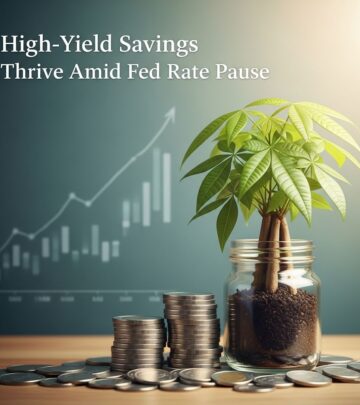
Savings account rates, particularly high-yield options from online banks, track the federal funds rate closely. Current top yields hover around 4%-4.5% APY, down from peaks above 5% in prior years. With the Fed on hold, these rates have stabilized but face downward pressure if cuts materialize later.
- High-yield savings offer liquidity but variable rates that decline with Fed easing.
- Traditional bank savings at brick-and-mortar institutions yield under 1%, far below inflation.
- Online providers maintain competitive APYs through lower overhead.
Inflation at 2.4% in recent data erodes real returns, making it essential for savers to seek accounts exceeding this threshold.
Certificates of Deposit in a Steady Rate Environment
CDs lock in rates for terms from 3 months to 5 years, shielding savers from immediate declines. Current top short-term CD rates range from 4.2% for 6 months to 3.8% for 1 year, while longer terms dip to 3.5%-4%. The Fed’s pause allows new CDs to capture these levels before potential drops.
| CD Term | Average APY (2026) | Projected Post-Cut APY |
|---|---|---|
| 3-6 Months | 4.3%-4.5% | 4.0%-4.2% |
| 1 Year | 4.0%-4.2% | 3.7%-3.9% |
| 2-3 Years | 3.8%-4.0% | 3.5%-3.7% |
| 5 Years | 3.6%-3.8% | 3.3%-3.5% |
Projections assume one cut per FOMC medians; actuals depend on inflation trends and growth. Longer terms currently offer less premium due to anticipated easing.
Strategic Moves for Savers Amid Uncertainty
To optimize returns, consider a CD ladder: divide funds across multiple maturities for liquidity and rate capture. For example, allocate 25% each to 6-month, 1-year, 2-year, and 3-year CDs. This averages yields while providing periodic access.
Shop online banks and credit unions via comparison sites for the best rates, often 10-20 basis points above national averages. No-penalty CDs offer flexibility without early withdrawal fees, ideal for uncertain times.
Alternatives to Traditional Savings and CDs
Beyond CDs, money market accounts (MMAs) blend savings liquidity with check-writing, yielding 4%-4.5% currently. Treasury securities provide safety with direct government backing; 1-year T-bills yield around 4.1%, tax-exempt at state levels.
- U.S. Treasuries: Risk-free, auction-based rates track Fed moves.
- I Bonds: Inflation-protected, but purchase limits apply.
- Short-term bond funds: Higher yields with moderate risk.
For conservative investors, these outperform cash under mattresses, preserving purchasing power against 2.7% projected PCE inflation.
Economic Factors Influencing Future Rate Paths
Geopolitical risks, including conflicts in Iran, elevate oil prices and inflation risks, potentially delaying cuts. Tariffs under evolving policies could add 0.5%-1% to CPI, per analysts. Robust job growth stabilizes unemployment at 4.4%, reducing urgency for stimulus.
FOMC minutes highlight vigilance on second-round inflation effects, with some members open to hikes if pressures mount. Goldman Sachs forecasts growth acceleration to 2-2.5%, supporting a pause before March-June cuts to 3%-3.25%.
Risks of Waiting Versus Locking Rates Now
Delaying CD purchases risks lower yields if cuts occur, as seen post-2025 reductions. However, if inflation spikes, rates could rise. Historical data shows CDs outperform savings after the first cut cycle. Savers with over $250,000 should prioritize FDIC-insured institutions.
Tax Considerations for Interest Earnings
All savings and CD interest is federally taxable as ordinary income. Municipal bonds or Treasuries offer tax advantages for high earners. Use tax-advantaged accounts like IRAs for CDs to defer taxes, boosting effective yields by 1%-2% depending on brackets.
Long-Term Savings Planning in Volatile Times
Build an emergency fund covering 3-6 months’ expenses in high-yield savings. Beyond that, ladder CDs or shift to diversified portfolios as rates normalize toward 3.125% long-run median. Monitor FOMC meetings quarterly for updates.
Frequently Asked Questions
Will CD rates drop after a Fed cut?
Yes, typically within 1-2 weeks, as banks adjust to lower funding costs.
Are savings rates guaranteed?
No, they fluctuate daily; CDs fix the rate at purchase.
What’s the best CD term now?
Short-to-medium (6-18 months) to capture current highs before easing.
How does inflation affect my savings?
Real yield = nominal APY minus inflation; aim for positive to grow wealth.
Should I move money from savings to CDs?
If you won’t need funds soon and rates exceed your needs, yes.
References
- Federal Reserve Rate Cut Outlook & Mortgage Impact Spring 2026 — The Mortgage Reports. 2026. https://themortgagereports.com/128048/federal-reserve-rate-cut-outlook-mortgage-rates-2026
- Fed Holds Rates Steady, Still Sees One Cut in 2026 — Charles Schwab. 2026. https://www.schwab.com/learn/story/fomc-meeting
- The Outlook for Fed Rate Cuts in 2026 — Goldman Sachs. 2026. https://www.goldmansachs.com/insights/articles/the-outlook-for-fed-rate-cuts-in-2026
- Could the US Fed Raise Interest Rates In 2026? — Morningstar. 2026. https://global.morningstar.com/en-nd/economy/could-us-fed-raise-interest-rates-2026
- Fed meeting March 2026: What is next for interest rates — Fidelity. 2026. https://www.fidelity.com/learning-center/trading-investing/the-fed-meeting
- Will the Federal Reserve cut interest rates in 2026? — Fox Business. 2026. https://www.foxbusiness.com/economy/federal-reserve-cut-interest-rates-2026
- What’s The Fed’s Next Move? — J.P. Morgan. 2026. https://www.jpmorgan.com/insights/global-research/economy/fed-rate-cuts
- Minutes of the Federal Open Market Committee — Federal Reserve. 2026-01-28. https://www.federalreserve.gov/monetarypolicy/fomcminutes20260128.htm
Similar Articles








Read full bio of medha deb