Federal Reserve Rate Cuts: How Low Is Low Enough?
Understanding the Fed's interest rate strategy and optimal policy levels in 2025.
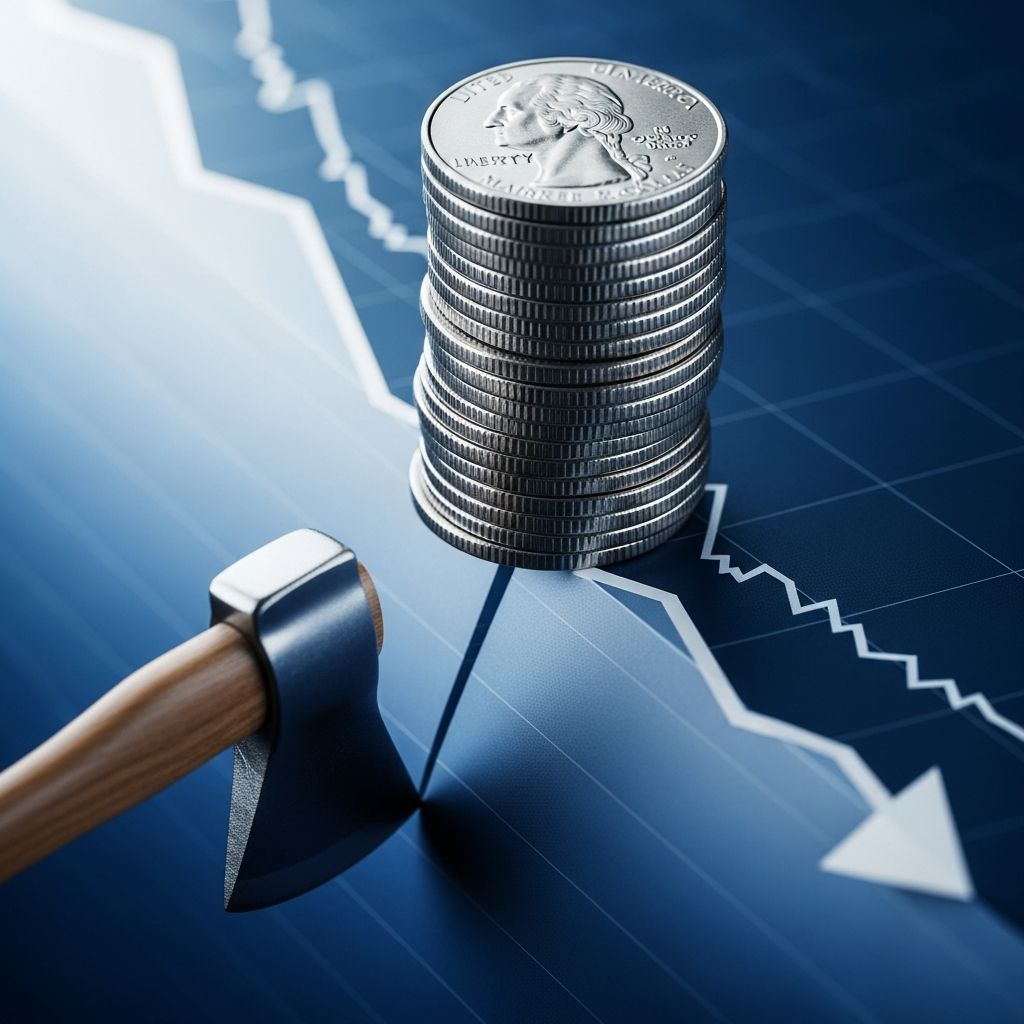
The Federal Reserve has entered a significant phase of monetary policy adjustment as 2025 progresses. After holding rates steady for much of the year due to persistent inflation concerns and tariff uncertainty, the central bank has begun reducing borrowing costs. In October 2025, the Fed cut its policy interest rate by 0.25%, following a similar reduction in September, bringing the federal funds rate to a target range of 3.75–4.00%. Yet amid this shift toward accommodative policy, a critical question emerges: how low should rates actually go?
This question sits at the heart of contemporary monetary policy debate. Fed Chair Jerome Powell has cautioned that further rate cuts are “far from” certain, while markets and economists grapple with determining the neutral rate—the level that neither stimulates nor restricts economic activity. Understanding where the Fed should ultimately settle its policy rate requires examining inflation dynamics, labor market conditions, and the broader economic landscape.
Recent Fed Actions and Rate Trajectory
The Federal Reserve’s recent moves represent a meaningful shift in policy stance. At the October 2025 Federal Open Market Committee (FOMC) meeting, policymakers voted to reduce the federal funds rate by 25 basis points, setting the target range at 3.75–4.00%. This action followed a similar 25-basis-point cut in September, bringing borrowing costs to their lowest level since 2022.
While markets widely anticipated the October decision, dissent within the FOMC reflected underlying policy tensions. Two of twelve FOMC voters dissented from the majority view: one preferred a more aggressive 50-basis-point cut, while another favored holding rates steady. This divergence illustrates the genuine uncertainty surrounding the appropriate policy path.
Market expectations currently price in a 72% probability of another 25-basis-point cut at the December 9–10, 2025 FOMC meeting. However, Fed Chair Powell’s cautious messaging during recent press conferences has tempered certainty around December action. “Policy is still modestly restrictive,” Powell noted, suggesting room for additional cuts if economic conditions warrant, but not an automatic continuation of reductions.
Forward Guidance and Long-Term Projections
Investor expectations have shifted meaningfully following recent economic data releases. Interest rate markets now price in a target policy rate near 2.9% to 3.0% by the end of 2026, substantially below current levels and below the Fed’s own projected rates. The Bureau of Labor Statistics’ downward revision of past hiring data prompted markets to lower their year-end 2026 target from 3.25% to approximately 2.9%, reflecting growing concern about labor market strength.
The Debate: How Low Should Rates Go?
The Neutral Rate Concept
At the core of the “how low is low enough” debate lies the concept of the neutral federal funds rate—often called the “r-star” or natural rate of interest. This theoretical rate neither stimulates nor restrains economic activity; it aligns with long-term economic growth potential and inflation targets. Estimates of the neutral rate typically range between 2.0% and 2.5%, though considerable uncertainty surrounds precise calculations.
If the neutral rate sits around 2.0–2.5%, then current Fed policy at 3.75–4.00% remains moderately restrictive. This positioning provides cushion for further cuts without necessarily overshooting toward excessive stimulus. However, determining the exact neutral rate proves challenging because it changes over time with productivity trends, demographic shifts, and structural economic factors.
Inflation Remains Above Target
A primary constraint on aggressive rate cuts is persistent inflation above the Fed’s 2% target. The Core Personal Consumption Expenditures price index (Core PCE), the Fed’s preferred inflation gauge, stood at 2.9% in September 2025—notably above the 2% goal. While this represents substantial progress from above 5.5% in 2022 (following aggressive rate hikes from early 2022 to mid-2023), the gap remains meaningful.
Tariff-related pressures complicate the inflation picture. President Trump’s tariff policies raised initial concerns about immediate price acceleration, though actual pass-through to consumers has been modest thus far. However, business “prices paid” surveys and rising tariff revenue suggest companies intend to pass along additional cost increases over time. This dynamic creates asymmetric risk: cutting rates too aggressively could validate price increases and entrench higher inflation expectations, undermining the Fed’s credibility and requiring future restrictive action.
Labor Market Weakness as a Counterweight
Offsetting inflation concerns, the labor market has shown recent weakness. Downward revisions to past hiring data revealed a softer employment picture than initially reported over the preceding eighteen months. Rising joblessness and softer wage growth relative to earlier expectations have shifted Fed priorities toward supporting employment—the second prong of the Fed’s dual mandate alongside price stability.
Bill Merz, head of capital markets research at U.S. Bank Asset Management Group, emphasizes that labor market weakness has become the dominant factor in recent Fed decisions. “Negative labor market revisions indicate a softer hiring picture over the last year and a half, but higher income consumers continue to drive solid aggregate consumer spending,” Merz notes. This mixed picture—softer employment but resilient consumption—creates policy complexity.
Economic Conditions Shaping Policy
Consumer Spending and Economic Resilience
Despite labor market softness, aggregate demand remains reasonably robust. Higher-income consumers continue driving solid spending, supporting economic activity. This resilience suggests the economy doesn’t require aggressive stimulus, allowing the Fed to maintain a measured approach to rate cuts. If consumer spending weakens materially, justifying deeper cuts would become stronger; if it remains solid, supporting the case for patience.
Tariff Impact Uncertainty
Tariff policies introduce significant economic uncertainty. While consumer pass-through has been limited to date, companies signal intentions to raise prices progressively. Business economists and policymakers must navigate this uncertain environment. Cutting rates too aggressively could inadvertently validate price increases and complicate inflation control. Conversely, excessive caution could undermine employment if the economy softens more than currently expected.
Market Expectations and Rate Scenarios
Current market pricing reflects several scenarios. The baseline expectation incorporates approximately three to four additional 25-basis-point cuts over the next year, bringing the federal funds rate toward 2.75–3.00% by late 2026. This trajectory would represent substantial easing from the restrictive stance maintained through most of 2025.
However, scenarios exist at both ends of the range. Under optimistic conditions—inflation continuing to decline toward target while employment remains resilient—fewer cuts might suffice, potentially settling around 3.0–3.25%. Conversely, if labor market deterioration accelerates significantly, deeper cuts approaching 2.0–2.25% could become appropriate.
Policy Divergence Within the FOMC
Recent dissents within the FOMC highlight genuine disagreement about appropriate policy. The hawkish dissent favoring no cut emphasized inflation risks and the case for maintaining restrictive conditions. The dovish dissent seeking 50 basis points reflected greater concern about employment risks and the potential costs of delayed easing. These perspectives will likely continue competing through coming meetings.
Fed Chair Powell’s careful messaging suggests leadership prefers gradual, data-dependent adjustments over predetermined paths. By maintaining flexibility and reserving the right to pause, skip, or accelerate cuts based on incoming information, the Fed preserves credibility and accommodates genuine uncertainty about appropriate policy.
Historical Context and Learning
Recent monetary policy history informs current decisions. The aggressive rate hiking cycle from early 2022 to mid-2023 raised the federal funds rate from near-zero to 5.25–5.50%, successfully bringing inflation down substantially from 2022 peaks. However, some observers question whether further hikes proved necessary, given inflation had already moderated significantly by late 2023. This experience cautions against both excessive stimulus and excessive restraint.
The Path Forward: Balancing Competing Objectives
The fundamental challenge facing the Fed involves balancing competing objectives under uncertainty. Inflation remains above target, arguing for caution. Employment has softened, arguing for support. The neutral rate lies in the 2.0–2.5% range, suggesting current policy remains appropriately restrictive but not excessively so. Market expectations of 2.9% by end-2026 may exceed optimal policy if inflation doesn’t continue declining, or may prove insufficient if employment deteriorates more sharply.
Rather than a predetermined endpoint, “low enough” likely means positioning rates at levels that support employment while maintaining inflation credibility. This probably translates to settling somewhere in the 2.5–3.25% range over the medium term—below current levels but above emergency accommodation. Precise calibration should continue following data releases regarding inflation, employment, and overall economic activity.
Frequently Asked Questions
Q: Why hasn’t the Fed cut rates more aggressively?
A: Inflation remains elevated at 2.9% versus the Fed’s 2% target, creating caution about excessive easing. Additionally, consumer spending remains solid, suggesting the economy doesn’t require aggressive stimulus. The Fed prefers data-dependent, gradual adjustments.
Q: What is the neutral federal funds rate?
A: The neutral rate—the level neither stimulating nor restricting activity—typically ranges between 2.0% and 2.5%. Current policy at 3.75–4.00% remains above this range, indicating moderate restrictiveness.
Q: How do tariffs affect Fed policy?
A: Tariffs create inflation risks as companies pass costs to consumers. This argues for caution about rate cuts. However, modest pass-through to date and resilient consumer spending limit immediate urgency for either aggressive tightening or easing.
Q: Will the Fed cut rates in December 2025?
A: Markets price approximately 72% probability of a 25-basis-point cut in December, though Fed Chair Powell described such action as “far from” certain, emphasizing data-dependency and policy flexibility.
Q: What factors determine optimal policy rates?
A: The Fed balances inflation, employment, economic growth, financial stability, and forward-looking risks. When inflation exceeds target but employment softens, as currently, policy faces genuine trade-offs requiring careful calibration.
References
- Federal Reserve Calibrates Interest Rate Policy Amid Softer Hiring — U.S. Bank, Financial Perspectives. 2025-10-29. https://www.usbank.com/investing/financial-perspectives/market-news/federal-reserve-tapering-asset-purchases.html
- United States Fed Funds Interest Rate — Trading Economics. 2025-10-29. https://tradingeconomics.com/united-states/interest-rate
- Open Market Operations — Federal Reserve Board. https://www.federalreserve.gov/monetarypolicy/openmarket.htm
- FOMC Meeting Calendars and Information — Federal Reserve Board. https://www.federalreserve.gov/monetarypolicy/fomccalendars.htm
Similar Articles








Read full bio of Sneha Tete