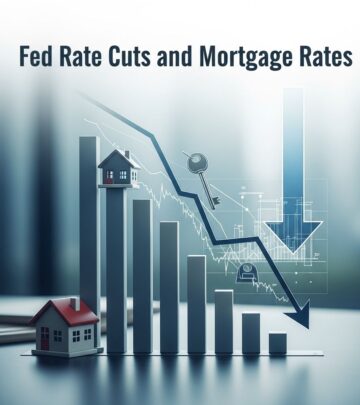
Fed Rate Cuts: Delayed Relief for Borrowers
Understand why Federal Reserve rate reductions in 2026 won't immediately lower your loan costs and how to navigate high rates now.

The Federal Reserve’s anticipated interest rate reductions in 2026 promise eventual relief for consumers grappling with high borrowing costs, but the benefits will not materialize overnight. Economic lags mean mortgage rates, auto loans, and credit card APRs could remain elevated for months or even years after the Fed acts.
Current Federal Funds Rate and Recent Decisions
As of early 2026, the Federal Open Market Committee (FOMC) has maintained the federal funds rate in the 3.5%-3.75% range, marking a pause after prior adjustments. This decision reflects a cautious stance amid stabilizing unemployment and steady inflation readings. The latest FOMC minutes from January 28, 2026, confirm a unanimous vote to hold the rate on reserve balances at 3.65%, signaling no immediate easing.
Markets anticipated this hold, with tools like the CME Group FedWatch Tool showing low probabilities for cuts in the near term. For instance, there’s only a 27.5% chance of a 25 basis point reduction in December 2025, pushing expectations into 2026.
Why the Fed Is Holding Back on Cuts
Persistent inflation above the 2% target remains the primary barrier. Core Personal Consumption Expenditures (PCE), the Fed’s preferred gauge, rose 3.1% year-over-year in January, with a monthly increase of 0.4%. Core Consumer Price Index (CPI) held at 2.5% annually in February, up 0.2% monthly—too ‘hot’ for comfort according to analysts.
Geopolitical tensions, such as those involving Iran, have spiked oil prices, complicating the inflation picture. The Summary of Economic Projections (SEP) now forecasts core PCE at 2.7% by year-end, up from prior estimates, with 2027 projections at 2.2%. Dissent within the FOMC, including from Governor Stephen Miran advocating for cuts, highlights internal debates, but the majority favors patience.
Fed Projections for 2026: A Cautious Outlook
The Fed’s ‘dot plot’ envisions just one 25 basis point cut in 2026, contrasting with more optimistic market views. J.P. Morgan’s Michael Feroli predicts zero cuts through 2026, citing ongoing inflationary pressures in PCE and CPI data. Goldman Sachs, however, forecasts cuts in March and June, targeting a terminal rate of 3%-3.25%, driven by expected growth acceleration to 2-2.5% from tax cuts and easing tariffs.
| Institution | Expected Cuts | Terminal Rate | Rationale |
|---|---|---|---|
| Federal Reserve (Dot Plot) | One 25bp cut | Not specified | Inflation at 2.7% PCE |
| J.P. Morgan | Zero cuts | Current levels | Hot inflation data |
| Goldman Sachs | Cuts in Mar/Jun | 3-3.25% | Growth rebound, cooling inflation |
| Market Consensus | 1-2 cuts | Low 3s | Labor market softening |
This table summarizes divergent views, underscoring uncertainty.
The Transmission Lag: How Long Until Consumers Feel It?
Even if the Fed cuts rates, the ‘transmission mechanism’ delays impacts on everyday borrowing. Banks adjust prime rates slowly, often waiting for sustained Fed easing. Mortgage rates, tied to 10-year Treasury yields influenced by broader economic signals, may not drop immediately.
- Mortgages: Expect 3-6 months lag; current low-6% forecasts could persist mid-year.
- Auto Loans: Variable rates shift faster but still trail by 1-3 months.
- Credit Cards: Tied to prime rate; introductory offers might lure borrowers sooner.
- HELOCs/HELOC: Most sensitive, potentially adjusting within weeks.
Historical patterns from 2024-2025 cuts show consumers waited quarters for relief amid affordability crises in housing and essentials.
Sector-Specific Impacts in 2026
Housing Market Struggles
The stagnant housing sector feels the pinch most acutely. With mortgage rates hovering in the low 6s, homebuyers face an affordability wall despite any Fed action. Experts like Rebekah Scott predict rates stay elevated through mid-2026 unless inflation cools dramatically or labor weakens. Tariff volatilities and policy shifts under new leadership add unpredictability.
Consumer Debt and Spending
Higher rates exacerbate debt burdens in a ‘low-hire, low-fire’ job market. Taxpayer-funded interest on $38.9 trillion national debt indirectly pressures household budgets via energy, groceries, and healthcare costs. College graduates, comprising 55-60% of labor income, risk spending cuts if AI efficiencies soften employment, potentially prompting further Fed response.
Business and Investment Effects
Firms delay expansions amid high borrowing costs, slowing job growth. Financial conditions tightening could curb spending, influencing Fed pauses.
Strategies for Consumers in a High-Rate Environment
While waiting for rate relief:
- Refinance strategically if eligible, locking in before potential hikes.
- Build emergency funds to buffer variable payments.
- Shop multiple lenders for auto/credit offers.
- Pay down high-interest debt aggressively.
- Monitor Fed meetings via official calendars.
Improving credit scores accelerates access to better terms, regardless of Fed moves.
Risks and Uncertainties Ahead
Upside risks include faster inflation cooldown from tariff pass-through ending mid-2026, enabling more cuts. Downsides: Geopolitical wars, AI-driven job shifts, or new Fed leadership like Kevin Warsh could halt easing. Unemployment stabilization supports holds, but deteriorations might accelerate cuts.
Frequently Asked Questions
When will mortgage rates drop after a Fed cut?
Typically 3-6 months, depending on Treasury yields and lender adjustments.
Is inflation finally under control?
No, core PCE at 3.1% exceeds the 2% target; projections see 2.7% year-end.
How many rate cuts in 2026?
Fed dots: one; analysts range from zero to two.
Should I buy a home now or wait?
Weigh personal timeline against forecasts of persistent high rates mid-year.
What if no cuts happen?
Prolonged high costs strain budgets; focus on debt reduction and savings.
This FAQ addresses common concerns based on current data.
References
- J.P. Morgan pushes back on Fed’s 2026 interest-rate cut forecast — TheStreet. 2026. https://www.thestreet.com/fed/j-p-morgan-pushes-back-on-feds-2026-interest-rate-cut-forecast
- The Outlook for Fed Rate Cuts in 2026 — Goldman Sachs. 2026. https://www.goldmansachs.com/insights/articles/the-outlook-for-fed-rate-cuts-in-2026
- Federal Reserve Rate Cut Outlook & Mortgage Impact Spring 2026 — The Mortgage Reports. 2026. https://themortgagereports.com/128048/federal-reserve-rate-cut-outlook-mortgage-rates-2026
- Will the Federal Reserve cut interest rates in 2026? — Fox Business. 2026. https://www.foxbusiness.com/economy/federal-reserve-cut-interest-rates-2026
- Fed Holds Rates Steady, Still Sees One Cut in 2026 — Charles Schwab. 2026. https://www.schwab.com/learn/story/fomc-meeting
- What’s The Fed’s Next Move? — J.P. Morgan Global Research. 2026. https://www.jpmorgan.com/insights/global-research/economy/fed-rate-cuts
- Minutes of the Federal Open Market Committee — Federal Reserve. 2026-01-28. https://www.federalreserve.gov/monetarypolicy/fomcminutes20260128.htm
Similar Articles








Read full bio of Sneha Tete