Fed Rate Cuts: 2026 Impacts on Your Money
Discover how anticipated Federal Reserve rate cuts in 2026 could reshape borrowing costs, savings returns, and investment strategies for everyday Americans.
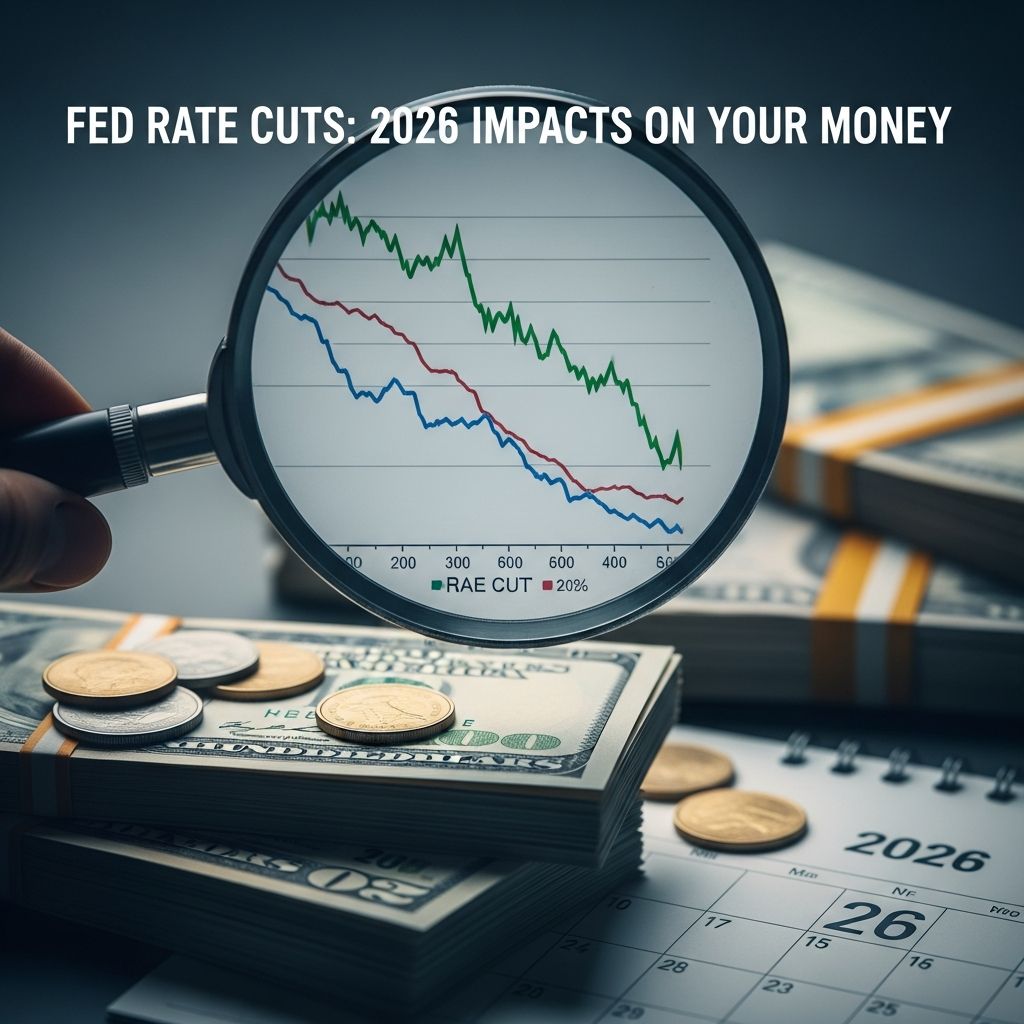
The Federal Reserve’s decisions on interest rates profoundly influence everyday financial decisions, from securing a home loan to growing retirement savings. As of early 2026, the federal funds rate stands steady at 3.5% to 3.75%, with FOMC projections indicating just one potential 25-basis-point cut this year. This cautious approach reflects balanced economic growth, persistent inflation around 2.7% PCE, and a stable unemployment rate near 4.4%. Understanding these dynamics helps individuals navigate borrowing, saving, and investing amid uncertainty from global events like tariffs and geopolitical tensions.
Understanding the Federal Funds Rate Mechanism
The federal funds rate serves as the benchmark that banks use for overnight lending, rippling through all consumer rates. When the Fed cuts this rate, it signals cheaper money, encouraging spending and investment to stimulate growth. Currently, after pauses following 2025 cuts, policymakers project a terminal rate around 3.1% to 3.4% by year-end, assuming inflation eases toward 2%. Goldman Sachs anticipates cuts in March and June, potentially dropping to 3-3.25%, driven by cooling labor trends and disinflation from housing.
These adjustments don’t happen in isolation. FOMC minutes reveal debates over inflation risks from tariffs and oil spikes, leading to a unanimous hold in January 2026. For consumers, this means watching economic indicators like jobs reports—September’s 119,000 payrolls masked an underlying slowdown to 39,000 monthly gains.
Borrowing Becomes More Affordable with Cuts
Lower rates directly reduce costs for variable-rate debts. Credit card APRs, often pegged to the prime rate (fed funds plus 3%), could drop swiftly post-cut. If rates fall 25 basis points, expect card rates to follow, saving hundreds annually on balances. For a $10,000 balance at 20% APR, a 1% drop saves about $100 yearly in interest.
- Credit Cards: Average APR hovers at 21-24%; cuts could trim minimum payments, easing cash flow for 150 million U.S. cardholders.
- Auto Loans: New car financing at 6-7% might ease to 5.5%, reducing a $30,000 loan’s monthly payment by $25-30 over 60 months.
- Personal Loans: Unsecured debt rates around 11-12% stand to benefit most from Fed easing.
Home equity lines of credit (HELOCs), variable by nature, mirror these changes closely, offering opportunities to refinance or tap equity cheaply.
Mortgage Markets: Fixed vs. Variable Impacts
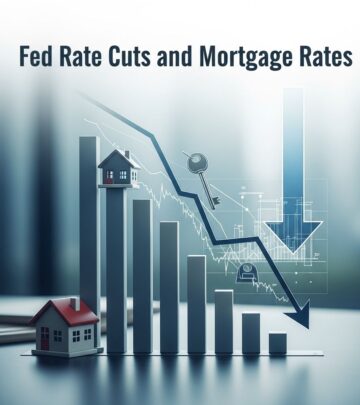
Mortgages blend fixed and adjustable products. Fixed 30-year rates, influenced indirectly via 10-year Treasury yields, have held above 6% amid inflation worries but could dip below 6% with sustained cuts. Adjustable-rate mortgages (ARMs) reset periodically, making them highly sensitive— a rate drop could lower payments on millions of outstanding ARMs.
| Loan Type | Current Avg Rate (2026) | Post-1 Cut Projection | Monthly Savings ($300K Loan) |
|---|---|---|---|
| 30-Year Fixed | 6.5% | 6.25% | $60 |
| 15-Year Fixed | 5.8% | 5.5% | $95 |
| 5/1 ARM | 6.2% | 5.95% | $45 (initial) |
Refinancing surges in low-rate environments; if cuts materialize mid-year, homeowners could save thousands over loan life. However, J.P. Morgan notes potential tightening if labor strengthens, reversing gains.
Savings and CDs: Adjusting to Lower Yields
Savers face trade-offs. High-yield savings accounts (HYSAs) at 4-5% now compete with inflation; cuts would pull yields down to 3.5-4%, eroding real returns. Certificates of deposit (CDs) lock in rates—laddering terms (e.g., 6-month to 5-year) hedges against drops.
- Money Market Accounts: Yields track fed funds closely; expect 0.25-0.50% decline per cut.
- I Bonds: Fixed rate plus inflation; cuts indirectly pressure by signaling economic shifts.
- Treasury Bills: Short-term safest bet, with auctions reflecting Fed moves weekly.
Shift toward longer-term CDs before cuts to capture current highs, as Fidelity projections suggest median one cut in 2026.
Investment Portfolios in a Cutting Cycle
Rate cuts boost equities, especially growth stocks sensitive to borrowing costs. Sectors like real estate investment trusts (REITs), utilities, and consumer discretionary thrive as money flows from bonds. Schwab’s analysis post-FOMC shows dot plot signaling growth at 2.4% GDP, supporting markets.
Bonds rally inversely: longer-duration treasuries gain most. A portfolio with 60/40 stocks/bonds could see 5-8% uplift from a 50bps easing, per historical patterns. Yet, Morningstar warns of hike risks if inflation rebounds, urging diversification.
Strategies for Debt Management
Proactive steps amplify benefits:
- Pay down high-interest variable debt pre-cut to minimize exposure.
- Refinance fixed loans if rates drop 0.5%+ below current.
- Build emergency funds in liquid, high-yield options.
Monitor FOMC calendars—next meetings in June and September could trigger cuts if jobs soften further.
Retirement and Long-Term Planning
For 401(k)s and IRAs, lower rates favor equities over bonds. Target-date funds auto-adjust, but DIY investors should tilt toward dividend growers. Social Security adjustments tie to inflation, not rates directly, but portfolio health affects supplementation needs.
Goldman Sachs forecasts unemployment stabilizing above 4.4%, implying steady wage growth to offset yield drops.
Navigating Global and Policy Uncertainties
Tariffs, Iran conflicts, and new Fed leadership (e.g., Kevin Warsh nomination) cloud outlooks. Powell emphasized conditional cuts: no progress on 2% inflation means no easing. Fox Business notes market pullbacks post-projections, pricing fewer cuts.
Frequently Asked Questions
When will the Fed cut rates in 2026?
Projections point to one cut mid-year, possibly June/September, but pauses likely early on.
Will mortgage rates fall if the Fed cuts?
Indirectly yes, via Treasury yields; expect 0.25-0.5% drops per Fed action.
How do rate cuts affect my savings account?
Yields decline quickly on variable accounts; lock in CDs beforehand.
Are stocks a buy before cuts?
Historically yes, but diversify amid inflation risks.
What if the Fed hikes instead?
Unlikely per consensus, but stronger growth could prompt it by 2027.
References
- The Outlook for Fed Rate Cuts in 2026 — Goldman Sachs. 2026. https://www.goldmansachs.com/insights/articles/the-outlook-for-fed-rate-cuts-in-2026
- Fed Holds Rates Steady, Still Sees One Cut in 2026 — Charles Schwab. 2026. https://www.schwab.com/learn/story/fomc-meeting
- Could the US Fed Raise Interest Rates In 2026? — Morningstar. 2026. https://global.morningstar.com/en-nd/economy/could-us-fed-raise-interest-rates-2026
- Fed meeting March 2026: What is next for interest rates — Fidelity. 2026. https://www.fidelity.com/learning-center/trading-investing/the-fed-meeting
- Will the Federal Reserve cut interest rates in 2026? — Fox Business. 2026. https://www.foxbusiness.com/economy/federal-reserve-cut-interest-rates-2026
- What’s The Fed’s Next Move? — J.P. Morgan. 2026. https://www.jpmorgan.com/insights/global-research/economy/fed-rate-cuts
- Minutes of the Federal Open Market Committee — Federal Reserve. 2026-01-28. https://www.federalreserve.gov/monetarypolicy/fomcminutes20260128.htm
Similar Articles








Read full bio of medha deb