FOMC Meetings 2025: 8 Dates And Rate Cut Outlook
Understanding the Federal Reserve's 2025 rate cut schedule and monetary policy outlook.

The Federal Reserve’s 2025 Meeting Schedule and Rate Cut Outlook
The Federal Reserve plays a crucial role in shaping the nation’s monetary policy and economic health. The Federal Open Market Committee (FOMC) meets regularly throughout the year to assess economic conditions and make decisions about interest rates. Understanding when these meetings occur and what rate cuts might be coming in 2025 is essential for anyone interested in economics, investing, or personal finance.
As we move through 2025, the FOMC has a full calendar of scheduled meetings that will determine the trajectory of the federal funds rate. With inflation concerns gradually easing and economic data continuing to guide policy decisions, market participants and consumers alike are watching closely for signals about potential rate reductions.
When Are the Next FOMC Meetings in 2025?
The Federal Reserve has released its official meeting schedule for 2025, with eight regularly scheduled FOMC meetings spread throughout the year. These meetings typically span two consecutive days and are held approximately every six to eight weeks.
Here is the complete list of 2025 FOMC meeting dates:
- January 28–29
- March 18–19
- May 6–7
- June 17–18
- July 29–30
- September 16–17
- October 28–29
- December 9–10
Each of these meetings provides an opportunity for the FOMC to review economic data, discuss monetary policy adjustments, and make announcements about interest rate changes. Certain meetings are also associated with a Summary of Economic Projections, which provides insights into the committee’s economic forecasts.
Understanding FOMC Meeting Structure and Timing
FOMC meetings follow a consistent format that helps maintain transparency in the Federal Reserve’s decision-making process. Each meeting takes place over two consecutive business days, with policy announcements typically occurring on the second day. The FOMC’s policy statement is generally released at 2:00 p.m. Eastern Time (6:00 p.m. UTC), followed by a press conference led by the Federal Reserve Chair approximately 30 minutes later.
These press conferences have become increasingly important for financial markets, as they provide real-time context for the policy decisions and offer policymakers the opportunity to discuss economic outlooks and future policy directions. Investors, economists, and financial analysts closely monitor these announcements for clues about the Fed’s next moves.
Rate Cut Expectations for 2025
Current Interest Rate Status
As of the most recent FOMC meeting in October 2025, the federal funds rate remained holding in the range of 4.25% to 4.50%. This level represents the current baseline from which any future rate cuts would be measured.
Market Expectations and Economic Data
The question of whether the Federal Reserve will cut rates further in the remainder of 2025 depends heavily on incoming economic data. Inflation has shown signs of easing compared to its peaks in recent years, but uncertainties remain regarding tariffs, labor market strength, and broader economic conditions. The Fed has historically signaled that it would implement approximately two quarter-point rate reductions by the end of 2025, though this guidance has been subject to revision based on economic developments.
Initially, some market participants anticipated a rate cut at the September 2025 FOMC meeting. However, comments from Federal Reserve Chair Jerome Powell following the July meeting suggested a more cautious approach, with rate cut probabilities falling below 50% for that meeting. This shift reflected the Fed’s concern about inflation persistence and the need for additional data confirmation before proceeding with reductions.
Factors Influencing Fed Rate Decision-Making
The Federal Reserve does not make rate decisions in a vacuum. Instead, policymakers carefully analyze multiple economic indicators and risk factors before taking action:
- Inflation Data: Consumer Price Index (CPI) and Personal Consumption Expenditures (PCE) reports help the Fed gauge whether inflation remains above their 2% long-term target.
- Employment Data: The Fed monitors jobs reports, unemployment rates, and wage growth to ensure the labor market remains balanced and healthy.
- Economic Growth: Gross Domestic Product (GDP) figures and other growth indicators inform decisions about economic strength and slack in the economy.
- Global Conditions: International economic developments and financial stability concerns can influence Fed policy.
- Policy Uncertainty: Factors such as potential tariff implementations and fiscal policy changes add complexity to the Fed’s outlook.
What Rate Cuts Mean for You
Mortgage Rates and Housing
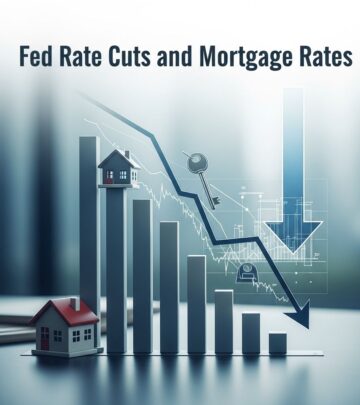
Federal Reserve rate decisions have a direct impact on mortgage rates, which typically move in the same direction as the federal funds rate. When the Fed cuts rates, mortgage rates often decline, making home purchases more affordable for borrowers. Conversely, rate increases push mortgage costs higher.
Savings Accounts and CDs
Rate cuts typically put downward pressure on yields offered by banks on savings accounts, money market accounts, and certificates of deposit (CDs). If you hold these products, declining rates mean lower interest income on your savings.
Credit Cards and Loans
Variable-rate credit cards and personal loans are often tied to the prime rate, which moves in tandem with the federal funds rate. Rate cuts can lead to lower interest charges on variable-rate debt, providing relief to borrowers carrying balances.
Stock Market and Investment Returns
Lower interest rates can make stocks more attractive relative to bonds and other fixed-income investments, potentially supporting stock market performance. However, the relationship between Fed policy and market returns is complex and influenced by many other factors.
The Federal Reserve’s Dual Mandate
It’s important to understand that the Federal Reserve operates under a dual mandate established by Congress: to promote maximum employment and stable prices. This means the Fed must balance its desire to support job creation with its responsibility to keep inflation under control. Rate cuts are typically implemented when the Fed believes inflation is sufficiently contained and the economy could benefit from monetary stimulus. Conversely, rate increases are used to combat overheating economies and excessive inflation.
Looking Ahead: 2026 and Beyond
The Federal Reserve has also released its preliminary meeting schedule for 2026, which includes eight meetings scheduled as follows:
- January 27–28
- March 17–18
- April 28–29
- June 16–17
- July 28–29
- September 15–16
- October 27–28
- December 8–9
Policy decisions in 2026 will depend heavily on how the economy develops in the final months of 2025 and the beginning of 2026. If inflation remains sticky, the Fed may hold rates steady or even consider increases. If economic growth slows and inflation continues declining, additional rate cuts may be warranted.
Emergency Meetings and Policy Flexibility
While the FOMC has eight regularly scheduled meetings per year, it maintains the flexibility to convene unscheduled emergency meetings if economic conditions warrant immediate action. This happened notably during the 2008 financial crisis and the early stages of the COVID-19 pandemic. The regular meeting schedule provides structure and predictability, but the Fed retains tools to respond quickly to crises.
How to Stay Informed
For those who want to monitor Fed decisions closely, several resources are available. The Federal Reserve’s official website publishes all FOMC statements, meeting minutes, and press conference transcripts. Major financial news outlets provide immediate analysis of Fed announcements. Additionally, financial data providers offer real-time tracking of fed funds rate futures, which reflect market expectations about future rate decisions.
Frequently Asked Questions
Q: How many times per year does the FOMC meet?
A: The FOMC holds eight regularly scheduled meetings per year, typically spaced approximately six to eight weeks apart. Emergency meetings can be called if economic conditions require immediate action.
Q: What happens at an FOMC meeting?
A: During an FOMC meeting, committee members review economic data, discuss monetary policy, and vote on whether to adjust interest rates or maintain current policy. The meeting concludes with a policy statement and press conference.
Q: When will the Fed cut rates next?
A: Rate cut timing depends on incoming economic data. While the Fed previously signaled possible cuts in 2025, actual decisions hinge on inflation, employment, and growth data. Watch for announcements at each FOMC meeting for the latest guidance.
Q: How do I know what the Fed decided?
A: The FOMC releases its policy statement at 2:00 p.m. ET on the second day of each meeting, followed by a press conference at approximately 2:30 p.m. ET. These are broadcast live on the Federal Reserve’s website and covered by financial news outlets.
Q: Does the Fed always change rates at every meeting?
A: No. The FOMC only adjusts rates when it believes economic conditions warrant a change. Often, the committee votes to maintain the current rate, especially during periods of economic stability or policy uncertainty.
Q: How far in advance are FOMC meetings scheduled?
A: The Federal Reserve typically releases its meeting schedule approximately one year in advance. These dates remain tentative until officially confirmed at the meeting immediately preceding them.
References
- FOMC Meeting Schedule for 2025 and 2026 — Federal Reserve Board. 2024. https://www.federalreserve.gov/monetarypolicy/fomccalendars.htm
- Federal Open Market Committee Meeting Information — Federal Reserve Board. 2025. https://www.federalreserve.gov/monetarypolicy/fomcpresconf20251029.htm
Similar Articles








Read full bio of medha deb