Federal Reserve’s October 2025 Rate Cut Explained
Understanding the Fed's October 2025 quarter-point rate cut and its impact on your finances.

Federal Reserve’s October 2025 Rate Cut: What You Need to Know
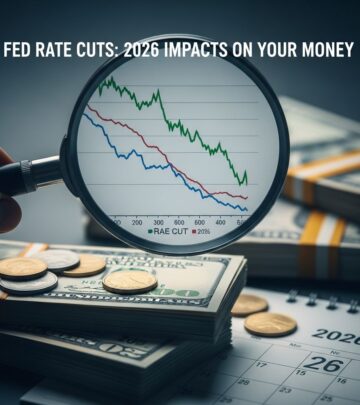
On October 29, 2025, the Federal Reserve announced another quarter-point interest rate cut, reducing the federal funds rate by 25 basis points to a target range of 3.75% to 4.00%. This decision marked the second consecutive rate reduction and brought borrowing costs to their lowest level in nearly three years. The move came as the central bank shifted its focus from controlling inflation to supporting employment in an increasingly uncertain economic environment.
The Federal Open Market Committee (FOMC) made this decision in light of a shift in the balance of risks facing the economy. While inflation remains elevated at approximately 3%, above the Federal Reserve’s 2% long-term target, policymakers now see greater concern in a cooling job market than in persistent price increases. This strategic pivot reflects the Fed’s dual mandate to achieve both maximum employment and stable prices.
Understanding the October 2025 Rate Cut Decision
The Committee’s Rationale
The Federal Reserve’s decision to cut rates in October came despite limited official government data releases leading up to the meeting—information the Fed typically relies on heavily when making monetary policy decisions. Nevertheless, investors had widely anticipated the rate cut, and the central bank proceeded with its plan to lower borrowing costs further.
According to the FOMC statement, the Committee sought to carefully assess incoming data, the evolving outlook, and the balance of risks when considering additional adjustments to the federal funds rate. This measured approach suggests the Fed remains vigilant about future economic developments while taking steps to support the economy in the near term.
Economic Conditions Driving the Decision
Several economic factors contributed to the Fed’s October rate cut decision. Job growth has slowed considerably due to various economic headwinds, including uncertainty around tariffs and government shutdowns. These labor market weaknesses prompted the central bank to prioritize employment support over inflation concerns, at least for the time being.
The Fed’s reasoning is straightforward: by making it less expensive for businesses and consumers to borrow money, lower interest rates encourage businesses to invest in new projects, expand their operations, and hire more people. Additionally, lower rates help consumers manage their existing debt more affordably, potentially freeing up household income for spending and investment.
Impact on Borrowers
Mortgage Rates
One of the most significant impacts of the Fed’s rate cut affects mortgage borrowers. While the Federal Reserve’s actions don’t directly set mortgage rates, they strongly influence them through the federal funds rate. A 25-basis-point cut in the federal funds rate typically leads to corresponding decreases in mortgage rates offered by banks and lenders.
For prospective homebuyers, lower mortgage rates mean reduced monthly payments on new home purchases. For existing homeowners, this environment may present refinancing opportunities, though the extent of savings depends on current mortgage rates and individual financial circumstances.
Credit Card and Personal Loan Rates
The October rate cut also influences credit card interest rates and personal loan rates. Most credit cards carry variable interest rates tied to the prime rate, which moves in tandem with the Federal Reserve’s federal funds rate. As the Fed cuts rates, credit card companies typically reduce the interest rates they charge to cardholders over time.
However, it’s important to note that credit card rate reductions may lag behind Fed decisions by several weeks or months. Additionally, individual cardholders’ rates depend on their creditworthiness and existing account terms. Those with excellent credit scores generally benefit more from rate cuts than those with lower scores.
Auto Loan Rates
Auto loan rates also tend to decline when the Federal Reserve cuts interest rates. Whether purchasing a new or used vehicle, borrowers may find more favorable financing terms in the aftermath of the Fed’s rate cut. Timing an auto purchase to coincide with lower rates can result in substantial savings over the life of a loan.
Impact on Savers
Savings Account and Money Market Rates
While borrowers benefit from lower interest rates, savers typically experience the opposite effect. The October 2025 rate cut likely led to decreased interest rates on savings accounts, money market accounts, and certificates of deposit (CDs).
Savers with funds in interest-bearing accounts should expect to earn slightly less on their deposits, though the impact remains relatively modest given the size of this particular rate cut. Banks and financial institutions adjust deposit rates based on the Fed’s actions, generally offering lower yields to depositors when the central bank reduces rates.
Checking Account Interest
Interest-bearing checking accounts, while less common than savings accounts, also see reduced rates when the Fed cuts. High-yield checking accounts offered by online and smaller financial institutions may be affected, though some institutions maintain competitive rates to attract deposits despite the Fed’s actions.
Implications for Retirement Savings
Retirees relying on interest income from savings accounts or fixed-income investments face challenges in a lower-rate environment. This shift may prompt some savers to reconsider their investment strategies and explore other income-generating options, such as dividend-paying stocks or bonds with longer maturities.
The Fed’s Balance Sheet Actions
Concluding the Quantitative Tightening Process
In addition to the rate cut announcement, the Federal Reserve indicated it would conclude its process of reducing its balance sheet effective December 1, 2025. This quantitative tightening process, which began in 2022, involved allowing securities to mature without reinvesting the proceeds, thereby reducing the Fed’s holdings of Treasury securities and mortgage-backed securities.
The decision to end balance sheet reductions marks a significant shift in monetary policy. By ceasing quantitative tightening while simultaneously cutting rates, the Fed is employing multiple tools to support economic growth and employment. The Fed’s balance sheet, which had expanded dramatically during the COVID-19 pandemic, will stabilize at its reduced level under this new approach.
What Happens After October?
December Rate Cut Expectations
Market participants and Fed officials remain divided on whether another rate cut will occur in December. Some Fed participants believed that an additional 25-basis-point reduction in December could be suitable if the economy evolved broadly as expected during the intermeeting period. However, many others suggested that keeping rates unchanged through the remainder of 2025 would likely be appropriate under their economic outlooks.
Several Fed officials emphasized that another 25-basis-point cut might not be warranted in December, signaling a potential pause in the rate-cutting cycle if economic conditions stabilize. The path forward depends heavily on incoming economic data, inflation trends, and labor market developments between October and December.
Forward Guidance and Market Expectations
The Fed’s forward guidance indicates a data-dependent approach to future rate decisions. The FOMC statement emphasized that the Committee will carefully assess incoming data, the evolving outlook, and the balance of risks when considering additional adjustments to the target range. This stance suggests that future rate cuts are not predetermined and will depend on real-time economic conditions.
Broader Economic Implications
Supporting Economic Growth
Lower interest rates generally stimulate economic growth by encouraging business investment and consumer spending. Companies may be more inclined to finance expansion projects, research and development, and hiring initiatives when borrowing costs decline. Consumers benefit from reduced debt servicing costs, allowing them to allocate more income toward purchases and savings.
Employment Market Support
The Fed’s focus on supporting employment through rate cuts reflects concerns about slowing job growth. By reducing borrowing costs, the central bank aims to encourage businesses to hire and expand their workforce. Lower financing costs may prove particularly beneficial for small businesses that rely on credit to fund operations and growth.
Inflation Considerations
While inflation remains above the Fed’s 2% target at approximately 3%, the central bank appears confident that price pressures are moving in the right direction. By cutting rates despite above-target inflation, the Fed is essentially betting that inflation will continue declining toward its long-term goal without requiring restrictive monetary policy measures.
How Different Rate Environments Affect You
| Category | Borrowers | Savers |
|---|---|---|
| Mortgages | Lower monthly payments | N/A |
| Credit Cards | Reduced interest rates over time | N/A |
| Auto Loans | More favorable financing terms | N/A |
| Savings Accounts | N/A | Lower interest earnings |
| CDs and Money Markets | N/A | Reduced yields |
| Checking Accounts | N/A | Minimal interest earnings |
Frequently Asked Questions
Q: Why did the Federal Reserve cut rates in October 2025?
A: The Fed cut rates to support employment and economic growth while inflation, though elevated, appears to be trending toward the central bank’s 2% long-term target. Job growth had slowed due to various economic uncertainties, prompting the Fed to prioritize employment support.
Q: How much did the Federal Reserve cut rates in October 2025?
A: The Fed cut the federal funds rate by 25 basis points (0.25%), bringing the target range from 4.00%-4.25% to 3.75%-4.00%.
Q: Will my mortgage rate automatically decrease after the Fed cuts rates?
A: No, mortgage rates don’t automatically decrease. However, lenders typically adjust their mortgage rates in response to Fed actions. Your existing mortgage rate won’t change unless you refinance, but new mortgage offers generally become more attractive after a rate cut.
Q: What should savers do when the Fed cuts rates?
A: Savers should shop around for the best available rates on savings accounts and CDs, as different banks offer varying rates. Consider locking in rates on CDs before they decline further, and explore diversified investment strategies if you rely on interest income.
Q: Is another rate cut expected in December 2025?
A: The Fed has not committed to a December rate cut. Some officials believe another cut could be appropriate if the economy evolves as expected, while others suggest holding rates steady through the end of the year. The decision will depend on incoming economic data.
Q: How does the Fed’s balance sheet conclusion affect me?
A: The conclusion of the Fed’s balance sheet reduction means the central bank will stop shrinking its holdings of securities. This action, combined with rate cuts, provides additional monetary stimulus to the economy, which can support borrowing conditions and economic growth.
Q: What was the Fed’s target rate range after the October 2025 cut?
A: The new target range for the federal funds rate became 3.75% to 4.00%, representing the lowest level in nearly three years.
References
- Federal Reserve Issues FOMC Statement — Board of Governors of the Federal Reserve System. 2025-10-29. https://www.federalreserve.gov/newsevents/pressreleases/monetary20251029a.htm
- Fed Meeting October 2025: The Fed Cuts Again — Fidelity Investments. 2025-10-29. https://www.fidelity.com/learning-center/trading-investing/the-fed-meeting
- What the October 2025 Fed Rate Cut Means for You — Citizens Bank. 2025-10-29. https://www.citizensbank.com/learning/fed-interest-rate-cut-impacts.aspx
- Implementation Note Issued October 29, 2025 — Board of Governors of the Federal Reserve System. 2025-10-29. https://www.federalreserve.gov/newsevents/pressreleases/monetary20251029a1.htm
- United States Fed Funds Interest Rate — Trading Economics. 2025-11-19. https://tradingeconomics.com/united-states/interest-rate
Similar Articles








Read full bio of Sneha Tete