Fed Rate Cuts And Mortgage Rates: 5 Expert Forecasts For 2026
Understand how Federal Reserve rate cuts influence mortgage rates, expert forecasts for 2026, and strategies for homebuyers and refinancers.
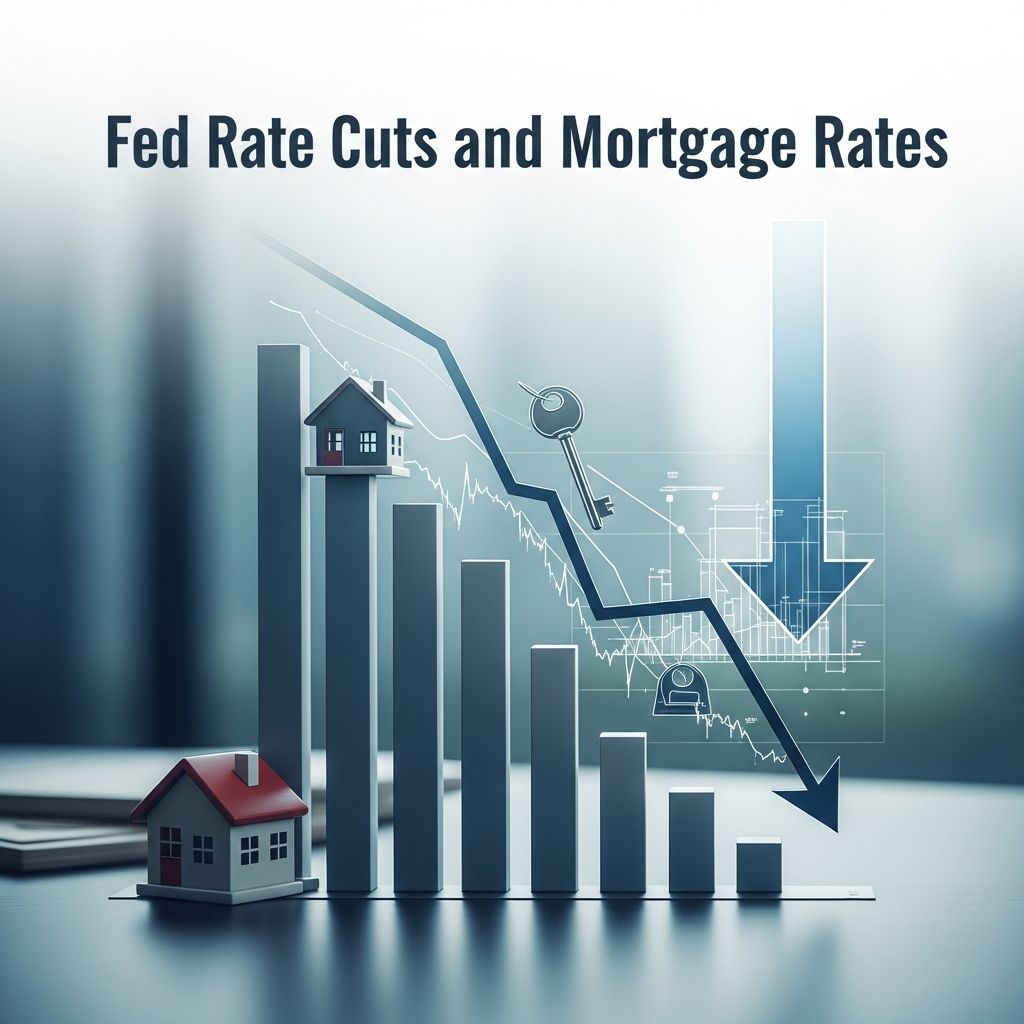
The Federal Reserve’s decisions on interest rates play a pivotal role in shaping mortgage rates, influencing homebuyers, refinancers, and the broader housing market. While the Fed does not directly control mortgage rates, its federal funds rate adjustments significantly affect bond yields and lender pricing, often leading to shifts in borrowing costs.
How Fed Rate Cuts Affect Mortgage Rates
Mortgage rates are indirectly tied to the Fed’s federal funds rate, which influences short-term borrowing costs and overall market sentiment. When the Fed cuts rates, it signals easing monetary policy, typically lowering yields on 10-year Treasury notes—a key benchmark for 30-year fixed mortgage rates. For instance, recent Fed cuts in late 2025, including a quarter-point reduction in September, October, and December, prompted mortgage rates to trend downward as lenders anticipated further relief.
However, the relationship is not one-to-one. Mortgage rates often move in anticipation of Fed actions, sometimes declining before official announcements due to market pricing. Cooling inflation and a softening labor market further amplify these effects, creating conditions for gradual rate declines.
- Federal Funds Rate: Lowering this rate reduces short-term borrowing costs, indirectly pressuring mortgage rates downward.
- 10-Year Treasury Yields: Mortgage rates closely track these yields; projections show them rising slightly to 4.3% by late 2028 despite Fed cuts.
- Inflation Trends: As inflation nears the Fed’s 2% target, it paves the way for sustained rate cuts and lower mortgage costs.
Current Mortgage Rate Environment (January 2026)
As of early January 2026, 30-year fixed mortgage rates have dipped to a 15-month low, averaging around 6% with fluctuations. Bankrate reports 30-year rates at levels that could fall below 6% for the first time since summer 2022, driven by anticipated Fed cuts and recession concerns. Specific averages include:
| Mortgage Type | Previous Week | 1 Year Ago | 2025 Peak | Current (Jan 2026) |
|---|---|---|---|---|
| 30-Year Fixed | 6.42% | 6.52% | 7.07% | 6.31% |
| 15-Year Fixed | 5.54% | 5.59% | 6.30% | 5.88% |
| 30-Year Jumbo | 6.42% | 6.52% | 7.07% | 6.31% |
These rates include an average of 0.31 discount and origination points, allowing borrowers to buy down rates further. Despite recent dips, volatility persists due to stubborn inflation readings and economic uncertainty.
Expert Predictions for Mortgage Rates in 2026
Forecasters are cautiously optimistic for 2026, projecting gradual declines as inflation cools and the Fed potentially resumes cuts mid-to-late year. The federal funds rate is expected to settle at 3.4% by year’s end.
- Freddie Mac: Anticipates 30-year fixed rates below 6%, boosting affordability and home sales.
- Mortgage Bankers Association (MBA): Sees rates at 6.4% through 2026, citing economic growth and persistent inflation; refinancing could rise if rates dip under 6%.
- Fannie Mae: Expects gradual downward pressure with possible volatility from economic shifts.
- National Association of Realtors (NAR): Predicts stabilization near 6%, aiding inventory movement and buyer confidence.
- Bankrate Analysts: 30-year rates bouncing around 6%, potentially as low as 5.5% with Fed cuts and recession fears.
These projections hinge on sustained inflation moderation, labor market cooling, and no major geopolitical disruptions.
Why Mortgage Rates May Decline Further in 2026
Several economic indicators align for potential easing:
- Cooling Inflation: Nearing 2%, reducing upward pressure on rates and encouraging Fed cuts.
- Softening Labor Market: Slower job growth and rising unemployment could prompt stimulative policy.
- Fed Rate Cuts: Additional reductions possible at January 28 meeting or later, with markets pricing in low probability now but subject to change.
- Economic Deceleration: Declining consumer spending signals slower growth, often lowering rates.
Even without dramatic drops, a shift to 5.5%-6% would enhance affordability compared to 2025 peaks above 7%.
Reasons Mortgage Rates Won’t Plunge Dramatically
Expectations of sub-5% rates are tempered by historical norms and policy caution. Ultra-low 3% rates were pandemic anomalies; 5%-6% represents a sustainable range.
- Fed remains vigilant against reaccelerating inflation.
- 10-year Treasury yields may rise gradually to 4.3% by 2028.
- Lenders balance risk amid steady economic growth per MBA.
Small decrements, like 0.5%, still yield meaningful savings: on a $300,000 loan, this cuts monthly payments by about $100 and lifetime interest significantly.
Refinancing Opportunities in 2026
Homeowners with rates above 6.5% from recent years stand to benefit. A drop to 6% or below could spur refinancing volume, especially if held long-term. Monitor daily, as rates react swiftly to Fed signals and data releases.
Fixed-rate mortgages remain preferable in falling-rate environments for locking in savings, versus adjustables which risk hikes later.
Frequently Asked Questions (FAQs)
Q: Will mortgage rates drop further in 2026?
A: Yes, experts predict gradual declines to 5.5%-6.4%, driven by cooling inflation and potential Fed cuts, though not below 5% likely.
Q: How does the Fed directly influence mortgage rates?
A: Indirectly via federal funds rate, affecting bond yields and lender expectations; rates often move preemptively.
Q: Is now a good time to buy or refinance?
A: If rates are at personal lows and plans are long-term, act; otherwise, wait for further dips amid volatility.
Q: What if inflation rises again?
A: It could stall cuts, keeping mortgage rates elevated around 6% or higher.
Q: Fixed or adjustable-rate mortgage in 2026?
A: Fixed for stability as rates may fluctuate; adjustables suit short-term plans if rates continue falling.
Strategies for Homebuyers and Borrowers
Lock rates when favorable, consider points to buy down, and track economic indicators like unemployment and CPI. Diversify with buydowns or alternative products if needed.
References
- Will Mortgage Rates Drop Further in 2026? What Experts Predict — MIDFLORIDA Credit Union. 2026-01 (approx). https://www.midflorida.com/resources/insights-and-blogs/insights/mortgage/will-mortgage-rates-drop-further-in-2026-what-experts-predict
- Mortgage Rates Dip To 15-Month Low — Bankrate. 2026-01-07. https://www.bankrate.com/mortgages/analysis/mortgage-rates-january-7-2026/
- Budget office expects Federal Reserve to cut rates in 2026 — ABC News. 2026 (recent). https://abcnews.go.com/Business/wireStory/budget-office-expects-federal-reserve-cut-rates-2026-129032633
- Current mortgage rates report for Jan. 12, 2026 — Fortune. 2026-01-12. https://fortune.com/article/current-mortgage-rates-01-12-2026/
- 3 reasons mortgage rates could fall again soon — CBS News. 2026-01 (approx). https://www.cbsnews.com/news/ways-mortgage-rates-could-fall-again-next-january-2026/
Similar Articles








Read full bio of Sneha Tete