Fear and Greed Index: Definition and Market Indicators
Understanding market sentiment through the CNN Fear and Greed Index and its seven key indicators.
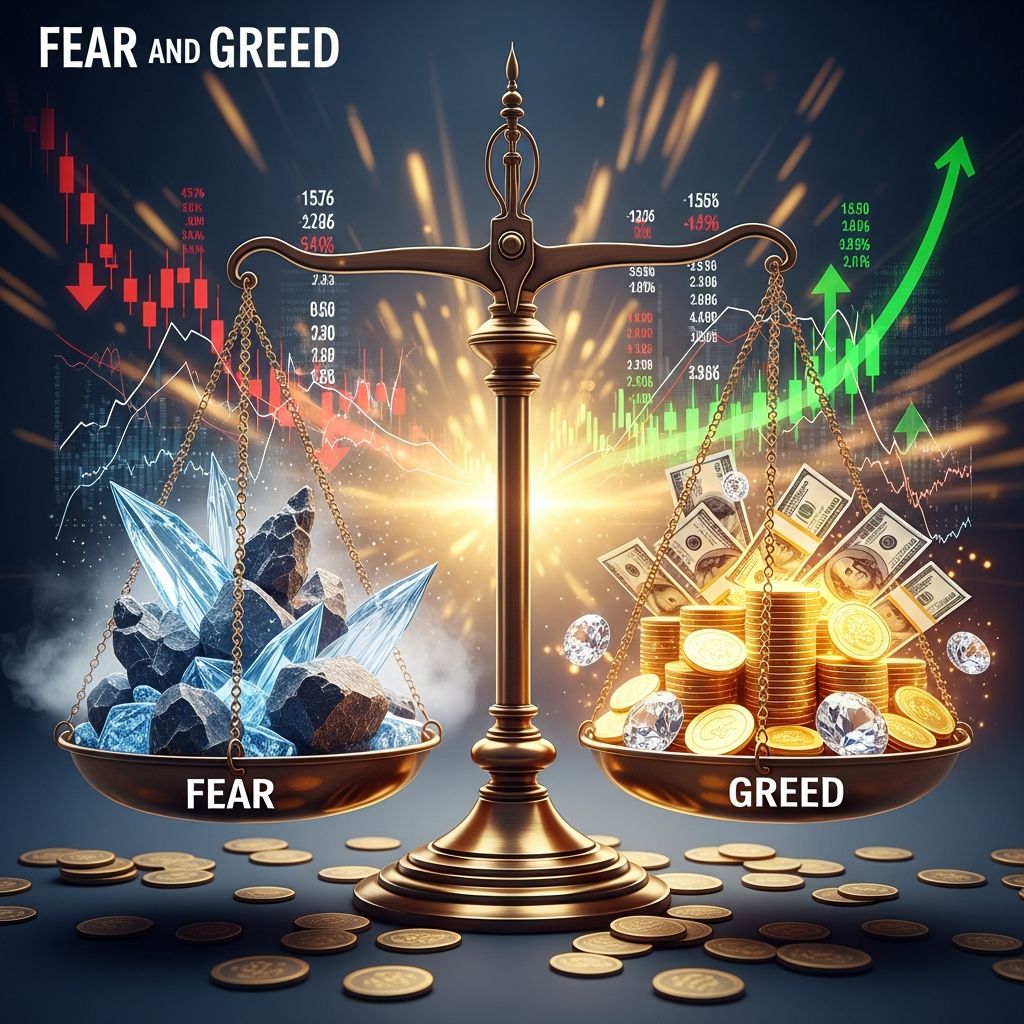
What Is the Fear and Greed Index?
The Fear and Greed Index is a market sentiment indicator developed by CNN Money that measures investor emotion and behavior across the financial markets. Rather than focusing solely on traditional economic data, this index captures the psychological drivers behind market movements by analyzing seven distinct indicators that reflect how fearful or greedy investors are becoming. The index ranges from 0 to 100, with readings below 25 indicating extreme fear, 25-45 representing fear, 45-55 signaling neutral sentiment, 55-75 showing greed, and above 75 reflecting extreme greed.
Market sentiment plays a crucial role in determining price movements, often overshadowing fundamental economic data in the short term. The Fear and Greed Index synthesizes multiple sentiment signals into a single, easy-to-interpret metric that helps traders, investors, and financial professionals gauge whether markets are overheated or presenting buying opportunities based on emotional extremes rather than rational valuation.
The Seven Components of the Fear and Greed Index
The Fear and Greed Index combines seven distinct market indicators, each capturing a different dimension of investor sentiment. Understanding these components provides insight into the various forces driving market behavior and helps investors identify when sentiment has reached dangerous extremes.
Market Momentum
Market momentum measures the strength of the S&P 500’s performance relative to its 125-day moving average. This component captures whether the market is trading above or below its intermediate-term trend, reflecting whether investors are becoming more optimistic or pessimistic about near-term market direction. Strong upside momentum suggests greed is dominating sentiment, while momentum below the moving average indicates fear is taking hold.
Stock Price Strength
This indicator evaluates the number of stocks reaching 52-week highs compared to those hitting 52-week lows on the New York Stock Exchange. When many companies achieve new highs, it suggests broad-based optimism and greed. Conversely, when more stocks are hitting new lows, it reflects fear permeating the market. This component helps distinguish between narrow, leadership-driven rallies and genuine broad-based market strength.
Stock Price Breadth
Stock price breadth analyzes the advance-decline line, which tracks the cumulative difference between advancing and declining stocks. A rising advance-decline line indicates healthy market participation where most stocks are participating in gains, suggesting genuine bullish sentiment. A deteriorating advance-decline line, even during index rallies, signals that fewer stocks are participating, a warning sign that greed may be artificially concentrated in a narrow set of names.
Put/Call Options Ratio
The put/call options ratio compares the volume of protective put options to call options. A higher ratio indicates investors are buying protection, suggesting fear and hedging activity. When this ratio is low, it reflects confidence and greed as investors sell protective puts and buy calls. Extreme put/call ratios in either direction signal sentiment extremes and potential market turning points.
Junk Bond Demand
Junk bond demand reflects investor appetite for high-yield, lower-quality debt. When investors are greedy and risk-tolerant, they bid aggressively for junk bonds, pushing spreads (the yield premium over safer bonds) tighter. When fear dominates, spreads widen as investors demand higher compensation for risk. This indicator effectively captures the “reach for yield” behavior that characterizes greed cycles.
Market Volatility
The VIX, often called the “fear gauge,” measures implied volatility of S&P 500 options. Low VIX readings (typically below 15) reflect complacency and greed, suggesting investors believe markets will remain calm. Elevated VIX readings (above 25-30) indicate fear and elevated uncertainty. Extreme VIX spikes to levels above 40 reflect panic and terror in markets.
Safe Haven Demand
This component tracks the relative demand for Treasury bonds compared to stocks, measured through flows and yield relationships. When investors flee to safety, Treasury demand increases relative to stock demand, indicating fear. When investors embrace risk and seek higher returns, they shift capital from bonds to stocks, reflecting greed and confidence in economic growth.
Understanding the Index Scale
The Fear and Greed Index uses a straightforward scale from 0 to 100 to communicate market sentiment:
| Index Range | Sentiment Level | Market Interpretation |
|---|---|---|
| 0-25 | Extreme Fear | Markets severely oversold; potential buying opportunity for contrarian investors |
| 25-45 | Fear | Investor pessimism elevated; caution warranted for new positions |
| 45-55 | Neutral | Balanced sentiment; market fundamentals should drive decisions |
| 55-75 | Greed | Strong investor optimism; potential overvaluation risk |
| 75-100 | Extreme Greed | Markets potentially overbought; risk of sharp correction |
How Investors Use the Fear and Greed Index
Professional and retail investors employ the Fear and Greed Index in several strategic ways. Contrarian investors use extreme readings as signals to position against prevailing sentiment, buying during extreme fear when assets are deeply discounted and selling during extreme greed when prices become stretched. Risk managers monitor the index to adjust portfolio positioning, increasing defensive holdings when greed reaches dangerous levels and increasing equity exposure when fear creates attractive valuations.
Swing traders and technical analysts use the index to identify potential turning points in markets. When the index reaches extremes, mean reversion becomes increasingly probable, creating opportunities for tactical trades. Long-term investors track the index to time their contributions, adding to positions during fear-driven drawdowns and reducing exposure during greed-driven rallies.
Historical Context and Past Market Turning Points
The Fear and Greed Index has proven valuable in identifying major market inflection points throughout its history. During the 2018 market correction, the index shifted dramatically from greed in September to extreme fear by October, correctly signaling the onset of a significant downturn that saw the S&P 500 decline sharply and the VIX spike dramatically. Similarly, in February 2018, when sentiment indicators peaked amid retail exuberance, the index preceded the volatility spike that caught many investors off guard.
Perhaps most notably, during the March 2020 COVID-19 market panic, the Fear and Greed Index plummeted to unprecedented levels as all seven components aligned in extreme fear. The index correctly identified the capitulation bottom that marked the beginning of one of history’s most powerful bull markets. This historical track record demonstrates the index’s value as a contrarian indicator and market timing tool.
Limitations and Considerations
While valuable, the Fear and Greed Index has important limitations investors should understand. The index is backward-looking, constructed from recently observed market behavior, meaning it lags actual market turning points by days or weeks. It measures sentiment rather than fundamental value, so extreme readings don’t guarantee immediate reversals—markets can remain irrational longer than investors expect. Additionally, the index works best as a contrarian indicator, suggesting caution during extremes rather than providing precise entry and exit signals.
The index also assumes all seven components carry equal weight in determining overall sentiment, which may not always reflect the relative importance of different indicators during specific market conditions. During structural market shifts or black swan events, historical relationships between sentiment and returns can break down temporarily, reducing the index’s predictive power.
The Divergence Problem: Narrow Greed with Broad Fear
A particularly important pattern that emerges from studying the Fear and Greed Index is the divergence between different sentiment components. While the overall index might register extreme fear, market momentum can show extreme greed if a narrow set of mega-cap technology stocks drives market indices higher while most stocks participate weakly. This divergence—extreme greed in narrow leadership paired with fear signals across breadth, volatility, and sentiment indicators—has historically preceded significant market corrections.
This pattern reflects a psychological contradiction where investors simultaneously fear stretched valuations and rising risks, yet refuse to miss final rally stages, concentrating capital in perceived safe mega-cap leaders. Unlike 2020’s COVID bottom where all indicators aligned in extreme fear (a classic capitulation signal), this divergence pattern typically precedes tops rather than bottoms, warranting investor caution when market breadth deteriorates despite index strength.
Current Market Applications
In modern markets, the Fear and Greed Index has become increasingly relevant as central banks navigate post-pandemic inflation and interest rate cycles. The index helps investors distinguish between fundamental value changes and pure sentiment-driven movements, particularly important during periods of policy uncertainty. Traders monitor the index in real-time through CNN Money’s dashboard, which updates the metric daily using the latest market data across all seven components.
Frequently Asked Questions
Q: What does an index reading of 50 mean?
A: A reading of 50 represents neutral sentiment, indicating that fear and greed are roughly balanced in markets. Investors should primarily rely on fundamental analysis rather than sentiment signals at this midpoint level.
Q: How often does the Fear and Greed Index update?
A: The index updates daily, typically after market close, incorporating the latest data from all seven sentiment components to provide a current snapshot of market psychology.
Q: Can the Fear and Greed Index predict market crashes?
A: While the index cannot predict crashes with certainty, extreme readings, particularly when combined with divergences like strong momentum paired with weak breadth, have historically preceded significant market corrections and volatility increases.
Q: Is the Fear and Greed Index suitable for long-term investors?
A: While primarily useful for tactical traders, long-term investors can use extreme readings to identify buying opportunities during fear-driven drawdowns and to reduce exposure during greed-driven rallies, helping improve long-term returns through better market timing.
Q: What is the relationship between the Fear and Greed Index and the VIX?
A: The VIX represents one of seven components in the Fear and Greed Index. While the VIX measures volatility specifically, the broader index synthesizes multiple sentiment signals for a more comprehensive view of market psychology.
Q: How does the index perform during black swan events?
A: During unexpected crises, the index can swing dramatically within days, reflecting rapid sentiment shifts. However, it may lag the actual market bottom by several days as investors process unprecedented information and capitulation occurs gradually.
Key Takeaways
The Fear and Greed Index provides a quantifiable measure of investor sentiment by synthesizing seven distinct market indicators into a single 0-100 scale. Extreme readings in either direction signal potential market turning points, with extreme fear often preceding strong rallies and extreme greed potentially warning of corrections. While not a perfect timing tool, the index works best as a contrarian indicator, alerting investors when sentiment has reached dangerous extremes that historically precede significant moves. By understanding the seven components and recognizing historical patterns, investors can use the Fear and Greed Index to inform better investment decisions and improve market timing during emotionally charged periods.
References
- CNN Fear and Greed Index — CNN Money. https://money.cnn.com/data/fear-and-greed/
Similar Articles








Read full bio of medha deb