FDR’s Economic Policies and Major Accomplishments
Discover how Franklin D. Roosevelt's New Deal transformed America's economy during the Great Depression.

FDR’s Economic Policies and Accomplishments: Reshaping America During the Great Depression
Franklin D. Roosevelt’s presidency fundamentally transformed the relationship between the federal government and the American economy. When Roosevelt took office in March 1933, the United States faced an unprecedented economic catastrophe. The Great Depression had devastated millions of Americans, unemployment soared to historic levels, and the banking system teetered on the brink of collapse. Roosevelt responded with an ambitious and comprehensive set of programs collectively known as the New Deal, which sought to provide immediate relief, foster recovery, and enact lasting reforms that would prevent future economic disasters.
The New Deal represented a dramatic departure from the limited government approach favored by Roosevelt’s predecessor, Herbert Hoover. Rather than waiting for market forces to self-correct, Roosevelt believed that active federal intervention was essential to rescue the American economy. His administration attacked the depression on multiple fronts simultaneously: banking, agriculture, industry, public works, work relief, and regional development. This multifaceted approach, while sometimes contradictory in its methods, ultimately helped restore economic stability and laid the foundation for modern American capitalism.
The Banking Crisis and Financial Reform
Roosevelt’s first priority upon assuming office was to stabilize the banking system, which was in complete disarray. Thousands of banks had failed, wiping out the savings of millions of Americans. On his first day in office, before Congress had even reconvened, Roosevelt declared a national bank holiday under powers conferred by Congress in the Trading-with-the-Enemy Act of 1917. This dramatic action temporarily closed every bank in the nation, halting the panic withdrawals that threatened to destroy the entire financial system.
Within days, Congress passed the Emergency Banking Relief Act of 1933, which gave Roosevelt extraordinary emergency powers over the banking system and established a strategy to separate viable banks from those beyond saving. The government reinforced stronger banks with loans from the Reconstruction Finance Corporation (RFC), a credit relief agency that Hoover had created but Roosevelt expanded dramatically. The Banking Act of 1933 also established the Federal Deposit Insurance Corporation (FDIC), which guaranteed bank deposits up to a specified amount, providing American citizens with confidence that their savings were protected.
These banking reforms were essential to stopping the financial panic and restoring public confidence in the financial system. By creating a framework for federal oversight of banking practices and protecting depositors, Roosevelt addressed one of the most immediate sources of American anxiety during the Depression.
Agricultural Recovery and the Agricultural Adjustment Act
Agriculture presented a particularly acute problem during the Depression. Nearly half of all Americans depended upon farm prosperity, yet the agricultural sector had been in crisis since the 1920s. Farmers faced catastrophically low prices for their products, making it impossible to pay mortgages or purchase supplies. Roosevelt’s administration developed the Agricultural Adjustment Act (AAA), which took an innovative but controversial approach to the farm crisis.
The AAA limited agricultural production by paying farmers not to plant on their land and to slaughter excess livestock. The theory was straightforward: by reducing supply, prices would rise, and farmers would achieve better returns. The government financed these payments through a tax on food processors, which ultimately passed costs to consumers through higher retail prices. While the AAA did succeed in raising agricultural prices, this unintended consequence of inflated food costs placed additional burden on urban consumers already struggling with unemployment and reduced incomes.
Although the Supreme Court eventually ruled the AAA unconstitutional in 1936, ruling that the federal government had overstepped its constitutional authority, the program demonstrated Roosevelt’s willingness to experiment with bold solutions. Agricultural policy remained a priority throughout his presidency, and subsequent programs continued to provide price supports and development assistance to farmers. These programs helped stabilize rural America and prevented complete agricultural collapse during the Depression’s worst years.
Industrial Recovery and the National Recovery Administration
The National Recovery Administration (NRA) represented Roosevelt’s most ambitious attempt to reform industrial practices and stimulate economic recovery. The NRA established industry-wide codes that set minimum wages, maximum working hours, and guaranteed workers’ right to collective bargaining. The program aimed to eliminate unfair competitive practices, prevent wage-cutting races to the bottom, and restore purchasing power by ensuring workers earned adequate wages.
However, the NRA faced significant legal and practical challenges. The Supreme Court struck it down in 1935, ruling that Congress had delegated excessive power to the executive branch and that the NRA’s authority extended improperly to intrastate commerce. Roosevelt famously denounced this decision as a return to a “horse-and-buggy” economy, but he recognized that the NRA’s comprehensive approach to industrial regulation exceeded constitutional limits. Despite its demise, the NRA’s core principles regarding workers’ rights and minimum wage protections found expression in subsequent legislation and became permanent features of American labor law.
Public Works and Employment Programs
Roosevelt believed that direct government action to create employment was essential to combating the Depression. The New Deal included several major public works and employment programs designed to put Americans back to work while building infrastructure that benefited the nation.
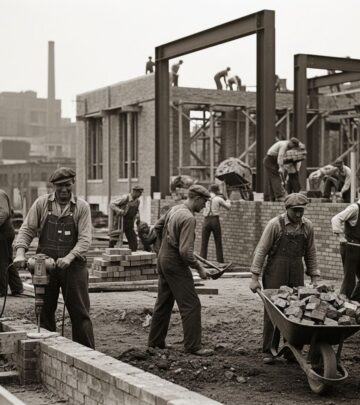
The Public Works Administration (PWA) hired unemployed workers to construct new public buildings, roads, bridges, subways, and other infrastructure projects. These tangible improvements not only provided employment but also modernized American infrastructure and remained visible reminders of government commitment to economic recovery.
The Civilian Conservation Corps (CCC) employed hundreds of thousands of young men in reforestation, soil conservation, and flood-control work. Operating in rural areas across the nation, the CCC provided employment while addressing environmental degradation. Participants received wages, room and board, and valuable work experience that many lacked.
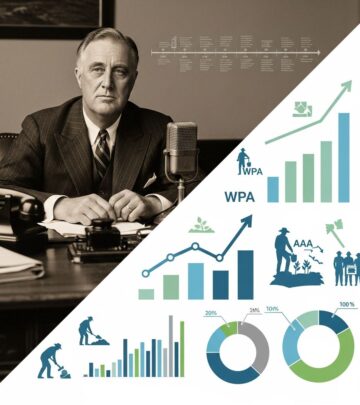
The Works Progress Administration (WPA), created later in the New Deal, became the largest employment program. The WPA employed millions of workers on various projects ranging from road construction to artistic endeavors. The WPA supported writers, artists, musicians, and actors, recognizing that unemployment affected educated professionals as well as manual workers.
The Federal Emergency Relief Administration (FERA), modeled on Roosevelt’s earlier Temporary Emergency Relief Administration as governor of New York, distributed federal funds to states for direct relief to the destitute. Between 1932 and 1940, the federal government expended approximately $2.6 billion on relief programs, an enormous sum at that time. While critics charged that such spending was wasteful or created dependency, relief expenditures increased personal consumption, lessened human suffering, and contributed meaningfully to economic growth.
Regional Development: The Tennessee Valley Authority
The Tennessee Valley Authority (TVA) represented an innovative approach to regional economic development. This massive federal agency brought cheap hydroelectric power to seven states in the Southeast by constructing dams, creating controlled flooding systems, and developing hydroelectric facilities. The TVA did far more than generate electricity; it promoted regional economic development, improved navigation on the Tennessee River, controlled floods, and improved agricultural practices.
The TVA exemplified Roosevelt’s belief that the federal government could actively shape economic development in ways that benefited entire regions. While some New Deal programs focused on short-term relief, the TVA represented long-term structural investment designed to transform regional prospects. This model of active federal participation in economic development remained influential throughout Roosevelt’s presidency and beyond.
Social Insurance and Long-Term Security
Beyond immediate relief and recovery measures, Roosevelt sought to create permanent reforms that would provide Americans with economic security. The Social Security Act of 1935 represented one of the New Deal’s most enduring accomplishments. The program provided financial aid to the aged, infirm, and unemployed when they could no longer provide for themselves. Social Security established the principle that the federal government bore responsibility for ensuring basic economic security for vulnerable populations, a revolutionary concept in American governance.
Social Security included provisions for unemployment insurance, old-age pensions, and aid to families with dependent children. The program was funded through a dedicated payroll tax, creating a self-sustaining insurance system. Though benefits did not begin until 1942, the program’s establishment represented a fundamental commitment to economic security that persisted throughout the twentieth century and beyond.
Financial Regulation and Securities Reform
The stock market crash of 1929 and subsequent revelations about fraudulent practices convinced Roosevelt that financial markets required federal oversight. The Securities Act of 1933 and the Securities Exchange Act of 1934 established government regulation of stock trading and established the Securities and Exchange Commission (SEC) to oversee financial markets. These measures aimed to prevent the speculative abuses and fraud that many believed had contributed to the stock market crash and subsequent collapse.
The Home Owners’ Refinancing Act provided mortgage relief to homeowners threatened with foreclosure, allowing millions to keep their homes during the Depression’s darkest years. These programs recognized that housing and homeownership were central to American economic security and that federal action was necessary to prevent total collapse of the housing market.
Fiscal Policy, Taxation, and the Deficit
Roosevelt’s approach to taxation and deficit spending evolved significantly throughout the 1930s. Initially, he attempted to balance the federal budget, believing that responsible fiscal management required matching expenditures with revenues. However, the scale of the Depression made balancing the budget impossible while simultaneously addressing immediate relief needs. Federal expenditures rose from $3.6 billion in 1931 to $8.4 billion in 1936, creating substantial deficits.
By 1936, Roosevelt reluctantly abandoned his goal of a balanced budget and embraced the concept of planned deficit spending to stimulate economic recovery. This represented a significant intellectual shift, influenced partly by economist John Maynard Keynes’ theories about using fiscal policy to manage aggregate demand. After 1937, deficit spending became an explicit tool for promoting economic recovery, though World War II’s massive expenditures ultimately played the greater role in ending the Depression and achieving full employment.
Labor Rights and Worker Protections
The New Deal fundamentally transformed the relationship between workers and employers. The National Labor Relations Act, passed in 1935, guaranteed workers the right to organize and bargain collectively. The Fair Labor Standards Act established minimum wage requirements and maximum working hours for many workers. These programs abolished child labor and supported higher wages for all workers, establishing protections that remained centerpieces of American labor law.
Roosevelt’s administration, influenced heavily by Secretary of Labor Frances Perkins, believed that workers deserved government protection and that fair labor standards were essential to both economic justice and economic recovery. By increasing workers’ bargaining power and establishing minimum wage floors, the government aimed to increase consumption and purchasing power, thereby stimulating economic growth.
Assessment of New Deal Accomplishments
The New Deal achieved remarkable success in several areas. It prevented complete economic collapse, stabilized the banking system, provided relief to millions of Americans, and created permanent reforms that transformed American capitalism. By establishing social insurance, protecting workers’ rights, regulating financial markets, and investing in infrastructure, Roosevelt fundamentally expanded the federal government’s role in managing the economy.
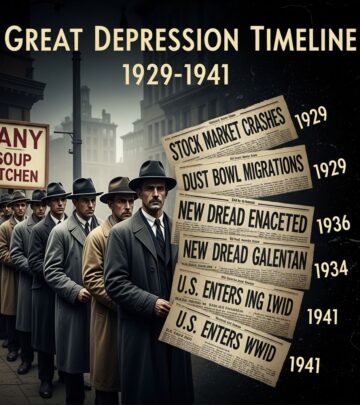
However, the New Deal did not completely cure the Depression’s ills. By 1940, unemployment remained in double digits, and Americans lacked the purchasing power to fully restart the economy. The recovery remained incomplete until American entry into World War II generated massive government spending and military production that ultimately achieved full employment.
Writ large, the New Deal sought to ensure that the economic, social, and political benefits of American capitalism were distributed more equally among America’s diverse population. Through employment programs, social insurance, financial regulation, worker protections, and regional development, Roosevelt fundamentally reshaped American society and governance. The New Deal’s philosophy that the federal government bore responsibility for economic stability and social welfare became embedded in American political culture and shaped policy for generations.
Frequently Asked Questions
Q: What was the primary goal of the New Deal?
A: The New Deal aimed to provide immediate economic relief to Americans suffering from the Great Depression, promote recovery through government spending and investment, and enact reforms to stabilize the economy and prevent future depressions.
Q: Why did the Supreme Court strike down some New Deal programs?
A: The Supreme Court ruled that certain programs, particularly the Agricultural Adjustment Act and the National Recovery Administration, exceeded the federal government’s constitutional authority. The Court believed Congress had improperly delegated executive power and that the programs regulated commerce in ways the Constitution did not permit.
Q: Did the New Deal end the Great Depression?
A: The New Deal substantially reduced the Depression’s severity and prevented total economic collapse, but it did not completely end unemployment or restore full prosperity. Only massive government spending for World War II and subsequent military production achieved full employment and complete economic recovery by 1941.
Q: What were the most successful New Deal programs?
A: The Social Security Act, the Tennessee Valley Authority, banking reforms, and employment programs like the Works Progress Administration are generally considered the most successful and enduring New Deal accomplishments.
Q: How did the New Deal change the role of the federal government?
A: The New Deal dramatically expanded federal government authority and responsibility for economic management, social welfare, and worker protection. It established the principle that government should actively intervene in the economy during crises and maintain programs ensuring economic security.
References
- New Deal Economic Policies: FDR and the Congress, 1933-1938 — Roosevelt Institute. https://www.roosevelt.nl/app/uploads/2021/07/New-Deal-Economic-Policies-FDR-and-the-Congress-1933-1938.pdf
- New Deal — Britannica. https://www.britannica.com/event/New-Deal
- President Franklin Delano Roosevelt and the New Deal — Library of Congress. https://www.loc.gov/classroom-materials/united-states-history-primary-source-timeline/great-depression-and-world-war-ii-1929-1945/franklin-delano-roosevelt-and-the-new-deal/
- Franklin D. Roosevelt: Impact and Legacy — Miller Center at University of Virginia. https://millercenter.org/president/fdroosevelt/impact-and-legacy
- Great Depression Facts — FDR Presidential Library & Museum. https://www.fdrlibrary.org/great-depression-facts
- The New Deal in New York City, 1933-1943 — Roosevelt House at Hunter College CUNY. https://www.roosevelthouse.hunter.cuny.edu/exhibits/new-deal-new-york-city/
- Chapter 3: The Department in the New Deal and World War II 1933 — U.S. Department of Labor. https://www.dol.gov/general/aboutdol/history/dolchp03
Similar Articles








Read full bio of medha deb