Understanding Your Family’s Spending Patterns
Discover how American households allocate their budgets across essential categories

Managing a household budget requires understanding how money flows out each month. Whether you’re a single earner, a couple, or a family with children, knowing where your money goes helps you make informed financial decisions. By examining typical spending patterns across American households, you can evaluate your own expenses and identify opportunities to align your budget with your financial goals.
The Big Picture: Total Annual Household Expenditures
According to the U.S. Bureau of Labor Statistics’ 2024 Consumer Expenditures Survey, the average consumer unit in America spends approximately $78,535 annually. This represents a modest 1.8% increase from 2023, reflecting the ongoing cost pressures facing American households. However, other sources present different figures depending on methodology. Some analyses indicate households spend around $61,334 annually, highlighting variations in how expenses are categorized and measured.
These figures encompass all spending by families, single individuals living independently, and groups of people sharing major expenses. Understanding these baseline numbers provides context for evaluating individual spending categories.
Housing: The Largest Budget Component
Housing consistently claims the largest share of household budgets. Monthly housing expenses average $2,188, translating to approximately $26,266 annually. This category includes rent or mortgage payments, property taxes, home insurance, maintenance, and repairs.
Housing costs vary significantly by geography. The median single-family home price in the United States stands at $273,992, though prices fluctuate considerably by region. For renters, the average monthly rent for a two-bedroom apartment runs approximately $1,154 nationwide, though this figure rises substantially in high-cost metropolitan areas.
When evaluating your housing budget, consider these elements:
- Primary residence mortgage or rent payments
- Property taxes and homeowners insurance
- Home maintenance and unexpected repairs
- Utilities and household services
- Home improvement projects and upgrades
For many households, housing represents 30-40% of total spending, making it the most significant expense category. If your housing costs exceed this proportion, you may benefit from reviewing your housing situation and exploring alternatives.
Transportation: Getting Around Costs More Than You Think
Transportation represents the second-largest expense category for most American households. Average monthly transportation spending totals $1,109, or $13,318 annually. This includes vehicle purchases, fuel, insurance, maintenance, and public transportation.
The transportation category encompasses several components:
- Vehicle payments and financing costs
- Gasoline and fuel expenses
- Vehicle insurance premiums
- Maintenance, repairs, and inspections
- Public transportation fares and rideshare services
Interestingly, transportation costs declined by 1.1% from 2023 to 2024, suggesting households may be adapting to economic pressures through more efficient vehicle choices or reduced driving. However, for families with multiple vehicles, transportation expenses can quickly exceed national averages.
Feeding Your Family: Food Expenses Breakdown
Food represents a critical household expense that varies based on family size, dietary preferences, and shopping habits. Average annual food spending reaches $10,169, translating to $847 per month. This includes both groceries purchased for home consumption and restaurant dining.
Food costs have shown interesting trends recently. Despite economic pressures, food spending declined from 6.9% growth in 2022-2023 to just 1.8% in 2023-2024, indicating households are finding ways to manage grocery bills more efficiently. The USDA tracks food plans at various cost levels, with different price points depending on individual age and gender.
Your food budget typically divides into two components:
- Groceries and food purchased for home preparation
- Restaurant dining and takeout services
Single adults typically spend less on food than families, while larger households often achieve economies of scale. Geographic location also influences food costs, with urban areas generally experiencing higher prices than rural regions.
Insurance and Retirement Planning
Household budgets must account for personal insurance and pension contributions, which average $816 monthly, or $9,797 annually. This category includes life insurance, disability insurance, and contributions to retirement savings accounts like 401(k) plans and IRAs.
These expenses often fluctuate based on employer benefits and life circumstances. Households should prioritize adequate insurance coverage to protect against financial emergencies while building retirement savings for future security.
Entertainment and Discretionary Spending
Beyond necessities, American households allocate funds toward entertainment and leisure activities. Average entertainment expenses reach $300 monthly, or $3,609 annually. This includes subscriptions, hobbies, cultural activities, and recreational expenses.
Entertainment spending has declined along with other discretionary categories, suggesting households are becoming more selective with leisure spending. However, financial advisors often recommend maintaining some entertainment budget to support mental health and quality of life.
Understanding the Cost of Living Across America
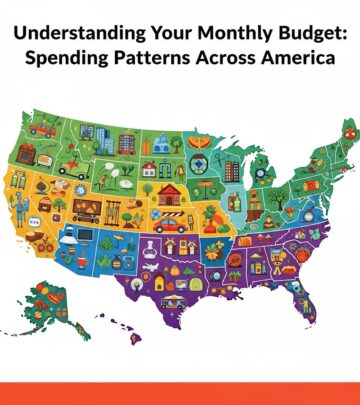
Geographic location dramatically influences household expenses. The cost of living varies substantially between states and regions, affecting how far household dollars stretch.
Mississippi maintains the lowest cost of living in the nation, with a cost of living index of 83.3. Housing costs prove particularly affordable there, with median single-family home prices around $140,818 and two-bedroom apartment rentals averaging $991 monthly. In contrast, high-cost states like California require significantly higher incomes to maintain comparable living standards.
Key cost-of-living considerations by region include:
- Housing availability and affordability
- Transportation infrastructure and vehicle necessity
- Utility costs for heating and cooling
- Local tax rates and property taxes
- Grocery and restaurant pricing
Income Requirements for Comfortable Living
Understanding what constitutes “comfortable” living requires examining income benchmarks. According to the Economic Policy Institute, a single adult needs approximately $106,745 annually to live comfortably in 2026. This increases to $138,000 for couples without children and approaches $280,000 for families with three children.
These figures include allowances for transportation exceeding $1,000 monthly and discretionary spending of approximately $2,600 for single adults. However, these requirements vary significantly by geography. In lower cost-of-living areas, single individuals may need approximately $87,000 annually, while high-cost regions like California might require $163,000 for a single adult.
The median household income in the United States stands around $84,000 annually, suggesting many households operate below these comfort thresholds. This underscores the importance of strategic budgeting and expense management.
Utilities: An Often-Overlooked Expense
Utility costs represent a significant but sometimes overlooked expense category. The average monthly utility cost across the United States reaches $370.16. This includes electricity, natural gas, water, sewer, and sometimes internet and phone services.
Utility expenses fluctuate seasonally and geographically. Families in climates requiring substantial heating or cooling experience higher utility bills. Energy-efficient upgrades and conservation practices can help reduce these costs over time.
Healthcare Expenses
Healthcare costs represent another substantial budget item, averaging approximately $5,177 annually. This includes insurance premiums, copays, deductibles, and out-of-pocket medical expenses. Healthcare expenses often increase with age and can vary based on insurance coverage and health status.
Benchmarking Your Household Budget
To evaluate your household spending effectively, compare your expenses to national averages while accounting for your specific circumstances:
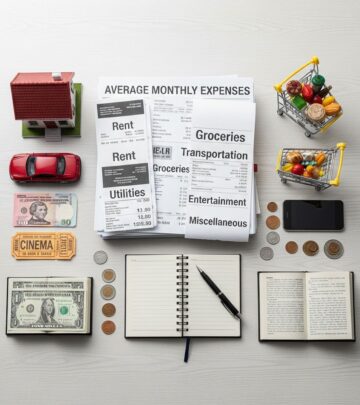
| Expense Category | Average Monthly Cost | Average Annual Cost | Percentage of Total Budget |
|---|---|---|---|
| Housing | $2,188 | $26,266 | 33% |
| Transportation | $1,109 | $13,318 | 17% |
| Food | $847 | $10,169 | 13% |
| Insurance & Pensions | $816 | $9,797 | 12% |
| Healthcare | $432 | $5,177 | 7% |
| Entertainment | $300 | $3,609 | 5% |
| Utilities | $370 | $4,440 | 6% |
Identifying Spending Trends and Adjustments
Recent spending data reveals important trends. Food, transportation, entertainment, healthcare, and cash contributions have all experienced declining growth rates in 2024 compared to 2023. This suggests households are actively managing expenses amid economic pressures.
When reviewing your budget, consider whether your spending aligns with these national patterns or if certain categories represent outsized expenses. Areas of disproportionate spending may offer opportunities for adjustment and savings.
Creating Your Family Budget
Developing an effective household budget begins with tracking your actual spending across all categories for at least one month. Compare your real expenses to the national averages provided above, adjusting for your family size, location, and lifestyle.
Your budget should account for:
- Fixed expenses that remain constant monthly
- Variable expenses that fluctuate seasonally
- Discretionary spending aligned with your values
- Emergency savings and long-term financial goals
Frequently Asked Questions
What is considered an average household in these statistics?
The Consumer Expenditures Survey defines a consumer unit as families, single persons living alone or sharing a household with others but financially independent, or two or more persons living together sharing major expenses.
How do my expenses compare if I live in a high-cost area?
High-cost areas typically see housing and food expenses 20-50% above national averages. If you live in a major metropolitan area or high-cost state, your expenses may substantially exceed the national figures presented here.
Should I spend more on entertainment if I have financial room?
Financial advisors generally recommend allocating discretionary spending based on your values and financial security. The Economic Policy Institute suggests approximately $2,600 monthly for single adults, though this represents a comfortable lifestyle rather than a requirement.
How can I reduce my household expenses?
Identify your highest expense categories and explore reduction strategies. Refinancing mortgages, improving vehicle efficiency, reducing food waste, and eliminating unused subscriptions commonly yield savings opportunities.
Why do my expenses differ from these national averages?
Your expenses depend on family composition, geographic location, age, employment status, and personal lifestyle choices. Single individuals, young families, and rural households all experience different expense patterns.
Taking Control of Your Financial Picture
Understanding national spending averages provides a valuable framework for evaluating your household budget. By analyzing where your money goes relative to these benchmarks, you can identify opportunities to optimize spending, increase savings, and work toward your financial goals. Remember that averages represent general patterns; your ideal budget should reflect your unique circumstances, values, and aspirations for financial security and well-being.
References
- Consumer Expenditures 2024 — U.S. Bureau of Labor Statistics. December 2025. https://www.bls.gov/news.release/cesan.htm
- Cost of Living Index by State 2026 — World Population Review. 2026. https://worldpopulationreview.com/state-rankings/cost-of-living-index-by-state
- Income Required to Live Comfortably in 2026 — Economic Policy Institute. 2026. https://www.epi.org/publication/
- USDA Food Plans: Monthly Cost of Food Reports — U.S. Department of Agriculture. December 2025. https://www.fns.usda.gov/research/cnpp/usda-food-plans/cost-food-monthly-reports
Similar Articles








Read full bio of medha deb