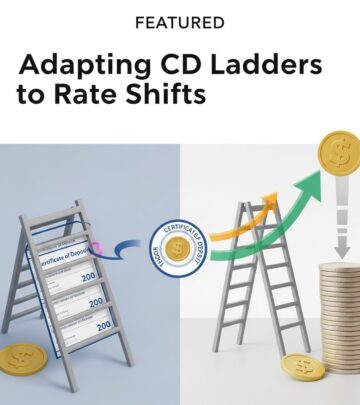
How Falling Interest Rates Affect Your CD Ladder
Understand how a falling-rate environment changes the risks, rewards, and best practices for managing your CD ladder strategy.

Certificates of deposit (CDs) have become a popular savings choice whenever interest rates climb, especially for savers who want predictable returns and federal deposit insurance protection on their balances. But as the rate environment turns and yields start to decline, many people with a CD ladder are left wondering whether their strategy still makes sense and how to adapt going forward.
This article explains how a CD ladder works, why falling interest rates change the tradeoffs you face, and what practical steps you can take to keep earning competitive yields without sacrificing too much flexibility.
Understanding CD Ladders in Any Rate Environment
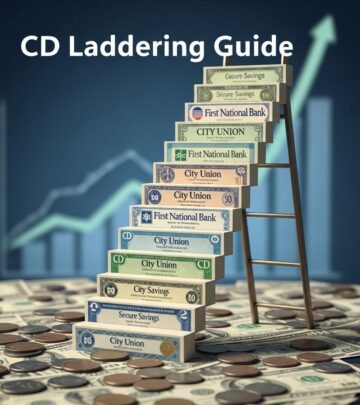
A CD ladder is a savings strategy in which you divide your money among multiple CDs that mature at staggered intervals, such as every 6, 12, 24, or 36 months. Instead of putting all your cash into a single term, you spread it out, so part of your money comes due regularly while the rest continues to earn a fixed rate until maturity.
How a CD Ladder Works
The basic mechanics of a CD ladder are straightforward:
- You choose a total amount you want to invest in CDs.
- You split that amount across several CDs with different terms (for example, one-year, two-year, three-year, four-year, and five-year CDs).
- As each CD matures, you decide whether to withdraw the cash or reinvest it into a new CD, usually at the longest rung of the ladder.
Over time, you build a rolling structure where one CD matures at regular intervals, giving you periodic access to funds and the chance to reinvest at current interest rates.
Key Benefits of a CD Ladder
CD ladders appeal to conservative savers because they balance three priorities: safety, return, and liquidity.
- Guaranteed returns: CDs typically offer a fixed interest rate for the term, so you know exactly how much you will earn if you hold to maturity.
- Insurance protection: When held at federally insured banks or credit unions within coverage limits, CD balances are protected by the FDIC or NCUA, making them very low-risk compared to market investments.
- Regular access to cash: Because maturity dates are staggered, a portion of your money becomes available on a predictable schedule, which can help with planned expenses or unexpected needs.
- Rate diversification: You avoid the risk of locking all your funds in a single CD at a rate that later looks unattractive, whether rates rise or fall.
How Falling Interest Rates Change the Equation
Interest rates move through cycles, reflecting central bank policy, inflation, and economic conditions. When policy makers cut benchmark rates, banks and credit unions tend to reduce the yields they offer on new CDs. In this environment, savers face a different set of decisions than they did when rates were rising.
The Current Trend Toward Lower CD Yields
After a period of aggressive rate hikes that pushed short-term interest rates and CD yields to their highest levels in roughly two decades, recent policy shifts have led to a gradual decline in CD rates across many terms. As central banks reduce their target rates, average yields on popular CD maturities have started to slip and are expected to trend lower if inflation remains contained.
This dynamic matters for CD ladder strategies because the return on each new rung depends on the rate available when you reinvest. As rates fall, new CDs will generally offer lower yields than the ones you opened earlier in the cycle.
What Declining Rates Mean for Your Existing Ladder
Falling interest rates affect your CD ladder in several ways:
- New rungs pay less: When a CD in your ladder matures, any reinvested funds will likely earn a lower rate than before, reducing your overall ladder yield over time.
- Locked-in rates look better: CDs you opened earlier at higher rates become more valuable, because they continue earning above-market yields until they mature.
- Opportunity cost shrinks: In rising-rate environments, a long-term CD can feel like a missed opportunity if rates increase afterward. In a falling-rate environment, that concern fades because newer CDs may pay less, not more.
In essence, falling rates tend to favor savers who already locked in competitive yields, while creating a challenge for how to handle each maturity going forward.
Pros and Cons of Maintaining a CD Ladder as Rates Fall
When interest rates decline, you do not necessarily need to abandon your CD ladder. Instead, it is useful to re-evaluate the benefits and limitations of the strategy and decide whether it still aligns with your goals.
Advantages in a Falling-Rate Environment
- Protection against further declines: Existing longer-term CDs in your ladder continue to earn the previously locked-in rate, even as new CD offers drop.
- Predictable income: A ladder can deliver steady interest payments, which can be appealing for retirees or others who rely on fixed income.
- Ongoing access to funds: With staggered maturities, you preserve some liquidity even while keeping most of your money in fixed-term accounts.
- Simplicity: A ladder is relatively easy to manage once it is set up; at each maturity date you repeat the same decision process—withdraw, reinvest, or adjust the structure.
Drawbacks When Yields Are Moving Lower
- Reinvestment risk: As rates decline, each maturing CD may have to be rolled over into a new one at a lower yield, gradually pulling down your overall earnings.
- Limited upside: If safe alternatives such as high-yield savings or money market accounts temporarily offer better rates with more liquidity, your ladder may underperform those options.
- Inflation risk: If inflation stays elevated relative to CD yields, the real (inflation-adjusted) return on your ladder could shrink, even if your nominal balance grows.
- Penalty risk for early withdrawals: Exiting a CD before maturity typically triggers an interest penalty, so adjusting your ladder midway can have a cost.
Strategic Choices When a CD in Your Ladder Matures
The most important moments in a CD ladder strategy occur when individual CDs mature. In a falling-rate environment, you generally face three broad choices.
| Option | What It Means | Potential Advantages | Key Risks |
|---|---|---|---|
| Reinvest into the ladder | Open a new CD, often with a longer term, to keep the ladder intact. | Maintains structure, locks in today’s rate before further declines, keeps predictable income. | New CD may pay less than the one that just matured; reduced flexibility. |
| Shift to liquid accounts | Move funds to a high-yield savings or money market account. | More liquidity and flexibility; can wait for better opportunities or rate changes. | Rate may fluctuate; yield could be lower than some CDs if conditions change. |
| Reconfigure the ladder | Adjust the number of rungs or term lengths to reflect new goals. | Better alignment with cash needs and rate outlook; can shorten or lengthen overall ladder. | Requires more active management; may involve opportunity cost if timing is off. |
When Reinvesting May Make Sense
Reinvesting maturing CDs into new ones can still be appropriate when:
- You value principal safety and predictable returns more than chasing slightly higher yields elsewhere.
- You believe rates are likely to drop further, making current CD rates relatively attractive even though they are lower than before.
- You do not need the funds for upcoming expenses and are comfortable extending the term.
When to Consider Holding Cash Instead
There are circumstances where leaving some or all maturing CD funds in a liquid account may be reasonable:
- You anticipate a large purchase or expense within the next year or so and want flexibility.
- Short-term savings or money market accounts are offering comparable yields without lock-up, at least temporarily.
- You expect your broader financial strategy to change soon (for example, paying down debt, investing in a retirement account, or funding education costs).
Adjusting the Structure of Your Ladder
A CD ladder is not a “set and forget” arrangement. As interest rates and your personal circumstances change, you can modify the structure of your ladder to better fit your objectives.
Shortening or Lengthening Terms
- Shortening the ladder: In uncertain environments, you may prefer shorter-maturity CDs (such as six or twelve months). This approach keeps more of your money available sooner but may sacrifice higher yields typically associated with longer terms.
- Lengthening the ladder: When you expect rates to continue falling, extending out into multi-year CDs can lock in today’s rates and provide more stable income over time.
Changing the Number of Rungs
Some savers begin with a simple three-rung ladder and gradually build to more rungs as they reinvest, such as five or even ten different maturities. Adding rungs can:
- Provide more frequent maturity events and decision points.
- Smooth out the impact of rate changes by spreading reinvestment across more dates.
- Allow finer matching between your CD maturities and expected cash needs.
Considering Special CD Products
Certain types of CDs may offer additional flexibility when rates are volatile:
- No-penalty CDs: These allow early withdrawal without the usual interest penalty, which can be useful if you want the option to pivot into a better opportunity later.
- Promotional CDs: Banks and credit unions sometimes offer limited-time higher yields to attract deposits before rates fall further; these can boost your ladder’s overall return if the terms fit your needs.
- Step-up or bump-up CDs: While designs vary, these products give the holder at least one opportunity to increase their rate during the term, which can provide partial protection if rates unexpectedly rebound.
Risk Management Considerations
Even though CDs are generally low-risk, it is important to manage the remaining risks that can affect the success of your ladder strategy.
Early-Withdrawal Penalties
Most CDs impose a penalty if you withdraw funds before maturity. This penalty usually takes the form of forfeiting a certain amount of interest, such as three to six months’ worth for shorter CDs and more for longer terms. If you anticipate needing money before a CD matures, it may be better to use a shorter term, a no-penalty CD, or a liquid savings account instead.
Inflation and Real Returns
Inflation can erode the purchasing power of your savings. If the inflation rate exceeds the interest rate your CDs are paying, your real return (after inflation) will be negative, even though your balance is growing in nominal terms. For long-term goals, you may decide to complement your CD ladder with other investments that have higher long-run return potential but also higher risk, such as diversified bond or stock funds.
Diversification Beyond CDs
Relying solely on a CD ladder for all your financial goals can limit growth. While CDs are well-suited for near-term needs and safety-focused savings, longer time horizons often benefit from diversified portfolios that include other asset classes. Consider how your ladder fits into your overall plan, which might also include retirement accounts, tax-advantaged savings vehicles, and flexible emergency reserves.
Practical Tips for Managing Your Ladder as Rates Fall
Putting everything together, here are some practical guidelines for managing a CD ladder when interest rates are declining:
- Review your cash needs annually so that your CD maturity schedule lines up with expected expenses.
- Compare current CD rates before allowing a maturing CD to auto-renew; it may be worth moving to another institution offering a better rate.
- Maintain an emergency fund in a liquid savings or money market account instead of tying all reserves up in CDs.
- Consider extending terms selectively when you find a rate that looks attractive relative to the current trend and your time horizon.
- Blend CD types (traditional, no-penalty, promotional) to balance yield and flexibility.
Frequently Asked Questions (FAQs)
Q: Is a CD ladder still a good idea when interest rates are falling?
A: Yes, a CD ladder can still be useful because it preserves higher rates you locked in earlier and provides regular access to cash. The main tradeoff is that reinvested CDs will likely earn lower yields over time, so you should periodically review whether the ladder remains the best fit for your goals.
Q: Should I break an existing CD to reinvest before rates drop further?
A: Generally, breaking a CD early only makes sense if the benefit of the new rate significantly exceeds the cost of the early-withdrawal penalty. In a falling-rate environment, the more common situation is that existing CDs already pay more than new ones, so it is usually better to hold them to maturity unless you need the funds.
Q: How long should the terms in my ladder be when rates are declining?
A: There is no single best term structure. Some savers favor shorter CDs for flexibility, while others extend into longer maturities to lock in today’s rates before further declines. The right mix depends on your time horizon, cash-flow needs, and comfort with tying up funds.
Q: Are high-yield savings accounts better than CDs when rates are moving lower?
A: High-yield savings and money market accounts offer daily liquidity and variable rates, which can be attractive if you want flexibility or expect to use the funds soon. CDs typically offer a fixed rate in exchange for committing your money for a set period. In a falling-rate environment, locking in a competitive CD rate can be advantageous, but you may want to keep some funds in liquid accounts as well.
Q: How do I start a CD ladder if rates may keep dropping?
A: One approach is to begin with a modest ladder using shorter terms (for example, six, 12, 18, and 24 months) and then decide at each maturity whether to extend into longer CDs. This lets you lock in some fixed yields now while retaining flexibility to adjust as the rate environment and your needs evolve.
References
- How To Create & Use a CD Ladder in Your Savings Strategy — Synchrony Bank. 2022-06-15. https://www.synchrony.com/blog/bank/how-to-create-cd-ladder-strategy
- What To Do When Your CD Matures In A Falling Rate Environment — Bankrate. 2025-10-20. https://www.bankrate.com/banking/cds/what-to-do-when-your-cd-matures-in-a-falling-rate-environment/
- How CD Laddering Works and Benefits of this Savings Strategy — Space Coast Credit Union. 2023-08-01. https://www.sccu.com/articles/personal-finance/how-cd-laddering-works-saving-benefits
- What is a CD ladder? — Vanguard. 2023-11-10. https://investor.vanguard.com/investor-resources-education/article/cd-ladder
- CD Laddering Explained: Strategies and Examples — Raisin. 2024-04-05. https://www.raisin.com/en-us/savings/cd-laddering/
Similar Articles








Read full bio of Sneha Tete