Factors of Production: Definition, Types, and Examples
Understanding the four essential elements that drive economic output and growth.
The factors of production are the fundamental building blocks of any economy. They represent the resources and inputs that businesses and individuals use to create goods and services that have value. Understanding these factors is essential for grasping how economies function, how businesses operate, and how wealth is generated in society. Whether you’re an entrepreneur starting a business, an investor analyzing opportunities, or a student of economics, knowledge of the factors of production provides critical insight into economic activity.
At their core, the factors of production answer a basic economic question: what resources are needed to produce the goods and services that people want and need? Economists have identified four primary factors that work together in this production process, each playing a distinct and vital role in transforming raw materials and ideas into finished products and valuable services.
What Are the Factors of Production?
The factors of production are the inputs used to create output in the form of goods and services. These factors are the resources that enable production to occur. They include everything from natural resources to human effort to machinery to innovative ideas. In a market economy, these factors are typically owned by individuals or businesses, and their use in production is coordinated through market mechanisms and price signals.
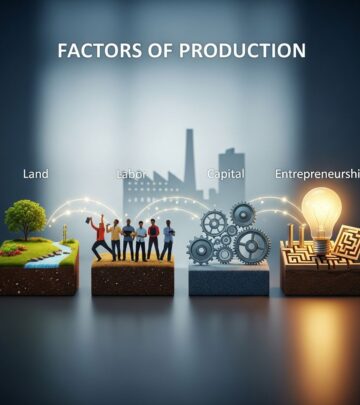
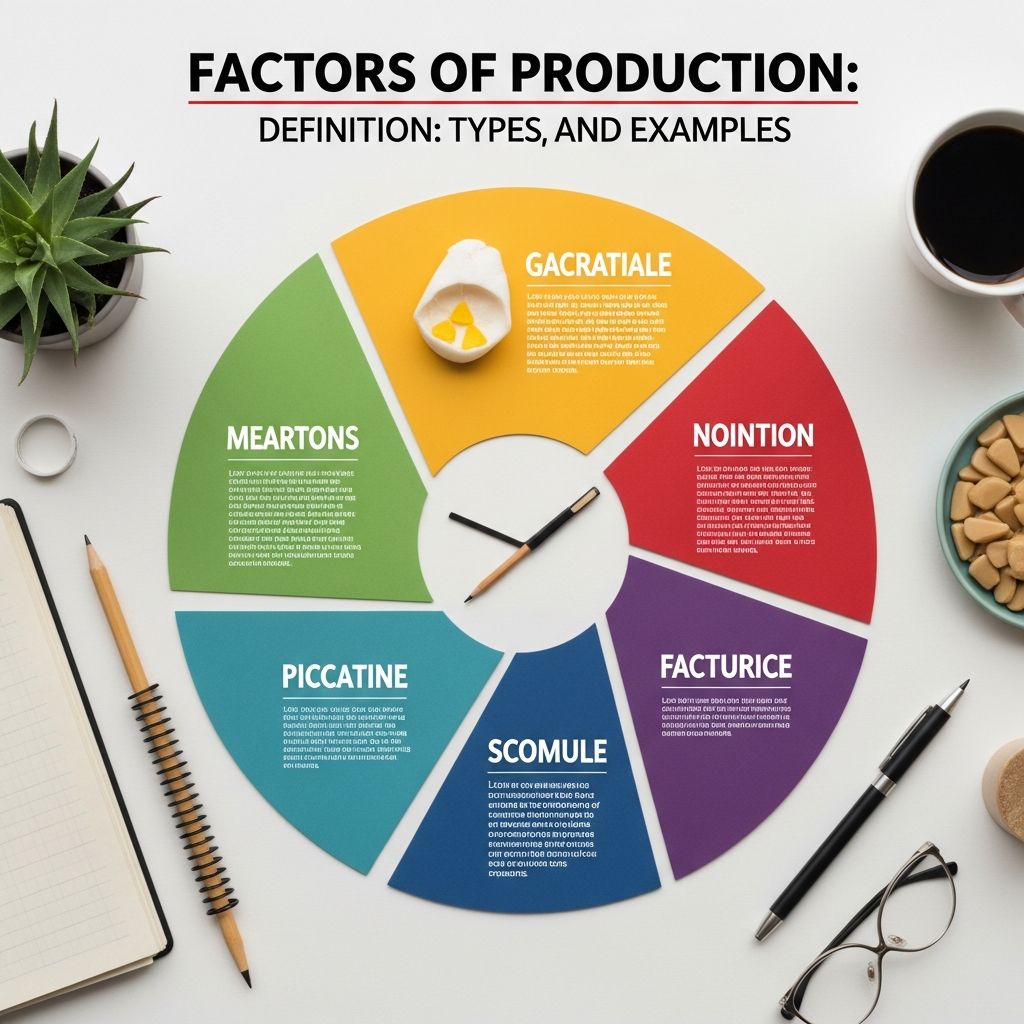
The four factors of production are widely recognized by economists as the essential components needed for any production process:
- Land — All natural resources and raw materials
- Labor — Human effort, skills, and time dedicated to production
- Capital — Physical assets, equipment, and financial resources
- Entrepreneurship — Innovation, vision, and risk-taking that organizes other factors
Each factor serves a unique purpose in the production process, and their interaction determines the efficiency and productivity of economic activity. When these factors are combined effectively, they can generate significant economic value and growth.
The Four Factors of Production Explained
1. Land
Land represents all natural resources and raw materials available on Earth that can be used in production. This includes not only the physical land itself but also everything that comes from the natural environment. Land encompasses forests, minerals, water, soil, and climate conditions. It also includes location value—the strategic placement of property that makes it suitable for particular uses.
In agriculture, land is obviously essential for growing crops and raising livestock. In manufacturing, land provides the space for factories and facilities. In real estate, land is a primary asset. The value of land can appreciate over time due to scarcity, location advantages, and development potential. Because land is finite and cannot be created by humans, it’s considered a fundamental and often limiting factor of production.
Land also extends to natural resources like oil, natural gas, metals, and timber that are extracted and used in production. The availability and quality of land resources significantly impact a region’s economic potential and the types of industries that can flourish there.
2. Labor
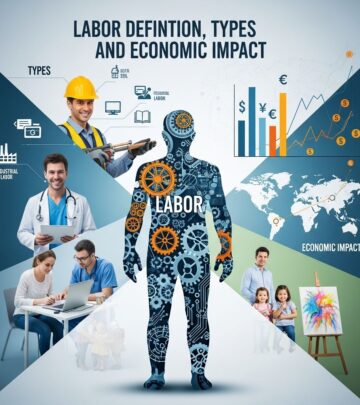
Labor refers to the human effort, skills, time, and mental and physical capabilities that people contribute to the production process. It encompasses everything from manual labor to professional services, from manufacturing work to creative endeavors. Labor is provided by workers at all skill levels, from unskilled workers to highly trained specialists and executives.
The quality and productivity of labor depend on several factors, including education, training, experience, health, and motivation. A well-educated and trained workforce is generally more productive and can command higher wages. Labor markets determine the wages and working conditions for different types of work based on supply and demand. Immigration, population growth, and education levels all affect the labor force available in an economy.
Labor is unique among the factors of production because it’s inseparable from the people who provide it. Workers have rights, require compensation, and are protected by labor laws in most developed nations. The human element of labor also means it involves considerations beyond pure economics, including dignity, safety, and fair treatment.
3. Capital
Capital refers to the man-made assets used in production, including machinery, equipment, tools, buildings, vehicles, and financial resources. Capital represents past investment that enables future production. It includes both physical capital (tangible assets like factories and computers) and financial capital (money and credit used to purchase physical assets).
Capital is produced by human effort and exists to aid in further production. Unlike land, which is naturally occurring, capital must be created through investment and accumulation. Businesses invest in capital to increase their productive capacity and efficiency. A bakery’s ovens, a transportation company’s trucks, a software company’s computers—all are examples of capital.
The accumulation of capital over time is crucial for economic development. Countries with more capital per worker tend to have higher productivity and higher living standards. Capital can depreciate or become obsolete, requiring ongoing investment to maintain and upgrade productive capacity. Interest rates and financing conditions affect how much capital businesses can acquire and therefore their productive potential.
4. Entrepreneurship
Entrepreneurship is the factor that brings the other three together in creative and productive ways. It represents the vision, innovation, risk-taking, and organizational ability that transforms resources into valuable products and services. Entrepreneurs identify opportunities, develop business ideas, and take on the financial and personal risks necessary to create new enterprises.
Entrepreneurs serve as innovators who introduce new technologies, products, and processes to the market. They recognize gaps and inefficiencies and develop solutions. Entrepreneurship drives economic dynamism and creates new industries and jobs. Without entrepreneurial activity, economies would stagnate as existing resources would simply be used to maintain the status quo.
An entrepreneur must be willing to accept uncertainty and the possibility of failure. They combine land, labor, and capital in novel ways to create value. This factor is crucial for economic growth, technological advancement, and the development of new markets. Successful entrepreneurship can lead to significant wealth creation both for individuals and society as a whole.
How the Factors of Production Work Together
While each factor of production is distinct, their power lies in their combination. A factory requires land to operate on, labor to run machines and perform tasks, capital in the form of equipment and facilities, and entrepreneurial vision to identify market opportunities and organize production efficiently.
The productivity of the economy depends on how effectively these factors are combined and utilized. If one factor is scarce or underutilized, it can limit overall production. For example, even with abundant capital and labor, a business cannot expand without sufficient land or natural resources. Conversely, vast natural resources are worthless without the labor, capital, and entrepreneurial effort to develop them.
Market mechanisms help allocate these factors to their most productive uses. Prices and wages signal where resources are needed most, guiding investment and labor toward sectors experiencing growth or facing shortages. This dynamic allocation process helps ensure that factors of production are used efficiently across the economy.
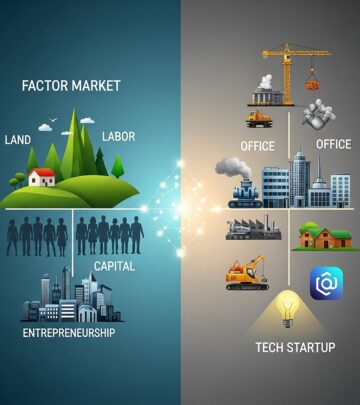
Examples of Factors of Production in Different Industries
Agriculture
In agriculture, land is paramount—the soil’s fertility and climate determine what can be grown. Labor includes farmers and farm workers. Capital consists of tractors, irrigation systems, and storage facilities. Entrepreneurship drives decisions about which crops to grow and how to market them.
Technology
In the tech industry, capital in the form of computers and data centers is essential. Labor includes software developers and engineers. Entrepreneurship is critical for identifying new problems to solve and innovations to pursue. Land plays a smaller but still relevant role—providing office space in strategic locations.
Manufacturing
Manufacturing relies heavily on all four factors. Land provides factory space, labor operates machinery and performs assembly, capital includes production equipment, and entrepreneurship drives process improvements and product development.
The Importance of Factors of Production in Economics
Understanding factors of production is fundamental to economic analysis. They help explain differences in productivity and wealth across regions and countries. Nations with abundant capital, skilled labor, good institutions, and strong entrepreneurial culture tend to be more prosperous. Conversely, countries lacking in these factors often struggle with poverty and limited economic opportunities.
The concept also helps explain economic growth. Economies expand when factors of production become more abundant or are used more efficiently. Technological improvements that increase capital productivity or worker training that enhances labor productivity both drive economic growth. Similarly, discovering new natural resources increases available land factors.
For businesses, understanding factors of production helps with strategic planning. Companies must assess their access to necessary inputs and optimize how they combine them. Successful businesses find ways to use available factors more efficiently than competitors, creating competitive advantages.
Challenges and Limitations in Factor Availability
Not all regions have equal access to factors of production. Geographic limitations constrain land availability in some areas. Educational systems affect the quality of available labor. Capital accumulation requires savings and investment capacity. Entrepreneurial ecosystems develop differently across different regions and cultures.
Resource scarcity is a fundamental economic reality. Because factors of production are limited, societies must make choices about how to allocate them. This reality underlies all economic decision-making and trade-offs. Efficient allocation of these scarce factors is a central challenge facing all economies, whether market-based or planned.
Modern Considerations: Technology and Sustainability
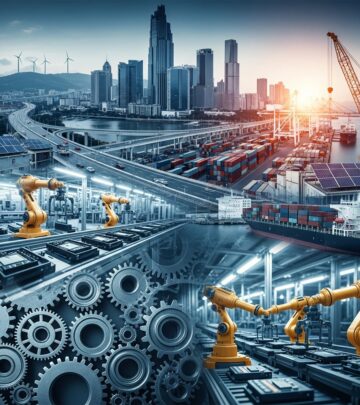
Technological advancement continues to reshape how factors of production are used. Automation increases capital productivity while reducing labor requirements for certain tasks. Information technology allows capital and labor to be more productive than ever before. Digital entrepreneurship creates new business models that require relatively little physical capital.
Sustainability concerns are increasingly important in discussions of factors of production. The use of land and natural resources must be balanced against environmental protection. Renewable energy, sustainable agriculture, and conservation reflect growing awareness that natural capital must be managed responsibly for long-term economic health.
Frequently Asked Questions (FAQs)
Q: Why are the factors of production important to understand?
A: Understanding factors of production helps explain how economies work, why different regions have different levels of prosperity, and how businesses create value. It provides a framework for analyzing economic activity at all levels.
Q: Can an economy function without all four factors?
A: While theoretically an economy might function with limited access to one factor, all four are necessary for comprehensive economic development. Lack of any factor creates bottlenecks that limit productivity and growth.
Q: How do factors of production relate to economic growth?
A: Economic growth occurs when factors of production increase in quantity or improve in quality, or when they’re combined more efficiently. Technological innovation and capital investment are key drivers of growth.
Q: Are the factors of production the same in all countries?
A: The types of factors are the same, but their availability, quality, and relative importance vary significantly between countries. Developed nations typically have more abundant capital and skilled labor, while developing nations may rely more heavily on natural resources and low-cost labor.
Q: How does entrepreneurship differ from the other factors of production?
A: Entrepreneurship is unique because it actively combines and organizes the other three factors. It represents the human element of innovation and risk-taking that drives economic change and new value creation.
Q: What role does technology play in factors of production?
A: Technology is embedded in capital and enhances labor productivity. Technological advancement allows factors to be combined more efficiently and creates new possibilities for production and entrepreneurship.
References
- Factors of Production — Investopedia. Accessed 2025-11-29. https://www.investopedia.com/terms/f/factors-production.asp
- Introduction to Economics — U.S. Bureau of Labor Statistics. U.S. Department of Labor. https://www.bls.gov/
- Capital Formation and Economic Growth — World Bank Economics. https://www.worldbank.org/
- Labor Economics and Employment Theory — National Bureau of Economic Research. https://www.nber.org/
- Entrepreneurship and Economic Development — OECD. Organisation for Economic Co-operation and Development. https://www.oecd.org/
Similar Articles








Read full bio of Sneha Tete