Factor-Based Funds: 6 Key Factors And How To Invest
Unlock the power of targeted investing strategies with factor-based funds for smarter portfolio diversification and potential outperformance.

Factor-based funds represent an innovative investment strategy that systematically targets specific characteristics of securities to potentially enhance returns and manage risk beyond broad market exposure. These funds, often called smart beta products, apply rules-based methods to construct portfolios emphasizing traits like value or momentum, bridging active and passive investing styles.
Core Principles of Factor Investing
At their heart, factor-based funds rely on empirical research identifying persistent drivers of asset performance. Pioneered through models like the Capital Asset Pricing Model (CAPM) in the 1960s, which highlighted market beta as a primary factor, modern approaches expand to multiple dimensions. Investors use these funds to tilt portfolios away from market-cap weighting toward attributes shown to deliver premiums over time.
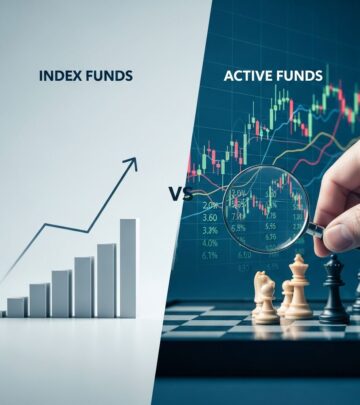
Unlike traditional index funds that mirror broad benchmarks, factor funds screen and weight holdings based on predefined metrics. This rules-based transparency reduces manager discretion while aiming for superior risk-adjusted outcomes.
Key Factors Powering These Strategies
Several well-researched factors form the foundation of these funds. Each captures a distinct premium backed by decades of data across markets.
- Value: Targets stocks trading below their fundamental worth, such as low price-to-earnings or price-to-book ratios, betting on mean reversion.
- Momentum: Selects assets with strong recent price trends, capitalizing on continuation patterns in investor behavior.
- Quality: Prioritizes companies with robust balance sheets, consistent profitability, and low debt, favoring financial stability.
- Low Volatility: Focuses on stocks with minimal price swings, appealing for downside protection during turbulent periods.
- Growth: Emphasizes firms with high expected earnings expansion, often in innovative sectors.
- Size: Often tilts toward smaller companies, which historically offer higher returns despite added risk.
Providers like Vanguard target select factors after rigorous analysis, offering pure plays or multifactor blends combining momentum, value, and quality for balanced exposure.
Historical Foundations and Academic Backing
The intellectual roots trace to academic breakthroughs. CAPM posited market risk as the sole explainer of returns, but subsequent models like Fama-French added value and size factors, demonstrating their ability to account for 50-80% of excess performance variations. Later expansions incorporated profitability and investment factors, solidifying a multifactor framework.
Research from institutions like Yale highlights how factors explain correlations and enable efficient diversification by addressing sources of risk and return. AQR emphasizes styles as quantifiable traits for repeatable premiums without stock-picking.
Advantages Over Conventional Approaches
Factor-based funds offer compelling edges in portfolio construction.
| Aspect | Traditional Indexing | Factor-Based Funds |
|---|---|---|
| Weighting | Market-cap driven | Factor-driven (e.g., equal or scored) |
| Diversification | Broad market | By return drivers, low inter-factor correlation |
| Cost | Very low | Low, often comparable to passive |
| Return Potential | Market beta | Factor premiums for alpha-like gains |
| Risk Control | Market volatility | Targeted (e.g., low vol for stability) |
BlackRock notes factors’ economic intuition: value thrives in recoveries, momentum in expansions, quality in uncertainty. This cyclical complementarity enhances diversification, with low correlations boosting Sharpe ratios.
Cost efficiency shines in ETF formats, where expense ratios rival plain-vanilla indexes yet pursue outperformance.
Integration into Investment Portfolios
To harness factors, investors can allocate via single-factor or multifactor vehicles. A core-satellite model places broad indexes as the core, overlaying factor tilts for enhancement. For instance, 70% in total market ETF, 15% value, 15% momentum.
Multifactor funds like Vanguard’s U.S. Multifactor ETF blend exposures systematically, reducing the need for tactical shifts. Fidelity underscores quality funds tracking indexes of high-profit, strong-balance-sheet firms.
Rebalancing quarterly or semi-annually maintains tilts, as factors can underperform cyclically. State Street Global Advisors advocates understanding factor interplay for optimal selection.
Potential Drawbacks and Risk Considerations
While promising, factor strategies carry unique challenges. They exhibit cyclicality: momentum crashes during reversals, value lags in growth booms. Vanguard warns of elevated volatility versus broad markets, deeming them unsuitable for risk-averse profiles.
Implementation risks include turnover costs from frequent rebalancing and capacity limits in niche factors. Bajaj AMC advises monitoring market regimes, as factor efficacy varies.
Diversification across factors mitigates this, but crowding—when many funds chase the same tilts—can erode premiums. Long-term horizons (10+ years) are essential, given short-term deviations.
Practical Steps for Getting Started
- Assess Objectives: Match factors to goals—low vol for income, growth for accumulation.
- Research Vehicles: Review prospectuses for methodology, holdings, and tracking error.
- Size Allocation: Limit to 10-30% of equity sleeve initially.
- Monitor and Adjust: Track relative performance against benchmarks quarterly.
- Diversify Factors: Combine complementary styles for resilience.
Motilal Oswal highlights periodic rule application for optimized portfolios, eliminating subjectivity.
Future Outlook for Factor Strategies
As data and computing advance, factors evolve with machine learning refining screens. Enhanced strategies now span asset classes, incorporating fixed income or commodities. Institutional adoption grows, with trillions in smart beta AUM signaling maturity.
Yet, premiums may compress with popularity, underscoring selection of proven, transparent providers.
Frequently Asked Questions
What sets factor-based funds apart from index ETFs?
Factor funds weight by characteristics like quality scores, not just market cap, targeting specific return drivers.
Do factors guarantee better performance?
No; they offer historical premiums but with cycles of underperformance requiring patience.
Are they suitable for beginners?
Best for those understanding risks; start small or with multifactor blends.
How often should I rebalance factor tilts?
Typically semi-annually, aligning with fund cadences to control drift.
Can factors apply beyond equities?
Yes, increasingly to bonds, currencies, and alternatives for holistic portfolios.
References
- What are factor-based mutual funds? — Bajaj AMC. 2023. https://www.bajajamc.com/knowledge-centre/what-are-factor-based-mutu…unds
- What are factor-based funds? — Vanguard Investor Resources. 2024. https://investor.vanguard.com/investor-resources-education/understanding-investment-types/what-are-factor-based-funds
- Factor Funds — Motilal Oswal Mutual Fund. 2024. https://www.motilaloswalmf.com/index-fund/factor-funds
- Factor-based investing: Targeting the real drivers of return — State Street Global Advisors. 2023. https://www.ssga.com/au/en_gb/intermediary/insights/education/factor-based-investing
- What is factor investing? — BlackRock. 2024. https://www.blackrock.com/us/individual/investment-ideas/what-is-factor-investing
Similar Articles








Read full bio of medha deb