Externality: Definition, Types, and Economic Impact
Understanding externalities: How third-party costs and benefits shape market outcomes.
What Is an Externality?
An externality is a cost or benefit arising from an economic activity that affects an uninvolved third party and is not reflected in market prices. In other words, when the production or consumption of a good or service creates spillover effects on individuals who did not choose to be part of the transaction, an externality occurs. These external effects represent a fundamental disconnect between private market pricing and the true social costs or benefits of economic activity.
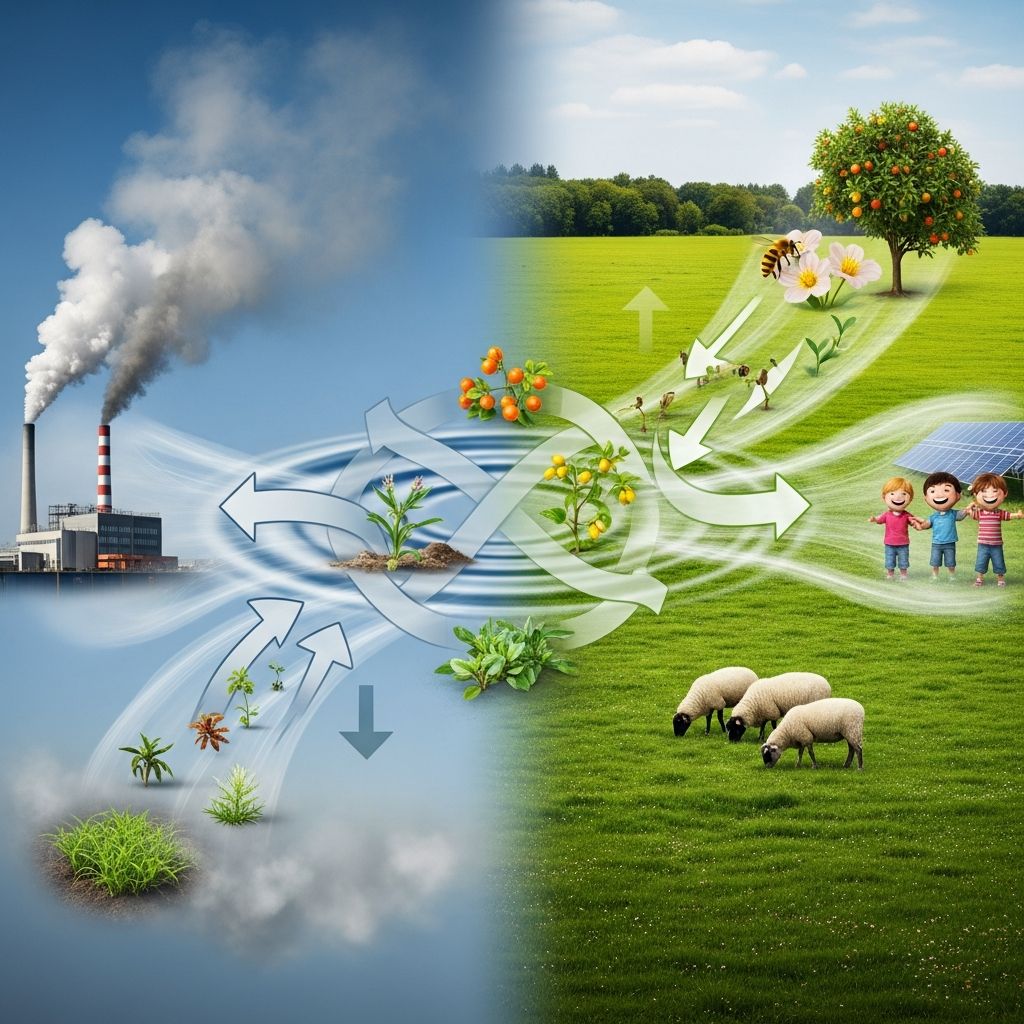
Externalities emerge when market prices fail to capture all relevant costs or benefits associated with a transaction. For example, a manufacturing plant that pollutes a river imposes costs on downstream water users who receive no compensation, even though they experience real economic harm. Similarly, a beekeeper’s hives provide pollination services to neighboring farms, creating benefits that the beekeeper cannot fully capture through market transactions. In both cases, the market price does not reflect the complete social picture.
The concept of externalities is central to understanding market failures. When externalities exist, the competitive market equilibrium fails to achieve Pareto optimality—a state where resources cannot be reallocated to make someone better off without making someone else worse off. This inefficiency signals that a different allocation of resources would improve overall social welfare.
Negative Externalities: Costs Imposed on Others
A negative externality occurs when an economic activity imposes uncompensated costs on third parties. In negative externalities, the social cost of production or consumption exceeds the private cost borne by the producer or consumer. This divergence creates market inefficiency, as decision-makers lack proper incentives to account for the full costs of their actions.
Characteristics of Negative Externalities
Negative externalities can arise on either the production side or the consumption side. Production-based negative externalities occur when a firm’s manufacturing processes create costs for others—such as air pollution from factories, noise from construction sites, or chemical runoff contaminating groundwater. Consumption-based negative externalities emerge when individuals’ use of products generates external costs, such as secondhand smoke from cigarette smoking or traffic congestion from automobile use.
A critical feature of negative externalities is that competitive markets tend to produce too much of the good or service in question. Since producers and consumers do not face the full social costs of their decisions, they have no market incentive to reduce their activity to the socially optimal level. The result is overproduction and overconsumption, creating deadweight loss and reducing overall economic efficiency.
Examples of Negative Externalities
Common examples include air pollution from motor vehicles, where society bears health and environmental costs not reflected in gasoline prices; water pollution from industrial facilities, where consumers and ecosystems suffer uncompensated damage; and noise pollution from airports or highways, which diminishes property values and quality of life for nearby residents.
Positive Externalities: Benefits for Others
A positive externality, also called an external benefit or beneficial externality, occurs when an economic activity generates uncompensated benefits for third parties. In these situations, the social benefit of production or consumption exceeds the private benefit received by the direct market participant. Positive externalities represent an underutilization of beneficial activities from a social welfare perspective.
Production and Consumption Sides
Positive production externalities arise when a firm’s activities increase the well-being of others without compensation—such as when research and development creates spillover knowledge that benefits competitors and society broadly. Positive consumption externalities occur when an individual’s consumption choices benefit others, such as when someone receives education, which generates social benefits through increased civic participation and economic productivity that extend beyond personal gain.
Unlike negative externalities where too much is produced, positive externalities result in underproduction. Market participants produce or consume less than the socially optimal quantity because they cannot capture all the benefits their activity generates. From a social welfare standpoint, expanding these activities would improve overall well-being.
Examples of Positive Externalities
Education creates positive externalities by producing a more informed citizenry and a more productive workforce. Vaccination programs generate positive externalities through herd immunity, protecting even those who don’t vaccinate. Environmental conservation efforts benefit all community members through cleaner air and water. Research into renewable energy technologies creates positive spillovers across industries and nations.
Pecuniary Externalities and Positional Effects
Beyond traditional externalities, economists recognize pecuniary externalities—external effects that operate through price changes rather than direct resource misallocation. When rising demand increases prices in competitive markets, consumers who were not party to the initial transaction face higher costs. While this represents a monetary transfer rather than a true economic inefficiency, it can still affect welfare distribution and market behavior.
Positional externalities arise from relative consumption considerations. Based on Duesenberry’s Relative Income Hypothesis, individuals evaluate the utility of their consumption by comparing it to others’ consumption bundles. This means that one person’s consumption of positional goods—items whose value depends on relative status—can reduce others’ satisfaction with their own consumption. The desire for status-signaling goods creates a consumption externality rooted in social comparison rather than physical effects.
Market Failure and Pareto Optimality
Externalities represent a classic form of market failure. Markets function efficiently under certain conditions, including that all costs and benefits are incorporated into prices. When externalities exist, these conditions are violated. The market equilibrium quantity differs from the socially optimal quantity, and resources are misallocated.
The concept of Pareto optimality provides a benchmark for evaluating efficiency. An allocation is Pareto optimal when no reallocation can make someone better off without making someone else worse off. With externalities, the free market equilibrium is not Pareto optimal. The social marginal benefit should equal the social marginal cost at the efficient quantity, accounting for all direct and indirect effects. Markets that ignore externalities fail to achieve this balance, leaving potential gains from trade unrealized.
Solutions to Externalities
Recognizing externalities prompts consideration of policy interventions to improve efficiency. Several approaches address the divergence between private and social costs or benefits.
Pigovian Taxes and Subsidies
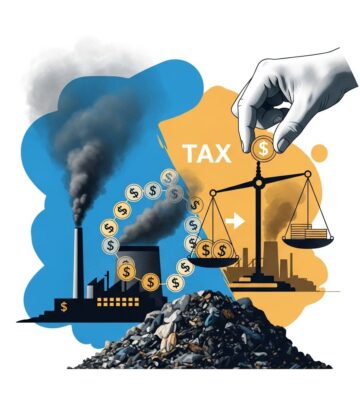
A Pigovian tax (also called Pigouvian tax, named after economist Arthur C. Pigou) is a tax imposed on activities that generate negative externalities, with the tax amount equal to the marginal external cost. By making polluters pay for the external costs they create, Pigovian taxes align private incentives with social costs, encouraging the socially optimal level of production. The tax effectively internalizes the externality, allowing market prices to reflect true social costs.
Conversely, governments can provide subsidies for activities generating positive externalities. Subsidizing education, green energy, or research encourages expansion toward socially optimal levels by reducing private costs and capturing more of the social benefits for individual decision-makers.
Regulation and Command-and-Control Policies
Governments may implement regulations that limit activities producing negative externalities. Examples include emission standards for factories, restrictions on pesticide use, or zoning laws limiting industrial activity near residential areas. These direct regulatory approaches set quantity or quality limits rather than relying on price incentives.
Market-Based Mechanisms
Cap-and-trade systems for pollution represent an innovative market-based approach. By creating tradeable permits for externality-generating activities, governments harness market mechanisms to achieve environmental or social goals efficiently. Firms with low abatement costs reduce more, while those with high costs purchase permits, achieving overall reduction targets at minimum cost.
Information Disclosure and Liability Rules
Making information about negative externalities public can influence behavior and encourage technological innovation. Liability rules that hold firms responsible for external damages create incentives for prevention and compensation without direct government intervention.
Coasean Bargaining and the Coase Theorem
Ronald Coase demonstrated that under certain conditions—including low transaction costs, well-defined property rights, and few parties involved—affected parties can negotiate privately to address externalities without government intervention. This Coasean bargaining approach can achieve efficient outcomes regardless of initial legal assignments of rights, provided bargaining costs remain manageable.
However, real-world applicability is limited. When externalities affect numerous dispersed parties, like air pollution impacting millions, the transaction costs of negotiating individual agreements become prohibitive. The Coase Theorem highlights the importance of transaction costs and property rights in determining whether private solutions suffice or government intervention becomes necessary.
The Role of Organizations and Information Sharing
Organizational structures affect externality generation and mitigation. Corporations and partnerships that facilitate confidential information sharing among members may reduce positive externalities that would emerge if information flowed freely throughout the economy. Conversely, open knowledge-sharing platforms can amplify beneficial spillovers from innovation and research.
Frequently Asked Questions
Q: What is the difference between negative and positive externalities?
A: Negative externalities impose uncompensated costs on third parties, while positive externalities generate uncompensated benefits. Markets produce too much of goods with negative externalities and too little of goods with positive externalities.
Q: How do externalities lead to market failure?
A: Externalities cause market failure because market prices do not reflect the full social costs or benefits of production and consumption. This causes the market equilibrium to diverge from the socially optimal quantity, resulting in resource misallocation and deadweight loss.
Q: What is a Pigovian tax and how does it work?
A: A Pigovian tax is a tax equal to the marginal external cost of a negative externality. By requiring polluters to pay for external damages, the tax internalizes the externality, leading producers to reduce output to the socially optimal level.
Q: Can private negotiation solve externality problems?
A: In some cases, yes. When transaction costs are low and few parties are involved, private bargaining under the Coase Theorem can achieve efficient outcomes. However, for large-scale externalities affecting many dispersed parties, such as air pollution, private solutions typically prove impractical.
Q: How do positional externalities differ from traditional externalities?
A: Positional externalities stem from relative consumption comparisons rather than physical impacts. One person’s consumption of status-signaling goods can diminish others’ satisfaction by affecting relative standing in social hierarchies.
Q: What policy tools can governments use to address externalities?
A: Governments can employ Pigovian taxes or subsidies, direct regulations, cap-and-trade systems, information disclosure requirements, and liability rules to address externalities and align private incentives with social welfare.
References
- Externality — Wikipedia. Accessed November 2025. https://en.wikipedia.org/wiki/Externality
- Externalities: Definition and Examples — The Decision Lab. Accessed November 2025. https://thedecisionlab.com/reference-guide/economics/externalities
Similar Articles








Read full bio of medha deb