Exports: Definition, Examples, and Economic Effects
Understand how exports drive economic growth, create jobs, and shape global trade dynamics.
What Are Exports?
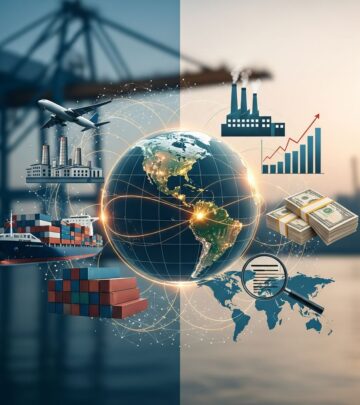
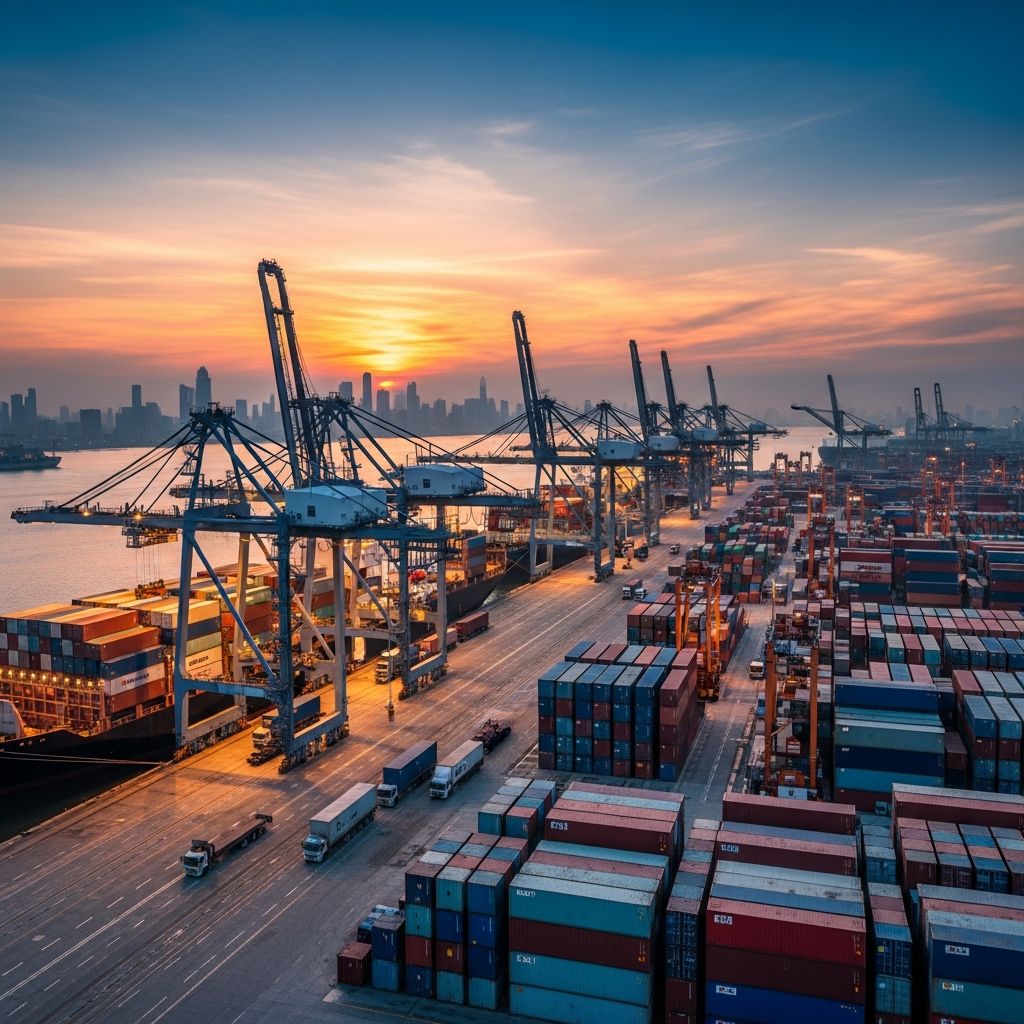
Exports represent goods and services produced domestically within one country and sold to buyers in foreign nations. This economic activity forms a cornerstone of international trade and serves as a critical component of a nation’s economic strategy. When a company manufactures a product in its home country and sells it abroad, that transaction qualifies as an export. The movement of locally manufactured products across international borders plays a fundamental role in globalization and international commerce.
Exports differ fundamentally from imports, which involve purchasing goods and services from other countries for domestic consumption. While imports represent money flowing out of a country, exports bring revenue inward. The distinction matters significantly for a nation’s economic health, as policymakers work to ensure that export values exceed import values, creating a positive trade balance.
Businesses engage in exporting for multiple strategic reasons. Companies typically export products in areas where they possess a competitive advantage, whether through superior quality, innovative features, or access to natural resources that other regions cannot produce. For example, Jamaica, Kenya, and Colombia possess climates ideal for growing coffee, enabling them to export this commodity to nations unable to produce it domestically.
Key Characteristics of Exports
Several defining features distinguish exports within the broader economic landscape:
- Cross-border movement: Exports involve physical or digital transfer of goods and services beyond national boundaries
- Revenue generation: Exports create an influx of foreign currency into the exporting nation
- GDP contribution: Export activities directly increase a country’s gross domestic product
- Competitive advantage: Companies typically export where they hold superior capabilities or unique resources
- Government support: Most governments actively encourage exports through subsidies, tax incentives, and favorable policies
Real-World Examples of Exports
Example 1: Natural Resource Exports
Consider a developing nation with abundant diamond reserves. This country exports diamonds worth $1 trillion annually, with additional exports of $110 billion from other commodities. However, the nation remains heavily dependent on imports for textiles, food products, and other essentials, with total imports approximating $1.3 trillion. This scenario illustrates how even resource-rich nations must balance exports against imports to maintain economic stability. In this case, the trade balance equals $1.11 trillion in exports minus $1.3 trillion in imports, resulting in a negative balance of $190 billion—a concerning situation requiring policy adjustments.
Example 2: Strategic Export Initiatives
A compelling recent example emerged through the Black Sea grain deal, implemented during the Russia-Ukraine conflict in July 2022. This initiative addressed global food shortages by facilitating the transportation of grains produced in Ukraine through the Black Sea. The agreement involved Russia, Ukraine, Turkey, and the United Nations, demonstrating how exports transcend simple commercial transactions to become instruments of global stability and humanitarian concern.
Example 3: Trade Surplus Achievement
Consider China’s trade position in 2019: the nation exported $1 trillion worth of goods while importing only $200 billion, resulting in an $800 billion trade surplus. This substantial surplus reflected China’s position as a manufacturing powerhouse and demonstrated how export dominance can create significant economic advantage and capital accumulation.
Exports and GDP Calculation
Exports constitute a critical component within the GDP formula, which economists express as:
GDP = Consumption + Government Spending + Investments + Net Exports
Net exports (also called balance of trade) are calculated by subtracting total imports from total exports. A positive net export value indicates a trade surplus, while negative net exports signal a trade deficit. For GDP to increase, export values must consistently exceed import values, making export growth a primary economic objective for most nations.
Research demonstrates the substantial impact of export growth on overall economic performance. Analysis shows that increasing exports as a share of GDP by just 5 percentage points—from 20% to 25%—could increase GDP by approximately £3.5 billion and support 17,500 jobs annually, with increased tax revenue of £500 million per year.
Advantages of Exports
Economic Growth and GDP Enhancement
Exports form an essential component of gross domestic product calculations. By selling goods and services internationally, nations directly increase their GDP figures and overall economic output. This growth translates into improved living standards and increased national wealth.
Employment Creation and Income Growth
Export-oriented industries create substantial employment opportunities across production, logistics, marketing, and support services. Workers in exporting firms typically earn higher wages than their counterparts in non-exporting companies, reflecting the greater profitability of international trade. Research indicates that exporting businesses create jobs faster and pay employees more generously than non-exporting enterprises.
Productivity and Innovation
Businesses engaged in international trade demonstrate significantly higher productivity levels. Companies competing globally must innovate continuously to maintain competitive advantage, leading to technological advancement and operational efficiency improvements. Studies show that UK exporting businesses prove approximately 20% more productive than non-exporting counterparts when controlling for size, industry, and ownership structure.
Optimal Resource Utilization
Exports ensure planned and efficient use of natural and human resources available within a nation. Countries can leverage their unique geographic advantages, raw materials, and skilled workforces to produce goods demanded globally, maximizing economic benefit from available resources.
Capital and Investment Attraction
Export-oriented economies attract substantial capital inflows and foreign investment. International companies seek to establish operations in countries with proven export capabilities, robust infrastructure including ports and industries, and skilled workforces. This investment further strengthens economic capacity and creates multiplier effects throughout the economy.
Government Support and Incentives
Governments actively promote exporters through tax returns, subsidies, and favorable trade policies. Credit agencies provide insurance against credit risks faced by exporters, reducing financial barriers to international trade. These governmental interventions recognize the strategic importance of exports to national economic objectives.
Disadvantages and Challenges of Exports
Domestic Market Competition
Focusing on export markets sometimes diverts resources from domestic suppliers, potentially creating survival disadvantages for local manufacturers and retailers. This competition can strain domestic industries and create economic inequality between export-focused and domestically-focused businesses.
Resource Exploitation Concerns
Extensive exporting of natural resources can lead to depletion of national assets without corresponding sustainable development. Nations that over-export finite resources may face long-term economic vulnerability and environmental degradation.
Trade Imbalances
While exports benefit exporting nations, they can create trade deficits for importing countries, potentially causing economic strain and political tensions. Persistent trade imbalances may lead to protectionist policies and trade disputes that harm global commerce.
Exports vs. Imports: Comparative Analysis
| Characteristic | Exports | Imports |
|---|---|---|
| Definition | Movement of commodities out of a country | Movement of commodities into a country |
| Financial Impact | Adds to national income | Forms part of national expenditure |
| Government Approach | Encouraged through subsidies and duty returns | Discouraged through duties and taxes |
| Economic Meaning | Promotes self-reliance and surplus sales | Indicates dependence on other countries |
| Policy Goal | Value should exceed imports | Lesser values are preferable |
How Exports Drive Economic Development
The relationship between exports and economic prosperity extends beyond simple revenue generation. Exporting companies must meet international quality standards, innovate to remain competitive, and adopt best practices from global markets. These pressures create spillover effects benefiting the entire economy through technology transfer and improved business practices.
Additionally, exports enable countries to specialize in production areas where they possess comparative advantage, leading to economic efficiencies and better resource allocation. This specialization drives sustainable economic growth while improving productivity over time through diffusion of new technology, increased competition, and exploitation of economies of scale.
Export Profitability for Businesses
From an individual business perspective, exporting offers compelling benefits. Exporting can prove profitable for companies of all sizes. On average, exporting firms experience faster sales growth, create more jobs, and provide higher employee compensation than non-exporting businesses. The United States, for instance, maintains international recognition for high-quality, innovative goods and services, coupled with excellent customer service and sound business practices, giving American exporters considerable competitive advantage.
Companies often export to access new markets, increase revenue streams, and reduce dependence on domestic market fluctuations. International expansion allows businesses to achieve economies of scale, spreading fixed costs across larger production volumes and improving profitability.
Frequently Asked Questions About Exports
Q: What is the difference between exports and imports?
A: Exports are goods and services a country produces and sells abroad, bringing revenue into the country. Imports are goods and services a country purchases from abroad, representing expenditure. Exports add to national income while imports represent national spending.
Q: Why do governments encourage exports?
A: Governments promote exports because they contribute directly to GDP, create employment, attract foreign investment, and improve the nation’s trade balance. Export growth strengthens the overall economy and improves citizens’ living standards.
Q: How do exports affect employment?
A: Exporting industries create jobs across production, distribution, and support services. Export-oriented companies typically pay higher wages than non-exporting firms and expand employment faster, contributing significantly to job creation and income growth.
Q: What determines which products a country exports?
A: Countries typically export products where they possess competitive advantage—either through superior quality, innovative technology, or natural resource availability that other regions lack. Geographic factors, climate, skilled workforce, and infrastructure also influence export specialization.
Q: How does a trade surplus benefit an economy?
A: A trade surplus occurs when exports exceed imports, resulting in net inflow of foreign currency. This strengthens the nation’s balance sheet, increases foreign exchange reserves, and provides capital for investment in domestic infrastructure and economic development.
Q: Can too many exports harm a domestic economy?
A: While exports generally benefit economies, excessive focus on exports can disadvantage domestic suppliers by diverting resources and market attention. Additionally, over-exporting natural resources without sustainable practices can deplete national assets and create long-term economic vulnerability.
References
- Export – Meaning, Examples, Advantage/Disadvantage, Vs Import — Wall Street Mojo. 2024. https://www.wallstreetmojo.com/export/
- Economic impact of exports — Scottish Government. 2024. https://www.gov.scot/publications/scotland-a-trading-nation/7-0-maximising-the-economic-impact-of-exports/7-1-economic-impact-of-exports/
- What Are Exports and Imports? Definitions and Examples — Indeed.com. 2024. https://www.indeed.com/career-advice/career-development/what-are-exports-and-imports
- What is an Export? – Definition & Example — Study.com. 2024. https://study.com/academy/lesson/what-is-an-export-definition-example.html
- Chapter 8, Net Exports of Goods and Services — Bureau of Economic Analysis (U.S. Department of Commerce). https://www.bea.gov/resources/methodologies/nipa-handbook/pdf/chapter-08.pdf
- Why Export? — International Trade Administration (U.S. Department of Commerce). 2024. https://www.trade.gov/why-export
Similar Articles








Read full bio of Sneha Tete