Exploring Mutual Fund Categories
Discover the diverse world of mutual funds and how each category aligns with your financial goals and risk tolerance.

Mutual funds remain a cornerstone of modern investing, pooling resources from numerous investors to create diversified portfolios managed by professionals. With thousands of options available, understanding the primary categories empowers individuals to select funds that match their financial objectives, whether seeking aggressive growth, steady income, or capital preservation. This article delves into the key types, highlighting their compositions, benefits, risks, and ideal applications within a broader investment strategy.
Equity Funds: Driving Long-Term Growth
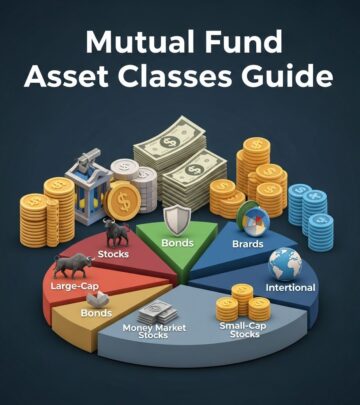
Equity funds, often called stock funds, form the backbone of growth-oriented portfolios by investing predominantly in company stocks. These funds capture the potential upside of equity markets, where historical data shows stocks delivering superior returns over extended periods compared to fixed-income alternatives. Managers allocate assets across various company sizes—large-cap (established giants), mid-cap (growing enterprises), and small-cap (emerging players)—or styles like growth or value.
- Growth Funds: Target companies with high earnings potential, reinvesting profits for expansion rather than dividends. They suit investors comfortable with volatility for potentially higher rewards.
- Value Funds: Focus on undervalued stocks trading below intrinsic worth, appealing to patient investors anticipating market corrections.
- Equity Income Funds: Prioritize dividend-paying stocks for regular payouts alongside moderate appreciation.
While equity funds offer diversification across hundreds of holdings, they remain susceptible to market downturns, making them best for long-term horizons of 5–10 years or more.
International and Global Equity Options
Broadening horizons beyond domestic markets, international and global equity funds provide exposure to worldwide opportunities. Global funds invest in both U.S. and foreign equities, whereas international funds exclude domestic holdings entirely. Subcategories include emerging markets funds targeting high-growth regions like Asia, Latin America, and Eastern Europe.
These funds enhance portfolio resilience through geographic diversification, potentially cushioning U.S. market slumps with gains elsewhere. However, they introduce currency risks, geopolitical uncertainties, and differing regulatory environments, amplifying volatility.
Sector and Specialty Funds: Targeted Bets
For those with strong convictions about specific industries, sector funds concentrate investments in areas like technology, healthcare, energy, real estate, or commodities. Unlike broad equity funds, these narrow focuses amplify both potential gains and losses tied to sector performance.
Commodity funds, for instance, track resource-heavy industries, serving as inflation hedges but exhibiting heightened swings. Investors often use sector funds as portfolio satellites—small allocations complementing core diversified holdings.
Bond Funds: Stability and Income Generation
Bond funds, or fixed-income funds, invest at least 80% of assets in debt securities like government Treasuries, municipal bonds, corporate debt, or mortgage-backed instruments. They appeal to conservative investors prioritizing capital preservation and predictable interest payments over aggressive growth.
| Bond Fund Type | Key Features | Risk Level | Tax Considerations |
|---|---|---|---|
| Government/Treasury | U.S. or agency bonds; highest safety | Low | Federally taxable |
| Municipal | State/local debt; tax-exempt income | Low-Medium | Often tax-free |
| Corporate | Company bonds; higher yields | Medium | Fully taxable |
| High-Yield/Junk | Lower-rated debt; elevated returns | High | Taxable |
| Mortgage-Backed | Home loan pools; steady flows | Medium | Taxable |
Short- and intermediate-term bond funds minimize interest rate sensitivity, while longer-duration ones offer higher yields but greater price fluctuations.
Money Market Funds: Liquidity and Safety
Money market funds target ultra-short-term, high-quality instruments such as Treasury bills, commercial paper, and certificates of deposit, aiming to maintain a stable $1 net asset value. They function as cash equivalents, ideal for emergency reserves or short-term parking of funds.
- Government Funds: 99.5% in federal securities; maximal safety.
- Prime Funds: Include corporate debt for slightly higher yields but marginally more risk.
- Municipal Funds: Tax-exempt options for high-tax-bracket investors.
Though lower-risk, returns trail inflation and other funds, and they lack FDIC insurance.
Balanced and Asset Allocation Funds: Hybrid Approaches
Balanced funds blend stocks and bonds—typically 60% equities and 40% fixed income—for moderate growth with reduced volatility. Asset allocation funds dynamically adjust mixes based on market conditions or life stages.
Target-date funds, a popular variant, automate shifts toward conservatism as retirement nears, simplifying planning for hands-off investors.
Index Funds: Passive Efficiency
Index funds replicate benchmarks like the S&P 500, holding proportional shares of index constituents for low-cost market exposure. Outperforming most active peers net of fees, they emphasize broad diversification and tax efficiency, suiting cost-conscious, long-term holders.
Fund of Funds and Alternative Structures
Fund-of-funds aggregate multiple mutual funds or ETFs, offering instant diversification but layering fees. These suit novices seeking all-in-one solutions.
Assessing Risks Across Categories
Every mutual fund type carries unique risks: market risk for equities, interest rate and credit risk for bonds, liquidity constraints for money markets. Diversification across categories mitigates these, aligning with individual risk tolerance, time horizon, and goals. Actively managed funds rely on manager skill, while passive ones prioritize low expenses.
Building a Diversified Portfolio
A robust strategy might allocate 50–70% to equities (blending domestic, international, growth/value), 20–40% to bonds, and 5–10% to money markets. Rebalance annually to maintain targets, considering tax implications in taxable accounts.
Frequently Asked Questions (FAQs)
What is the minimum investment for mutual funds?
Many funds require $1,000–$3,000 initially, with lower thresholds for retirement accounts or automatic investments.
Are mutual funds safe?
No investment is risk-free; safety varies by type. Money market funds are lowest risk, equities highest.
How do fees impact returns?
Expense ratios (0.5–2%) erode gains; prioritize low-cost index funds.
Can I lose money in bond funds?
Yes, due to rising rates or defaults, though less than stocks.
What role do mutual funds play in retirement?
Target-date funds automate lifecycle adjustments for 401(k)s and IRAs.
References
- The Types of Mutual Funds: A Guide — Chase. 2023. https://www.chase.com/personal/investments/learning-and-insights/article/types-of-mutual-funds
- Types of Mutual Funds — Nationwide. 2024-02-15. https://www.nationwide.com/lc/resources/investing-and-retirement/articles/mutual-funds-types
- Mutual Funds — FINRA. 2025-01-10. https://www.finra.org/investors/investing/investment-products/mutual-funds
- What Are Mutual Funds? Different Types & How They Work — Merrill Edge. 2024. https://www.merrilledge.com/investor-education/understanding-mutual-funds
- Types of mutual funds — Charles Schwab. 2025. https://www.schwab.com/mutual-funds/types
- Understanding different types of mutual funds — Transamerica. 2023-11-20. https://www.transamerica.com/knowledge-place/understanding-different-types-mutual-funds
- Different Types of Mutual Funds — TD Canada Trust. 2024. https://www.td.com/ca/en/personal-banking/personal-investing/learn/types-of-mutual-funds
Similar Articles








Read full bio of medha deb