Expense Reporting: 9-Step Guide To Accurate Reimbursements
Master the art of expense reporting to streamline reimbursements, ensure compliance, and optimize business spending with proven strategies.

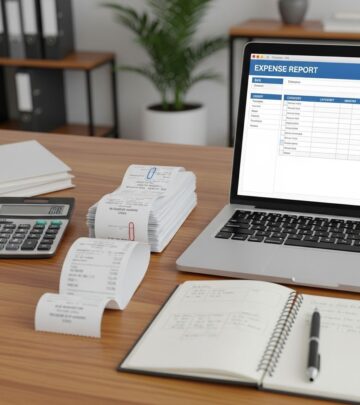
Expense reporting forms the backbone of financial accountability in businesses, enabling precise tracking of expenditures, timely employee reimbursements, and adherence to tax regulations. This process involves documenting business-related costs with detailed records to support deductions and maintain fiscal transparency.
Defining Expense Reports and Their Core Purpose
An expense report serves as a formal document cataloging business expenditures incurred by employees or contractors over a defined period, typically monthly. It details each cost’s nature, amount, and justification, facilitating reimbursement while providing data for budgeting and audits. Businesses rely on these reports to differentiate legitimate operational costs from personal spending, ensuring only qualified expenses qualify for tax benefits under IRS rules.
The primary objectives include reimbursing staff promptly, monitoring spending patterns, enforcing policy limits, and compiling records for financial statements. Without structured reporting, companies risk overpayments, non-compliance penalties, or distorted financial insights.
Critical Components of a Robust Expense Report
Every expense report must incorporate specific elements to meet legal standards and internal policies. Core details encompass employee identification, expense timelines, vendor information, monetary values, and contextual explanations.
- Employee Data: Full name, ID number, department, and contact details for accurate routing and verification.
- Report Period: Start and end dates defining the covered timeframe.
- Expense Entries: Individual lines noting date, merchant/vendor, description, amount (including taxes/tips), payment method, and business rationale.
- Attendee Lists: For meals or events, names and affiliations of participants to validate deductibility.
- Categorization: Labels like travel, supplies, or meals for organized analysis.
- Receipt Attachments: Scanned or photographed proofs matching reported figures.
- Totals: Category subtotals, adjustments for advances, and grand total for reimbursement calculation.
These components ensure reports withstand scrutiny from approvers, accountants, and tax authorities.
Step-by-Step Guide to Preparing an Expense Report
Creating an expense report demands methodical organization. Follow this sequence for manual or digital preparation.
- Collect Documentation: Assemble all receipts, invoices, and notes from the period, sorting by date or type.
- Access Template: Use company-provided forms, spreadsheets, or software interfaces.
- Input Header Info: Record personal details and reporting dates.
- List Expenses: Enter each item line-by-line with full particulars, splitting complex transactions as needed.
- Justify Purposes: Articulate business necessity, noting projects or clients.
- Classify Costs: Assign categories and allocate to relevant accounts or budgets.
- Attach Proofs: Link digital scans or images to entries.
- Compute Sums: Verify subtotals per category and overall balance, deducting any prior advances.
- Review and Submit: Double-check accuracy before manager approval and finance processing.
This workflow minimizes errors and accelerates approvals.
Types of Business Expenses to Document
Expense reports cover diverse outlays, grouped into fixed, variable, and periodic categories for clarity.
| Category | Description | Examples |
|---|---|---|
| Fixed | Consistent, predictable costs | Subscriptions, insurance, lease payments |
| Variable | Fluctuating monthly amounts | Utilities, advertising, hourly labor |
| Periodic | Quarterly, annual, or irregular | Tax filings, repairs, bonuses |
| Travel/Meals | Employee mobility and client interactions | Flights, hotels, dining with attendees |
| Supplies/Office | Operational necessities | Equipment, software, stationery |
Proper classification aids in trend analysis and policy enforcement.
Frequent Mistakes and Prevention Tactics
Common pitfalls derail reimbursements and invite audits. Awareness prevents these issues.
- Omitting receipts or mismatched details, violating IRS substantiation rules.
- Vague purposes lacking business ties, risking personal expense classification.
- Inaccurate math on totals or unadjusted advances.
- Delayed submissions beyond policy deadlines.
- Forgetting attendee info for entertainment costs, capping deductibility at 50%.
- Misallocating to wrong categories or projects.
To counter, adopt double-verification, policy familiarization, and digital tools for auto-calculations.
Leveraging Technology for Streamlined Reporting
Manual processes breed inefficiency; modern software automates tasks, integrates with cards, and enforces rules in real-time. Platforms scan receipts via OCR, categorize via AI, flag anomalies, and route approvals seamlessly.
Benefits include reduced processing time by 70%, fewer errors, mobile submissions, and analytics for spend optimization. Corporate cards linked to systems provide instant transaction feeds, eliminating manual entry.
Navigating Approval Workflows and Reimbursements
Post-submission, reports undergo multi-tier reviews: manager validation, finance audits, and policy checks. Approved totals trigger payments via direct deposit or checks, often within days.
Trackers monitor status; rejections specify fixes. Timely handling maintains employee satisfaction and cash flow discipline.
IRS Compliance and Tax Implications
U.S. tax code mandates “accountable plans” for deductible reimbursements: business connection, substantiation, and excess return. Reports must detail date, amount, place, and purpose per Publication 463.
Non-compliant reports convert reimbursements to taxable income. Retain records three years for audits.
Best Practices for Effective Expense Management
Optimize with predefined policies, training, real-time apps, regular audits, and analytics. Encourage pre-approvals for high-value items and quarterly reviews for anomalies.
- Set clear per diem rates and limits.
- Integrate with accounting software.
- Foster culture of fiscal responsibility.
Frequently Asked Questions
What qualifies as a reimbursable business expense?
Costs ordinary and necessary for operations, like travel or supplies, excluding personal items. Must tie directly to revenue generation.
How soon should I submit an expense report?
Within 30-60 days per policy and IRS guidelines to ensure timeliness.
Can I use personal cards for expenses?
Yes, but attach receipts promptly for reimbursement; corporate cards simplify tracking.
What if a receipt is lost?
Provide credit card statements or affidavits per policy, though originals are preferred.
How do automated tools benefit small businesses?
They cut admin time, enforce compliance, and offer insights without large IT investments.
References
- How to Fill Out an Expense Report: A Step-by-Step Guide — Fyle. 2024. https://www.fylehq.com/blog/how-to-fill-out-an-expense-report
- Expense Reporting 101: Understanding & Improving The Process — Brex. 2024. https://www.brex.com/spend-trends/expense-management/expense-reporting
- Expense Reports: A Comprehensive Guide — Precoro. 2024. https://precoro.com/blog/expense-reports-a-comprehensive-guide/
- What is an Expense Report? How to Create One (Template Example) — Tipalti. 2024. https://tipalti.com/resources/learn/expense-report/
- Expense Reporting: Definition and Process Explained — BILL. 2024. https://www.bill.com/learning/expense-reporting
- What Is an Expense Report? — Ramp. 2024. https://ramp.com/blog/what-is-an-expense-report
- Expense Report: What It Is and Why It’s Important (2025) — Invoice Fly. 2025. https://invoicefly.com/academy/expense-report/
Similar Articles








Read full bio of Sneha Tete