Expansionary Monetary Policy: Definition, Purpose & Tools
Understanding how central banks use monetary policy to stimulate economic growth and reduce unemployment.
What Is Expansionary Monetary Policy?
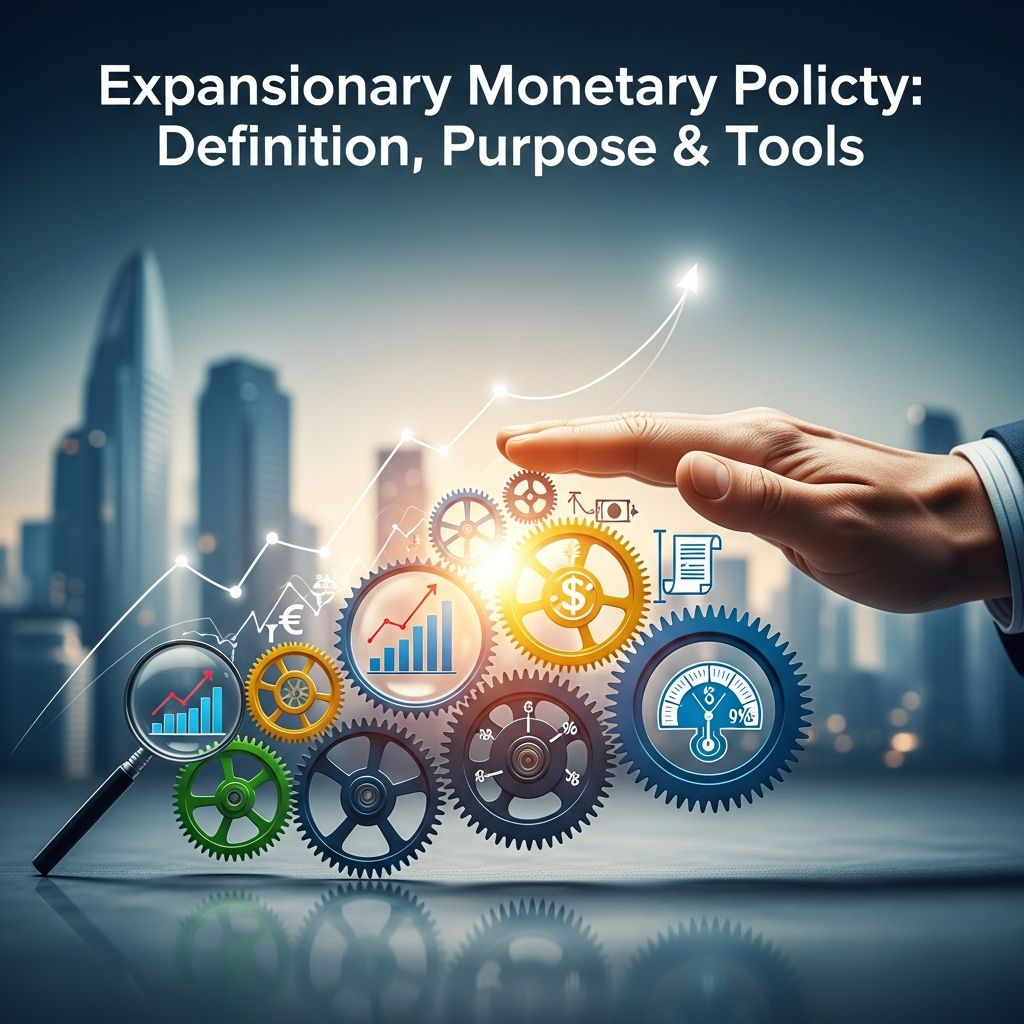
Expansionary monetary policy is a macroeconomic strategy employed by central banks to increase the money supply and lower interest rates in order to stimulate economic activity. This policy approach is designed to boost aggregate demand, encourage borrowing and spending, and ultimately promote economic growth during periods of economic downturn or recession. When a central bank implements expansionary monetary policy, it essentially injects liquidity into the financial system, making credit more accessible and affordable for both consumers and businesses.
The Federal Reserve and other central banking institutions use expansionary monetary policy as a critical tool to address economic challenges such as high unemployment, low inflation, and recessionary conditions. By reducing the cost of borrowing through lower interest rates and increasing the amount of money available in the economy, policymakers aim to encourage consumption and investment, which are essential components of aggregate demand.
Key Objectives of Expansionary Monetary Policy
Central banks pursue expansionary monetary policy with several important macroeconomic objectives in mind. Understanding these goals helps explain why policymakers choose to implement such policies during specific economic conditions.
Promoting Economic Growth
The primary objective of expansionary monetary policy is to promote sustainable economic growth by increasing aggregate demand. When the economy is underperforming or experiencing a recession, central banks use this policy to stimulate economic activity. By lowering borrowing costs and increasing money supply, households and businesses are incentivized to spend and invest more, which drives up demand for goods and services. This increased demand, in turn, encourages firms to expand production, leading to higher gross domestic product (GDP) growth and improved economic conditions overall.
Reducing Unemployment
Another critical objective is to reduce unemployment in the economy. When businesses experience increased demand for their products and services due to expansionary monetary policy, they typically respond by hiring more workers to meet that demand. Lower interest rates make it more affordable for companies to borrow capital for expansion and investment in new projects, further creating employment opportunities. By encouraging business investment and expansion, expansionary monetary policy helps stimulate job creation and reduce the unemployment rate.
Maintaining Price Stability
During periods of deflation or very low inflation, expansionary monetary policy helps prevent a decline in prices by stimulating demand and encouraging spending. Deflation can be particularly damaging to an economy because it encourages consumers and businesses to delay purchases in anticipation of lower prices, which further reduces demand and economic activity. By injecting money into the economy and lowering interest rates, central banks can help maintain price stability and prevent the economic stagnation that often accompanies deflationary pressures.
Tools of Expansionary Monetary Policy
Central banks have several powerful tools at their disposal to implement expansionary monetary policy. These tools work by either directly increasing the money supply or lowering the cost of borrowing, or both.
Open Market Operations
Open market operations (OMOs) represent one of the primary tools used by central banks to conduct expansionary monetary policy. Through OMOs, the Federal Reserve and other central banks purchase government securities, such as Treasury bonds and other financial assets, directly from commercial banks and financial institutions. When the central bank buys these securities, it injects money into the banking system, thereby increasing the overall money supply in the economy. This increased liquidity encourages commercial banks to lend more money to businesses and consumers, facilitating greater spending and investment throughout the economy.
Lowering the Discount Rate
The discount rate is the interest rate that the central bank charges commercial banks when they borrow from the central bank’s “discount window.” By lowering the discount rate, the Federal Reserve makes it less expensive for banks to borrow money, which encourages them to increase lending to their customers. When banks have cheaper access to funds, they pass these savings on to consumers and businesses through lower interest rates on loans and credit products. This reduction in borrowing costs stimulates both consumer spending and business investment, thereby increasing aggregate demand and economic activity.
Reducing Reserve Requirements
Commercial banks are required by regulation to hold a certain percentage of their deposits in reserve, known as the reserve requirement. By reducing this reserve requirement, the central bank allows banks to lend out a larger portion of their deposits to borrowers. When banks have more money available to lend, they increase credit availability in the economy, making it easier for consumers and businesses to obtain loans. This expansion of credit stimulates borrowing and spending, which drives economic growth and increases aggregate demand.
Quantitative Easing
Quantitative easing (QE) is an advanced form of expansionary monetary policy that central banks employ when traditional tools have become ineffective, typically when interest rates are already near zero. Under a quantitative easing program, the central bank purchases large quantities of longer-term government bonds and other financial assets to inject substantial amounts of money into the economy. This tool is particularly valuable during severe recessions or financial crises when conventional monetary policy measures prove insufficient to stimulate economic recovery.
How Expansionary Monetary Policy Works
Understanding the transmission mechanism of expansionary monetary policy is essential to comprehend how central bank actions translate into real economic effects. The process operates through several interconnected channels that affect consumption, investment, and net exports.
When a central bank decreases the discount rate and increases the money supply, it directly affects the components of aggregate demand. First, lower interest rates reduce the cost of borrowing for individuals and households. This encourages consumers to take out loans for major purchases such as homes and automobiles, thereby increasing consumption (C). Simultaneously, households reduce their savings and spend more of their current income, further boosting consumption.
Second, lower interest rates make borrowing less expensive for businesses as well. Firms respond by increasing their investment (I) in new equipment, facilities, and research and development. The expectation of higher future consumption by households provides additional incentive for businesses to expand production capacity and invest in growth opportunities.
The combined effect of increased consumption and investment shifts the aggregate demand curve to the right, moving the economy from one equilibrium point to another with higher real GDP and lower unemployment. The economy achieves growth as firms increase output to meet the higher demand, requiring them to hire additional workers. However, this process typically results in some inflation as the increased money supply and higher demand bid up prices in the economy.
Advantages of Expansionary Monetary Policy
Expansionary monetary policy offers several important benefits when properly implemented during appropriate economic conditions.
Stimulates Economic Growth
By reducing interest rates and increasing the money supply, expansionary monetary policy encourages borrowing, investment, and spending throughout the economy. This stimulation of economic activity leads to higher GDP growth, increased business sales, and improved overall economic performance. During recessions or periods of slow growth, this policy tool can help restore economic momentum and create conditions for sustainable expansion.
Reduces Unemployment
As businesses experience increased demand for their products and services, they expand operations and hire more workers. Lower interest rates make it more affordable for companies to finance expansion and hire new employees. This job creation is particularly important during economic downturns when unemployment rates are elevated and workers face significant hardship.
Supports Market Confidence
Expansionary monetary policy strategies, such as quantitative easing, help stabilize financial markets during periods of economic uncertainty. By injecting liquidity into the financial system, central banks prevent liquidity crises, maintain credit availability, and restore confidence among investors and consumers. This support for market confidence helps prevent financial crises from deepening and promotes a more stable economic environment.
Encourages Investment and Business Expansion
Lower interest rates significantly reduce the cost of capital for businesses, making it more attractive to undertake investment projects. Companies are more likely to borrow for expansion, equipment purchases, and research and development when borrowing costs are low. This increased business investment generates job creation and contributes to long-term economic growth.
Effects and Outcomes of Expansionary Monetary Policy
Expansionary monetary policy produces several measurable effects on the economy, though not all outcomes are necessarily positive.
Increased Aggregate Demand
The primary effect of expansionary monetary policy is an increase in aggregate demand. With more money in circulation and lower borrowing costs, consumers and businesses increase their spending. This higher aggregate demand translates into increased business revenues and encourages firms to expand production and hire additional workers.
Economic Growth
As aggregate demand increases, firms increase their output to meet consumer and business demand, resulting in higher GDP growth. This economic expansion helps lift economies out of recession and creates conditions for improved living standards and increased prosperity.
Rising Inflation
One significant side effect of expansionary monetary policy is an increase in the general price level, or inflation. When more money circulates through the economy chasing the same amount of goods and services, prices tend to rise. While moderate inflation is generally acceptable and often considered healthy for economic growth, excessive inflation can erode purchasing power and create economic instability.
Currency Devaluation
Expansionary monetary policy can lead to a devaluation of the domestic currency in foreign exchange markets. When a central bank increases the money supply significantly, the increased supply of currency relative to demand can push down its value. While currency devaluation can make exports more competitive internationally, it can increase the cost of imports and create other international economic complications.
Frequently Asked Questions
Q: When do central banks use expansionary monetary policy?
A: Central banks implement expansionary monetary policy when the economy is experiencing a recessionary gap, meaning it is performing below its potential output with high unemployment and deflationary pressures. This policy is typically employed during economic downturns, recessions, or periods of sluggish growth to stimulate economic activity and restore full employment.
Q: What is the difference between expansionary and contractionary monetary policy?
A: Expansionary monetary policy increases the money supply and lowers interest rates to stimulate economic growth, while contractionary monetary policy decreases the money supply and raises interest rates to control inflation and prevent the economy from overheating. Contractionary policy is used when the economy is growing too rapidly and inflation is rising.
Q: How long does it take for expansionary monetary policy to affect the economy?
A: Expansionary monetary policy operates with a time lag. The initial effects on interest rates and credit availability are relatively immediate, but the broader impacts on employment, output, and prices typically emerge over several quarters to a year or more as consumers and businesses respond to changed financial conditions and adjust their spending and investment decisions.
Q: Can expansionary monetary policy cause problems?
A: While beneficial during recessions, expansionary monetary policy can create problems if maintained too long or implemented too aggressively. Potential drawbacks include excessive inflation, asset price bubbles, increased income inequality, and financial instability. Central banks must carefully monitor economic conditions and adjust policy appropriately to avoid these negative consequences.
Q: What role does the Federal Reserve play in expansionary monetary policy?
A: The Federal Reserve, as the United States’ central bank, is the primary authority responsible for implementing monetary policy, including expansionary measures. The Fed uses its policy tools—open market operations, the discount rate, and reserve requirements—to manage the money supply and interest rates in pursuit of maximum employment, stable prices, and moderate long-term interest rates.
References
- Expansionary Monetary Policy — Economics Online. 2024. https://www.economicsonline.co.uk/definitions/expansionary-monetary-policy.html
- Expansionary Monetary Policy: Honors Economics — Fiveable. 2024. https://fiveable.me/key-terms/honors-economics/expansionary-monetary-policy
- Expansionary Monetary Policy: Definition & Effects — Study.com. 2024. https://study.com/academy/lesson/expansionary-monetary-policy-helping-the-economy-grow.html
- Expansionary and Contractionary Monetary Policy — Federal Reserve Bank of St. Louis. 2024. https://www.stlouisfed.org/in-plain-english/expansionary-and-contractionary-policy
- Introduction to U.S. Economy: Monetary Policy — U.S. Congress. Congressional Research Service. 2024. https://www.congress.gov/crs-product/IF11751
Similar Articles








Read full bio of medha deb