Expansionary Fiscal Policy: Purpose, Examples & How It Works
Understanding how governments use fiscal policy to stimulate economic growth and combat recessions.
What Is Expansionary Fiscal Policy?
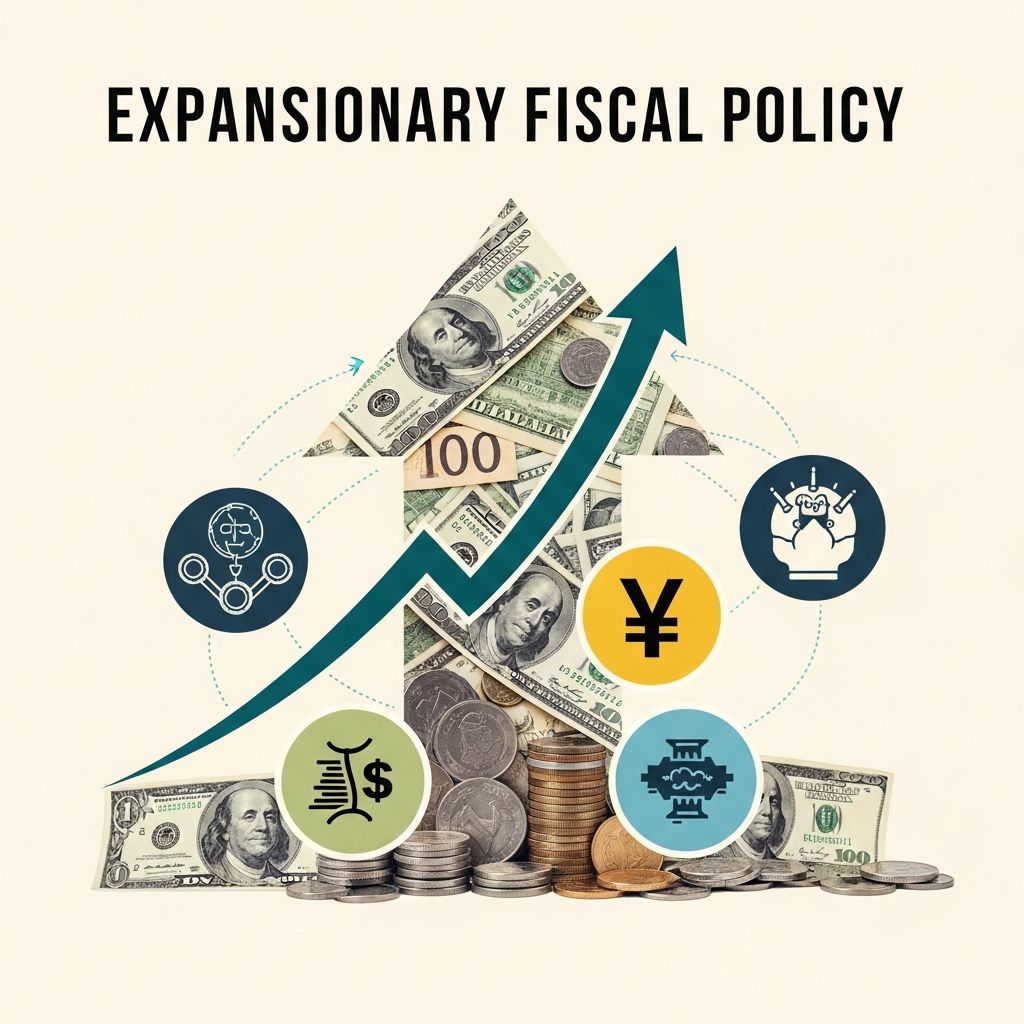
Expansionary fiscal policy is a macroeconomic strategy employed by governments to stimulate economic growth and increase aggregate demand during periods of economic weakness, recession, or high unemployment. This policy operates through two primary mechanisms: increasing government spending or reducing tax rates. The fundamental objective is to inject more money into the economy, thereby encouraging consumer spending, business investment, and overall economic activity. By making funds more readily available to individuals and corporations, expansionary fiscal policy aims to reverse economic downturns and promote job creation across various sectors of the economy.
The concept of expansionary fiscal policy gained prominence through the economic theories of John Maynard Keynes, who argued that government intervention is vital for maintaining macroeconomic stability. Keynes proposed that during periods of economic contraction, governments could increase employment and sustain monetary value by strategically adjusting taxes and public spending. This theoretical foundation has guided policymakers for decades and remains central to modern fiscal policy discussions.
Purpose and Goals of Expansionary Fiscal Policy
The primary purpose of expansionary fiscal policy is to address significant underperformance in various areas of the economy. Governments implement these policies with several specific objectives in mind:
- Combat Recession: During economic downturns, expansionary fiscal policy helps prevent or mitigate the severity of recessions by boosting overall economic activity and consumer confidence.
- Reduce Unemployment: By increasing government spending or reducing tax burdens on businesses, governments can stimulate job creation and reduce unemployment rates.
- Increase Aggregate Demand: These policies shift the aggregate demand curve to the right, moving the economy closer to full-employment output levels.
- Stimulate Private Investment: Lower business taxes and increased disposable income encourage corporations and individuals to undertake greater investments and expand operations.
- Support Consumer Spending: By increasing disposable income through tax cuts or providing transfer payments, governments encourage consumers to spend more, creating demand for goods and services.
How Expansionary Fiscal Policy Works
Expansionary fiscal policy operates through specific mechanisms that increase the money supply available to the public and businesses. Understanding these mechanisms is essential to grasp how fiscal stimulus translates into economic growth.
Tax Cuts and Income Enhancement
One of the primary tools of expansionary fiscal policy is reducing personal income taxes and payroll taxes. When individuals pay less in taxes, their disposable income increases, allowing them to spend more on goods and services. This increased consumption creates demand for products, prompting businesses to increase production and hire additional workers. The multiplier effect amplifies this initial spending, as workers and businesses who receive income from increased consumer spending also spend a portion of their earnings, creating a chain reaction throughout the economy.
Business Tax Reductions
Expansionary fiscal policy also involves cutting corporate and business taxes to increase after-tax profits. When businesses retain more of their earnings, they have greater resources available for expansion, research and development, and hiring. Lower business taxes effectively lower the cost of capital and make new investments more attractive, encouraging companies to undertake projects they might otherwise consider too risky or expensive. This mechanism directly stimulates private investment and job creation.
Increased Government Spending
Governments can also implement expansionary fiscal policy by directly increasing their own spending on final goods and services. This includes investing in infrastructure projects such as highways, bridges, schools, and public facilities. Infrastructure spending has a dual benefit: it immediately creates jobs for construction workers and related industries, and it provides long-term benefits through improved public infrastructure that supports future economic productivity. Additionally, governments may increase federal grants to state and local governments, enabling them to expand their own spending and services.
Transfer Payments and Rebates
Transfer payments—such as unemployment benefits, welfare payments, and stimulus checks—represent another mechanism through which expansionary fiscal policy works. These payments directly increase the disposable income of recipients, who typically spend a significant portion of additional funds. The American Response and Recovery Act of 2009, for example, provided substantial extension of unemployment benefits, ensuring that jobless workers maintained purchasing power during the severe recession.
The Aggregate Demand and Supply Framework
To understand how expansionary fiscal policy influences the broader economy, economists use the aggregate demand and aggregate supply model. In this framework, aggregate demand represents the total quantity of goods and services demanded at different price levels. Aggregate supply represents the total quantity of goods and services that firms are willing to supply at various price levels.
When an economy operates below its full-employment level of output, there exists a recessionary gap between actual output and potential GDP. Expansionary fiscal policy through tax cuts or increased government spending shifts the aggregate demand curve to the right. This rightward shift increases overall demand for goods and services at each price level, moving the economy toward full-employment output. As the economy reaches higher output levels and fuller employment, the price level also tends to rise, reflecting increased demand.
Historical Examples of Expansionary Fiscal Policy
The New Deal (1930s)
President Franklin D. Roosevelt implemented the first major test of Keynesian fiscal policy through the New Deal during the Great Depression. Although initially encountering limited success due to inexperience with the policy and the severe damage already inflicted by the Depression, the New Deal established the precedent for using government spending as an economic stimulus tool. The program included public works projects that employed millions of workers and laid the groundwork for modern fiscal policy implementation.
The Economic Stimulus Act of 2008
In response to the financial crisis and early stages of the Great Recession, the U.S. Congress enacted the Economic Stimulus Act of 2008. This legislation provided immediate tax relief to individuals, offering rebates between $600 and $1,200 depending on marital status and the number of dependents. The act aimed to boost consumer spending and prevent the economy from falling into a severe recession as credit markets seized up and oil and food prices skyrocketed.
The American Recovery and Reinvestment Act of 2009
The Obama administration’s most significant fiscal stimulus came through the American Recovery and Reinvestment Act, a comprehensive $787 billion package representing the largest stimulus program since World War II. This act addressed sluggish private sector investment during 2008-2009 through three primary spending channels: infrastructure projects that created jobs in construction and related industries; education funding that prevented teacher layoffs and supported student programs; and extended unemployment benefits that maintained consumer purchasing power. While the act successfully helped reduce unemployment, critics noted that it had limited effectiveness in stimulating overall GDP growth. The program was implemented alongside monetary policy measures, including near-zero interest rates and quantitative easing by the Federal Reserve.
Other Legislative Examples
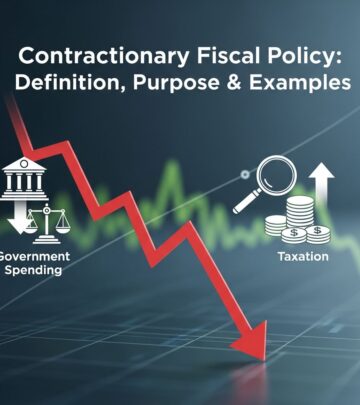
The American Taxpayer Relief Act, enacted to address the expiration of specific tax relief provisions from earlier Bush-era tax cuts, maintained lower tax rates for most taxpayers while imposing higher rates on upper-income brackets. The Budget Control Act of 2011, by contrast, represented a shift toward contractionary fiscal policy, focusing on deficit reduction through $917 billion in spending cuts over ten years.
The Political Dimensions of Expansionary Fiscal Policy
The choice between using tax cuts versus increased government spending as the primary tool of expansionary fiscal policy often reflects political ideology and preferences. Conservative and Republican policymakers generally favor tax cuts as the preferred mechanism for expansionary stimulus, believing that allowing individuals and businesses to keep more of their earnings is the most efficient way to stimulate economic activity. Liberal and Democratic policymakers tend to prefer increased government spending, particularly on infrastructure, education, and social services, arguing that direct government investment ensures funds are deployed toward productive uses and can address market failures.
This political divide was evident in the policy response to the 2008-2009 recession. While the Obama administration’s stimulus package included both tax cuts and spending increases, subsequent political disagreements over the appropriate balance between these tools reflected broader ideological differences about the role of government in the economy.
Benefits of Expansionary Fiscal Policy
When implemented appropriately during economic downturns, expansionary fiscal policy offers several significant benefits:
- Recession Prevention and Mitigation: By increasing aggregate demand, fiscal stimulus can prevent recessions from developing or reduce their severity once underway.
- Employment Growth: Increased spending creates demand for labor, prompting businesses to hire and reducing unemployment rates.
- Income Stability: By maintaining consumer spending through tax cuts or transfer payments, expansionary policy helps stabilize household incomes during difficult economic periods.
- Business Confidence: Fiscal stimulus can restore business confidence and encourage investment in an environment where private demand has weakened.
- Infrastructure Enhancement: Government spending on infrastructure creates immediate jobs while providing long-term productivity benefits through improved public facilities.
Risks and Limitations of Expansionary Fiscal Policy
Despite its benefits, expansionary fiscal policy carries significant risks and limitations that policymakers must carefully consider:
- Budget Deficit Expansion: Increased government spending or reduced tax revenue directly increases budget deficits, expanding the gap between government revenues and expenditures.
- National Debt Accumulation: Persistent budget deficits lead to increased national debt, which can create long-term fiscal sustainability challenges and constrain future policy flexibility.
- Inflation Risk: Excessive fiscal stimulus when the economy approaches full capacity can generate inflation, as too much money chases a limited supply of goods and services. The Federal Reserve’s target inflation rate is 2%, and overshooting this target can erode purchasing power and economic stability.
- Asset Bubble Formation: Excessive liquidity from expansionary policy can sometimes inflate asset prices in financial markets and real estate, creating bubbles that eventually burst and cause economic damage.
- Crowding Out Effects: Increased government borrowing can raise interest rates, potentially reducing private investment even as fiscal stimulus attempts to encourage it.
- Effectiveness Limitations: When private sector confidence is severely damaged, as during deep recessions, fiscal stimulus may prove less effective than anticipated, as businesses and consumers remain reluctant to spend despite increased disposable income.
- Implementation Lags: Government spending projects require time for planning, approval, and implementation, potentially delaying the impact of fiscal stimulus when immediate action is most needed.
Comparison: Fiscal vs. Monetary Policy
| Characteristic | Expansionary Fiscal Policy | Monetary Policy |
|---|---|---|
| Implementing Authority | Government (Congress/Parliament) | Central Bank |
| Primary Tools | Tax cuts, increased spending | Interest rate changes, open market operations |
| Mechanism | Direct government action | Indirect through money supply adjustment |
| Speed of Implementation | Slower (requires legislation) | Faster (policy decision by central bank) |
| Political Feasibility | Often contentious and debated | Generally more independent from politics |
| Long-term Debt Impact | Increases national debt | No direct debt impact |
When Should Expansionary Fiscal Policy Be Used?
Expansionary fiscal policy is most appropriate during specific economic conditions. The policy works best when the economy faces a significant recessionary gap—when actual output falls substantially below potential GDP and substantial unemployment exists. In such environments, unused productive capacity and idle workers mean that increased demand can be met by increasing production without significant inflationary pressure. Conversely, if the economy already operates at or near full capacity, expansionary fiscal policy risks generating inflation without achieving meaningful increases in real output or employment.
Policymakers must also consider the state of government finances. Countries with low debt levels and strong fiscal positions have more room to implement expansionary policies, while those already facing high debt burdens must weigh the benefits of stimulus against sustainability concerns.
Frequently Asked Questions
Q: What is the difference between expansionary and contractionary fiscal policy?
A: Expansionary fiscal policy increases aggregate demand through tax cuts or increased government spending, while contractionary fiscal policy decreases aggregate demand through tax increases or spending cuts. Expansionary policy addresses recessions and unemployment, while contractionary policy combats inflation and budget deficits.
Q: Why do Republicans typically prefer tax cuts while Democrats prefer spending increases?
A: This reflects different philosophies about government’s role in the economy. Conservatives believe individuals and businesses spend money more efficiently than government, making tax cuts preferable. Liberals believe government spending can address market failures and ensure funds are deployed toward essential services and infrastructure.
Q: Can expansionary fiscal policy cause inflation?
A: Yes, if expansionary fiscal policy injects too much money into an economy approaching full capacity, it can cause demand-pull inflation. This is why timing and magnitude of fiscal stimulus are crucial considerations for policymakers.
Q: How does expansionary fiscal policy affect national debt?
A: Expansionary fiscal policy increases national debt because government either spends more money than it collects in revenue or reduces revenue through tax cuts. This increases budget deficits and requires increased government borrowing to finance the gap.
Q: What is the multiplier effect in fiscal policy?
A: The multiplier effect refers to how initial government spending or tax cuts create additional rounds of spending throughout the economy. When recipients of government spending or tax cuts spend their additional income, they create income for others who also spend, amplifying the initial stimulus effect.
Q: Is expansionary fiscal policy always effective?
A: No. During severe recessions when business and consumer confidence is deeply damaged, fiscal stimulus may prove less effective as recipients save rather than spend additional income. Additionally, implementation lags can delay stimulus impact when immediate action is most needed.
Q: How does expansionary fiscal policy interact with monetary policy?
A: During recessions, both policies often work together. Central banks lower interest rates and increase money supply while governments increase spending or cut taxes, creating a coordinated stimulus that can be more effective than either policy alone, as demonstrated during the 2008-2009 financial crisis.
References
- Expansionary and Contractionary Fiscal Policy — Lumen Learning. Accessed 2025. https://courses.lumenlearning.com/wm-macroeconomics/chapter/expansionary-and-contractionary-fiscal-policy/
- Expansionary Fiscal Policy — EBSCO Research Starters. Accessed 2025. https://www.ebsco.com/research-starters/business-and-management/expansionary-fiscal-policy
- Expansionary Policy – Definition, Types, Pros and Cons — Corporate Finance Institute. Accessed 2025. https://corporatefinanceinstitute.com/resources/economics/expansionary-policy/
- Economics 101: What Is Expansionary Fiscal Policy — MasterClass, October 12, 2022. https://www.masterclass.com/articles/economics-101-what-is-expansionary-fiscal-policy
- Introduction to U.S. Economy: Fiscal Policy — U.S. Congress. Accessed 2025. https://www.congress.gov/crs-product/IF11253
Similar Articles








Read full bio of medha deb