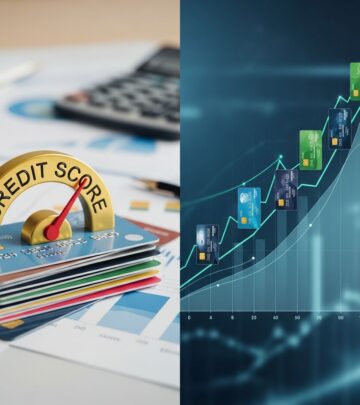
Expanding Credit Cards: Strategy for Better Credit Health
Learn how opening new credit accounts strategically impacts your creditworthiness and financial profile.

Many consumers wonder whether obtaining additional credit cards could enhance their credit scores. This question touches on a nuanced area of personal finance where the relationship between credit account expansion and creditworthiness involves multiple interconnected factors. Understanding how new credit cards influence your overall financial profile requires examining several dimensions of credit scoring models, from credit utilization rates to credit mix composition.
The Connection Between Available Credit and Your Score
When you open a new credit card, the most immediate benefit relates to your available credit. Credit utilization ratio—the percentage of your total credit limits you’re actively using—represents a significant component of credit scoring models, accounting for approximately 20% to 30% of your overall score. By increasing your total available credit through a new card, you can potentially lower your utilization ratio without changing your spending habits.
For example, consider a scenario where you have $5,000 in total credit card balances across existing cards with a combined limit of $10,000. Your current utilization would be 50%, which falls into a range that can negatively impact your score. However, if you obtain a new card with a $5,000 limit, your total available credit increases to $15,000, bringing your utilization ratio down to approximately 33%. This mathematical shift alone can provide a measurable improvement to your credit profile.
Financial experts generally recommend maintaining credit utilization below 30% for optimal credit health, with utilization under 10% considered excellent. The gap between your balances and limits signals to lenders that you manage credit responsibly and aren’t dangerously overextended. Each additional card with available credit contributes to widening this gap.
Understanding the Hard Inquiry Effect
The process of applying for new credit cards involves a temporary trade-off. When creditors check your credit to evaluate your application, they perform what’s known as a hard inquiry. This investigation remains visible on your credit report for two years and typically impacts your score by a few points during the first year. However, this negative effect is generally modest and temporary compared to the potential benefits of increased available credit.
The timing of hard inquiries matters in practical terms. If you’re planning major financial decisions like applying for a mortgage or auto loan, spacing out credit card applications becomes strategically important. Multiple hard inquiries within a short timeframe could accumulate and create a more noticeable impact on your score during a critical evaluation period.
Credit Mix and Account Diversity Benefits
Beyond utilization, credit scoring models evaluate the diversity of your credit portfolio, a factor known as credit mix. This component typically accounts for about 10% of your FICO score. Credit mix refers to having different types of credit—such as revolving accounts (credit cards) and installment accounts (auto loans, mortgages)—rather than relying solely on one type.
When you already maintain several credit cards, opening another card doesn’t necessarily improve your credit mix. However, if your credit profile previously contained limited credit card accounts alongside installment debt, strategic card acquisition can demonstrate to lenders that you can responsibly manage multiple forms of revolving credit. This diversity suggests financial flexibility and creditworthiness across different borrowing scenarios.
The Timing and Reporting Cycle Consideration
Credit utilization possesses a unique characteristic compared to other credit factors: it responds quickly to changes. Unlike payment history, which builds gradually over months and years, your utilization ratio can improve within 30 days if you reduce balances before your card issuer reports to credit bureaus. This means that opening a new card with available credit might improve your score shortly after the account appears on your credit report.
However, the scoring impact depends on when credit bureaus receive updated information. Most credit scoring models examine only your most recently reported utilization data, meaning month-to-month changes drive the score fluctuations. Newer models like FICO Score 10T and VantageScore 4.0 analyze utilization trends over time, potentially rewarding consistent patterns of responsible credit management across multiple accounts.
Strategic Considerations Before Opening New Cards
Spending Discipline and Behavioral Factors
The potential credit score benefits from new cards assume responsible financial behavior. Opening additional cards only helps if you avoid increasing overall debt levels. New cardholders sometimes experience the psychological phenomenon of increased available credit encouraging higher spending, which would actually harm credit scores through elevated utilization.
Financial discipline becomes essential. You should approach new credit cards with the intention of maintaining or decreasing debt levels rather than expanding spending. Each additional card represents another minimum payment obligation and another account requiring timely payment. Late payments on any single account can create substantial credit score damage, potentially overshadowing any utilization benefits.
Credit History Age Dynamics
Credit history length represents another scoring factor, comprising approximately 15% of your FICO score. Opening new accounts actually reduces your average account age because the new card starts with zero history. For consumers with limited credit history, this effect can be more pronounced. However, for those with established, lengthy credit histories, the addition of a new account has minimal impact on average age.
This dynamic suggests that credit card expansion strategies work differently depending on your current credit profile. Someone with five years of credit history might see more significant average-age reduction than someone with fifteen years of established credit.
Number of Recent Applications
Credit inquiries cluster together in scoring models. The timing of your credit applications matters strategically. Multiple recent inquiries signal to lenders that you’re simultaneously seeking credit from multiple sources, which can indicate financial stress. Spacing applications across several months minimizes this perception while still allowing you to expand your available credit gradually.
Calculating Your Potential Score Impact
| Scenario Element | Before New Card | After New Card | Change |
|---|---|---|---|
| Credit Card Balances | $6,000 | $6,000 | No change |
| Total Credit Limits | $12,000 | $17,000 | +$5,000 |
| Utilization Ratio | 50% | 35% | -15 percentage points |
| Score Impact Category | Fair to Poor | Good | Positive |
This simplified illustration demonstrates how a $5,000 credit limit addition, without any change in spending, moves utilization into a healthier range. The actual score improvement varies based on your specific credit profile and scoring model, but the directional benefit is typically positive when utilization decreases.
When Card Expansion Strategies Backfire
Several scenarios can cause new card acquisition to harm rather than help your credit profile. Opening cards while already carrying high debt levels, then using the cards to increase overall borrowing, elevates utilization across all accounts. Applying for multiple cards simultaneously creates clustering of hard inquiries that temporarily depress scores. Missing payments on any account—including new ones—creates far more damaging effects than utilization benefits provide.
Additionally, consumers with thin credit files or poor payment history may find that card expansion simply creates more accounts vulnerable to delinquency, increasing risk rather than demonstrating creditworthiness. In these situations, building credit through one account managed responsibly typically produces better outcomes than diversifying across multiple new accounts.
Alternative Approaches to Credit Score Improvement
While new credit cards can assist score improvement, they represent only one strategy. Paying existing balances below 30% utilization provides immediate benefits without hard inquiry penalties. Setting up automatic payments ensures no missed deadlines, protecting the payment history component that carries the most weight in credit calculations. Requesting credit limit increases on existing cards produces utilization improvements without new hard inquiries, provided the issuer conducts a soft inquiry instead.
Disputing inaccurate information on your credit report addresses errors that may artificially depress scores. Becoming an authorized user on someone else’s account with positive payment history can boost scores without requiring new applications. These alternative methods offer benefits without the temporary inquiry penalties associated with new applications.
Frequently Asked Questions
How quickly will a new credit card improve my score?
The timing depends on when your card issuer reports to credit bureaus. Once the new card appears on your credit report with available credit, your utilization ratio recalculates immediately. You might see score improvement within 30-45 days, though the hard inquiry will create a temporary small decline initially.
Does opening cards hurt if I already have excellent credit?
Excellent credit scores have less room for improvement, making utilization gains minimal. The temporary hard inquiry impact may actually result in net score decline. Those with established excellent credit typically benefit more from maintenance strategies than expansion.
How many new cards can I apply for at once?
While no legal limit exists, applying for multiple cards simultaneously creates cluster inquiries that compound negative effects. Industry best practices suggest spacing applications 3-6 months apart to minimize inquiry impact on your score.
Will more cards mean more minimum payments I can’t manage?
This represents a legitimate concern. Each card requires independent payment management. For individuals struggling with existing obligations, expanding cards increases financial complexity and default risk. Cards should only be acquired if you can reliably maintain payments.
Making Your Decision
Whether acquiring new credit cards serves your financial goals depends on your specific situation. For individuals with established credit carrying high utilization ratios, strategic card acquisition can meaningfully improve scores by distributing balances across higher available credit. For those with limited credit history, the average-age reduction becomes more significant. Conversely, those with excellent credit, substantial existing accounts, or payment management challenges likely benefit more from alternative improvement strategies.
The decision ultimately requires honest assessment of your financial discipline, current credit profile, and specific score goals. When executed thoughtfully with commitment to responsible spending, new credit cards can genuinely enhance creditworthiness. When pursued carelessly or paired with increased borrowing, they become liability generators that harm rather than help your financial standing.
References
- How Does Credit Utilization Affect Your Credit Score? — Centier Bank. Retrieved from https://www.centier.com/resources/articles/article-details/how-does-credit-utilization-affect-your-credit-score
- What Is a Credit Utilization Rate? — Experian. Retrieved from https://www.experian.com/blogs/ask-experian/credit-education/score-basics/credit-utilization-rate/
- What is credit card utilization and how does it affect your credit scores? — Credit Karma. Retrieved from https://www.creditkarma.com/credit/i/credit-card-utilization-and-your-credit-score
Similar Articles








Read full bio of medha deb