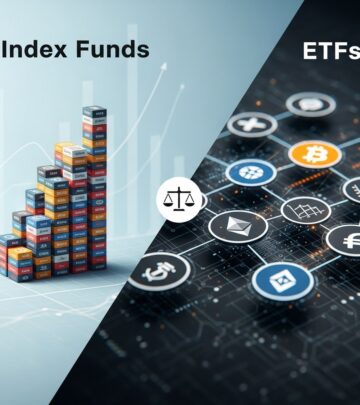
Exchange-Traded Funds: A Modern Investment Vehicle
Discover how ETFs combine the flexibility of stocks with diversified portfolios for modern investors.

An exchange-traded fund, commonly referred to as an ETF, represents a contemporary investment approach that has transformed how millions of investors build and manage their portfolios. At its core, an ETF is a pooled investment vehicle that trades on stock exchanges throughout the day, much like individual company shares, while providing exposure to a diversified collection of underlying securities.
Understanding the Fundamental Structure of ETFs
ETFs operate as investment products that must register with the Securities and Exchange Commission as either open-end investment companies or unit investment trusts. The core mechanism involves pooling capital from numerous investors to purchase a basket of securities, which may include stocks, bonds, money-market instruments, commodities, or alternative assets.
Each share of an ETF represents fractional ownership in the underlying portfolio and entitles the shareholder to a proportional claim on any income generated by those holdings. This structure differs fundamentally from direct stock ownership, as investors gain instant diversification and professional portfolio management without needing to purchase individual securities separately.
How ETF Share Creation and Trading Operate
The mechanics of ETF trading involve two distinct market layers, each serving different investor needs and market functions. Understanding this dual-market structure clarifies why ETFs offer unique advantages unavailable through traditional mutual fund investments.
The Primary Market: Creation and Redemption Process
In the primary market, designated Authorized Participants—typically large financial institutions or broker-dealers—engage directly with ETF providers to create new shares and retire existing ones. When an Authorized Participant wants to create new ETF shares, they deliver a specified collection of securities (the creation basket) to the fund provider and receive a fixed block of ETF shares in return, known as a creation unit.
Conversely, when demand decreases, these institutional participants can return shares to the fund and receive the underlying securities back. This creation and redemption mechanism operates independently from secondary market trading, meaning most everyday transactions between investors do not directly impact the ETF’s underlying holdings or asset composition.
The Secondary Market: Daily Trading on Exchanges
The secondary market is where individual investors like yourself conduct the vast majority of ETF transactions. ETF shares trade continuously throughout each trading day on national securities exchanges at market-determined prices, exactly like common stock shares. You can buy or sell through any brokerage account with just a few clicks, experiencing real-time price fluctuations based on supply, demand, and market sentiment.
This intraday trading capability represents a significant distinction from mutual funds, which only settle trades once per day after the market closes. The ability to trade ETFs throughout the day, combined with the possibility to employ advanced strategies like short selling or margin purchasing, makes ETFs remarkably flexible investment vehicles for diverse investor objectives.
Key Distinctions Between ETFs and Mutual Funds
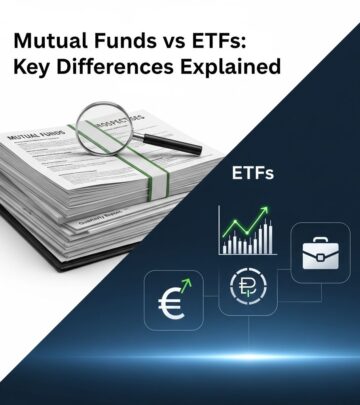
While ETFs and traditional mutual funds share surface-level similarities—both pool investor capital and maintain professionally managed portfolios—important differences affect how you might use them in your financial strategy.
| Feature | ETFs | Mutual Funds |
|---|---|---|
| Trading Method | Trade on exchanges throughout the day at market prices | Trade once daily after market close at net asset value |
| Pricing | Subject to bid-ask spreads and continuous price discovery | Single fixed price per day |
| Tax Efficiency | Generally more tax-efficient due to in-kind transactions | More frequent capital gains distributions |
| Expense Ratios | Often lower, especially for passive index trackers | Typically higher for equivalent strategies |
| Share Creation | Shares created in creation units through Authorized Participants | Shares issued directly to investors through the fund company |
| Trading Flexibility | Can be sold short, purchased on margin, or have options | Standard buy-and-hold transactions only |
The Tax Efficiency Advantage
One of the most compelling reasons investors favor ETFs over mutual funds involves their superior tax efficiency. This advantage stems directly from how ETF share creation and redemption operate.
When Authorized Participants create or redeem shares in the primary market, they exchange securities in-kind rather than selling securities for cash. This mechanism means the ETF rarely needs to sell securities and realize capital gains, avoiding the distribution of taxable gains to shareholders. Secondary market trading among investors similarly does not trigger capital gains within the fund itself.
By contrast, mutual fund managers must frequently sell securities to accommodate investor redemptions, crystallizing gains that get passed along to remaining shareholders as taxable distributions. This structural difference can result in significantly lower tax bills for ETF investors over extended holding periods, particularly in taxable investment accounts where tax considerations matter most.
Passive and Active Management Approaches
ETFs employ two primary management philosophies, each serving different investment objectives and risk tolerances.
Index-Tracking ETFs
The majority of ETF assets are invested in passive, index-tracking funds that replicate the performance of established benchmarks like the S&P 500, Nasdaq-100, or total bond market indices. These funds employ systematic strategies to hold the same securities in the same proportions as their underlying index, aiming to match performance before fees.
Index-tracking ETFs typically maintain minimal expense ratios because their investment decisions are mechanized and straightforward. This cost advantage compounds over decades, allowing more of your returns to remain in your pocket rather than flowing to fund managers and operating expenses.
Actively Managed ETFs
Alternatively, some ETFs employ active management strategies where portfolio managers make discretionary security selections intended to outperform their benchmarks. These funds typically carry higher expense ratios reflecting the costs of research, analysis, and active trading. Some actively managed ETFs must disclose their complete holdings daily, providing transparency superior to traditional actively managed mutual funds.
Exploring Different ETF Categories and Strategies
The ETF marketplace has expanded dramatically to encompass virtually every investment category imaginable, enabling investors to access diverse markets and strategies with single purchases.
Asset Class Categories
ETFs provide exposure across multiple asset classes:
- Equity ETFs: Track stock market indices spanning domestic large-cap, mid-cap, small-cap, and international companies
- Fixed Income ETFs: Provide bond exposure including government bonds, corporate bonds, municipal bonds, and high-yield securities
- Commodity ETFs: Enable direct or indirect exposure to physical commodities like gold, oil, or agricultural products
- Currency ETFs: Allow investors to gain exposure to foreign exchange movements
- Alternative Asset ETFs: Provide exposure to real estate, infrastructure, commodities, or hedge fund strategies
Geographic and Sector Focus
Investors can also narrow their focus through geography-specific or sector-specific ETFs. A single fund might concentrate exclusively on emerging markets, technology companies, healthcare providers, or companies within a specific country. This granular approach enables targeted portfolio construction matching individual investment convictions.
Synthetic and Commodity-Linked Structures
More sophisticated ETF structures include synthetic ETFs, which do not purchase actual securities but instead employ swap agreements with counterparties to replicate index performance. These arrangements can provide tax efficiency or access to markets difficult to trade directly, though they introduce counterparty risk that must be carefully evaluated.
Understanding Expense Ratios and Total Cost of Ownership
The expense ratio—expressed as a percentage of assets under management charged annually—represents the primary cost of ETF ownership. For passive index-tracking ETFs, competitive expense ratios have declined substantially, with many broad market index funds charging less than 0.10% annually.
Beyond the expense ratio, investors should consider bid-ask spreads when trading ETF shares on secondary markets. The spread represents the difference between the price you receive when selling and the price you pay when buying, varying based on the ETF’s trading volume and liquidity. Heavily traded ETFs with large asset bases typically feature tighter spreads, while smaller or more specialized funds may involve wider spreads that effectively increase transaction costs.
Evaluating Liquidity and Trading Considerations
When selecting an ETF, investors should assess the fund’s liquidity profile, which directly impacts transaction costs and execution quality. Average daily trading volume serves as a key metric—funds with high trading volumes typically feature tighter bid-ask spreads and easier trade execution.
Assets under management also matters, as larger funds generally maintain better price tracking to their underlying indices and face lower closure risk. However, smaller specialized ETFs may still merit consideration if they provide unique exposure unavailable through larger alternatives, provided you’re willing to accept slightly higher trading costs.
Building a Diversified Portfolio with ETFs
ETFs facilitate portfolio diversification through their low cost and ease of access. Rather than purchasing dozens of individual stocks or bonds, a single ETF purchase provides instant exposure to hundreds or thousands of securities.
A simple portfolio might combine a broad U.S. stock index ETF, an international developed markets ETF, an emerging markets ETF, and a bond ETF in proportions matching your risk tolerance and time horizon. As life circumstances change, rebalancing becomes straightforward—simply adjust positions among your existing ETF holdings.
Frequently Asked Questions About ETFs
Are ETFs riskier than mutual funds?
ETFs and mutual funds holding identical securities carry identical market risk. The primary differences relate to trading mechanics and tax efficiency rather than underlying investment risk. However, some specialized ETFs (leveraged, inverse, or commodity-based) may carry elevated risk profiles.
Can I lose money investing in ETFs?
Yes. ETF share prices fluctuate with market conditions and underlying security values. An ETF tracking stock indices will decline when stock markets decline, potentially resulting in losses. However, properly diversified ETF portfolios tend to exhibit moderate volatility suitable for long-term investing.
How frequently should I trade ETFs?
For most investors, ETFs serve as long-term holdings rather than trading vehicles. Frequent trading incurs transaction costs and tax consequences that typically reduce returns. A buy-and-hold approach combined with periodic rebalancing aligns better with wealth-building objectives.
Are dividend distributions from ETFs taxable?
Yes, dividend and interest distributions from ETF holdings are taxable events in the year received, whether reinvested or paid out. However, ETFs’ superior capital gains efficiency means fewer unexpected taxable distributions compared to mutual funds.
Conclusion: Why ETFs Deserve Consideration in Modern Portfolios
Exchange-traded funds represent a genuine innovation in investment accessibility and efficiency. Their combination of low costs, tax efficiency, intraday trading flexibility, and instant diversification addresses limitations inherent in both individual stock selection and traditional mutual fund investing. Whether you’re building your first investment portfolio or refining an existing strategy, understanding ETF mechanics and advantages positions you to make informed decisions aligned with your financial objectives.
References
- Exchange-Traded Fund (ETF) – Investor.gov — U.S. Securities and Exchange Commission. https://www.investor.gov/introduction-investing/investing-basics/glossary/exchange-traded-fund-etf
- ETF Academy – What are Exchange Traded Funds (ETFs)? — DWS. https://etf.dws.com/en-us/etf-knowledge/etf-academy-what-are-exchange-traded-funds-etfs/
- Exchange-Traded Funds and Products — Financial Industry Regulatory Authority (FINRA). https://www.finra.org/investors/investing/investment-products/exchange-traded-funds-and-products
- ETF Basics and Structure: FAQs — Investment Company Institute. https://www.ici.org/faqs/faqs_etfs
Similar Articles








Read full bio of Sneha Tete