Exchange-Traded Funds (ETFs): Complete Guide
Master ETF investing: Learn how these versatile funds provide diversification and flexibility for modern portfolios.

What Are Exchange-Traded Funds (ETFs)?
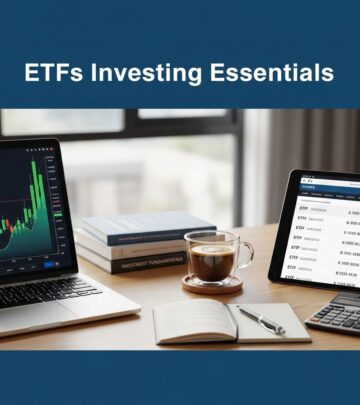
An exchange-traded fund (ETF) is a type of investment fund that trades on stock exchanges like individual stocks. Unlike traditional mutual funds that are bought and sold at the end of each trading day, ETFs provide investors with the flexibility to trade during market hours at real-time prices. ETFs own a diversified portfolio of financial assets including stocks, bonds, currencies, commodities like gold, and futures contracts, allowing investors to gain exposure to entire market segments or specific investment strategies through a single security.
ETFs divide ownership into shares held by shareholders who indirectly own the fund’s underlying assets. Shareholders are entitled to a share of profits from dividends and interest, receive annual reports, and would be entitled to any residual value if the fund undergoes liquidation. This structure makes ETFs an accessible way for individual investors to achieve professional-grade portfolio diversification without the complexity of managing multiple individual securities.
How ETFs Work: The Mechanics
ETFs operate through a sophisticated arbitrage mechanism designed to keep share prices aligned with net asset value. The creation process begins when an investment bank or fund sponsor submits a detailed proposal to regulatory authorities explaining the fund’s structure and underlying holdings. Once approved, the sponsor contacts firms and funds holding the securities to be included in the ETF. These securities are assembled and delivered to a custodial bank, which holds them safely.
Based on the equivalent value of the pooled securities, ETF shares are created and offered to investors. When an investor wants to sell ETF shares, they typically sell them on the open market at current market prices rather than redeeming them for the underlying securities, though redemption is theoretically possible. This trading flexibility combined with the arbitrage mechanism ensures that ETF share prices remain closely aligned with the value of their underlying holdings, minimizing price deviations.
Types of ETFs
Index ETFs
Index ETFs are the most common type and track the performance of specific market indices by holding securities in the same proportions as their benchmark index. These funds replicate major indices like the S&P 500, bond indices, or sector-specific indices. Notable examples include the Vanguard Total Stock Market ETF, which provides exposure to thousands of U.S. companies. Index ETFs typically employ one of two strategies: full replication, where 100% of assets are invested in index securities, or representative sampling, where 80-95% is invested in index holdings with the remainder in futures, options, and other instruments designed to track the index precisely.
Factor ETFs
Factor ETFs use enhanced indexing that blends passive and active management to potentially exceed index returns. These funds target measurable characteristics that explain differences in risk and return, including size, value, momentum, quality, and low volatility. Common examples include dividend-focused ETFs that replicate indices of high-paying dividend stocks. Factor ETFs typically have slightly higher expense ratios and volatility than strictly passive index ETFs due to their more sophisticated management approach.
Cryptocurrency ETFs
Cryptocurrency ETFs provide exposure to digital assets without requiring direct ownership. Spot crypto ETFs invest directly in cryptocurrencies like Bitcoin or Ethereum, with share prices fluctuating in real-time with cryptocurrency prices. Future-based crypto ETFs take a different approach, investing in cryptocurrency futures contracts rather than the underlying cryptocurrencies themselves, offering an alternative for investors seeking exposure to digital assets through traditional brokerage accounts.
Specialized ETFs
Beyond these main categories, ETFs exist for virtually every market segment and investment theme. Specialized ETFs focus on niche areas such as sustainable energy, environmental social and governance (ESG) criteria, specific countries or regions, commodity futures, and numerous other focused investment strategies. This variety allows investors to build highly customized portfolios aligned with their specific investment objectives and values.
ETFs vs. Mutual Funds: Key Differences
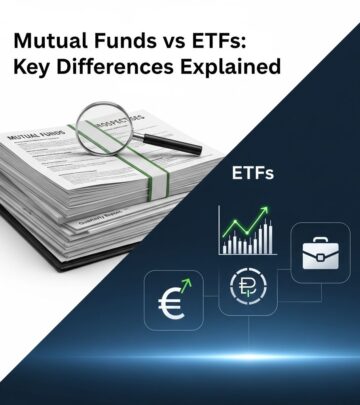
While ETFs and mutual funds serve similar purposes, important distinctions exist between these investment vehicles. Understanding these differences is crucial for investors choosing between them.
| Feature | ETFs | Mutual Funds |
|---|---|---|
| Trading Time | Trade throughout market hours at real-time prices | Trade only at end of day at net asset value |
| Transparency | Holdings published online daily | Less frequent disclosure of holdings |
| Tax Efficiency | More tax-efficient in the U.S. | Less tax-efficient due to redemption structure |
| Trading Options | Limit orders, short selling, margin buying, hedging | Limited to basic buy/sell orders |
| Minimum Investment | No minimum; price of one share | Often has minimum investment requirements |
| Trading Restrictions | No restrictions on frequent trading | May restrict frequent trading |
Trading Flexibility
ETFs offer superior trading flexibility compared to mutual funds. Investors can execute advanced trading strategies including limit orders (specifying exact price points for trades), stop-loss orders (automatic selling at predetermined prices), margin buying (purchasing using borrowed funds), and complex hedging strategies. This flexibility enables investors to implement market timing strategies and hedge portfolio risk effectively. Mutual funds, by contrast, restrict frequent trading and offer only basic buy and sell orders at day-end prices.
Transparency and Tax Efficiency
ETFs provide greater transparency since their holdings are generally published online daily, allowing investors to know exactly what they own. Furthermore, ETFs are structurally more tax-efficient than mutual funds in the United States due to their creation and redemption mechanism, which minimizes taxable events for long-term shareholders. This tax efficiency can significantly improve after-tax returns over extended holding periods.
Cost Considerations
One of the primary advantages of ETFs is their typically low cost structure. The largest passively-managed ETFs tracking stock market indices have annual expense ratios as low as 0.03% of invested assets, making them among the lowest-cost investment options available. However, specialty ETFs with more complex strategies, active management, or focus on niche areas can have annual expense ratios of 1% or higher. These fees are paid to the ETF issuer from dividends received from underlying holdings or from asset sales, and investors should carefully evaluate fee structures when comparing ETF options.
How to Trade ETFs
Trading ETFs is straightforward and mirrors stock trading. Investors can purchase and sell ETF shares at current market prices during trading hours through their brokerage accounts. Unlike mutual funds, there are no minimum investment requirements beyond the price of a single share. The trading process typically occurs more quickly than mutual fund transactions, and investors can execute the same sophisticated order types available for stocks, including limit orders that specify exact price points.
When demand for an ETF increases, new shares are created through ETF inflows. Conversely, when investors redeem ETF shares for underlying securities, this is referred to as ETF outflow. These inflows and outflows help maintain the relationship between ETF prices and their underlying net asset value, though occasional deviations can occur during periods of extreme market volatility.
Advantages and Benefits of ETFs
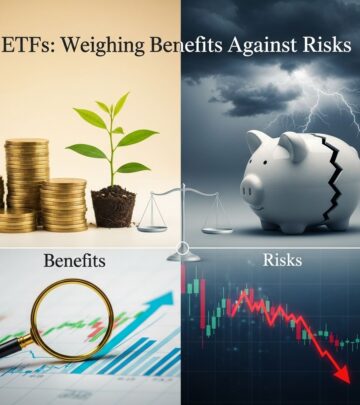
ETFs offer numerous advantages for modern investors. First, they provide instant diversification across entire market sectors or segments through a single investment, reducing unsystematic risk. Second, their low expense ratios, particularly for index-tracking funds, minimize drag on investment returns over time. Third, the ability to trade during market hours provides flexibility and allows investors to respond quickly to market conditions. Fourth, enhanced transparency lets investors know daily exactly what securities they own. Finally, tax efficiency and the ability to use sophisticated trading strategies make ETFs an attractive choice for various investment objectives and time horizons.
Considerations for ETF Investors
While ETFs offer substantial benefits, investors should understand their limitations. ETF performance depends on the effectiveness of the arbitrage mechanism in keeping prices aligned with net asset value. During unusual market conditions or for thinly traded ETFs, price deviations can occur. Additionally, while most ETFs have low fees, actively managed ETFs may have higher costs that can impact returns. Investors should also consider their specific investment objectives, time horizon, and risk tolerance when selecting among the thousands of available ETFs.
Frequently Asked Questions
What is the difference between an ETF and an index fund?
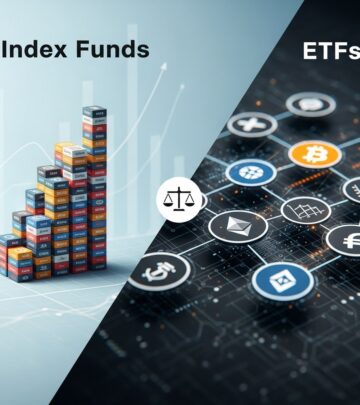
While many ETFs are index funds, not all index funds are ETFs. The key difference is that ETFs trade on stock exchanges throughout the day like stocks, whereas index mutual funds trade only at the end of each trading day. ETFs typically offer greater trading flexibility and tax efficiency.
Can I lose money investing in an ETF?
Yes, like any investment, ETF values fluctuate with market conditions. If the underlying securities decline in value, your ETF shares will decline proportionally. However, diversification within ETFs can help reduce the impact of any single security’s poor performance.
How are ETF dividends handled?
When underlying securities in an ETF pay dividends, these are typically distributed to shareholders either quarterly or annually. Some ETFs automatically reinvest dividends, while others pay them out in cash, depending on the fund’s structure.
Are ETFs suitable for long-term investing?
Yes, ETFs are excellent for long-term investing, particularly low-cost index ETFs. Their tax efficiency and low expenses make them ideal for buy-and-hold strategies. However, their intraday trading capability also makes them suitable for active traders.
How do I choose between different ETFs?
Consider the ETF’s objective and holdings, expense ratio, trading volume (liquidity), performance history, and how it fits your overall portfolio strategy. Lower-cost index ETFs from reputable providers are often the best choice for most investors.
What are ETF inflows and outflows?
ETF inflows occur when demand for an ETF increases and new shares are created. ETF outflows occur when investors redeem shares for underlying securities. These mechanics help maintain the relationship between ETF share prices and their net asset values.
References
- Exchange-Traded Fund — Wikimedia Foundation. 2025. https://en.wikipedia.org/wiki/Exchange-traded_fund
- An Intro To Exchange-Traded Funds (ETFs) — Investopedia. August 8, 2013. https://www.investopedia.com/video/
- Investment Company Act of 1940 — U.S. Securities and Exchange Commission. https://www.sec.gov/cgi-bin/browse-edgar
Similar Articles








Read full bio of medha deb