P&L Statement Example: 7 Steps To Read And Prepare One
Learn how P&L statements work with real-world examples and detailed breakdowns.

What Is an Example of a P&L Statement?
A profit and loss statement, commonly referred to as a P&L statement or income statement, is one of the three fundamental financial statements that businesses use to report their financial performance over a specific period. Understanding how to read and interpret a P&L statement is essential for business owners, investors, and financial analysts who want to assess the health and profitability of a company. This comprehensive guide will walk you through what a P&L statement is, how it’s structured, and provide practical examples to help you understand this critical financial document.
Understanding the P&L Statement
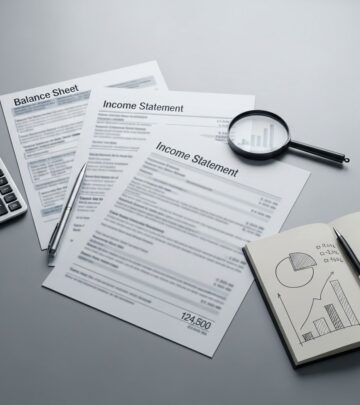
A profit and loss statement is a financial report that provides a summary of a company’s revenues, expenses, and profits or losses over a given period of time. The statement typically covers a month, quarter, or fiscal year and shows how much money a company earned and how much it spent during that timeframe. The P&L statement is also known as an income statement or statement of operations, and it serves as a key tool for evaluating a company’s operational efficiency and financial performance.
The primary purpose of a P&L statement is to show a company’s ability to generate sales, manage expenses, and ultimately create profits. By analyzing this statement, stakeholders can determine whether a business is operating profitably or at a loss, making it invaluable for decision-making at all levels of an organization.
Key Components of a P&L Statement
A P&L statement is organized into several key sections that flow logically from top to bottom. Understanding each component is crucial for interpreting the statement accurately.
Revenue
Revenue, also known as sales or income, represents the total money a company receives from selling its products or services. Many larger companies break down revenue into different categories. For example, a retail company might separate revenue into product sales and service sales, allowing stakeholders to see which segments are driving the most income. Revenue is always placed at the top of the P&L statement as the starting point for the analysis.
Cost of Goods Sold (COGS)
Cost of goods sold represents the direct costs associated with producing the goods or services that a company sells. This includes raw materials, labor directly involved in production, and manufacturing overhead. COGS is subtracted from revenue to calculate gross profit. The formula for gross profit is: Revenue minus COGS equals Gross Profit.
Operating Expenses
Operating expenses are the costs incurred in running the daily operations of a business, separate from the cost of producing goods. These expenses typically include:
- Sales and marketing expenses
- Research and development costs
- Administrative and general expenses
- Rent and utilities
- Salaries for administrative staff
- Technology and software costs
Operating expenses are subtracted from gross profit to arrive at operating income, which is also known as earnings before interest and taxes (EBIT).
Interest and Taxes
Below the operating income line, companies deduct interest expenses (costs associated with debt) and income taxes. These items are not part of core business operations but are still significant expenses that affect the bottom line.
Net Income
Net income, also called the bottom line, represents the company’s total profit or loss for the period. This is calculated by taking operating income and subtracting interest expenses and taxes. Net income is the most important figure on the P&L statement as it shows the ultimate profitability of the business.
Real-World P&L Statement Example
Let’s examine a practical example to understand how all these components come together. Consider a mid-sized technology company for the fiscal year 2024:
| Line Item | Amount |
|---|---|
| Revenue | $50,000,000 |
| Cost of Goods Sold | ($18,000,000) |
| Gross Profit | $32,000,000 |
| Operating Expenses | |
| Sales and Marketing | ($8,000,000) |
| Research and Development | ($5,000,000) |
| General and Administrative | ($4,500,000) |
| Total Operating Expenses | ($17,500,000) |
| Operating Income (EBIT) | $14,500,000 |
| Interest Expense | ($1,000,000) |
| Income Tax | ($3,200,000) |
| Net Income | $10,300,000 |
In this example, the company generated $50 million in revenue. After paying $18 million for the direct costs of producing its products and services, it had a gross profit of $32 million. The company then spent $17.5 million on operating expenses, leaving it with $14.5 million in operating income. Finally, after accounting for $1 million in interest expenses and $3.2 million in taxes, the company achieved a net income of $10.3 million.
The Difference Between Profit and Cash
It’s important to understand that profit shown on a P&L statement is not the same as cash generated by a business. While these terms are often used interchangeably by those unfamiliar with accounting, they can be significantly different. Several factors create a gap between reported profit and actual cash flow:
- Revenue may include sales made on credit that haven’t been collected in cash
- Expenses may include non-cash charges such as depreciation and amortization
- Inventory purchases affect cash but may not immediately impact the P&L
- Capital investments and loan repayments affect cash but aren’t on the P&L
For this reason, analysts and investors must examine the cash flow statement in addition to the P&L statement to get a complete picture of a company’s financial health.
How to Prepare a P&L Statement
Creating a P&L statement requires gathering financial data from a company’s accounting records. Here’s the basic process:
Step 1: Gather Revenue Data
Compile all revenue generated during the period from all sources. This may include product sales, service revenue, and any other income streams.
Step 2: Calculate Cost of Goods Sold
Identify all direct costs associated with producing revenue, including materials, direct labor, and production overhead.
Step 3: Determine Gross Profit
Subtract COGS from revenue to calculate gross profit.
Step 4: List Operating Expenses
Categorize and sum all operating expenses for the period.
Step 5: Calculate Operating Income
Subtract total operating expenses from gross profit.
Step 6: Account for Non-Operating Items
Subtract interest expenses and add any other non-operating income or expenses.
Step 7: Calculate Net Income
Subtract income taxes from the pre-tax income to arrive at net income.
Why P&L Statements Matter
The P&L statement is crucial for multiple reasons. For management, it provides insight into whether the business is operating efficiently and which areas may need cost reduction or revenue enhancement. For investors, it demonstrates whether the company is profitable and whether profits are growing over time. For creditors, it shows whether the company has sufficient earnings to pay back debt obligations. Financial analysts use P&L statements to evaluate company performance and make investment recommendations.
Additionally, P&L statements are required for tax filing purposes and are essential for any company seeking to raise capital through loans or investments.
Analyzing P&L Statements
Professional financial analysts go beyond simply reading a P&L statement—they analyze it to uncover insights about company performance. Common analytical techniques include:
- Calculating profit margins at various levels (gross margin, operating margin, net margin)
- Comparing P&L statements across multiple periods to identify trends
- Benchmarking against industry competitors
- Analyzing the composition of revenue and expenses as percentages of total revenue
- Identifying unusual or one-time items that may distort normal operations
P&L Statement vs. Other Financial Statements
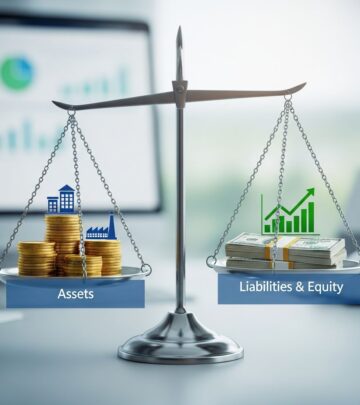
While the P&L statement is essential, it should be reviewed alongside other financial statements for a complete financial picture. The balance sheet shows a company’s assets, liabilities, and equity at a specific point in time, providing a snapshot of financial position. The cash flow statement shows how much cash a company actually generated and spent during a period, divided into operating, investing, and financing activities. Together, these three statements provide investors and analysts with comprehensive insight into a company’s financial health.
Frequently Asked Questions
Q: How often should a P&L statement be prepared?
A: P&L statements are typically prepared monthly for internal management purposes, quarterly for public reporting to shareholders, and annually for year-end financial statements and tax reporting.
Q: What does a negative net income mean?
A: A negative net income, also called a loss, means the company’s expenses exceeded its revenues during the period. This indicates the business is currently unprofitable.
Q: Can a company be profitable and still run out of cash?
A: Yes, a company can show a profit on its P&L statement but have negative cash flow. This often occurs when revenue is earned on credit, large capital investments are made, or inventory is built up.
Q: What is EBIT and why is it important?
A: EBIT stands for Earnings Before Interest and Taxes and represents operating income. It’s important because it shows the profitability of core business operations without the influence of financing decisions or tax situations.
Q: How does the P&L statement relate to cash flow?
A: The P&L statement shows accounting profits using accrual accounting, while the cash flow statement shows actual cash movements. A company can be profitable on paper but have poor cash flow, which could threaten its survival.
References
- Profit and Loss Statement (P&L) – Corporate Finance Institute — Corporate Finance Institute. 2024. https://corporatefinanceinstitute.com/resources/accounting/profit-and-loss-statement-pl/
Similar Articles








Read full bio of Sneha Tete