Ex-Dividend Date vs. Record Date: Key Differences
Understand the critical distinctions between ex-dividend and record dates for dividend investing success.
Understanding Ex-Dividend Dates and Record Dates
When investing in dividend-paying stocks, timing is everything. Two dates in particular play critical roles in determining whether you’ll receive a dividend payment: the ex-dividend date and the record date. While these terms are often used interchangeably by novice investors, they represent distinct points in the dividend distribution process with different implications for your investment strategy. Understanding the nuances between these dates is essential for anyone looking to build a dividend-focused portfolio or maximize their dividend income.
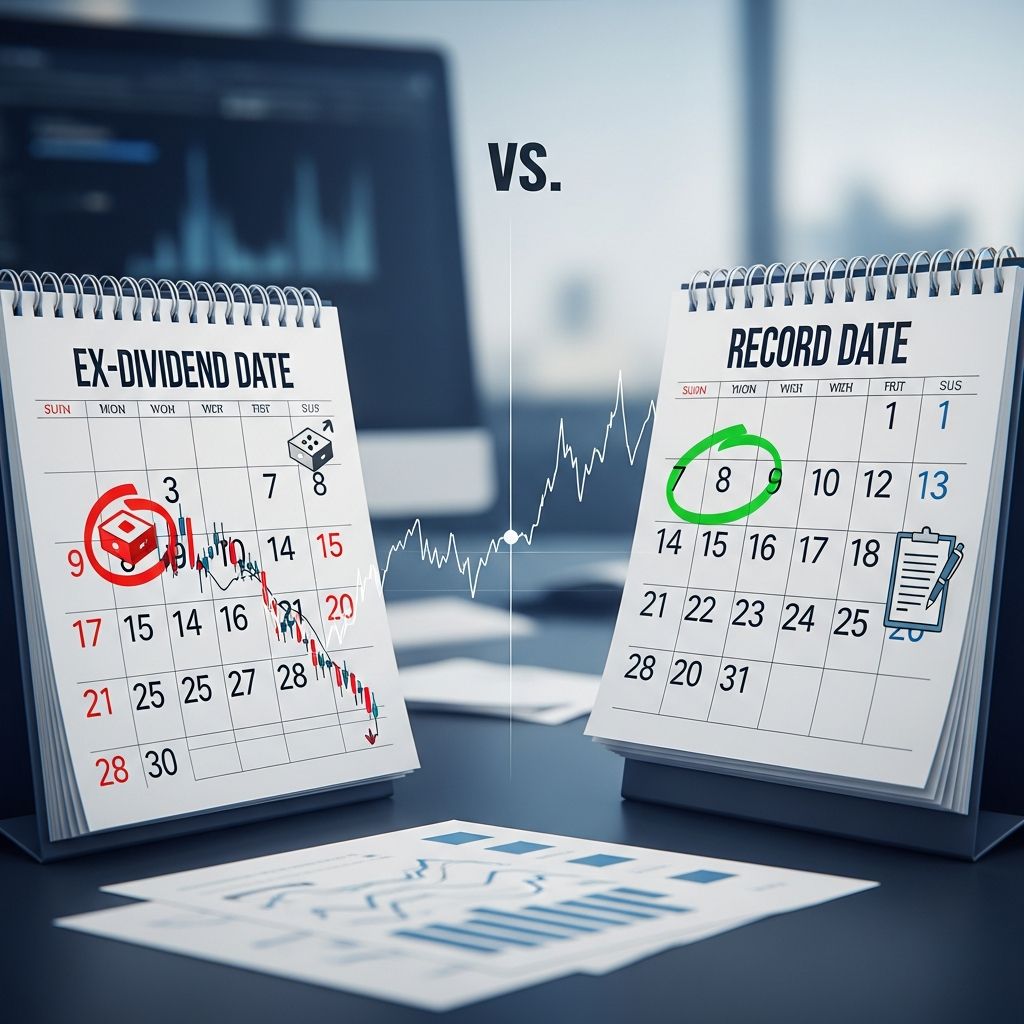
The ex-dividend date and record date are interconnected but serve different purposes in the dividend payment timeline. The record date is when a company officially identifies which shareholders are eligible to receive the upcoming dividend payment, while the ex-dividend date marks the cutoff for new buyers to become eligible for that same dividend. Missing these dates by even a single day can mean the difference between receiving a dividend payment and missing out entirely.
What Is the Record Date?
The record date is the specific date on which a company closes its books to determine which shareholders are eligible to receive a dividend payment. Only investors whose names appear on the company’s shareholder registry as of the close of business on the record date will receive the declared dividend. This date is crucial because stock ownership changes hands constantly throughout the trading day, and the record date provides a definitive snapshot of who owns shares at a particular moment.
The company’s board of directors selects the record date, typically setting it several weeks after announcing the dividend. For example, a company might announce on November 16 that it will pay a dividend, and then set the record date for December 15. This gives the company time to prepare its records and ensures that all transactions have settled properly.
It’s important to note that the record date is determined independently by the company’s board, giving them control over the timing of dividend eligibility. However, this date works in conjunction with the ex-dividend date, which is determined by stock exchange rules rather than company decisions.
What Is the Ex-Dividend Date?
The ex-dividend date, commonly abbreviated as ex-date, is the first trading day on or after which a stock trades without the right to receive the declared dividend. If you purchase a stock on or after the ex-dividend date, you will not receive the upcoming dividend payment; instead, the dividend will go to the previous owner. Conversely, if you own the stock before the ex-dividend date, you remain eligible for the dividend even if you sell the stock after this date.
Unlike the record date, which is chosen by the company, the ex-dividend date is determined by the stock exchange and its settlement rules. The stock exchange sets the ex-dividend date approximately one business day before the record date to account for the standard settlement period of trades. In the United States and most major markets, trades typically settle two business days after the transaction date, meaning if you purchase a stock on a given day, it won’t appear in your account until two business days later.
Stock prices typically adjust downward on the ex-dividend date by approximately the dividend amount per share. This adjustment reflects the fact that buyers on or after this date are not receiving the dividend, and the stock’s value adjusts accordingly to compensate.
Key Differences Between the Two Dates
While ex-dividend dates and record dates work together in the dividend payment process, several fundamental differences distinguish them:
Who Sets the Dates
The record date is established by the company’s board of directors as part of their dividend announcement. The board decides when they want to take a snapshot of their shareholder registry. The ex-dividend date, however, is determined by the stock exchange according to its settlement rules and cannot be chosen by the company. The stock exchange calculates the ex-date working backward from the record date to account for the standard two-business-day settlement period.
Chronological Order
Although the record date is announced first by the company, the ex-dividend date typically occurs one business day before the record date. This might seem counterintuitive, but it reflects the reality of how stock trades settle. When you purchase stock, it takes two business days for the transaction to settle and for your name to be added to the shareholder registry.
Purpose and Function
The record date serves as an official checkpoint—it’s the date the company uses to generate its final list of eligible dividend recipients. The ex-dividend date, on the other hand, serves as a practical deadline for investors. It marks the last opportunity to purchase a stock and still be eligible for the current dividend payment.
The Timeline of Important Dividend Dates
To fully understand dividend investing, it’s helpful to recognize that the ex-dividend date and record date are just two of four important dates in the dividend distribution process:
Declaration Date
This is when the company’s board of directors announces that a dividend will be paid. The announcement includes the dividend amount per share, the record date, and the payment date. This is when investors first learn about an upcoming dividend opportunity.
Ex-Dividend Date
Occurring approximately one business day before the record date, this is the deadline for purchasing the stock if you want to receive the dividend. Buy on or after this date, and you won’t receive the dividend.
Record Date
On this date, the company finalizes its list of shareholders eligible to receive the dividend. Your name must appear in the company’s records by the close of business on this date to qualify.
Payment Date
This is when the company actually distributes the dividend payments to eligible shareholders. The payment date typically occurs several weeks after the record date, giving the company time to process and distribute payments.
Practical Example
Consider a hypothetical company called TechCorp Inc. On July 2, 2025, the company announces a quarterly dividend of $0.50 per share. The board establishes the record date as July 17, 2025, and the payment date as August 17, 2025. Based on these dates, the stock exchange sets the ex-dividend date as July 15, 2025 (one business day before the record date).
Here’s what this means for investors:
- If you purchase TechCorp shares on July 14 or earlier, you’ll receive the $0.50 dividend because the trade will settle by July 17, putting your name on the company’s books by the record date.
- If you purchase shares on July 15 (the ex-dividend date) or later, you won’t receive this dividend because your purchase won’t settle until July 17 or later, after the record date has passed.
- If you own shares on July 14 and sell them on July 16, you’ll still receive the dividend because you owned the shares before the ex-dividend date, even though you’re no longer an owner on the record date.
How Settlement Periods Affect These Dates
The relationship between ex-dividend and record dates is fundamentally tied to how stock trades settle. In most major markets, trades settle on a T+2 basis, meaning the transaction completes two business days after the trade date. This is why the ex-dividend date is typically set one business day before the record date.
Here’s how the math works: If you buy a stock on Monday, it settles on Wednesday (T+2). For your name to appear on the company’s books by the record date, your purchase must settle by that date. Working backward, if the record date is Wednesday, the latest you can purchase and still have the trade settle in time is Monday. Since the stock exchange wants to ensure a one-business-day buffer to account for various contingencies, they set the ex-dividend date as Tuesday, meaning trades on Tuesday will settle Thursday, which is after the record date.
Special Situations and Exceptions
While the standard timing has the ex-dividend date one business day before the record date, exceptions exist. When a company declares a special dividend exceeding 25% of the stock’s current value, or when issuing a stock dividend rather than a cash dividend, the stock exchange may set the ex-dividend date further in advance of the record date. Additionally, if either the ex-dividend date or record date falls on a weekend or holiday, the dates shift accordingly to the next business day.
Implications for Dividend Investors
Understanding the distinction between these dates has several practical implications for your investment strategy.
Timing Your Purchases
If you want to receive an upcoming dividend, you must purchase the stock at least two business days before the record date. This effectively means buying before the ex-dividend date. Waiting until the ex-dividend date or later means you’ll miss that dividend payment.
Timing Your Sales
If you want to receive a dividend but also wish to sell your shares, you can do so after the ex-dividend date and still receive the payment. Your name will already be on the record, and the sale won’t affect your eligibility.
Price Adjustments
Expect the stock price to drop by approximately the dividend amount on the ex-dividend date. This isn’t a loss; it simply reflects the fact that the company is paying out money to shareholders. However, this price adjustment can affect your short-term returns if you’re buying right before the ex-date or selling right after.
Frequently Asked Questions
Q: What happens if I buy a stock on the ex-dividend date?
A: If you purchase a stock on the ex-dividend date or any day after, you won’t receive the current dividend. Your purchase will settle after the record date, so your name won’t be on the company’s books in time. However, you’ll be eligible for future dividends once you hold the stock through the next ex-dividend date.
Q: Can I sell my stock and still receive the dividend?
A: Yes, if you sell after the ex-dividend date, you’ll still receive the dividend. What matters is that you owned the stock before the ex-dividend date. Once that date passes, you’re entitled to the dividend regardless of whether you still own the shares.
Q: Who decides the ex-dividend date?
A: The stock exchange sets the ex-dividend date based on settlement rules. It’s not chosen by the company, though it’s calculated based on the record date that the company selects.
Q: How far in advance is the ex-dividend date typically announced?
A: Companies typically announce dividends several weeks in advance, providing investors with time to make purchasing decisions. The ex-dividend date is automatically calculated based on the record date and settlement rules.
Q: What if the record date falls on a weekend?
A: If the record date falls on a weekend or holiday, it’s typically moved to the next business day. The ex-dividend date adjusts accordingly to maintain the proper relationship between the two dates.
Q: Does the ex-dividend date affect dividend amount?
A: No, the ex-dividend date doesn’t affect the dividend amount. It only determines who is eligible to receive it. The dividend amount per share is set when the dividend is declared.
Conclusion
The ex-dividend date and record date are both essential elements of the dividend distribution process, but they serve distinct purposes. The record date is the company’s official snapshot of eligible shareholders, while the ex-dividend date is the practical cutoff for investors to purchase shares and remain eligible for the dividend. By understanding the difference between these dates and how they relate to stock settlement timelines, you can make more informed investment decisions and optimize your dividend income strategy. Remember: to receive a dividend, you must own the stock before the ex-dividend date, which typically occurs one business day before the record date. Missing this deadline by even a single day means missing out on that dividend payment.
References
- A Guide to Ex-Dividend vs. Date of Record (With Examples) — Indeed Career Advice. 2025. https://ca.indeed.com/career-advice/career-development/ex-dividend-vs-date-of-record
- Ex-Dividend Date vs. Record Date: Key Differences — SmartAsset. 2025. https://smartasset.com/investing/ex-dividend-date-vs-record-date
- Ex Dividend Date vs Record Date: Differences, Relationship, Effect on NRI Investors — GoINRI. 2025. https://www.goinri.com/blog/ex-dividend-date-vs-record-date-differences-relationship-effect-on-nri-investors
- Ex-Dividend Dates: When Are You Entitled to Stock and Cash — U.S. Securities and Exchange Commission Investor.gov. 2025. https://www.investor.gov/introduction-investing/investing-basics/glossary/ex-dividend-dates-when-are-you-entitled-stock-and
- What does record date and ex-date mean? — Zerodha Support. 2025. https://support.zerodha.com/category/console/corporate-actions/ca-others/articles/what-does-ex-date-and-record-date-mean
Similar Articles








Read full bio of medha deb