Ex-Dividend Date: Understanding Stock Dividend Eligibility
Learn when you're eligible to receive stock dividends and how ex-dividend dates affect your investment decisions.

Ex-Dividend Date: What You Need to Know
The ex-dividend date (also called the ex-date) is one of the most important dates in the dividend payment process for investors. This date marks the cutoff point that determines whether a shareholder is eligible to receive an upcoming dividend payment. Understanding how ex-dividend dates work is essential for making informed investment decisions and maximizing your dividend income.
When a company declares a dividend, it establishes several key dates that affect shareholder eligibility. The ex-dividend date represents the date on or after which a security trades without the right to receive a previously declared dividend. In simpler terms, if you purchase a stock on or after the ex-dividend date, you will not receive the next dividend payment. Conversely, if you purchase the stock before the ex-dividend date, you will be entitled to receive the dividend.
Key Dates in the Dividend Timeline
To fully understand ex-dividend dates, it’s important to recognize the relationship between several related dates that comprise the dividend payment process.
Declaration Date
The declaration date is when the company’s board of directors announces the dividend. On this date, the company publicly announces the dividend amount, record date, and payment date. This announcement is crucial because it sets all the other dates in motion.
Record Date
The record date is the date by which you must be on the company’s books as a shareholder to receive the dividend. This is the official date that the company uses to determine which shareholders are eligible for the payment. However, the record date is not the same as the ex-dividend date, and this distinction is critical for investors.
Ex-Dividend Date
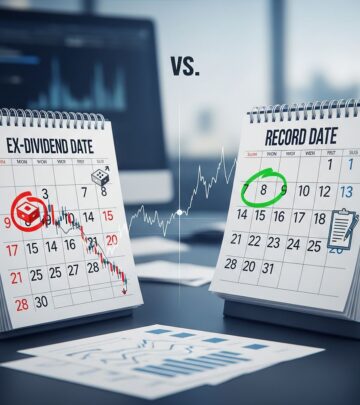
The ex-dividend date is typically set one business day before the record date (or on the record date itself if the record date falls on a business day). This date is established by stock exchange rules and is designed to account for the settlement cycle of stock transactions. The ex-dividend date is the key date that investors need to monitor when making purchase decisions.
Payment Date
The payment date is when the dividend is actually distributed to eligible shareholders. This date typically occurs one to two weeks after the record date. It’s important to note that the tax year of dividend income is determined by the payment date, not the ex-dividend date.
How Settlement Cycles Affect Ex-Dividend Dates
One of the primary reasons ex-dividend dates exist is to accommodate the settlement cycle of stock transactions. When you purchase a stock, there is a delay between when you place the order and when the transaction settles and appears on the company’s shareholder register.
Most developed financial markets use a settlement cycle known as T+2, meaning the transaction settles two business days after the trade date. However, the United States recently transitioned to a T+1 settlement cycle, meaning stocks settle one business day after purchase. Because of these settlement delays, stock exchanges set the ex-dividend date strategically to ensure that only investors who have actually settled their purchases by the record date are eligible for the dividend.
For example, if the record date is Thursday and the settlement cycle is T+1, the ex-dividend date would be set on Wednesday. An investor purchasing stock on Tuesday would settle on Wednesday, after the ex-dividend date has passed, and therefore would not be eligible for the dividend. However, an investor purchasing on Monday would settle on Tuesday, before the ex-dividend date, and would be eligible.
Understanding Your Dividend Eligibility
The fundamental rule for dividend eligibility is straightforward: you must own the stock before the ex-dividend date to receive the dividend. More specifically, you must be the owner of record on the record date. Since settlement cycles create a delay between purchase and registration, you need to purchase the stock at least one business day before the ex-dividend date to ensure you’re registered as a shareholder on the record date.
An important nuance is that you only need to own the stock for one day—the record date—to be entitled to the dividend payment. This means an investor could theoretically purchase stock the day before the ex-dividend date, be registered as a shareholder on the record date, and then sell the stock on the ex-dividend date or immediately after while still receiving the dividend payment.
The Impact on Stock Price
Stock prices typically adjust on the ex-dividend date to reflect the upcoming dividend payment. When the market opens on the ex-dividend date, the stock price is generally expected to decrease by approximately the amount of the dividend being paid. This price adjustment reflects the fact that new buyers will not receive the dividend, so the stock is theoretically worth less by the dividend amount.
For example, if a stock is trading at $100 per share and the company announces a $2 dividend, the stock price would theoretically open at approximately $98 on the ex-dividend date. However, this theoretical price adjustment can be obscured by other market factors that influence the stock’s price, such as overall market conditions, company news, or sector performance.
In cases of special dividends—where the dividend amount is 25% or more of the stock value—different rules apply. For special dividends, the ex-dividend date may be deferred until one business day after the dividend payment date rather than the traditional timeline.
Ex-Dividend Dates for Stock Dividends
While cash dividends are the most common type, companies sometimes distribute stock dividends instead. A stock dividend involves issuing additional shares rather than cash. The procedures for stock dividends differ slightly from cash dividends.
For stock dividends, the ex-dividend date is typically set on the first business day after the stock dividend is paid, which is also after the record date. This timing differs from cash dividends because it takes additional time to process and distribute the shares. If you sell your stock before the ex-dividend date for a stock dividend, you are selling away your right to receive the additional shares. Your broker will provide you with a due bill or I.O.U. for the additional shares you would have received, which the seller must deliver to the stock buyer.
International Differences in Ex-Dividend Practices
While the concept of ex-dividend dates is universal, specific practices vary by country and stock exchange. In the United Kingdom, for example, the ex-dividend date for shares listed on the London Stock Exchange is usually one business day before the record date, and it almost always falls on a Thursday with the record date on Friday. Prior to October 2014, the UK used a different system where the ex-dividend date was two business days before the record date.
The United States and other developed financial markets have standardized approaches, but investors trading internationally should be aware of these variations to ensure they understand the local rules governing dividend eligibility.
Tax Implications of Ex-Dividend Dates
An important point that often confuses investors is that the ex-dividend date does not determine the tax year of dividend income. Instead, the tax year is determined by the payment date. This means dividend income is taxable in the year it is actually paid to shareholders, not the year the ex-dividend date occurs.
There is one notable exception to this rule. If a mutual fund or real estate investment trust (REIT) declares a dividend in October, November, or December that is payable to shareholders of record during one of those months, but the actual payment occurs in January of the following year, the dividend is considered received for tax purposes on December 31 of the year it was declared. This special rule prevents year-end timing issues for these types of investments.
Practical Examples of Ex-Dividend Dates
To illustrate how ex-dividend dates work in practice, consider two scenarios:
Scenario 1: Record Date on a Business Day
A company declares a dividend on Monday, March 1, 2026, with a record date of Monday, March 15, 2026, and a payment date of Tuesday, March 16, 2026. Since the record date falls on a business day, the ex-dividend date is set for Monday, March 15, 2026. Any investor who purchases the stock on March 15 or later will not receive the dividend. Those who purchase before March 15 will receive it.
Scenario 2: Record Date on a Weekend
A company declares a dividend on Monday, March 1, 2026, with a record date of Sunday, March 14, 2026 (a weekend), and a payment date of Tuesday, March 16, 2026. Since the record date falls on a weekend, the ex-dividend date is set one business day before, on Friday, March 12, 2026. Investors must purchase before Friday, March 12, to be eligible for the dividend.
Common Investor Mistakes with Ex-Dividend Dates
Many investors make critical timing errors when it comes to ex-dividend dates. One common mistake is assuming that purchasing a stock on the record date will make you eligible for the dividend. In reality, you need to purchase before the ex-dividend date to be eligible. Another mistake is not accounting for settlement delays when planning dividend purchases. Understanding your brokerage’s settlement timeline is essential for ensuring you’ll be registered as a shareholder on the record date.
Frequently Asked Questions About Ex-Dividend Dates
Q: What happens if I buy a stock on the ex-dividend date?
A: If you purchase a stock on the ex-dividend date or after, you will not receive the upcoming dividend payment. The seller of the stock retains the right to the dividend. You would only be eligible for future dividend payments if the company continues to pay dividends.
Q: Can I receive a dividend if I sell the stock after the ex-dividend date?
A: Yes. If you own the stock before the ex-dividend date and remain a shareholder on the record date, you will receive the dividend even if you sell the stock on or after the ex-dividend date. The dividend payment depends on your status on the record date, not on whether you hold the stock at payment time.
Q: How does the ex-dividend date differ from the record date?
A: The ex-dividend date is set by the stock exchange and is typically one business day before the record date. It determines when you must have purchased the stock for eligibility purposes. The record date is when the company actually checks its shareholder register to determine who receives the dividend. The ex-dividend date exists to account for settlement delays.
Q: Why does the stock price drop on the ex-dividend date?
A: The stock price typically decreases by approximately the dividend amount on the ex-dividend date because new buyers will not receive the upcoming dividend payment. This price adjustment reflects the reduced value for new investors.
Q: Are ex-dividend dates the same worldwide?
A: No. Different countries and stock exchanges have different rules and conventions for setting ex-dividend dates. For example, the London Stock Exchange typically sets the ex-dividend date on a Thursday, while practices in other markets may differ. International investors should familiarize themselves with local rules.
Q: What is a special dividend and how does it affect the ex-dividend date?
A: A special dividend is an unusually large dividend, typically 25% or more of the stock value. For special dividends, the ex-dividend date may be deferred until one business day after the dividend payment date, rather than following the normal timeline.
Q: How do stock dividends affect ex-dividend dates?
A: For stock dividends, the ex-dividend date is set on the first business day after the stock dividend is paid, which differs from the typical one-business-day-before-record-date rule for cash dividends. If you sell before the ex-dividend date for a stock dividend, you forfeit your right to the additional shares.
References
- Ex-dividend date — Wikipedia. Accessed 2025-11-29. https://en.wikipedia.org/wiki/Ex-dividend-date
- Ex-Dividend Dates: When Are You Entitled to Stock and Cash Dividends? — U.S. Securities and Exchange Commission, Investor.gov. Accessed 2025-11-29. https://www.investor.gov/introduction-investing/investing-basics/glossary/ex-dividend-dates-when-are-you-entitled-stock-and
Similar Articles








Read full bio of medha deb