The Evergreen State College: Innovative Liberal Arts Education
Discover Evergreen's unique interdisciplinary learning model and innovative approach to higher education.
The Evergreen State College: A Distinctive Educational Approach
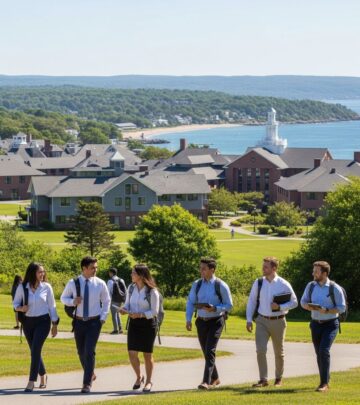
The Evergreen State College stands as a nationally acclaimed public liberal arts institution located in Olympia, Washington, offering a fundamentally different approach to higher education compared to traditional colleges and universities. Founded in 1967 and welcoming its first students in 1971, Evergreen has established itself as a pioneer in alternative educational methodologies. The college’s 1,000-acre campus, nestled near the southern end of Puget Sound and featuring its own saltwater beach, provides students with a unique learning environment that emphasizes experiential education and close interaction with faculty members.
What distinguishes Evergreen from conventional institutions is its comprehensive commitment to interdisciplinary learning, collaborative study, and student-centered education. The college has maintained consistent core practices throughout its history, including team-taught interdisciplinary classes, learning communities, narrative evaluations instead of traditional grades, and inclusive governance structures that give students meaningful participation in institutional decisions.
Unique Academic Structure and Curriculum
The Evergreen State College’s undergraduate curriculum operates on a distinctive quarter system that fundamentally differs from the traditional course-based model found at most American colleges. Rather than enrolling in multiple separate courses each term, full-time undergraduate students select one comprehensive 16-credit interdisciplinary program for an entire quarter. This integrated approach allows students to explore subjects from multiple disciplinary perspectives within a single, cohesive learning experience.
The college emphasizes freedom and flexibility in academic planning. Students have no declared majors and are not required to follow a predetermined sequence of programs. Instead, they exercise substantial autonomy in designing their own educational path, choosing which programs to enroll in each quarter throughout their undergraduate career. This student-directed approach reflects Evergreen’s philosophy that learners take unusually high levels of responsibility for their own academic planning and intellectual development.
Programs at Evergreen typically run for one, two, or three quarters, with three-quarter programs generally spanning from September through June. Full-time programs encompass the breadth of work related to a concentration area, taught by up to three faculty members who collaborate to create an integrated learning experience. This team-teaching model allows students to see connections across different disciplines and understand how various fields of knowledge intersect and complement one another.
Evaluation and Assessment Philosophy
One of Evergreen’s most distinctive features is its rejection of traditional letter grades. At the conclusion of each program, faculty members write substantive one-page narrative evaluations of students’ work rather than assigning letter grades. These evaluations provide detailed, qualitative assessments of student performance, growth, and engagement. Additionally, faculty hold end-of-program evaluation conferences with each student, creating opportunities for personalized feedback and discussion about academic progress.
The narrative evaluation system reflects Evergreen’s commitment to holistic assessment that acknowledges the complexity of learning and intellectual development. Faculty members also determine the number of credits to be awarded for completed work, meaning students can potentially lose credits if their work does not meet expected standards. This approach encourages genuine engagement with material and meaningful learning outcomes rather than simply accumulating credit hours.
Degree Requirements and Graduation Standards
To earn a Bachelor of Arts degree from Evergreen, students must complete 180 credits. For students pursuing a Bachelor of Science degree, requirements are more rigorous, necessitating 180 total credits with 72 credits in science coursework. Of these science credits, 48 must be designated as upper-division level work. Upper-division science requirements can typically be satisfied through one year of full-time upper-division science studies, allowing students flexibility in how they meet these requirements while maintaining academic rigor.
These credit requirements ensure that Evergreen graduates possess both breadth of knowledge across multiple disciplines and depth of expertise in their areas of concentration. The emphasis on upper-division science coursework for B.S. candidates reflects the college’s commitment to rigorous scientific training and preparation for advanced study or careers in scientific fields.
Graduate Programs and Professional Education
Beyond undergraduate education, Evergreen offers several graduate degree programs designed for advanced study and professional development. The college awards Master of Environmental Studies degrees, Master in Teaching credentials, and Master of Public Administration degrees. Graduate programs maintain the college’s commitment to interdisciplinary learning and practical application of knowledge.
The Master of Environmental Studies program, for example, structures its curriculum around required core courses that provide foundational knowledge in environmental policy, research methodology, and regional ecology. The program emphasizes collaborative learning through cohort models, where students progress through their studies as a learning community. Graduate students complete 72 quarter-hours of credit including core courses, electives, internships, and a substantial research thesis, ensuring they develop both theoretical understanding and practical expertise in environmental fields.
Campus Environment and Facilities
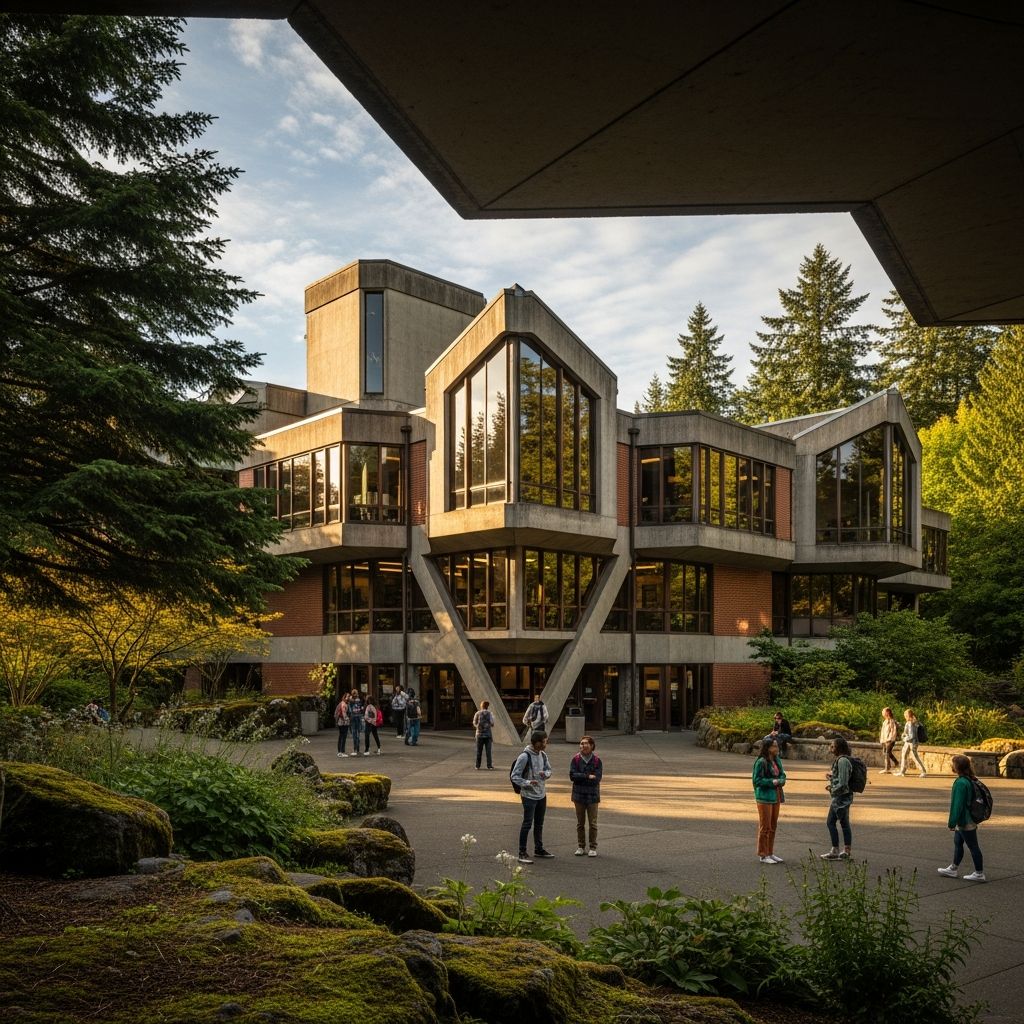
Evergreen’s physical environment plays an integral role in its educational mission. The 1,000-acre campus consists primarily of second-growth forest, creating a natural laboratory for scientific field research and providing inspiration for creative and interdisciplinary work. Throughout the forest, multiple trails connect various locations and lead to Evergreen Beach on Puget Sound, offering students direct access to Pacific Northwest ecosystems for study and contemplation.
The campus infrastructure supports experiential learning and outdoor education. Students have opportunities to engage in field research, environmental studies, and hands-on learning experiences that leverage the natural environment as an educational resource. The satellite campus in nearby Tacoma extends Evergreen’s reach into another major regional center, providing additional opportunities for community engagement and localized programming.
Student Demographics and Diversity
Evergreen’s undergraduate population reflects both regional and national diversity. As of Fall 2023, the undergraduate student body composition was 57% White, 15% Hispanic, 9% Two or more races, 7% Unknown ethnicity, 6% Black, 3% American Indian/Alaska Native, and 2% Asian. The college demonstrates strong economic diversity, with 44% of undergraduates identified as low-income and 56% as affluent, reflecting Evergreen’s commitment to serving students across the socioeconomic spectrum.
This demographic composition reflects Evergreen’s values of inclusion and accessibility. The college actively works to create an educational environment where students from different backgrounds, perspectives, and socioeconomic circumstances can learn together and benefit from the diversity of experiences and viewpoints within the learning community.
Admissions and Accessibility
The Evergreen State College maintains an open admissions philosophy with a 96% admission rate, making the institution highly accessible to prospective students. This approach reflects the college’s belief that admission decisions should not serve as the primary gatekeeper to education, and that students of varying academic backgrounds can succeed in Evergreen’s distinctive learning environment with appropriate support and engagement.
The college’s accessibility extends beyond admissions. Evergreen explicitly welcomes eligible non-citizens, including DACA and undocumented students who have completed high school or earned a GED equivalency within the United States. This inclusive policy demonstrates the institution’s commitment to removing barriers to education and serving all qualified students regardless of citizenship status.
National Rankings and Recognition
Evergreen has received significant national recognition for its distinctive educational model and commitment to teaching excellence. Among regional schools offering some master’s programs but few doctorates in the western United States, U.S. News & World Report ranked Evergreen tied for 37th overall in 2020. The college earned particularly strong recognition for innovation and teaching quality, placing second for “most innovative” schools and tying for fourth best for undergraduate teaching.
Additional accolades include being tied for 14th best public school in the western region and 21st best school for veterans. These rankings reflect Evergreen’s success in implementing its distinctive educational philosophy and creating meaningful learning experiences for diverse student populations, including non-traditional and veteran learners.
Governance and Institutional Structure
Evergreen’s governance reflects its commitment to inclusive decision-making and faculty empowerment. The college operates without traditional faculty rank or disciplinary departments, instead organizing around interdisciplinary academic deans who rotate from and return to teaching faculty positions. This structure ensures that academic leadership remains closely connected to the teaching mission and faculty perspectives.
The college’s eight-member Board of Trustees, appointed by the governor and confirmed by the state Senate, holds broad statutory power to operate the institution. The board provides institutional oversight while respecting the college’s distinctive educational mission and practices. This governance structure supports Evergreen’s institutional autonomy and ability to pursue its innovative educational approach.
Student Engagement and Learning Community
A hallmark of Evergreen’s educational approach is the emphasis on learning communities and collaborative learning. Students benefit from close faculty-student interaction and hands-on, experiential learning opportunities. The team-taught, interdisciplinary structure of programs naturally fosters community among cohorts of students who progress through programs together, creating lasting connections and shared intellectual experiences.
Faculty commitment to student learning and mentorship is central to Evergreen’s culture. Professors engage with students individually and collectively, facilitating discussions that connect academic content to real-world applications and personal development. The narrative evaluation system further strengthens faculty-student relationships by requiring meaningful conversations about academic progress and intellectual growth.
Enrollment and Degree Awards
As of the 2023-2024 academic year, The Evergreen State College served a total student population of approximately 2,334 students, including both undergraduate and graduate learners. The college awarded 458 bachelor’s degrees, 104 master’s degrees, and 91 certificates or diplomas during the 2022-2023 academic year, demonstrating the institution’s productivity in advancing student educational goals across multiple credential types.
Distinctive Practices and Core Values
Evergreen’s reputation rests on several interconnected distinctive practices that work together to create a comprehensive alternative to traditional liberal arts education. The dynamic curriculum emphasizes collaboration and interdisciplinary thinking. Learning communities create social and intellectual cohesion. Narrative evaluations provide meaningful feedback. The absence of traditional departmental structure promotes curricular flexibility. Inclusive governance ensures that student and faculty voices shape institutional direction. Together, these practices create an educational environment where students develop not only disciplinary knowledge but also critical thinking skills, collaborative abilities, and personal responsibility for their own learning.
Looking Forward: Institutional Growth and Evolution
Evergreen continues to evolve and expand its educational offerings while maintaining core commitments to its distinctive mission. The college has undertaken planning efforts to grow enrollment and enhance its reputation through academic certificates and new degree completion curricula. These initiatives aim to serve additional students and address emerging regional market needs while preserving the college’s commitment to quality, interdisciplinary education and student-centered learning.
Frequently Asked Questions
Q: What makes Evergreen’s curriculum different from other colleges?
A: Evergreen uses a unique quarter-based system where students take one comprehensive 16-credit interdisciplinary program per quarter rather than multiple separate courses. There are no majors, students design their own academic path, and faculty provide narrative evaluations instead of letter grades.
Q: Does Evergreen have traditional letter grades?
A: No, Evergreen uses a distinctive narrative evaluation system where faculty write detailed one-page evaluations of student work and meet individually with students to discuss their progress and intellectual development.
Q: What are the admission requirements for Evergreen?
A: Evergreen maintains an open admissions policy with a 96% admission rate, making it highly accessible to prospective students from diverse academic backgrounds who are committed to engaged learning.
Q: How large is the Evergreen campus?
A: The main campus spans 1,000 acres of forest near Puget Sound in Olympia, Washington, and includes Evergreen Beach. The college also operates a satellite campus in Tacoma.
Q: What graduate programs does Evergreen offer?
A: Evergreen offers Master of Environmental Studies, Master in Teaching, and Master of Public Administration degrees, all featuring the college’s commitment to interdisciplinary learning and practical application.
Q: How diverse is the Evergreen student body?
A: Evergreen’s undergraduate population reflects significant diversity, with 44% low-income students, 57% White students, 15% Hispanic students, and representation from multiple ethnic and racial backgrounds.
References
- The Evergreen State College Common Data Set 2023-2024 — The Evergreen State College. 2024. https://www.evergreen.edu/
- Evergreen State College Master of Environmental Studies Student Handbook 2024-2025 — The Evergreen State College. 2024. https://www4.evergreen.edu/sites/default/files/2024-12/MES_StudentHandbook_2024-2025.pdf
- Policies, Regulations, and Financial Review Report 2024 — The Evergreen State College. 2024. https://www.evergreen.edu/
- The Evergreen State College Institutional Profile — CollegeData. 2024. https://www.collegedata.com/college-search/Evergreen-State-College
- Facts and Figures: Enrollment and Demographics — The Evergreen State College Office of Institutional Research. 2024. https://www.evergreen.edu/offices-services/institutional-research-and-decision-support/facts-figures
Similar Articles








Read full bio of Sneha Tete