Evaluating Neighborhood Safety for Your Home
Learn comprehensive strategies to assess safety and security when choosing your neighborhood.
Selecting a safe neighborhood is one of the most important decisions when purchasing a home. Safety affects not only your daily quality of life but also your family’s well-being, property values, and long-term satisfaction with your investment. However, assessing neighborhood safety goes beyond simply looking at crime statistics—it requires a comprehensive evaluation of multiple factors that contribute to a secure living environment.
Understanding Crime Data and Statistical Analysis
The foundation of neighborhood safety evaluation begins with understanding crime statistics. Rather than relying on a single data point, examine long-term trends that reveal patterns in your area of interest. Crime data should be analyzed carefully to distinguish between types of offenses, as neighborhoods may experience higher rates of specific crimes while remaining safe in other categories.
Multiple reliable tools can help you access crime information. Law enforcement agencies publish detailed reports through their official channels, while third-party platforms aggregate and visualize this data for easier comparison. When reviewing crime statistics, look for:
- Year-over-year trends to identify whether crime is increasing or decreasing
- Crime rates per capita rather than absolute numbers, which provides context relative to population size
- Specific crime categories such as violent crime versus property crime
- Geographic mapping that shows which specific streets or blocks experience higher incidents
It’s equally important to avoid overreacting to isolated incidents or recent spikes. A single event may not reflect the true safety trajectory of a neighborhood. Instead, focus on patterns that emerge over multiple years, which provide a more accurate picture of the area’s safety profile.
Physical Infrastructure and Environmental Indicators
The physical characteristics of a neighborhood communicate volumes about its safety and the level of community investment. Street lighting represents one of the most visible safety features—well-lit streets deter criminal activity and make residents feel more secure during evening hours. When evaluating a neighborhood, visit during different times of day to assess lighting quality. Pay attention to whether lights are functional, appropriately spaced, and positioned to illuminate walkways and streets effectively.
Road conditions and sidewalk maintenance signal community commitment to safety and upkeep. Cracked sidewalks, pothole-filled streets, and general disrepair suggest neglect and can contribute to both safety concerns and reduced property values. Quality neighborhoods typically maintain their infrastructure regularly, including street markings, traffic signs, and pedestrian pathways.
Traffic safety features provide concrete evidence of community planning for resident protection. Effective neighborhoods incorporate:
- Speed bumps and traffic calming devices that encourage slower driving
- Clearly marked crosswalks and pedestrian crossing signals
- Roundabouts designed to reduce high-speed vehicle movement
- Radar speed signs that display driver speeds to promote awareness
Research demonstrates that radar speed sign installations lead to measurable reductions in vehicle speeds, typically lowering average speeds by 10–20%, making streets safer for pedestrians and cyclists. These features collectively indicate a neighborhood designed with resident safety in mind.
Emergency Services Accessibility and Response Times
The proximity and responsiveness of emergency services fundamentally impact neighborhood safety. Police and fire station locations should be conveniently close—ideally within 1.5 to 2 miles for fire services. Beyond proximity, response times matter significantly. Emergency response times of under 3 minutes for police services indicate an area with robust law enforcement presence.
When evaluating emergency services, consider more than just station locations. Assess whether you observe regular police patrols in the area, indicating active law enforcement engagement. A visible police presence often deters criminal activity while demonstrating departmental commitment to community safety. Additionally, evaluate whether local law enforcement maintains strong community partnerships, as collaborative relationships between police and residents foster safer neighborhoods.
Fire and rescue services extend beyond emergency response to include prevention and community education. Communities that prioritize safety often feature adequate fire hydrants, clear access routes for emergency vehicles, and proactive fire prevention programs.
Community Engagement and Social Cohesion
Strong neighborhoods are built on community connection and mutual watchfulness. The level of community involvement in a neighborhood provides important clues about safety and quality of life. Neighborhoods with active engagement typically feature:
- Neighborhood watch groups that organize regular patrols and communication networks
- Homeowners associations that establish and maintain community standards
- Regular community events such as block parties, farmers markets, and social gatherings
- National Night Out participation or similar organized safety initiatives
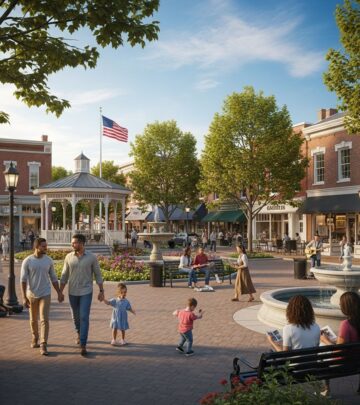
When visiting a prospective neighborhood, observe whether residents interact with one another and whether community spaces bring people together. Areas where neighbors know each other and maintain connections experience lower crime rates and higher quality of life. Children playing outside, people engaging in outdoor activities, and visible neighbor interaction all suggest a neighborhood where residents feel comfortable and safe.
These social bonds create informal surveillance networks—residents who know their neighbors naturally notice unusual activity and look out for one another’s properties. This collective awareness deters criminal activity more effectively than any physical security measure alone.
Parks, Recreation Areas, and Public Spaces
The condition and design of parks and recreational spaces reveal important information about neighborhood safety and community values. Well-maintained parks with clear sightlines, adequate lighting, and regular upkeep indicate neighborhoods where residents invest in shared spaces. Parks should feature sufficient visibility to prevent areas where criminal activity could occur undetected.
Quality recreational facilities attract families and encourage residents to spend time outdoors, increasing foot traffic and casual supervision that deters crime. Parks with organized programs, events, and maintenance schedules demonstrate community commitment. Conversely, parks with overgrown vegetation, poor lighting, or visible neglect suggest areas where community engagement may be lacking.
The presence of sidewalks and biking lanes that safely accommodate pedestrians and cyclists indicates a walkable neighborhood designed for families and outdoor activity. These features enable residents to move safely through their community while fostering the casual interactions that build community bonds.
Evaluating Environmental Quality and Livability
Environmental factors extend beyond crime statistics to include air quality, noise levels, and pollution sources. Neighborhoods located near heavy traffic, industrial facilities, or commercial zones often experience higher noise and air pollution levels. These environmental stressors affect both physical health and quality of life.
When assessing a neighborhood, pay attention to noise levels during different times of day. Morning rush hour traffic, evening congestion, and nighttime activity all influence the acoustic environment. Additionally, research air quality data through environmental agencies to understand particulate matter and pollution levels in the area. Neighborhoods with clean air and minimal noise pollution contribute to better health outcomes and higher property values.
Creating a Neighborhood Comparison Framework
Rather than evaluating a single neighborhood in isolation, develop a systematic comparison approach using a consistent framework. This methodology allows you to assess multiple neighborhoods objectively against the same criteria:
| Safety Factor | Evaluation Criteria | Information Sources |
|---|---|---|
| Crime Statistics | Long-term trends, violent vs. property crime rates, per-capita comparison | Law enforcement agencies, crime databases, mapping tools |
| Infrastructure Quality | Street lighting, sidewalk conditions, traffic safety features | Personal observation, municipal records, community feedback |
| Emergency Services | Station proximity, response times, visible patrols | Agency websites, 911 data, local government records |
| Community Engagement | Active groups, regular events, resident interaction | Direct observation, community group websites, HOA information |
| Parks and Recreation | Maintenance level, lighting, sightlines, programs | On-site visits, municipal parks department, community reviews |
| Environmental Quality | Air quality, noise levels, pollution sources | EPA data, environmental agencies, personal assessment |
Practical Assessment Strategies
Evaluating a neighborhood effectively requires more than online research—it demands direct observation and conversation. Schedule visits during different times of day to understand how neighborhoods function at various hours. Morning visits reveal how the area prepares for the workday, afternoon visits show school and recreational activity, and evening visits demonstrate nighttime safety and activity levels.
Engage with current residents and ask about their experiences and safety perceptions. Most people are willing to share insights about their neighborhoods, and their perspectives provide valuable context that statistics cannot convey. Ask specifically about:
- Whether residents feel comfortable walking alone at night
- Any safety concerns they have experienced or observed
- Community resources and how active neighborhood organizations are
- Changes they have noticed in the neighborhood over time
- Schools, parks, and recreational facilities and their quality
Combine personal observations with online research tools that provide neighborhood ratings, demographic information, school quality, and local amenities. This hybrid approach—balancing statistical data with lived experience and environmental observation—produces the most comprehensive understanding of neighborhood safety.
Frequently Asked Questions
What single factor most influences neighborhood safety?
While multiple factors contribute to safety, long-term crime trends combined with community engagement typically provide the strongest indicators. However, no single factor tells the complete story—a comprehensive evaluation considers crime data, infrastructure, emergency services, community involvement, and environmental quality together.
How far back should I research crime data?
Ideally, examine crime data spanning at least 5-10 years to identify genuine trends rather than temporary fluctuations. This timeframe provides context for understanding whether a neighborhood is becoming safer or experiencing increasing problems.
What are the most important signs of community engagement?
Active neighborhood watch groups, visible community events, engaged homeowners associations, and resident interaction are primary indicators. Additionally, whether children play outside safely and neighbors interact with one another suggests strong community bonds.
Should I prioritize crime statistics or infrastructure quality?
Both matter significantly, but infrastructure quality often correlates with overall neighborhood health. Well-maintained streets, adequate lighting, and quality public spaces typically exist in neighborhoods where residents invest in community welfare, which also tends to support lower crime rates.
How do I assess safety in an unfamiliar area?
Use crime data as a starting point, then visit multiple times at different hours. Talk with current residents, assess physical infrastructure, check emergency service proximity, and observe community activity levels. This multi-pronged approach provides realistic understanding of neighborhood conditions.
References
- Checklist for Evaluating Neighborhood Safety — Tralon Homes. 2024. https://tralonhomes.com/checklist-for-evaluating-neighborhood-safety/
- How to Gauge the Safety of a Neighborhood — EMM Loans. 2024. https://emmloans.com/blog/how-to-gauge-the-safety-of-a-neighborhood/
- TOOLKIT FOR PRIORITIZING AND MEASURING COMMUNITY SAFETY — Safety and Justice Challenge. 2024. https://safetyandjusticechallenge.org/wp-content/uploads/2023/12/CommunitySafetyToolkit.1.1.2024.pdf
- How to Conduct a Community Risk Assessment — Enterprise Community Partners. 2024. https://www.enterprisecommunity.org/learning-center/resources/how-conduct-community-risk-assessment
Similar Articles








Read full bio of Sneha Tete