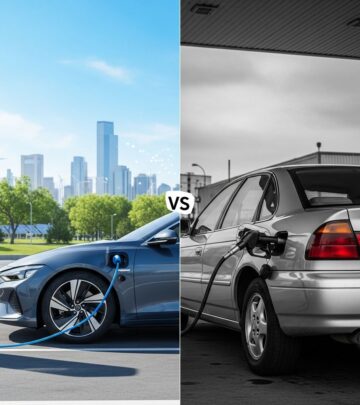
EV Battery Replacement: 6-Step Process, Costs & Timeline
Comprehensive insights into replacing electric vehicle batteries, from signs of failure to costs, processes, and future innovations for EV owners.
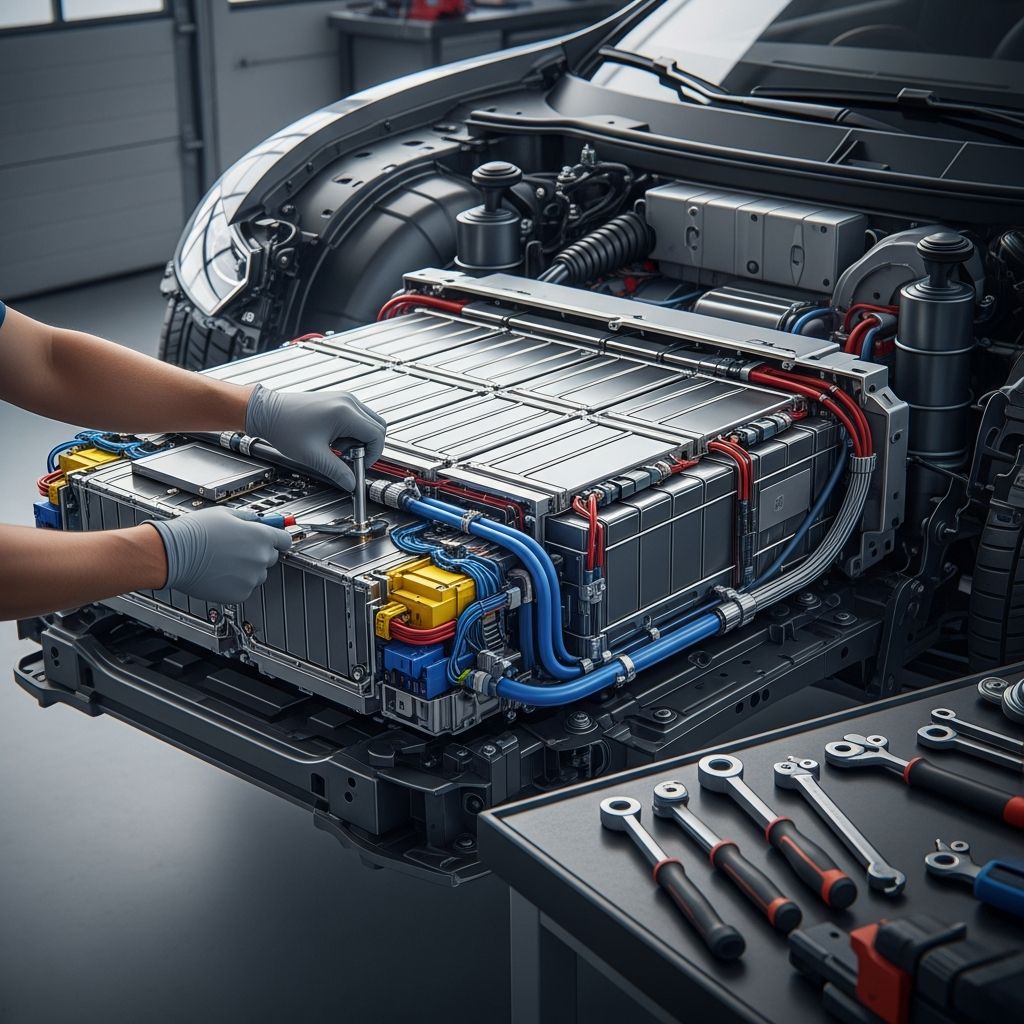
Electric vehicles rely on high-capacity lithium-ion batteries that power their drivetrains, but these components degrade over time due to charge cycles, temperature exposure, and usage patterns. Understanding replacement processes ensures owners maintain optimal performance without unnecessary expenses.
Understanding EV Battery Degradation
Battery health, often measured as State of Health (SOH), indicates remaining capacity compared to the original specification. A typical EV battery retains 70-80% capacity after 8-10 years or 100,000-150,000 miles under normal conditions. Factors accelerating degradation include frequent fast charging, extreme climates, and deep discharges below 20%.
- High temperatures above 95°F (35°C) can reduce lifespan by 20-30% if not mitigated by cooling systems.
- Cold weather temporarily lowers range but rarely causes permanent damage if preconditioned properly.
- Calendar aging occurs even when parked, emphasizing the need for periodic charges at 50-80% levels.
Owners monitor SOH via onboard diagnostics or apps; dropping below 70% often prompts replacement consideration.
Signs Indicating Battery Replacement Need
Recognize failure early to avoid stranding. Common indicators include reduced range (e.g., from 250 miles to under 150), slower acceleration, dashboard warnings, or uneven charging.
| Symptom | Cause | Action |
|---|---|---|
| Range drops 20-30% | Cell imbalance | Diagnostic scan |
| Warning lights | BMS fault | Service visit |
| Charging failures | Degraded modules | Module test |
| Unusual heat/noise | Cooling issue | Immediate inspection |
Proactive checks at certified shops use tools to map individual cell performance, identifying if full replacement or module repair suffices.
Detailed Replacement Procedure
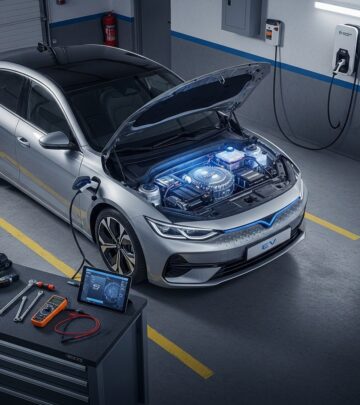
Replacing an EV battery demands certified technicians due to high-voltage risks up to 800V. The process spans 4-8 hours, varying by model architecture.
- Initial Diagnostics: Technicians employ manufacturer software to assess SOH, pinpoint faulty modules, and confirm replacement viability. Costs €100-200 ($110-220), taking 1-2 hours.
- Safety Lockout: Disconnect high-voltage systems per standards like UTEC 18-550, using insulated tools and personal protective equipment (30 minutes).
- Pack Extraction: Lift vehicle, remove underbody shields, and lower 300-600kg pack with hydraulic equipment (1-2 hours). Tesla packs form the floorpan; Nissan Leafs sit centrally.
- New Pack Installation: Align precisely, reconnect high-voltage cables, cooling lines, and sensors. Bleed air from coolant systems (1-2 hours).
- BMS Reprogramming: Update firmware for the Battery Management System to calibrate charging, thermal controls, and vehicle integration (1-2 hours).
- Final Testing: Run charge/discharge cycles, road test 20-30 miles, and verify components like chargers and motors (1-2 hours).
For 12V auxiliary batteries, simpler swaps use memory savers to preserve settings, but high-voltage packs require full protocols.
Costs Associated with Replacement
New OEM batteries range $5,000-$20,000 plus $500-$1,500 labor, totaling $10,000-$30,000 depending on capacity (e.g., 60-100kWh) and model. Refurbished packs from salvage cost 30-50% less, restoring 70-80% capacity with 2-year warranties.
- Tesla Model 3: $13,000-$17,000.
- Nissan Leaf: $5,000-$8,000 for upgraded packs.
- Hybrids like Prius: Module swaps under $5,000.
Independent shops offer savings over dealers but must be high-voltage certified. Financing or leasing mitigates upfront costs.
Warranty Coverage and Protections
Most manufacturers provide 8-year/100,000-mile warranties guaranteeing at least 70% capacity. Tesla covers up to 150,000 miles on some models; Nissan offers similar for Leafs. Post-warranty, extended plans from third parties cover $10,000+ repairs.
Verify coverage via VIN-specific lookups. Myths of $30,000+ routine costs are debunked; failures are rare within warranty.
Alternatives to Full Battery Replacement
Refurbishment disassembles packs, replaces weak cells (<85% capacity), and rebalances for €3,000-7,000 ($3,300-7,700). Firms like Revolte achieve 70-80% original capacity.
Module replacement suits hybrids or evenly degraded packs, though EVs favor whole-pack swaps due to uniform wear. Upgrades to larger packs (e.g., 24kWh to 62kWh Leaf) require retrofits like connector adapters.
Emerging Innovations: Battery Swapping
Automated stations from NIO swap packs in 5 minutes: vehicle positions, robot extracts old battery, installs charged one, and verifies systems. No technician needed, ideal for fleets.
Challenges include standardization across brands and infrastructure scale, but pilots expand in Asia and Europe.
Maintenance Tips to Extend Battery Life
Prolong replacement needs with habits:
- Charge to 80% daily, 100% weekly.
- Use Level 2 chargers over DC fast charge.
- Park in moderate temperatures; precondition in extremes.
- Monitor via apps for anomalies.
Regular software updates optimize BMS algorithms.
Choosing the Right Service Provider
Select shops with high-voltage certification, manufacturer tools, and positive reviews. Dealers ensure warranty preservation; independents cut costs 20-30%. Always request diagnostic reports pre-work.
FAQs
How often do EV batteries need replacement?
Typically after 8-15 years or 100,000-200,000 miles, retaining 70% capacity.
Is EV battery replacement DIY possible?
No, high-voltage dangers require certified pros.
What if my EV is out of warranty?
Opt for refurbished packs or extended warranties; costs $5,000-$20,000.
Can I upgrade to a bigger battery?
Yes, with retrofits for compatible models like older Leafs.
How does battery swapping work?
Robotic stations exchange packs in minutes for seamless charging.
References
- Changing Electric Car Battery: When, How, and at What Cost? — Go-Electra. 2023. https://www.go-electra.com/en/newsroom/changing-an-electric-car-battery/
- How to Replace an Electric Car Battery? — ChargeIQ. 2024. https://www.chargeiq.com.tr/en/how-to-replace-an-electric-car-battery
- Electric Car Battery Replacement from Start to Finish — Recurrent Auto. 2023. https://www.recurrentauto.com/research/electric-car-battery-replacement-from-start-to-finish
- 5-Minute Recharge? NIO ES6 Battery Swap Technology in Action! — YouTube (NIO Official). 2023. https://www.youtube.com/watch?v=TQMeKndHc8Q
- EV BATTERY REPLACEMENT – Is It Really That Easy? — YouTube (Automotive Channel). 2024. https://www.youtube.com/watch?v=JdR6BcLLNCU
Similar Articles








Read full bio of medha deb