EV Battery End-Of-Life Management: 5 Steps For Owners
Discover sustainable ways to handle electric vehicle batteries at end-of-life, from recycling methods to regulations and future innovations.
Electric vehicles are transforming transportation, but their powerful lithium-ion batteries eventually require careful handling at the end of their service life. Proper management prevents environmental harm and recovers valuable materials like cobalt, nickel, and lithium. This guide explores recycling processes, regulatory frameworks, owner responsibilities, and emerging technologies for sustainable disposal.
Understanding EV Battery Composition and Lifespan
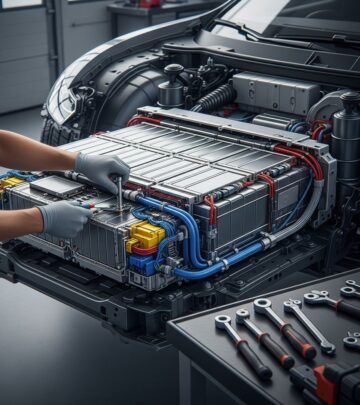
Lithium-ion batteries power most electric vehicles, consisting of cells packed into modules within a protective casing. Key components include cathodes rich in nickel, cobalt, and manganese; anodes typically made of graphite; electrolytes; and metal casings of aluminum and steel. These batteries last 8 to 10 years or 100,000 to 200,000 miles before capacity drops below 70-80%, signaling end-of-life for vehicle use.
Despite reduced capacity, these batteries retain 70-90% of their original energy storage, making them ideal for second-life applications before full recycling. Factors like charging habits, temperature exposure, and driving patterns influence degradation rates.
Second-Life Opportunities Before Recycling
Before disposal, many EV batteries find new purposes in stationary energy storage. Repurposed packs store solar or wind energy for grid support, home backup systems, or peak shaving in commercial buildings. This extends battery utility by 5-10 years, reducing demand for new raw materials.
- Grid storage: Utilities integrate used packs to balance supply and demand.
- Residential use: Homeowners power households during outages.
- Commercial applications: Factories use them for efficient energy management.
Companies test and refurbish modules, replacing faulty cells to ensure safety and performance. This approach cuts manufacturing emissions by up to 50% compared to producing virgin batteries.
Core Recycling Processes Explained
Once second-life viability ends, batteries enter recycling streams. Facilities first discharge and disassemble packs into modules and cells for safe transport. Three primary methods dominate: pyrometallurgical, hydrometallurgical, and direct recycling.
Pyrometallurgical Recycling: High-Heat Extraction
This traditional method shreds batteries and smelts them at 1,000-1,500°C, incinerating organics to produce a “black mass” slag containing mixed metals. The slag undergoes further refining to isolate cobalt, nickel, and copper alloys. While effective for mixed battery types, it consumes high energy, emits gases requiring scrubbers, and recovers less lithium (under 50%).
Hydrometallurgical Recycling: Chemical Precision
Preferred for efficiency, this process mechanically shreds batteries into black mass, then uses acids and solvents to leach metals into solution. Selective precipitation recovers over 95% of lithium, cobalt, nickel, and copper with lower emissions than smelting. Pre-treatments like thermal or chemical separation detach electrodes from foils beforehand.
Direct Recycling: The Emerging Frontier
Direct methods preserve cathode structures intact, avoiding breakdown and re-synthesis. Shredding produces black mass, separated via froth flotation—graphite floats away while cathodes sink for purification. Ideal for lithium-iron-phosphate (LFP) batteries lacking high-value cobalt, this technique promises 90%+ recovery rates and energy savings. Still scaling commercially, it could revolutionize circular economies for EVs.
| Method | Recovery Rates | Environmental Impact | Best For |
|---|---|---|---|
| Pyrometallurgical | 50-90% (low Li) | High energy, emissions | Mixed chemistries |
| Hydrometallurgical | 90-99% (incl. Li) | Low emissions | High-value metals |
| Direct | 90%+ (intact cathode) | Lowest energy | LFP, manufacturing scrap |
Global Regulations Shaping Disposal Practices
Governments enforce strict rules to boost recycling rates. In the European Union, targets mandate 65% lithium-ion battery recycling by weight by 2026, rising to 70% by 2031; material recovery goals include 50% lithium and 90% cobalt/nickel by 2028. The U.S. EPA promotes voluntary programs but classifies spent batteries as hazardous waste, requiring certified handlers.
Extended Producer Responsibility (EPR) laws hold manufacturers accountable for take-back and recycling, incentivizing design-for-recyclability. By 2030, projections estimate 200,000 tons of annual EV battery waste in the U.S. alone, underscoring regulatory urgency.
Step-by-Step Guide for EV Owners
Individual actions ensure compliance and safety. Never landfill or incinerate batteries independently due to fire and chemical risks.
- Assess battery health: Use dealer diagnostics or apps to check state-of-health (SOH).
- Contact authorized dealers: Most offer free removal during trade-ins or warranty claims.
- Find certified recyclers: Use EPA or state directories for facilities handling lithium-ion packs.
- Prepare for transport: Discharge fully and secure to prevent shorts; label as hazardous.
- Explore incentives: Some regions provide rebates for recycling.
Retail drop-offs at auto parts stores accept small batteries; larger EV packs require professional services.
Environmental and Economic Benefits
Recycling one ton of EV batteries recovers $10,000+ in metals, equivalent to mining 10 tons of ore. It slashes mining impacts—lithium extraction uses 15 times more water than recycling—while curbing pollution from cobalt mines. Economically, the global battery recycling market could reach $20 billion by 2030, creating jobs in green tech.
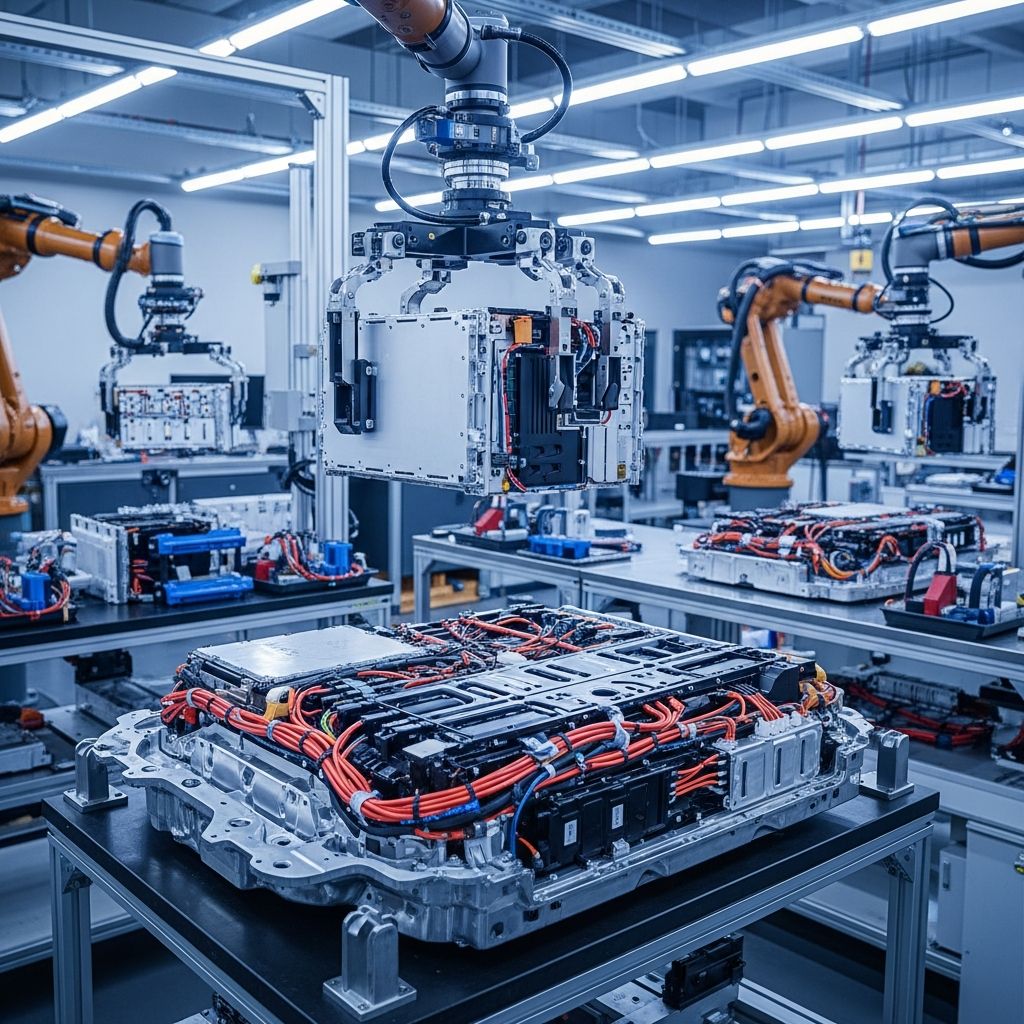
Challenges persist: only 5-10% of lithium-ion batteries currently recycle due to collection logistics and costs. Innovations like automated disassembly robots address this.
Future Innovations in Battery Sustainability
Advancements include sodium-ion batteries with easier recycling and solid-state designs reducing flammable electrolytes. AI-optimized sorting improves material purity, while blockchain tracks batteries from cradle to grave for accountability. By 2040, closed-loop systems could recycle 95% of EV batteries globally.
Frequently Asked Questions (FAQs)
Can I recycle my EV battery at home?
No, professional handling is required to avoid fires and leaks. Contact your dealer or certified recycler.
How much does EV battery recycling cost?
Often free via manufacturer programs; otherwise, $200-500 depending on size and location.
Are all EV batteries recyclable?
Yes, though chemistries vary; over 95% of materials recoverable with modern methods.
What happens if I landfill an EV battery?
Illegal in most areas; risks explosions, soil contamination, and fines up to $50,000.
Will recycling rates improve?
Yes, regulations target 80%+ by 2030, driven by EPR and tech advances.
References
- Electric Vehicle Battery Recycling — SMMT. 2023. https://www.smmt.co.uk/article/electric-vehicle-battery-recycling/
- How Are EV Batteries (Actually) Recycled? — Union of Concerned Scientists. 2023-05-15. https://blog.ucs.org/jessica-dunn/how-are-ev-batteries-actually-recycled/
- Electric Vehicle Battery Recycling — FutureTracker. 2024. https://www.futuretracker.com/post/electric-vehicle-battery-recycling
- This Is How Electric Car Battery Recycling Is Done — YouTube (transcript). 2024. https://www.youtube.com/watch?v=INuR6WU_yWk
- Lithium-Ion Battery Recycling — US EPA. 2025-01-10. https://www.epa.gov/hw/lithium-ion-battery-recycling
- Everything You Need to Know about EV Battery Disposal — Car and Driver. 2023-11-20. https://www.caranddriver.com/features/a44022888/electric-car-battery-recycling/
Similar Articles








Read full bio of Sneha Tete